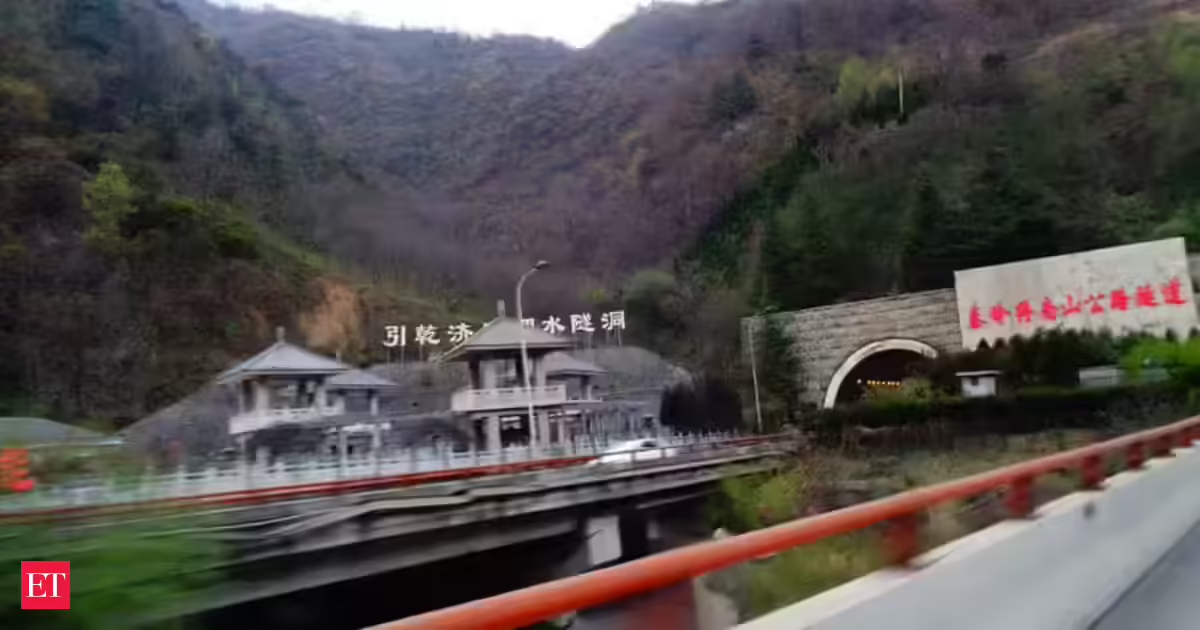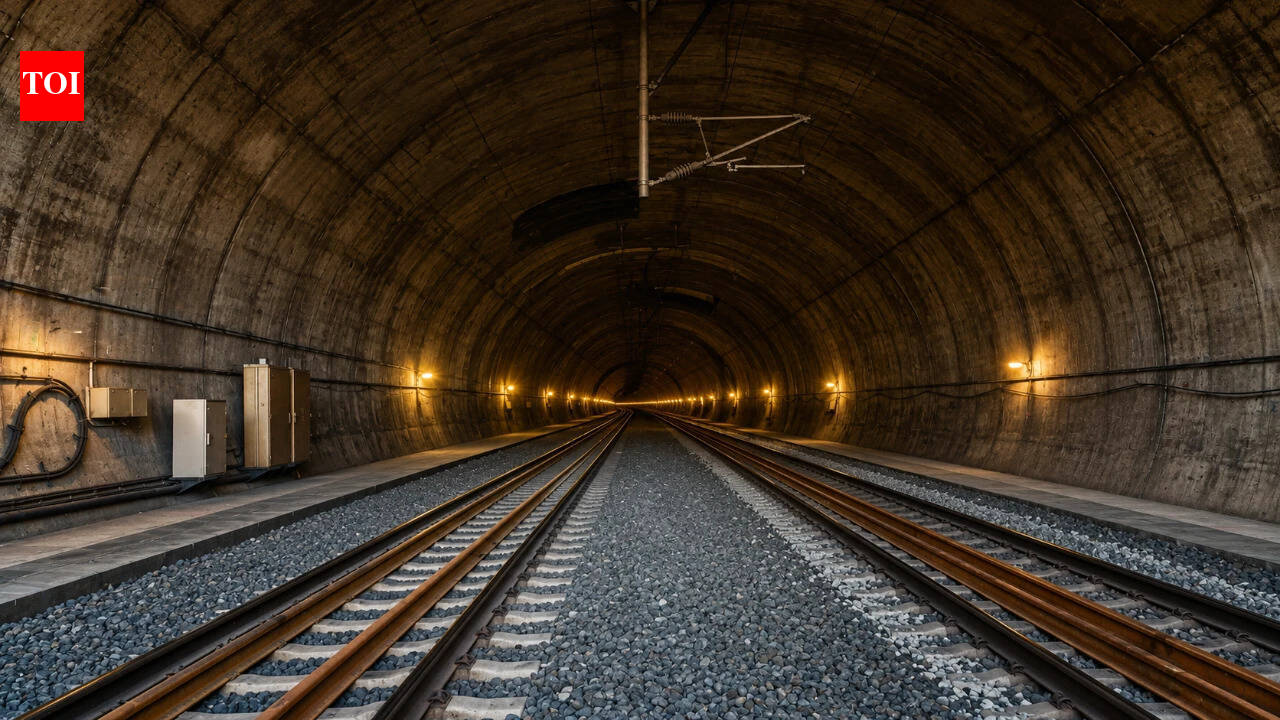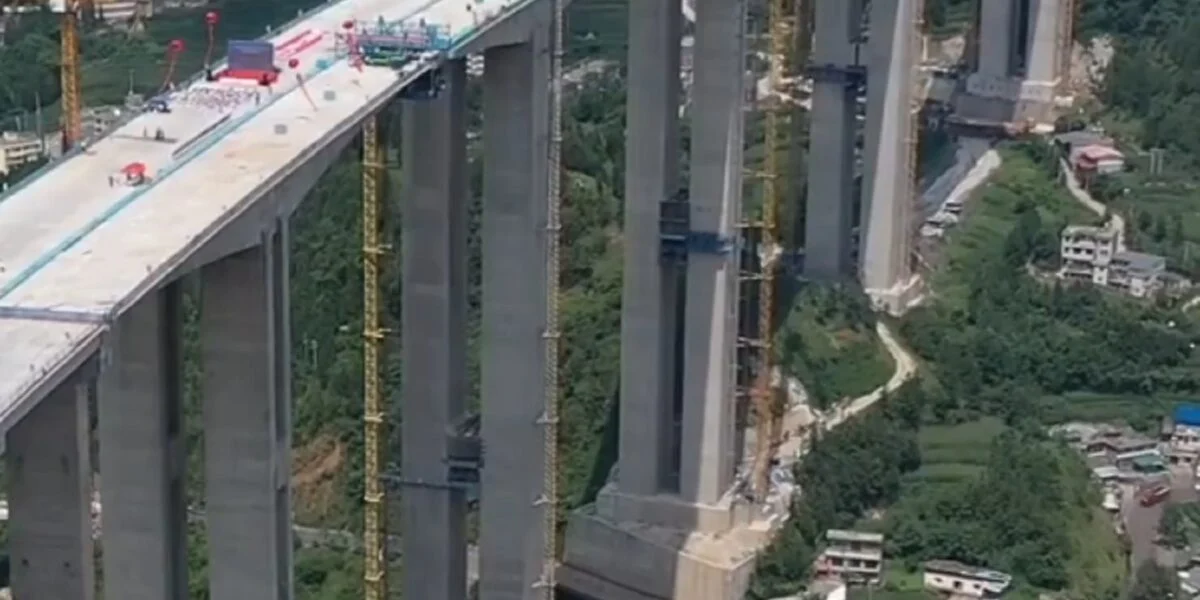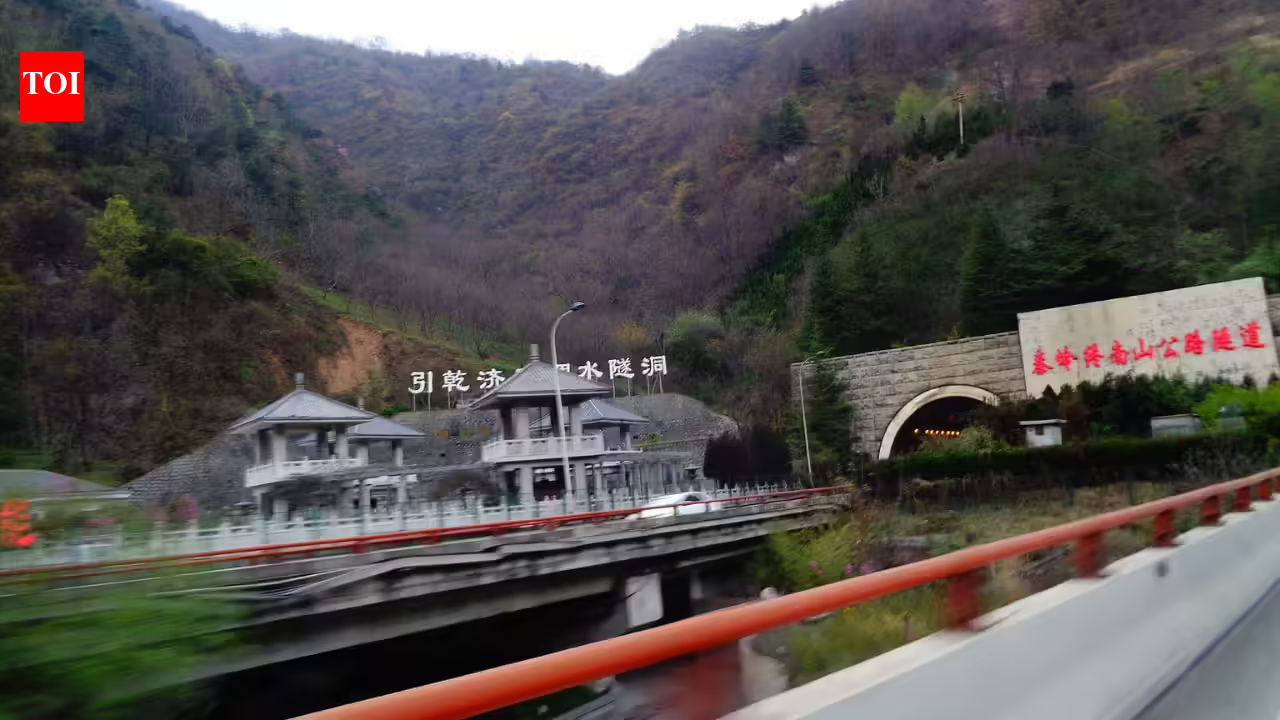
Qinling Zhongnanshan Tunnel in Shaanxi Province | Wikimedia CommonsMotorists driving through the Qinling Zhongnanshan Tunnel in central China spend about 15 minutes travelling beneath one of the country’s most formidable mountain ranges. Stretching 18.02 kilometres through the Qinling Mountains in Shaanxi Province, the twin-bore highway tunnel transformed what was once a slow, winding mountain crossing into a journey that takes less than an hour between Xi’an and Zhashui. But what surprises many first-time drivers isn’t just the tunnel’s length. Every few kilometres, the grey concrete suddenly gives way to glowing blue skies, white clouds and colourful lighting effects projected across the ceiling, creating the illusion that motorists have briefly emerged into daylight before disappearing underground again. The unusual feature was never intended as decoration. Engineers designed the “artificial sky” to break up the monotony of an exceptionally long underground drive, helping reduce visual fatigue, ease driver anxiety and improve road safety. According to the Shaanxi Provincial Department of Transport, construction began in 2001, the tunnel opened to traffic in January 2007, and each bore measures 18.02 kilometres, making it one of the world’s longest twin-bore highway tunnels at the time of its completion.Qinling Zhongnanshan Tunnel | Wikimedia CommonsAn engineering solution to one of China’s toughest mountain crossingsFor centuries, the Qinling Mountains formed a natural barrier between northern and southern China. Before the tunnel was built, motorists had to negotiate steep, winding roads that were frequently affected by snow, ice and poor weather, particularly during winter. The Zhongnanshan Tunnel became the centrepiece of a major highway project designed to create a faster, safer, year-round transport corridor through the mountains. Excavating more than 18 kilometres of hard rock presented enormous engineering challenges, from groundwater and geological faults to ventilation and emergency planning. Engineers ultimately constructed two parallel traffic bores connected by cross-passages, while three deep ventilation shafts divide the tunnel into separate ventilation zones to maintain air quality throughout its length. The Shaanxi transport authority says the project introduced numerous technical innovations, including advanced ventilation, fire protection, monitoring and rescue systems that helped establish new standards for long highway tunnels in China. Why engineers painted a blue sky undergroundBuilding a tunnel was only part of the challenge. Engineers also had to consider how drivers would respond psychologically to spending more than a quarter of an hour inside an enclosed underground environment. Research and international experience have shown that long tunnels can contribute to visual fatigue, anxiety and reduced concentration as drivers stare at the same lighting and concrete walls for extended periods. To counter that effect, designers introduced three specially illuminated sections inside each tunnel bore, spaced roughly every five kilometres. Each lighting zone extends about 150 metres and uses blue, white and coloured lighting to create scenes resembling open skies, clouds, sunrises and natural landscapes. Rather than allowing motorists to perceive the tunnel as one uninterrupted 18-kilometre passage, the changing scenery creates the impression of travelling through several shorter tunnels, helping relieve monotony and maintain attention. The Shaanxi Provincial Department of Transport describes the system as an innovation designed specifically to reduce driver fatigue and psychological stress, while CCTV’s coverage of the tunnel opening explained that the illuminated sections were intended to give drivers the sensation of briefly emerging into daylight before continuing underground. Zhongnan Mountains | Wikimedia CommonsSafety systems extend far beyond the artificial skyThe colourful lighting is only one component of a much larger safety system operating inside the tunnel. The two traffic bores are linked by emergency cross-passages, while hundreds of surveillance cameras, fire detection equipment, communications systems and traffic management controls continuously monitor conditions underground. According to the Shaanxi transport authority, cameras are installed every 125 metres, automatic incident detection systems monitor traffic throughout the tunnel, and integrated software coordinates emergency responses involving ventilation, lighting, rescue operations and traffic control. Together with the tunnel’s segmented ventilation system, these technologies help operators respond quickly to accidents, fires or other emergencies inside one of China’s busiest mountain crossings. Nearly two decades after opening, the Qinling Zhongnanshan Tunnel remains an example of how major infrastructure projects increasingly combine civil engineering with human-centred design, recognising that making an 18-kilometre underground drive feel safer depends not only on concrete and steel, but also on understanding how people experience long journeys beneath the mountains. PollWhat do you think is the most innovative feature of the Qinling Zhongnanshan Tunnel?Artificial Sky LightingEmergency Cross-PassagesAdvanced Ventilation SystemsCCTV Surveillance and Monitoring3k+ users shared opinion today 5k+ users already voted today Share Opinion
China drilled 18 kilometres through the Qinling Mountains and added glowing “artificial sky” sections inside the tunnel to help reduce driver fatigue
Motorists driving through the Qinling Zhongnanshan Tunnel in central China spend about 15 minutes travelling beneath one of the country’s most formidable mountain ranges. Stretching 18.02 kilometres through the Qinling Mountains in Shaanxi Province, the twin-bore highway tunnel transformed what was once a slow, winding mountain crossing into a journey that takes less than an hour between Xi’an and Zhashui.
744 words~3 min read