Japanese civic activists have called on society to confront and reflect on the Imperial Japanese Army's germ warfare in China, saying the atrocities are an established historical fact that Japan has never fully addressed.
About 100 people attended a gathering in Tokyo on Sunday, where they listened to audio recordings of the interrogation of convicted war criminal Shunji Sato and watched video testimony by his subordinate Yoshio Kurihara.
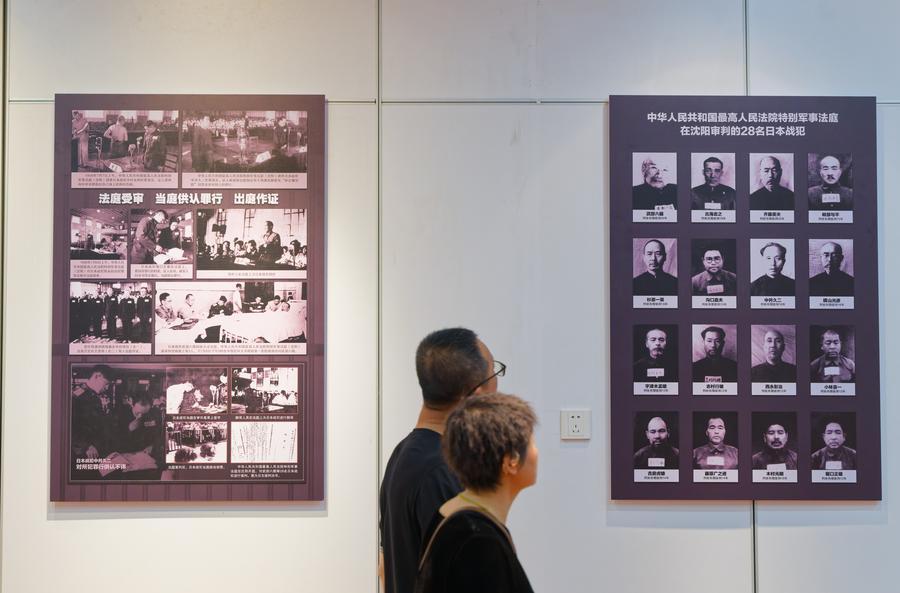
In their testimonies, Sato and Kurihara said the Imperial Japanese Army deliberately contaminated food for refugees with bacteria, including salmonella and cholera, causing large numbers of deaths. They also described human experiments on prisoners, including providing them with only water to observe how long they could survive.
Japanese investigative journalist Fuyuko Nishisato, who has spent years researching the army's germ warfare and interviewing Kurihara, said Japan failed to fully abandon its wartime values after World War II.
The crimes committed by the Imperial Japanese Army's germ warfare units — particularly Unit 731, which killed hundreds of thousands of people in occupied China in the 1930s and 1940s — were never fully prosecuted, and many perpetrators later assumed important positions in postwar Japan, Nishisato said.