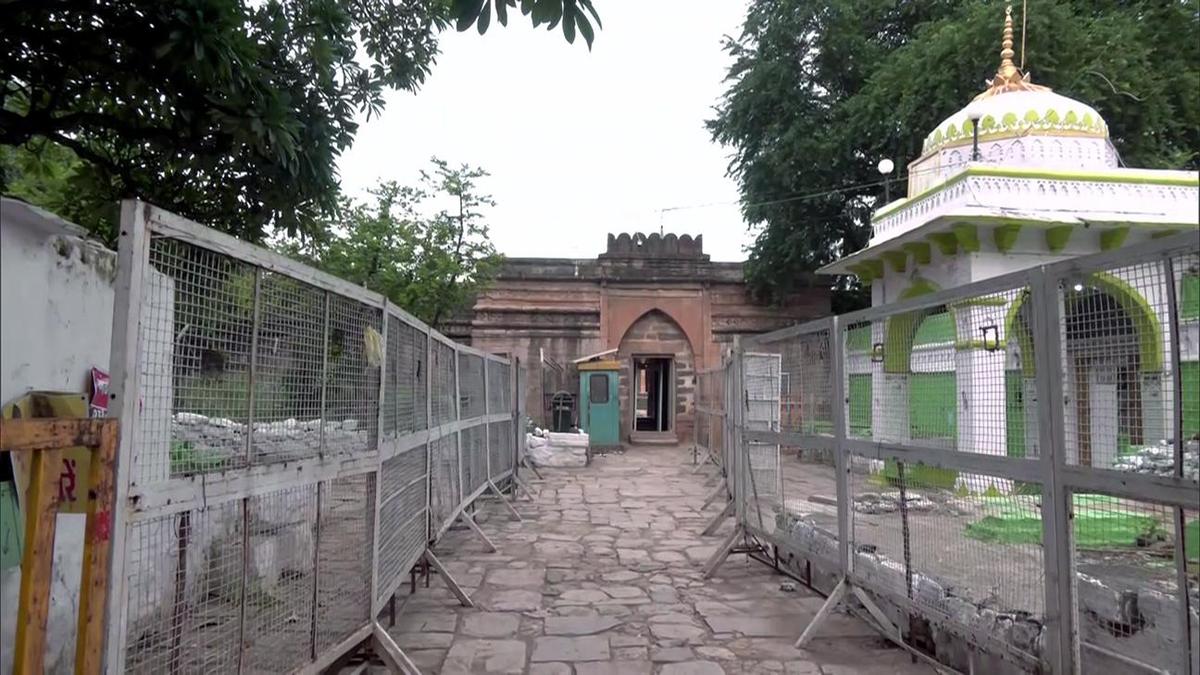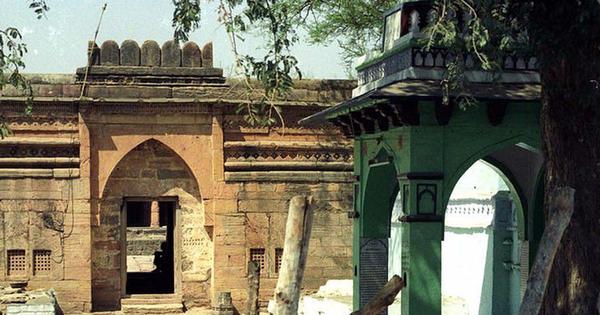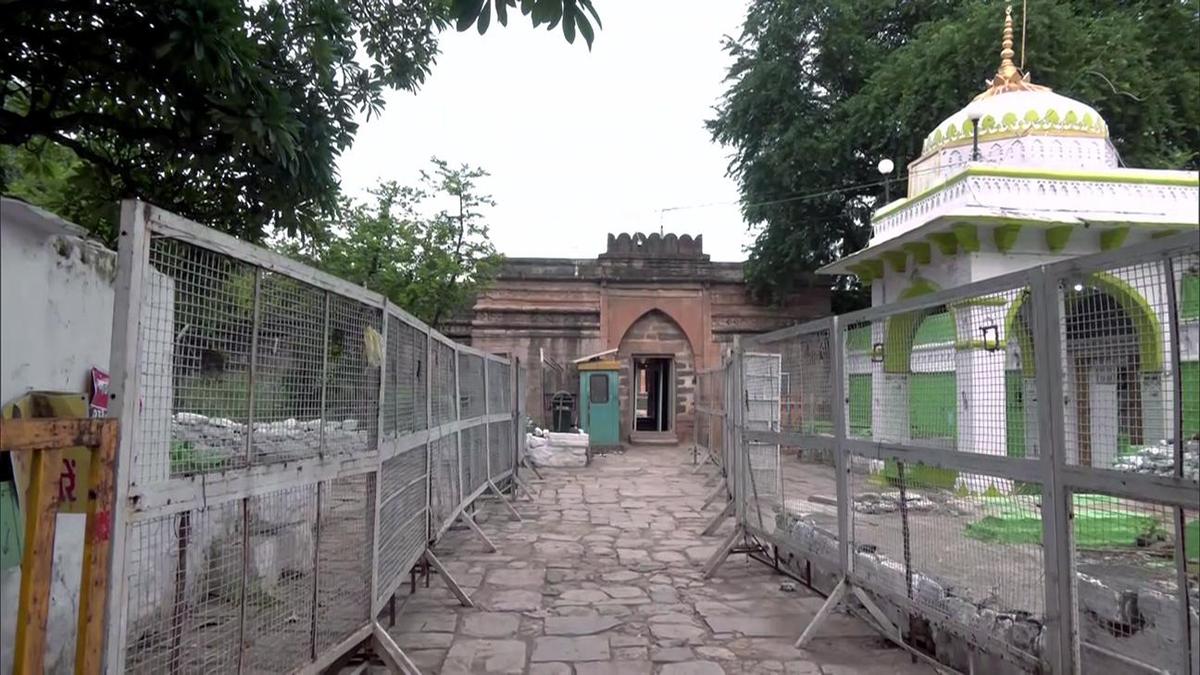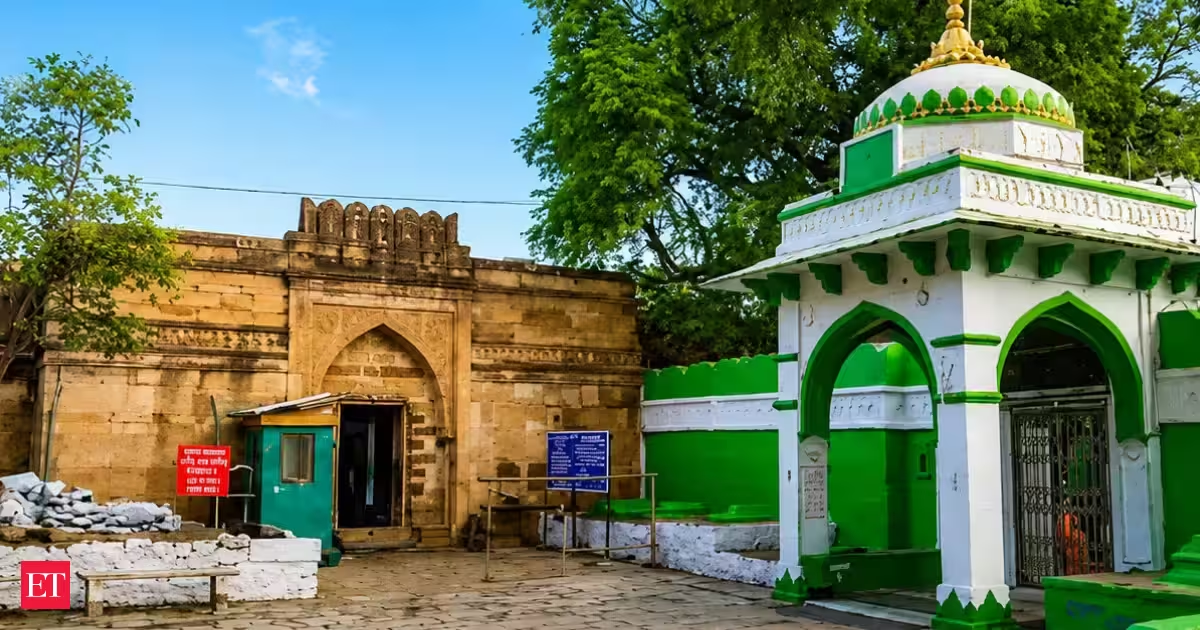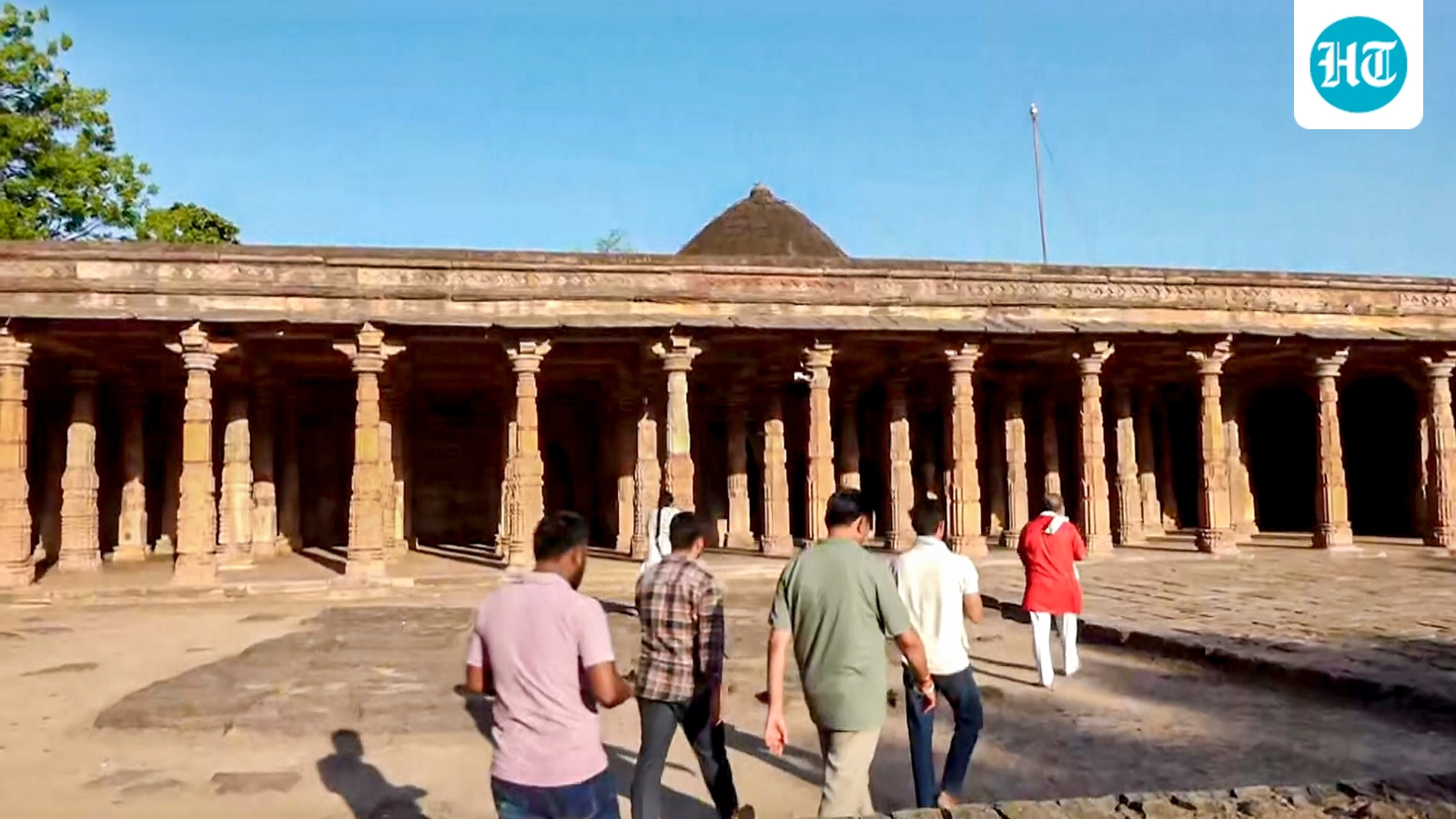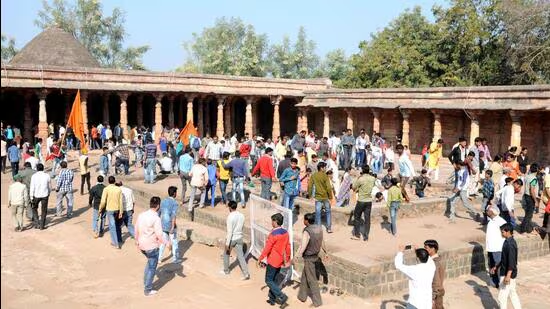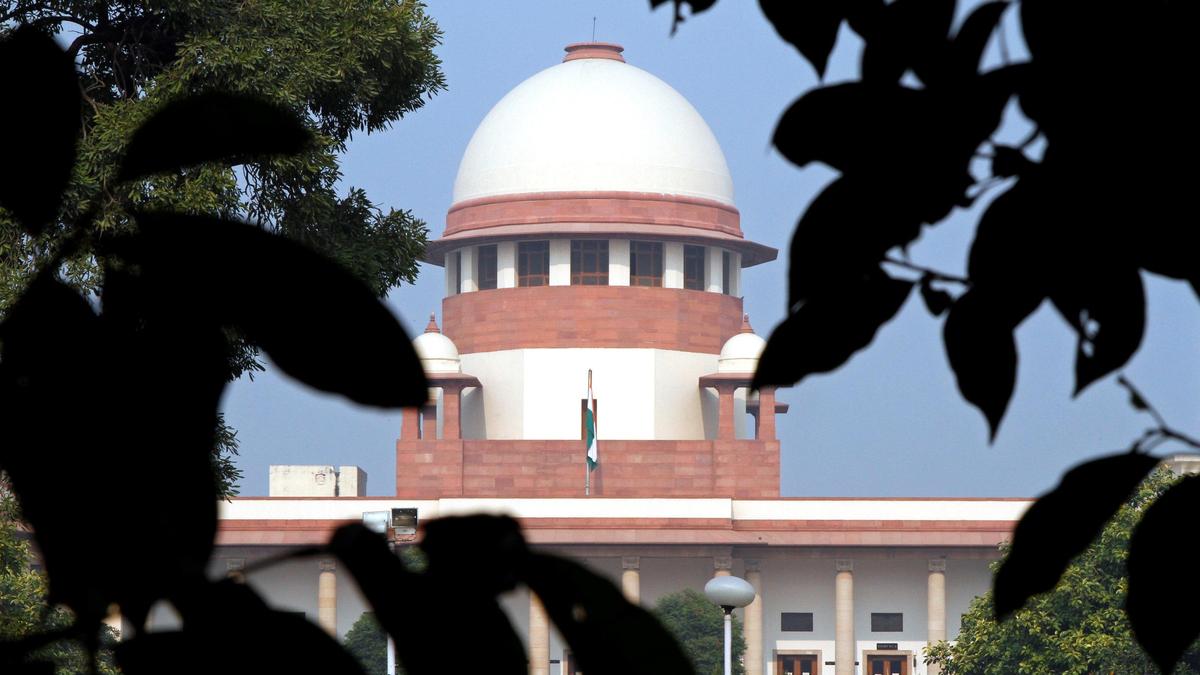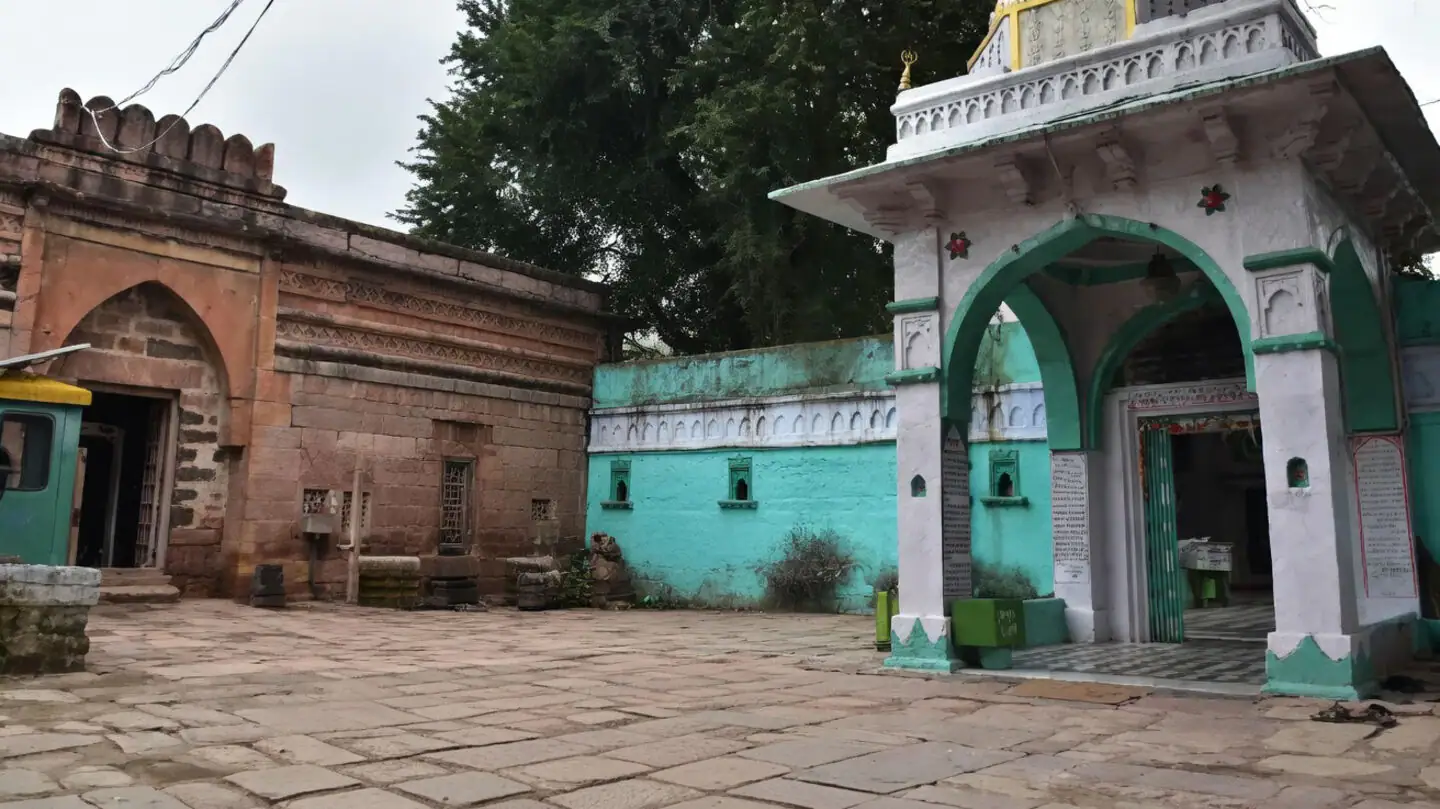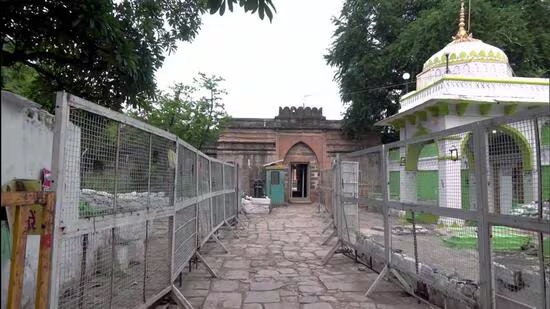
The Supreme Court on Wednesday directed the Centre and the Madhya Pradesh government to comply “in letter and spirit” with its July 14 order requiring authorities to provide a separate space “adjacent to or near” the disputed Bhojshala Temple-Kamal Maula Mosque complex in Dhar for members of the Muslim community to offer Friday namaz as an interim arrangement, after it was informed that the site identified by the administration was nearly two kilometres away.The SC has ordered Muslims to offer namaz at an interim space in an open area adjacent to the Bhojshala-Kamal Maula complex in Dhar, MP. (ANI)A bench headed by Chief Justice of India Surya Kant, and comprising justices Joymalya Bagchi and V Mohana, observed that the authorities were bound to faithfully implement its previous directions and posted the matter for further hearing on Friday to monitor compliance.The issue was mentioned before the bench by senior advocate Huzefa Ahmadi, appearing for the Muslim petitioners, who submitted that the site earmarked by the authorities was around two kilometres from the disputed complex. “They have allocated a place two kilometres away from the site,” Ahmadi told the court.Solicitor General Tushar Mehta, appearing for the Centre and the Madhya Pradesh government, responded that although the location was about 900 metres away, he had already spoken to the authorities to identify an alternative site.“I had a word with the authorities and it is 900 metres away. But I am in talks with them and have asked them to identify an alternative site,” Mehta said.The bench reminded the law officer that its previous order had specifically used the expression “adjacent site”. “Last time when we used the expression ‘adjacent site’...” the bench observed.Mehta assured the court that he had already spoken to the authorities and that the latest administrative order identifying the site would be addressed. “That order will be taken care of. I have already spoken to the authorities there,” he submitted.The bench, however, underlined that its directions were required to be implemented faithfully.“The order has to be complied with in letter and spirit... We will list it on Friday and you comply with the order of ‘adjacent site’,” the court directed.The dispute relates to the Bhojshala Temple-Kamal Maula Mosque complex in Dhar district, where both Hindu and Muslim communities have historically claimed religious rights.On July 14, while refusing to restore Friday namaz inside the disputed complex, the Supreme Court had preserved the effect of the Madhya Pradesh high court’s May 15 judgment declaring the monument to be a temple dedicated to Goddess Saraswati. At the same time, it evolved an interim arrangement directing the state administration and the Archaeological Survey of India (ASI) to provide an open space “adjacent to or near” the disputed premises where members of the Muslim community could offer Friday namaz between 1pm and 3pm.The court had clarified that the arrangement would be purely ad hoc and without prejudice to the rights of either side.“Meanwhile, as an interim measure and without prejudice to the rights of both sides, it is directed that a separate open space, that is adjacent to or near the subject premises, may be provided to the appellant(s) and other members of the Muslim community for offering Namaz on Fridays between 1pm and 3pm It shall be ensured that no disruption is caused to either side’s ingress and egress to the subject premises while they are performing their respective religious practices. This arrangement shall be ad hoc in nature and subject to the final outcome of these appeals,” the bench had ordered.The court had also restrained the ASI from carrying out any structural alterations at the protected monument without its prior permission.The Supreme Court is hearing appeals filed by petitioner Jebran Ansari, Quazi Moinuddin – the mutawalli (caretaker) of the Kamal Maula mosque, and the Maulana Kamaluddin Welfare Society against the Madhya Pradesh high court’s May 15 judgment, which declared the religious character of the 11th-century Bhojshala-Kamal Maula complex to be that of a temple dedicated to Goddess Saraswati and quashed the ASI’s 2003 order permitting Muslims to offer Friday prayers at the site.While issuing notice on the appeals on July 14, the Supreme Court had declined to stay the high court verdict, observing that the rights flowing from that judgment would have to be protected unless it was set aside in appeal, even as it sought to balance competing religious claims through the interim arrangement for Friday prayers nearby.The Indore bench of the Madhya Pradesh high court, in its May 15 judgment, had declared the religious character of the Bhojshala-Kamal Maula complex to be that of a temple dedicated to Goddess Saraswati. It ruled that the Places of Worship (Special Provisions) Act, 1991, would not apply because the monument is protected under the Ancient Monuments and Archaeological Sites and Remains Act, 1958. The high court also quashed the ASI’s April 7, 2003 order that had allowed Hindus to worship on Tuesdays and Muslims to offer namaz every Friday, while observing that Muslim parties could seek allotment of separate land elsewhere in Dhar for construction of a mosque.The high court’s decision relied on an ASI report, submitted in 2024, that said that the Bhojshala complex-Kamal Maula mosque was constructed using remnants of earlier temples, with the mosque being built centuries later. The survey found scriptures, pillars, pilasters, ancient coins, and inscriptions featuring images of Hindu deities such as Ganesh, Brahma with his consorts, Narasimha, and Bhairava.The 11th-century monument has been at the centre of a prolonged dispute, with Hindu groups asserting it is a temple and the Muslim community maintaining it is a mosque dedicated to a sufi saint. The Bhojshala case was part of a flurry of pleas over the past five years that argue that Islamic holy sites were built after demolishing temples, and therefore should be replaced. Other cases include the Gyanvapi Masjid in Varanasi and the Shahi Eidgah mosque in Mathura – both adjoining famous temples.
SC tells Centre, MP to comply ‘in letter and spirit’ with order on namaz site near Bhojshala complex
The dispute relates to the Bhojshala Temple-Kamal Maula Mosque complex in Dhar, where both Hindu and Muslim communities have historically claimed religious rights. | India News
986 words~4 min read