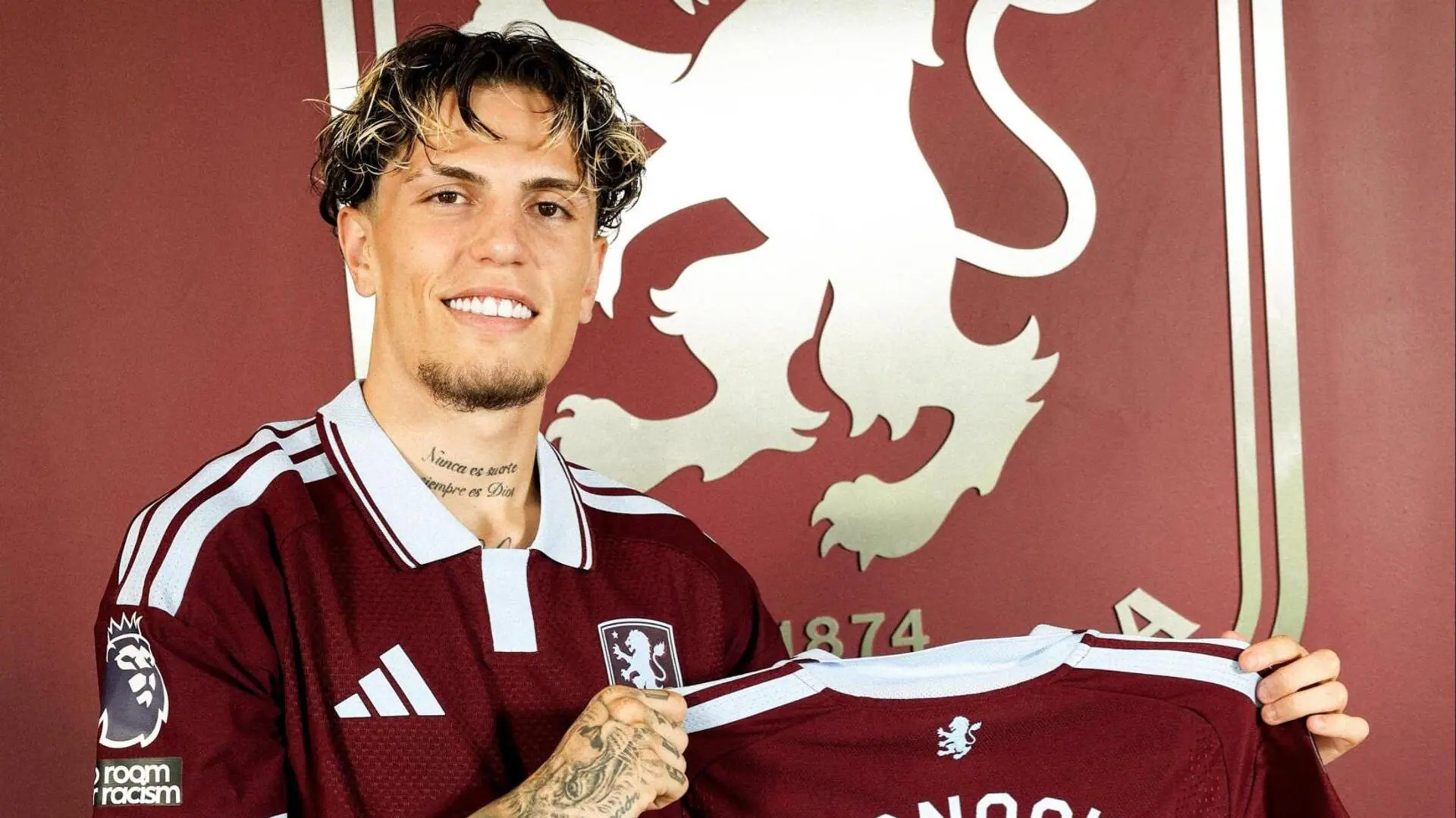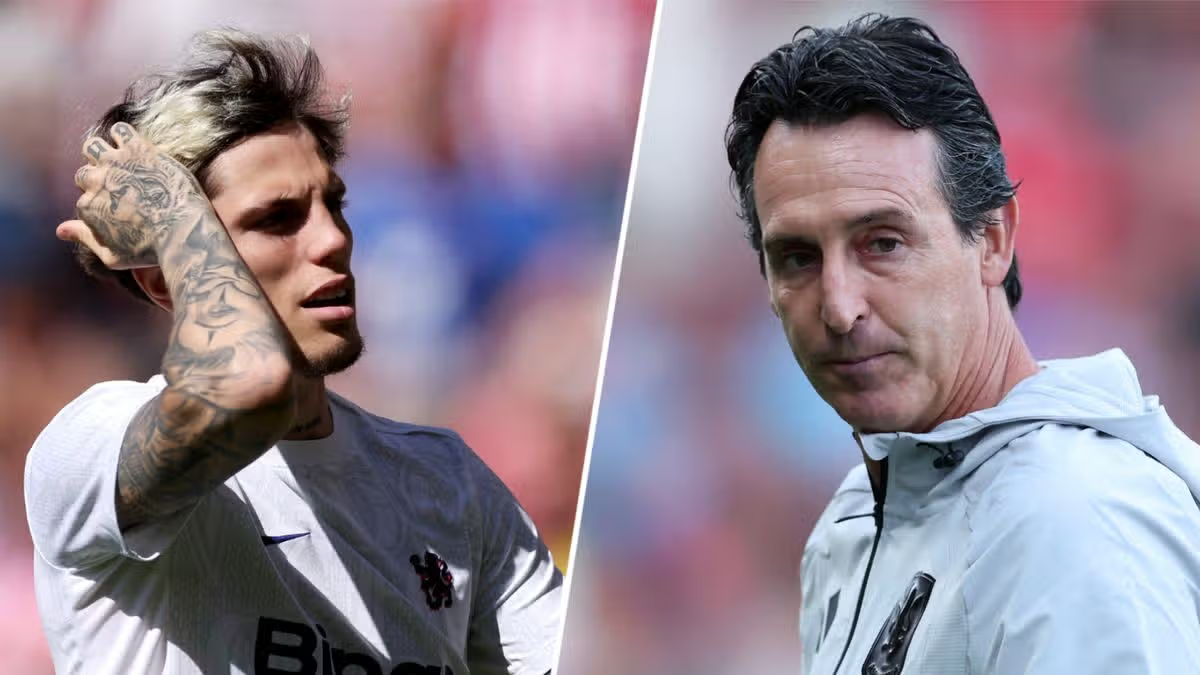
In Tuesday’s Transfer DealSheet, The Athletic reported Aston Villa had held dialogue with Chelsea regarding the potential transfer of Alejandro Garnacho.Later in the day, discussions began to accelerate, with Villa moving to close the deal, which centred on an initial loan with a conditional obligation to buy. Villa will pay a significant portion of Garnacho’s salary.The 22-year-old had become an option to fulfil Unai Emery’s priority position of a fast winger who could run beyond opposition defences. Garnacho had joined a small list of potential recruits, which included Paris Saint-Germain’s Ibrahim Mbaye and Crysencio Summerville from West Ham United, who is now closing in on a move to Al Hilal. Villa’s scouting department had tracked Mbaye closely for a long period, with the club holding talks across different windows.Representatives of players who Villa have discussed before say the club are constantly fluid with targets, with Emery frequently changing his mind. Even this time last week, Villa were holding serious conversations about what an agreement would look like for Summerville.So if Garnacho is to sign, recruiting another winger is not ruled out for later in the window, yet Villa will have to assess the lay of the land in terms of who has departed and, directly linked, the financial scope they have.Garnacho’s move would be separate to the deal that has taken Morgan Rogers to Stamford Bridge in a club-record £117million (€137m, $157m) transfer. Yet it does raise some pertinent questions. As happened last summer, Villa have recently explored signing a team-mate of Garnacho’s, Nicolas Jackson, permanently. Emery is a long-standing admirer since they worked together at Villarreal, though finding an agreement will be expensive.Chelsea enjoy a strong relationship with Villa, which assisted in negotiations for Rogers, with Villa co-owner Nassef Sawiris having the final say.Previously, both clubs have shown an openness to discuss buying and selling. In the summer of 2024, Ian Maatsen joined Villa from Chelsea for a fee worth £37.5m, with academy graduate Omari Kellyman moving in the opposite direction. The Premier League, having asked for proof of the justification in paying that fee for Maatsen, approved the deal.Over the previous two seasons, Villa and Chelsea have both incurred fines for breaching UEFA’s squad cost rules and have sailed close to the wind with profit and sustainability regulations (PSR).Chelsea were asking for £42.5m for Garnacho this summer and for him to leave permanently, which would represent a small profit on the £40m they paid in August 2025 to sign him from Manchester United. Yet progress with Villa was made on an initial loan, and most importantly, a conditional obligation.Multiple Villa sources, speaking on the condition of anonymity to protect relationships, insist Garnacho is regarded as a market opportunity. Emery wanted to sign him last summer, but Champions League football, which Chelsea had and Villa then did not, appealed to the Argentina international. Villa felt Roma were leading the pursuit of Garnacho this summer, though Emery pushed to convince the player to move to the Midlands. Villa believed that, through Emery’s conviction, they had convinced the winger to join.Should Garnacho’s move be finalised, it would have Emery’s fingerprints all over it, with the Spaniard the key advocate for the deal. Admittedly, given Chelsea want to offload him, an agreement is more straightforward than it is to negotiate with PSG for Mbaye, who is likely to prove more difficult to prise away from Paris for any buying club.How does a World Cup affect the transfer market?Christopher HamillThose close to Villa say Rogers was worth 14 goals a season, so sourcing a replacement was critical. This was factored in when pursuing West Ham United captain Jarrod Bowen earlier in the summer. The responsibility on Garnacho’s shoulders, therefore, would be to make a swift impact.Emery’s inclination for wide forwards is well known, but acutely demonstrated in Garnacho’s case. He wanted an attacker who could add pace, directness and an ability to play from both flanks. It has been discussed that a left winger would not be too much of an issue, which is Garnacho’s favoured position, considering John McGinn can tuck in from the other flank and ensure Villa maintain two No 10s, as is Emery’s customary structure. Villa’s desire to address this position has grown in prominence over the summer, with Jadon Sancho’s loan ending, Evann Guessand and Leon Bailey available to leave and Villa having the money to spend from Rogers’ sale. Club record signing Johan Manzambi is regarded as a direct replacement for Rogers.Whoever comes in will find that Emery allows the dressing room to police itself. He has never fined a player for indiscretions since arriving. Despite his demanding nature, he does not tend to mind what a player does off the pitch, as long as they are performing on it.This applies to maintaining high standards in training, which are so taxing that new signings can struggle initially and is perhaps why, until this summer, Villa have maintained such a similar nucleus to their squad. Last season, for instance, Ollie Watkins kept being picked over Tammy Abraham, even during his goal drought, because Watkins was considered to be displaying a better level of application and quality in training. Garnacho will have to meet those standards.In certain cases, though, Emery and his staff will take a hands-on approach, wanting to help instil focus when there is a player they believe in but whom he feels may have lost their way.Marcus Rashford’s acquisition in January 2025 served as an illustrative example. As did Marco Asensio that same window or, to a lesser extent, Sancho. Even the relentless pursuit of Joao Felix across at least three windows underlines his willingness to sign players who have question marks against them.“If there is a coach in European or even world football who is characterised by recovering players and getting the most out of them, it’s Unai Emery,” Monchi, Villa’s former sporting director, once told El Partidazo de COPE.Emery believed Rashford at his best was one of the most threatening attackers in the world and backed himself and his support network to rejuvenate the player. In their quest for Champions League qualification back then, Villa took a bet on Rashford providing an immediate impact, with senior figures stating that his salary — Villa covered 80 per cent of it — was double that of their next highest earner.With Garnacho, who was pictured wearing a home Villa shirt with ‘Rashford 9′ on the back last summer (the pair played together at Manchester United), Emery feels he can refine the raw materials that made him one of the most exciting young talents in Europe a few years ago.Pertinently, one of Garnacho’s best games at Chelsea came in their impressive 4-1 victory at Villa Park in February. He set up Joao Pedro for the Brazilian’s hat-trick goal and created more chances and had more touches in the opposition box than anyone else.For all the silliness and petulance that has plagued Garnacho’s career, he can look, at times, drained of confidence. This has affected his performances, causing him to become hesitant to take players on and utilise his best characteristics, which are his pace and one-versus-one trickery.Emery typically operates with one wide player and will demand Garnacho becomes serious in his defensive diligence. In the many one-on-one scenarios he will be presented with, he must be more intelligent and varied in his decision-making. Emery specialises in bringing consistency to players’ games, instilling good habits on and off the field to help them fulfil their potential. It is why he tends to have no hesitation when tasked with rejuvenating a player’s career.Emery wanted Garnacho last summer when Villa ended up with Sancho, another unwanted United winger. Having convinced the wide player that coming under his tutelage is the right next step, following talks with Chelsea post-Rogers’ sale, Garnacho is set for a critical, arguably career-defining, 12 months.What is the financial significance of this move?Villa’s pursuit of Garnacho is a curious one, and not just because he flattered to deceive during his first season at Stamford Bridge. Through signing a Chelsea player — any Chelsea player — Villa run the risk of taking a scythe to the very chunky profit they’ve enjoyed by selling Rogers to the London club.Morgan Rogers was part of England’s World Cup squad (Justin Setterfield/Getty Images)Each of Villa and Chelsea are currently required to comply with settlement agreements they entered into with UEFA a year ago. Those came on the back of the two English clubs breaching the governing body’s football earnings rule, which limits the size of financial loss clubs can record, after deductions for ‘good’ expenditure on infrastructure, youth teams and the like.The two agreements differ but one thing is clear for both: they each need to move away from big losses.English clubs, whether in a settlement agreement or otherwise, have increasingly turned to player sales to offset swingeing operating deficits. Rogers was bought for an initial £7m from Middlesbrough and, even as there were a further £8m in potential add-ons, and his former club is due a sizeable sell-on, that record £117m fee confers significant profit at Villa Park.Yet UEFA’s rules look unkindly on players passing between two clubs in a short space of time and, if they deem them ‘player exchange transactions’, require clubs to reduce the profits they show in their calculations. In essence, if UEFA deemed the Rogers deal to be in conjunction with a Chelsea player coming the other way, Villa would be required to reduce their Rogers profit to the difference between the net cash received for him and the amount paid to Chelsea for Garnacho, or, for that matter, anyone else.Whether Villa only wanted to loan Garnacho anyway is unclear, but there’s an obvious motive for not signing him permanently. Or at least not right now. UEFA’s player exchange rules cover a period of 45 days. After that, a permanent deal could be triggered and Villa could sign Garnacho outright and see no negative impact on the Rogers profit.Yet they also have to be careful around any obligations included in the deal.Per UEFA, if a condition is considered to be “virtually certain”, clubs must record loan deals as permanent ones at the point the loan takes place. In that sense, the conditions included in the Garnacho deal must have a realistic possibility of not occurring in order for the deal to be recorded, at least initially, as a loan.It is unclear currently what form any such conditions might take, with club sources advising The Athletic nothing can be confirmed until a deal is done. UEFA will look closely at any transfer, loan or otherwise, that does take place, though Villa’s cause for arguing the obligation is conditional might be bolstered, inadvertently, by a previous incident.Last season, they signed Harvey Elliott on loan from Liverpool, with a conditional obligation that appeared, at the time, fairly easy to meet: Elliott just had to play 10 Premier League games in an Aston Villa shirt. He didn’t, and has since returned to Liverpool.Each of Garnacho, Villa and Chelsea will hope the same doesn’t transpire again. But there is a balance to be found in whatever deal is eventually signed.Villa want to ensure they don’t kneecap themselves with respect to the Rogers profit, and Chelsea will benefit from saved wages even if the deal doesn’t go beyond a loan, but the latter will also be keen to obtain as much certainty as possible over the departure of a player now deemed surplus to requirements at Stamford Bridge.
Why Aston Villa are trying to sign Alejandro Garnacho from Chelsea
Unai Emery enjoys the challenge of polishing a rough diamond and would relish the chance to do that with the Argentina winger
1,915 words~9 min read