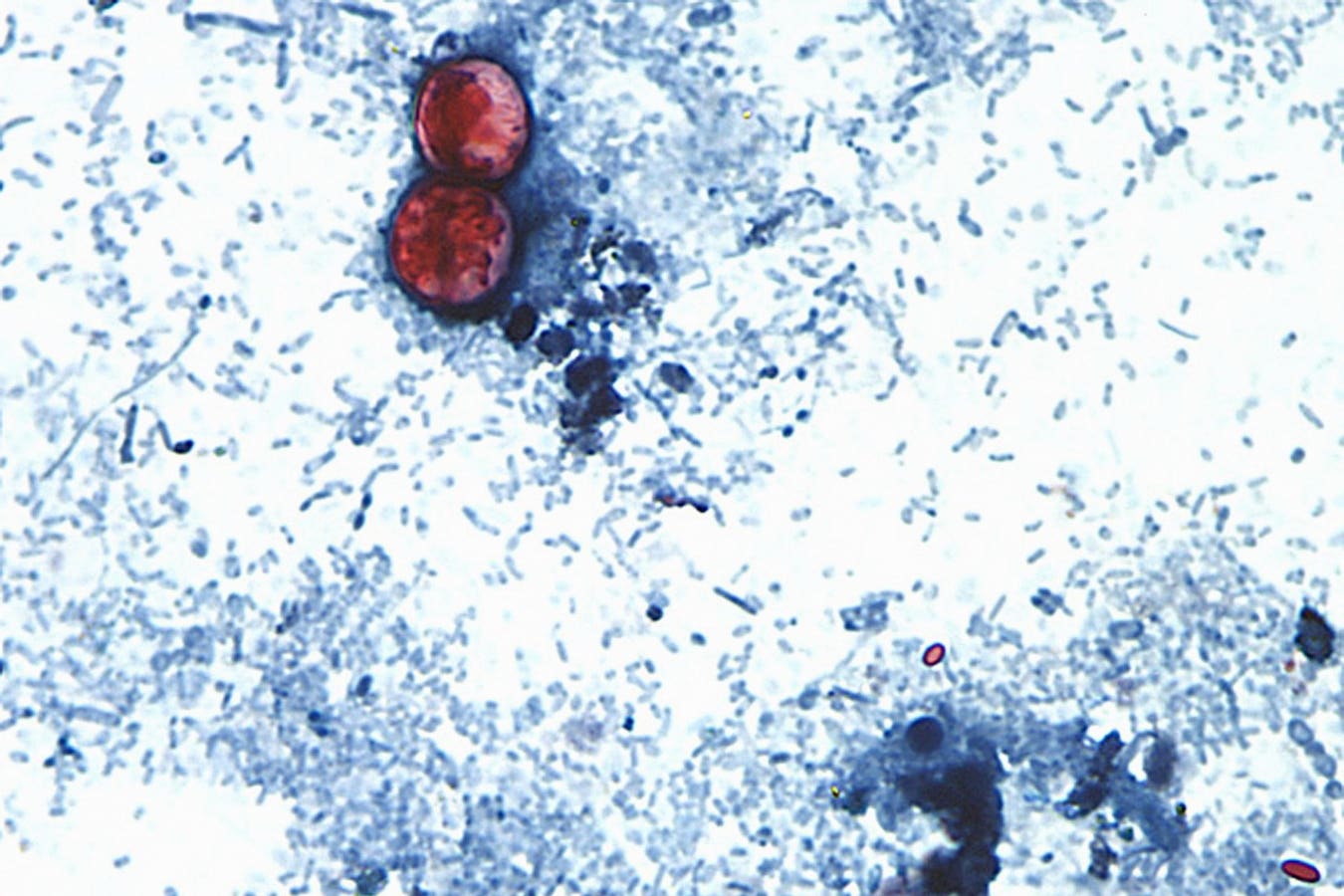
This photo taken through a microscope provided by the CDC shows Cyclospora cayetanensis oocysts found in a fresh stool sample which had been prepared with a formalin solution and stained with safranin. (CDC via AP, File)
In 2014, three Mastercard data scientists filed for a patent on a way to catch disease outbreaks from the traces people leave when they pay. Jeremy Pastore, Michael Zhao and Arun Elangovan proposed scanning payment-card records in real time and flagging an outbreak as it spread through a population. The patent was granted in 2019. Then it was set aside. It has never been deployed.
This summer showed what such a tool was for. The United States is having its worst cyclosporiasis season on record. Cyclosporiasis is an intestinal illness caused by Cyclospora cayetanensis, a microscopic parasite people acquire by eating fresh produce grown or washed with water carrying human waste. It brings on watery diarrhea, often for weeks, starting about a week after the contaminated meal. The parasite needs one to two weeks in the environment before it can infect anyone, so it does not pass between people.
The largest cluster was worked the way foodborne outbreaks have been for decades, by interviewing the sick until a common thread appeared. Michigan’s health department went through the food histories of 190 people already sick with the parasite who had eaten at Taco Bell, and 90 percent of them had eaten iceberg lettuce. The FDA traced that lettuce to a single grower in central Mexico, and Taylor Farms de Mexico pulled it from the American market on July 17.