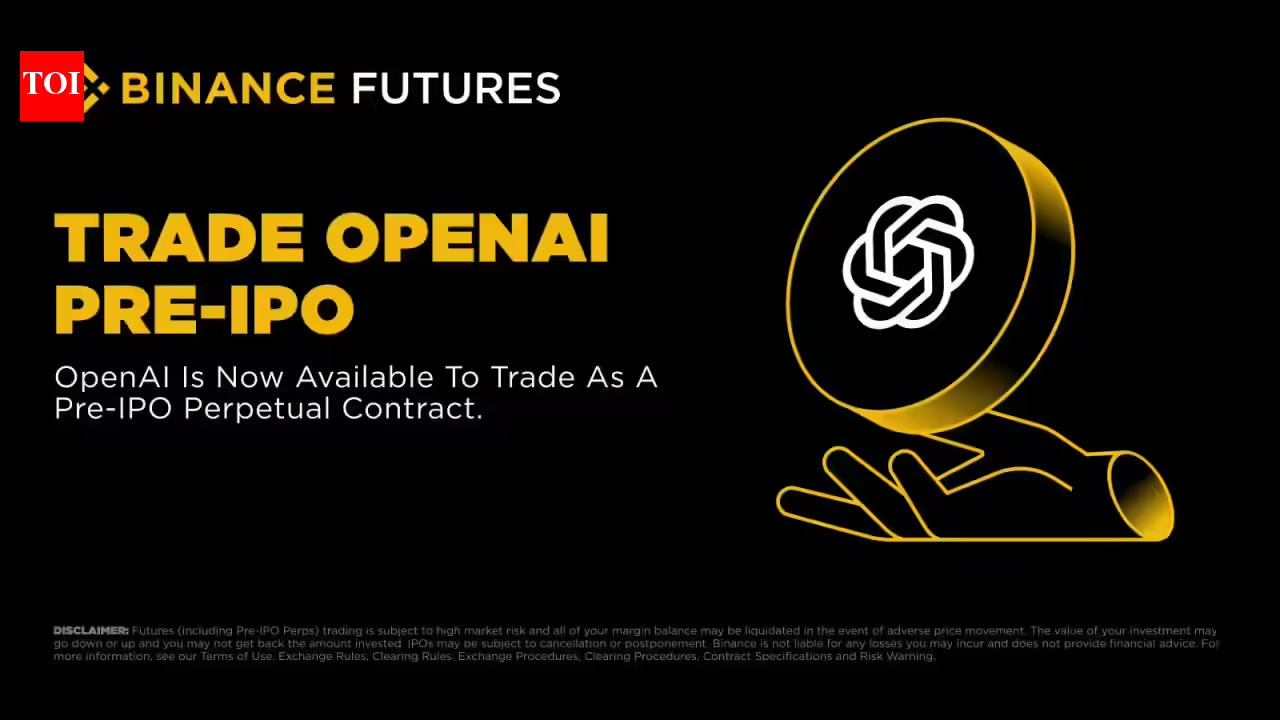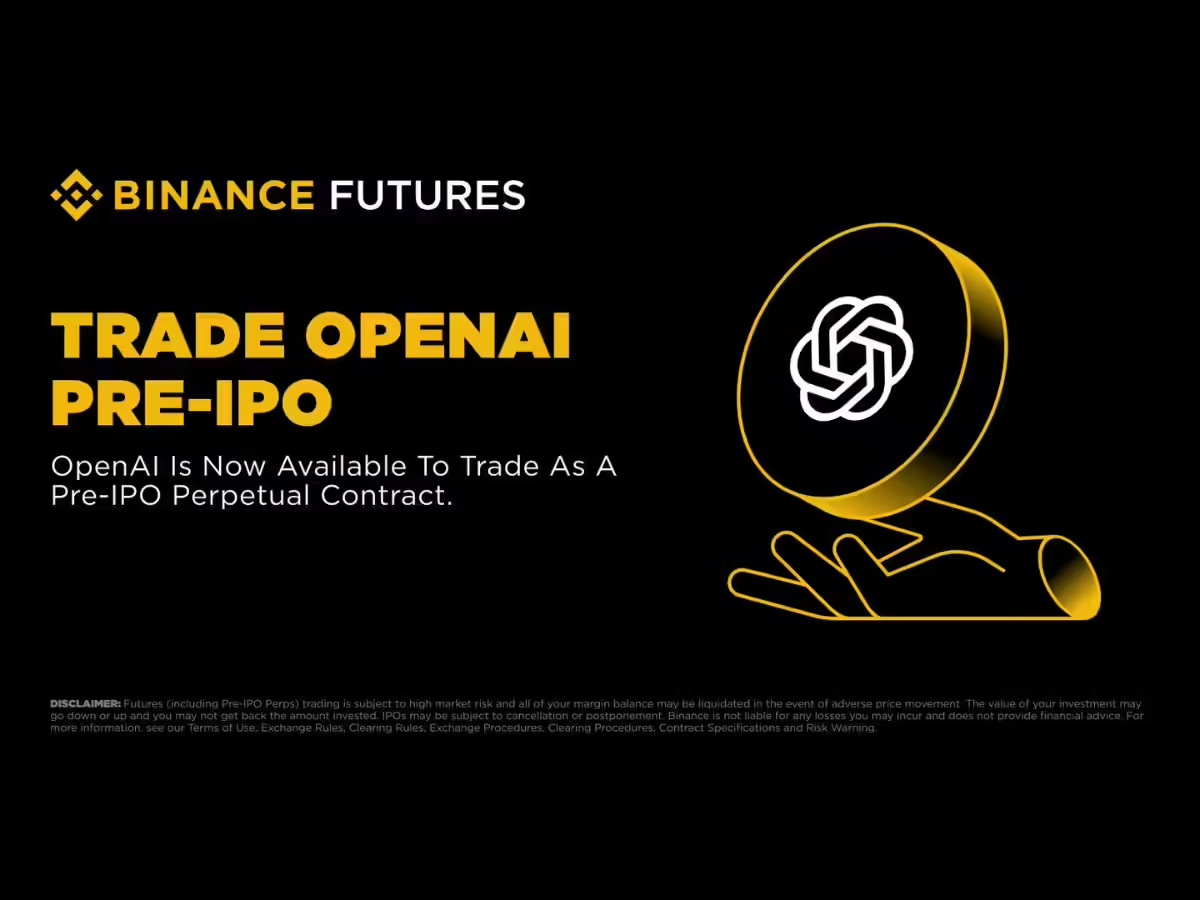
For most investors, buying into the next big technology company has traditionally required patience.Employees, venture capital funds and wealthy investors gained access first. The public arrived years later, often after much of the company’s growth had already been priced in.That model is beginning to change.A new generation of private-share marketplaces, tokenised products and crypto derivatives is allowing investors to gain exposure to companies before they list on a stock exchange. Some platforms sell genuine private shares. Others offer interests in funds that hold those shares. A growing number provide perpetual futures that let traders speculate on private-company valuations around the clock.They may all carry the same company name, but they are not the same investment.Buying private shares can provide real economic ownership, subject to transfer restrictions and company approval. Buying a perpetual contract provides only price exposure. The trader receives no voting rights, dividends or claim on the company’s assets.That distinction has become more important as markets develop around companies such as OpenAI, Anthropic, Stripe, Databricks, Anduril and Shield AI.Private-market activity has historically been difficult to measure. Transactions are negotiated, fragmented and often confidential. No central exchange shows a reliable daily volume figure for every private company.Crypto markets offer a different picture.Before SpaceX entered public markets, synthetic contracts linked to the company generated billions of dollars in notional trading volume across several exchanges. Traders could go long or short, use leverage and manage positions at any hour.The episode showed that private-company expectations could become a liquid global market before ordinary shares began trading.It also exposed the model’s weaknesses.A pre-initial public offering (IPO) contract may rely on an estimated company valuation, an assumed share count or an exchange-designed pricing formula. When the company eventually files official documents, the contract may need to be rebased or settled under rules determined by the platform.A price displayed on a screen can therefore look precise while resting on uncertain assumptions.This was evident in synthetic trading linked to Chinese memory-chip maker CXMT. Before its public listing, a crypto-based contract implied a valuation several times higher than the company’s official offering price.That gap could have reflected investor enthusiasm. It could also have resulted from limited short-side liquidity, leverage, currency differences or confusion about what each contract unit represented.Continuous trading does not guarantee accurate pricing.Traditional platforms such as Forge, Nasdaq Private Market, EquityZen and Hiive provide access to private securities or investment vehicles. These markets tend to be slower and are frequently restricted to accredited or institutional investors. Transactions can require legal reviews, issuer consent and lengthy settlement procedures.Crypto exchanges offer speed and broader access, where permitted. Platforms including Binance, OKX, Gate, Coinbase International, Aster and markets built on Hyperliquid infrastructure have introduced forms of pre-IPO or valuation-based perpetual trading.The appeal is obvious. Investors can trade companies that might otherwise remain inaccessible for years.The risks are equally clear.A company may delay its IPO, raise capital at a lower valuation or not list at all. A derivative market can become illiquid. Funding costs can erode returns. Leverage can liquidate a correct long-term view during a short-term price swing.Tokenised products add another layer of uncertainty. A token described as being backed by private shares may represent a fund interest, a custodial certificate or merely a contractual claim against an issuer.Investors should begin with three questions: What do I legally own? How is the company being valued? What happens if the expected IPO does not occur?Pre-IPO markets are likely to become an important bridge between private capital and always-open digital finance. They could broaden access and improve price discovery.But the market is still young, fragmented and easy to misunderstand.The smartest trade may not be identifying the next famous company to go public. It may be understanding the instrument before buying the name.• Muchena is founder of Proudly Associated and author of ‘Tokenized Trillions’ and ‘Artificial Intelligence Applied’.Business Day
HEATH MUCHENA | How to invest in private companies before they go public
Pre-IPO investing is accessible but investors should understand what they are buying
637 words~3 min read