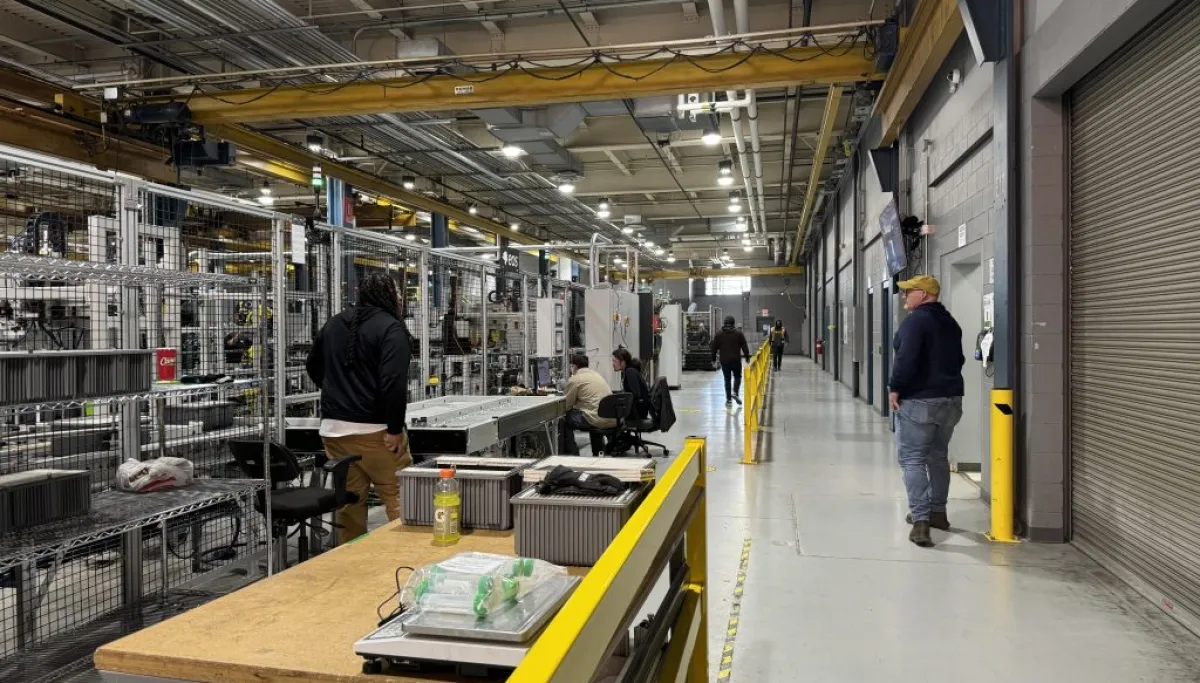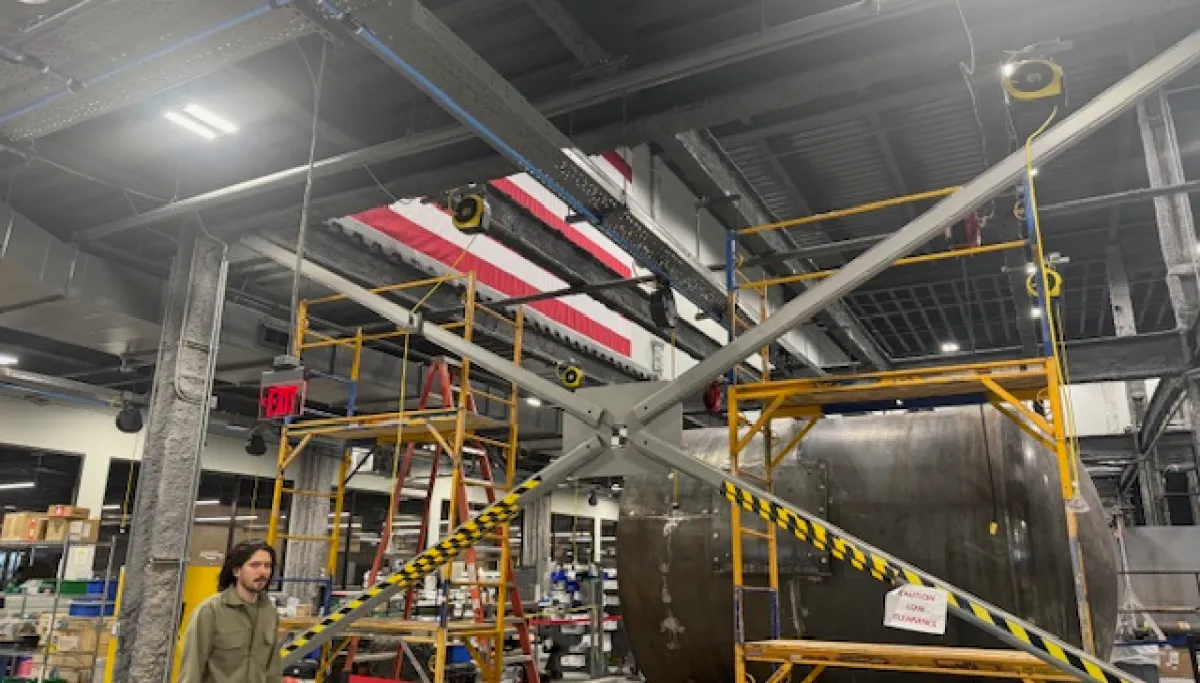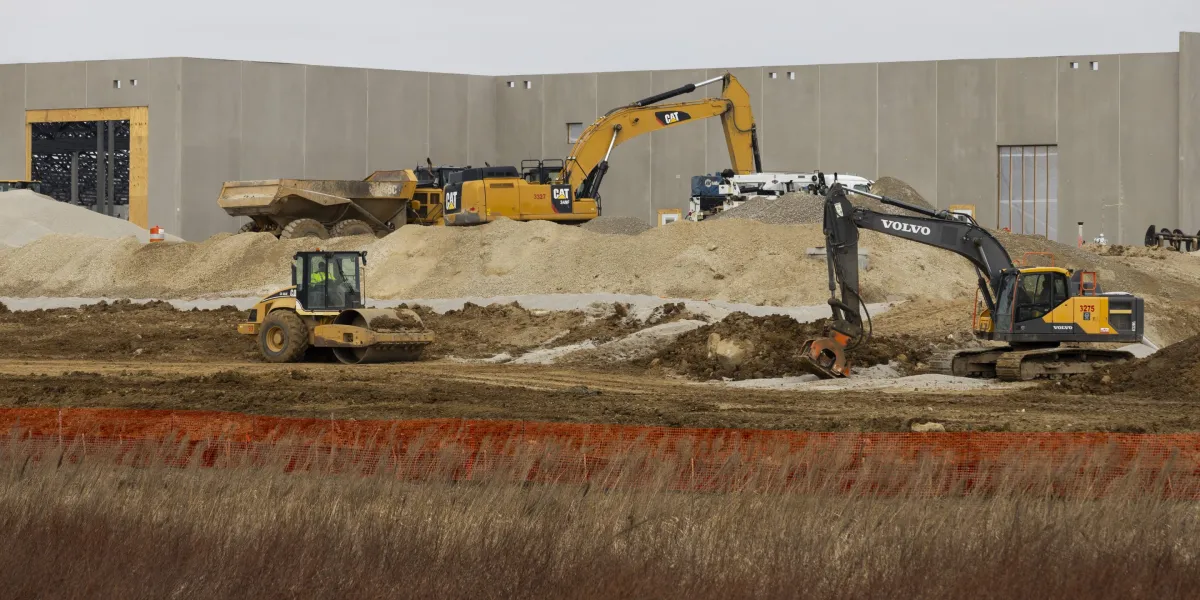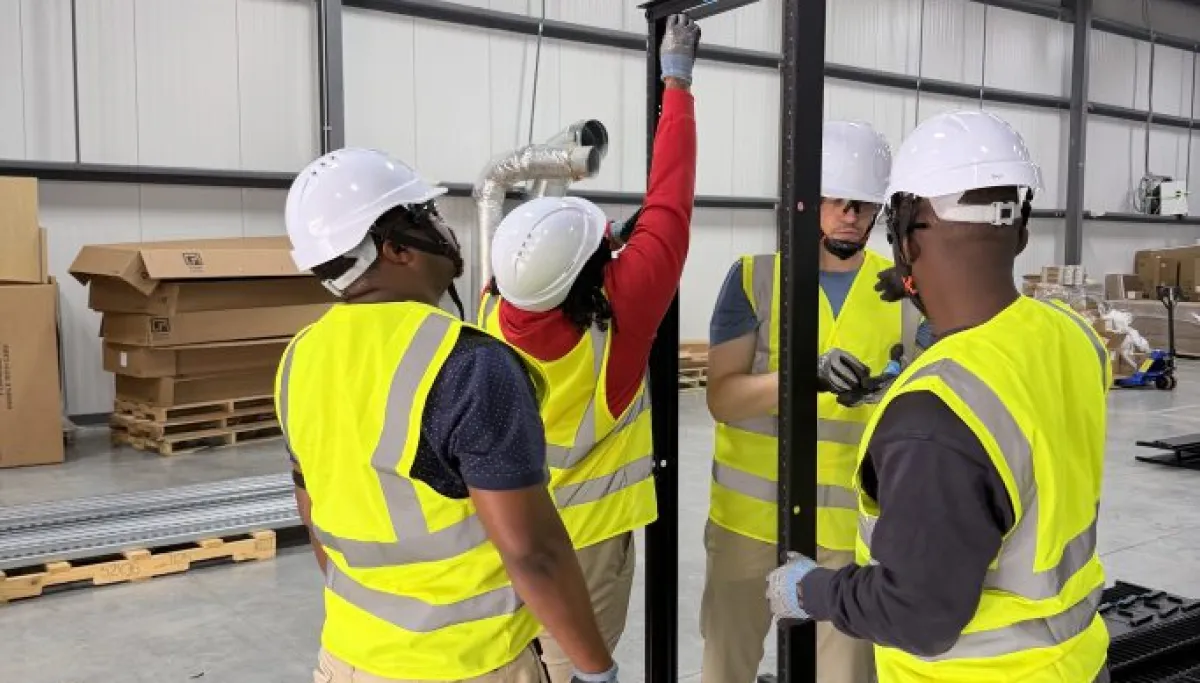
Mike Rowe said that the shift in how Americans think about vocational work has been both quixotic and an overnight success for the man who has been an evangelist for the trades for over 15 years.“Who was it? Hemingway? I forget who said it, but things happen very slowly and then suddenly,” he says of the shift in how Americans think about vocational work and the success of Meta’s launch of America’s Workforce Academy.For a man who has spent nearly two decades trying to change how the country talks about careers in the trades and dignified labor, it’s the perfect description of what is happening right here in Indianapolis, where the first class arrived for Meta’s new nationwide program that is aimed at fast-tracking long-term careers in skilled trades for artificial intelligence infrastructure.
The program is cost-free and supports students while they learn. It also guarantees them a job at the end of the four-week training bootcamp. There is an overwhelming sense of gratitude coming from the first wave of participants. Most of them had worked in jobs in the service industry with no real path toward moving up or prosperity. And it captures the life-changing potential that this program has on them and their communities.Those who have been accepted receive a guaranteed job offer from a Meta contractor partner. And after completion, they are immediately employed and assigned to work on-site at Meta’s data center construction sites.Meta funds training, tuition, airfare, lodging, and even offers a stipend while in training. No degree or prior work experience is needed; only a willingness to learn.SALENA ZITO — REIGNITING THE AMERICAN DREAM: DONALD TRUMP, DAVID MCCORMICK, AND JAMIE DIMON UNVEIL A MASSIVE MANUFACTURING PUSH IN PENNSYLVANIAThe Dirty Jobs host and mikeroweWORKS Foundation CEO doesn’t take credit for launching AWA, a skilled trades initiative that Meta unveiled in June under President and Vice Chairwoman Dina Powell McCormick. Instead, he frames his role as something closer to a witness with a microphone.The 15-year runway that Rowe references is not a rhetorical flourish. His foundation has quietly awarded work-ethic scholarships for over a decade, laying the ideological groundwork for exactly this kind of large-scale, private-sector intervention.What changed with Meta is both speed and scale. The company launched AWA on June 8 and backed it with an initial $115 million first-year investment, described as the largest private-sector commitment to skilled trades with a job guarantee in American history.It is a program that Rowe had wanted for two decades, executed at Meta velocity. “What Meta is doing is reinvigorating entire towns with financial commitments to do what building looks like in 2026,” he explains. “That’s huge, and that’s easy to quantify. You can point to it and you can say, ‘Go team, awesome.’ But what has to happen next, in my opinion, is that the stories of these parishes, towns, and individuals must be told.”He describes his job now as “tapping the country on the shoulder every week” to point out ordinary people who changed their lives by learning a trade and going to work — what he calls “the essential American story that’s got to be told.”Ask Rowe what dignified work actually means, and he pushes back on the conventional answer. Most people, he says, define it by conditions: pay, perks, a 401(k), a lunch break. Those things matter, but they miss the point. “Shouldn’t dignified work really come down to work that blesses someone else? Work that contributes, even if it’s just to your family, but someone other than the worker,” he said. “There has to be something about effort that’s more noble when it builds up the community.”It’s the same philosophy that kept Dirty Jobs on the air for years, he observed. At its core it was a show about people doing unglamorous work that was, without exception, necessary and community-building.That framing matters for AWA specifically because of who it’s designed to reach. Powell McCormick has repeatedly described the program’s target population as people boxed out of the trades not by lack of interest but by lack of a runway: people living paycheck to paycheck who can’t afford to take unpaid time off to train for a job that may or may not materialize. SALENA ZITO: HOW MIKE ROWE’S ‘BUILD FREEDOM’ AIMS TO RESTORE THE DIGNITY OF AMERICAN WORK“This is an opportunity for people like Uber drivers, waitresses, grocery store clerks, and anyone out there who is living paycheck to paycheck,” she said at the program’s launch, framing AWA as the answer to exactly the barriers that Rowe describes.Rowe sees the visible gratitude in the workers themselves. He traces it back to the “sweat pledge,” a 12-statement creed his foundation has attached to its scholarships for 15 years. Its opening line, he says, is the whole philosophy in miniature: “I believe I have won the greatest lottery of all time. I’m alive. I walked the Earth. I live in America. Above all things, I’m grateful.”For Rowe, gratitude isn’t just a byproduct of getting a good job — it’s a precondition that makes the whole enterprise work. “In the end, if you’re upright and walking and living in this country and not feeling fundamentally grateful, then that’s a choice that you’ve made,” he says, adding that “it’s very difficult to feel sorry for yourself when your default position is gratitude.”Interviews with three AWA students reflect that sentiment.Until recently, Lanyia Brooks worked as a custodian in a data center, where she spent her days maintaining the facility while watching tech professionals build the infrastructure around her.