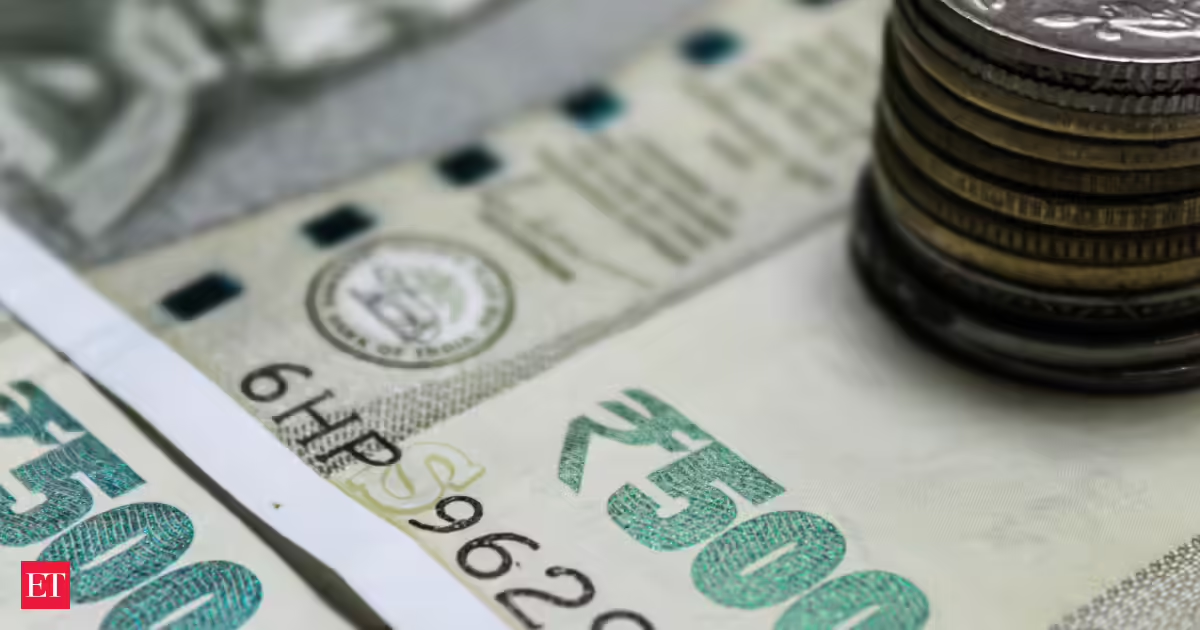
The Reserve Bank of India’s currency printing arm has invited proposals to make polymer based banknotes, ET reported last week. The polymer option can be more durable and secure, with environmental and cost benefits. Every year, India destroys tens of billions of notes worn down by use, and thousands of fake Rs 500 notes enter the banking system. Polymer has helped several countries fight these battles, and could do the same for India.India destroys billions of notes every yearIn the past decade, India has junked notes worth nearly Rs 50 trillion. Counterfeit notes remain a concernThe Rs 500 denomination continues to account for the overwhelming majority of fake notes.A longer lifespan means fewer replacements, lower printing costs and reduced waste. Key milestones in India's journey towards polymer~1988Australia: World's first polymer note released ($10)1996Australia becomes first country to convert all denominations to polymer~1990s-2000sVietnam, Malaysia, Romania, NZ, Singapore among nations to adopt polymer notes2011-2013Canada rolls out all denominations in phases2012India starts first polymer pilot with Rs 10 notes in select cities; project shelved due to ATM incompatibility2016-2021UK rolls out all denominations in phases2026India's notes printer invites proposals for polymer shift
Economics of plastic notes: Why RBI is considering polymer banknotes
India's currency printing arm is exploring polymer banknotes for future use. These notes offer enhanced durability and security features for the nation. The country destroys billions of worn-out notes annually due to extensive use. Counterfeit currency, particularly Rs 500 notes, remains a significant concern for authorities. Polymer banknotes could help India combat these persistent issues effectively.
188 words~1 min read