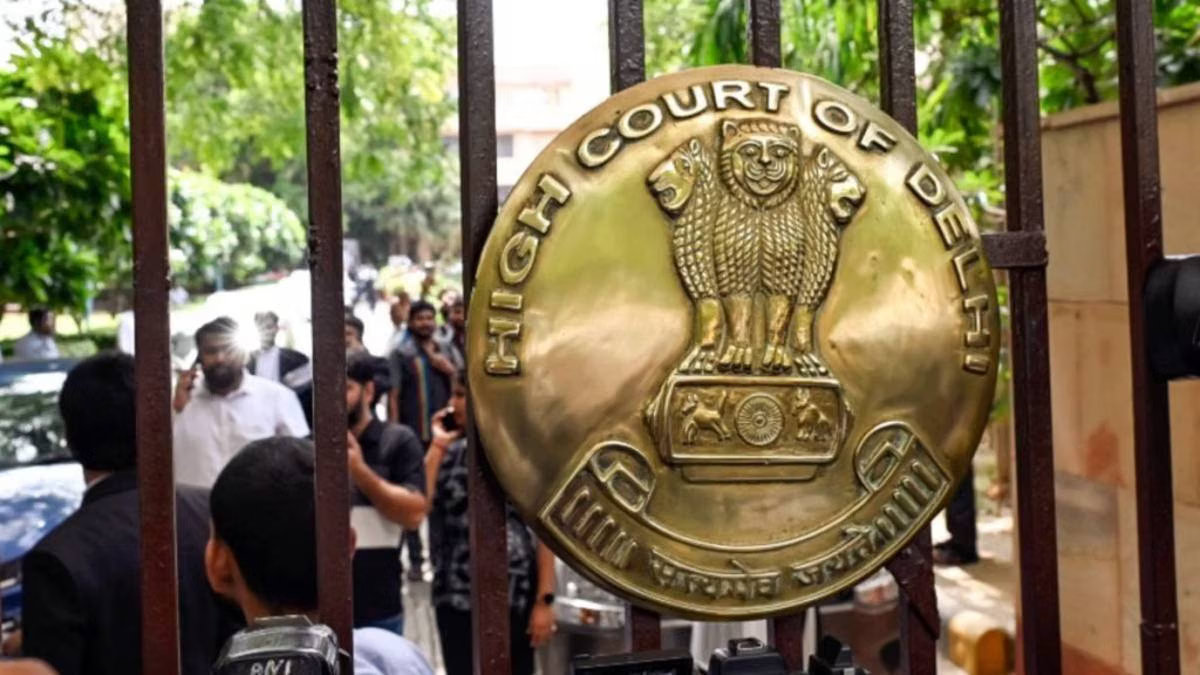
SynopsisDelhi High Court established a right to be forgotten, flowing from Article 21. This ruling allows de-indexing judicial records and masking personal identifiers. However, exceptions exist for serious offenses and overriding public interest concerns. Defining public interest standards is crucial for this evolving digital right. Clear government guidelines are essential for India's right to be forgotten regime.Last month, Delhi High Court took a major step in shaping India's evolving 'right to be forgotten' jurisprudence. By holding that the right flows from the Constitution's Article 21's guarantee of privacy, the judgment establishes a framework for de-indexing judicial records and masking personal identifiers in publicly accessible court records. The court recognised the perpetual availability of digital records can cause lasting reputational harm. Relief may be unavailable in cases involving offences against women or children, breaches of public trust, or other matters where overriding public interest justifies continued access. The right can't become a means of rewriting history or shielding information relevant to public accountability.But now comes a more difficult question: who determines what constitutes a legitimate public interest, and by what standards? This assumes particular importance in an era of rapid digitalisation, where personal information can be replicated, indexed and analysed at scale. India isn't alone in being concerned. The EU recognises a version of the right to be forgotten under GDPR, while courts in Britain have acknowledged delisting rights against search engines, subject to a careful balancing of privacy and public interest.GoI, in consultation with stakeholders, should establish clear standards governing masking and de-indexing of publicly accessible information. Such clarity is essential as personal data is generated and shared at unprecedented volumes, and advances in AI enable information to be collected, processed and repurposed in ways earlier unimaginable. Success of India's right-to-be-forgotten regime will depend not on whether the right exists but on how carefully its limits are defined. ...moreElevate your knowledge and leadership skills at a cost cheaper than your daily tea.Subscribe Now
How to remember to judiciously forget - The Economic Times
Delhi High Court established a right to be forgotten, flowing from Article 21. This ruling allows de-indexing judicial records and masking personal identifiers. However, exceptions exist for serious offenses and overriding public interest concerns. Defining public interest standards is crucial for this evolving digital right. Clear government guidelines are essential for India's right to be forgotten regime.
323 words~1 min read