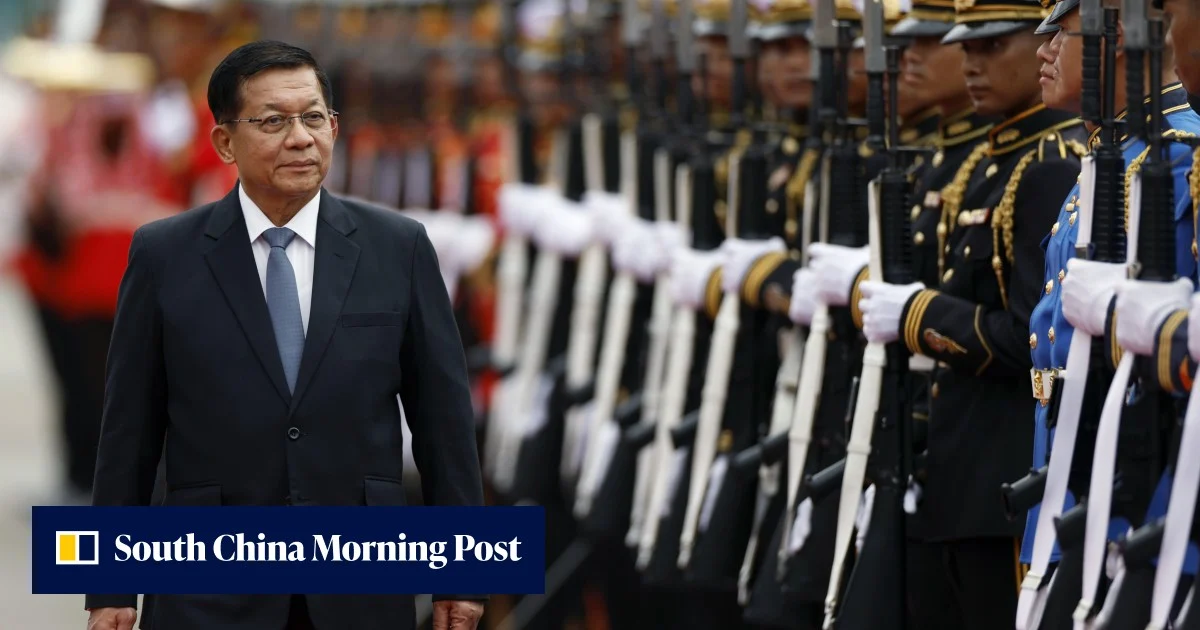
Last month, Myanmar’s new military-backed government rejected a request from the Philippines’ Foreign Secretary Ma. Theresa Lazaro to meet with the country’s detained civilian leader Aung San Suu Kyi, citing her prison sentence. Days later, Min Aung Hlaing, who led the 2021 coup and anointed himself president in April, traveled to Laos on an official bilateral visit, his first to an Association of Southeast Asian Nations (ASEAN) member state since the coup.
Although ASEAN itself has not officially recognized the new government, nor accepted the result of the election held in December and January, it still structures every visit and appointment around the notion that the junta is Myanmar’s sole government.
That is usually interpreted as ASEAN being cautious, compromised, or slow to react to the situation on the ground inside Myanmar. It instead reflects a diplomatic practice that recognizes one government per territory. Instead of asking whether ASEAN should recognize the military regime, or which of Myanmar’s competing authorities it might recognize instead, a more useful question may be whether looking for one government to recognize is the best or only way to think about the situation.