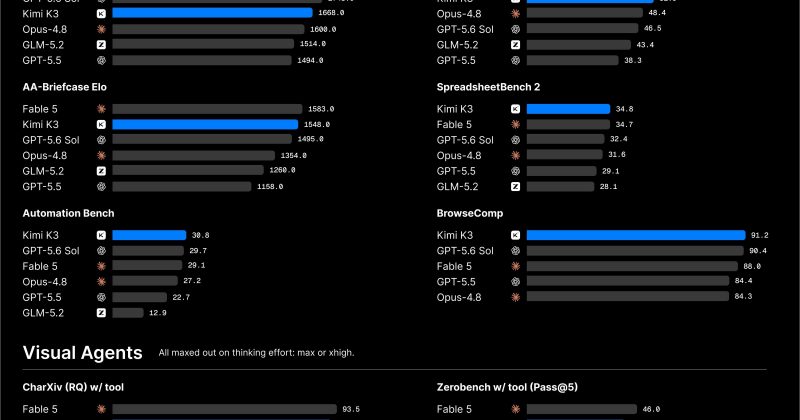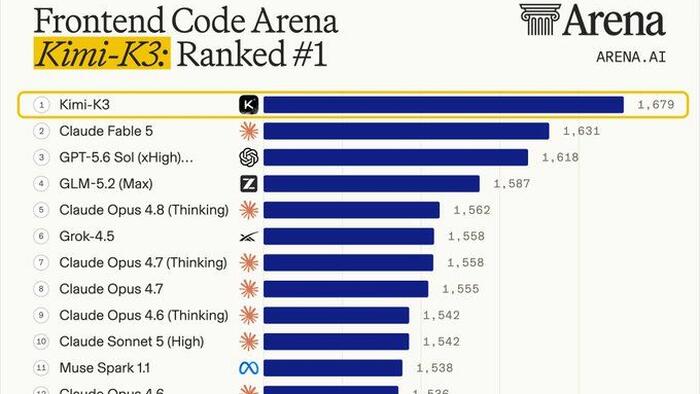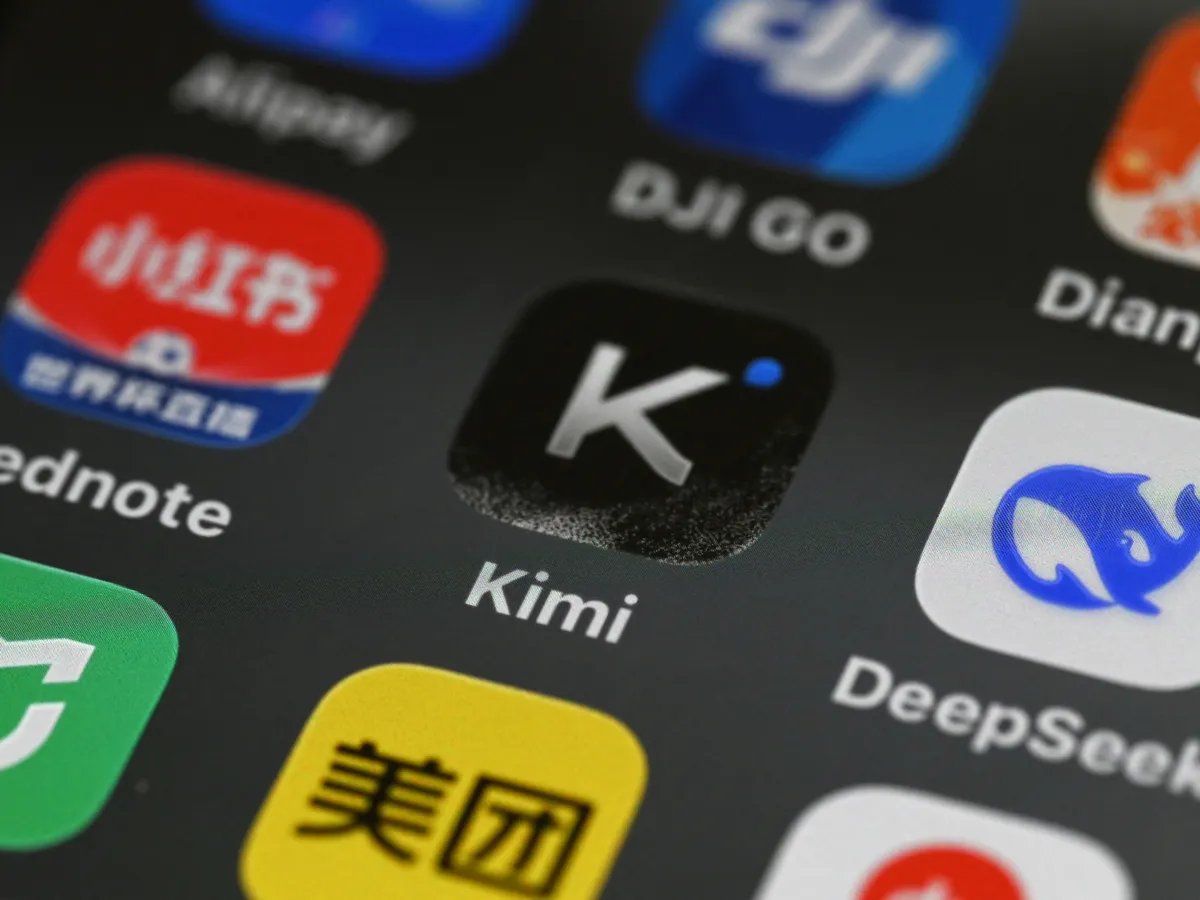
Skip to Content News Archives Economy Energy Oil & Gas Renewables Electric Vehicles Mining Commodities Agriculture Real Estate Mortgages Mortgage Rates Finance Banking Insurance Fintech Cryptocurrency Work Wealth Smart Money Wealth Management Investor Personal Finance Family Finance Retirement Taxes High Net Worth FP Comment Executive Women Puzzmo Newsletters Financial Times Business Essentials More Innovation Information Technology FP500 Podcasts Small Business Lives Told Tails Told Shopping Financial Post Store Obituaries Place a Notice Advertising Advertising With Us Advertising Solutions Postmedia Ad Manager Sponsorship Requests Classifieds Place a Classifieds ad Working Profile Settings My Subscriptions Saved Articles My Offers Newsletters Customer Service FAQ News Economy Energy Mining Real Estate Finance Work Wealth Investor FP Comment Executive Women Puzzmo Newsletters Financial Times Business Essentials HomeInnovationWhat to know about the Chinese AI model that's roiling markets and could threaten U.S. dominanceCheaper and more efficient Chinese AI models are quickly catching up to those offered by U.S. companiesLast updated 0 minutes ago You can save this article by registering for free here. Or sign-in if you have an account.The Moonshot AI Kimi app is seen on a mobile phone screen in Beijing on July 17, 2026. Photo by GREG BAKER/AFP via Getty Images filesChinese startup Moonshot AI Pte Ltd. last Friday released its Kimi K3 model, which it said is the world’s largest open-weight model and outperforms the United States‘ most advanced AI offerings on certain benchmarks, signalling that cheaper and more efficient Chinese AI models are quickly catching up to those offered by U.S. companies such as OpenAI Group PBC and Anthropic PBC.Subscribe now to read the latest news in your city and across Canada.Exclusive articles from Barbara Shecter, Joe O'Connor, Gabriel Friedman, and others.Daily content from Financial Times, the world's leading global business publication.Unlimited online access to read articles from Financial Post, National Post and 15 news sites across Canada with one account.National Post ePaper, an electronic replica of the print edition to view on any device, share and comment on.Daily puzzles, including the New York Times Crossword.Subscribe now to read the latest news in your city and across Canada.Exclusive articles from Barbara Shecter, Joe O'Connor, Gabriel Friedman and others.Daily content from Financial Times, the world's leading global business publication.Unlimited online access to read articles from Financial Post, National Post and 15 news sites across Canada with one account.National Post ePaper, an electronic replica of the print edition to view on any device, share and comment on.Daily puzzles, including the New York Times Crossword.Create an account or sign in to continue with your reading experience.Access articles from across Canada with one account.Share your thoughts and join the conversation in the comments.Enjoy additional articles per month.Get email updates from your favourite authors.Create an account or sign in to continue with your reading experience.Access articles from across Canada with one accountShare your thoughts and join the conversation in the commentsEnjoy additional articles per monthGet email updates from your favourite authorsSign In or Create an AccountorHere’s what you need to know about Kimi K3, Chinese AI models and what they mean for markets and Canadian businesses.Get the latest headlines, breaking news and columns.By signing up you consent to receive the above newsletter from Postmedia Network Inc.A welcome email is on its way. If you don't see it, please check your junk folder.The next issue of Top Stories will soon be in your inbox.We encountered an issue signing you up. Please try againOpen-weight AI refers to models that can be downloaded and customized by users to accomplish specific tasks and they have gained traction as companies seek lower-cost alternatives to OpenAI and Anthropic’s closed-source models.The top five AI models favoured by developers are open-weight ones from Chinese players, including startups DeepSeek and Knowledge Atlas Technology Joint Stock Co. Ltd. (Z.ai) and tech giant Tencent Holdings Ltd., according to OpenRouter Inc. data, with these models already winning the praise of some Silicon Valley insiders.“Many smart people (and) AI insiders are saying (Z.ai’s) GLM-5.2 is the first Chinese AI model to match and often beat the American big lab public AI models with no compromises,” venture capitalist Marc Andreessen said on X last month.Many smart people/AI insiders are saying GLM-5.2 is the first Chinese AI model to match and often beat the American big lab public AI models with no compromises. Incredible timing given current events.— Marc Andreessen 🇺🇸 (@pmarca) June 27, 2026Thinking Machines Lab Inc., a Silicon Valley startup founded by OpenAI’s former chief technology officer Mira Murati, is among the few Western challengers to China’s offerings, releasing an open-weight AI model last week. Meta Platforms Inc. last year abandoned its open-weight AI strategy to focus on building its proprietary AI model called Muse Spark.Beijing-based Moonshot said K3 still lags OpenAI’s and Anthropic’s top systems in overall performance, but surpasses their second-best models — GPT 5.5 and Claude Opus 4.8, respectively — on coding, agent and other benchmarks.It also said K3 is the world’s biggest open-weight model with 2.8 trillion parameters, which are internal variables that a system learns during training and uses to generate outputs.OpenAI and Anthropic have not publicly shared parameter counts for their frontier models.Elon Musk said on X that the Grok 4.6 model, developed by SpaceXAI, will finish training this week and have two trillion parameters. He said the K3 model is “impressive.”Moonshot’s assessments are backed up by external research, Andrew Forde, head of AI in Canada at KPMG LLP, said.“K3 leads today and not only on Moonshot’s own numbers,” he said.He said independent leaderboards rank the model first in front-end coding and fourth overall globally, which is the highest an open-weight model has ever scored.But Forde said the AI leaderboards are constantly changing.“I would treat (K3’s) leadership as a snapshot (and) not as an entrenched position,” he said.The growing capabilities and popularity of Chinese AI models have Washington and U.S. AI giants on edge.Moonshot’s release showed that China can create leading-edge AI models nearly on par with the U.S.’s best, but at a 40 per cent lower cost despite U.S. export controls on advanced chips.The Donald Trump administration reportedly renewed its efforts to ban Chinese AI models after K3 was released, according to Axios. On Tuesday, U.S. Treasury Secretary Scott Bessent said the government is investigating whether Chinese models have been distilled from U.S. ones and said the U.S. could sanction China if it finds “IP theft.”OpenAI’s head of strategic futures, Dean Ball, on Friday said on X that an open-weight-dominant world could lead to “full AI communism” and that the U.S. government’s best bet is to create “large amounts of regulatory risk around the use of open-weight Chinese models.”Some observations on Kimi: 1. It's a very good model! I don't think its performance can be explained away by distillation or anything like that. In agentic coding sessions, it seems pretty much on par with the best public models of Q1 2026. In my fairly limited use, it also…— Dean W. Ball (@deanwball) July 17, 2026Others, such as Anthropic chief executive Dario Amodei, have said there could be cybersecurity risks with open AI models.Forde said K3, which is priced at US$15 per million output tokens, is expensive by Chinese standards and equal to one-third of the top American equivalent, which costs around US$50 per million output tokens.“Chinese labs are no longer competing on price alone,” he said. “Every credible release (by China) builds enterprise confidence. That is what erodes the U.S. lead in adoption.”Moonshot’s K3 announcement triggered a stock selloff on Friday that hit some of AI’s biggest names while boosting Chinese semiconductor stocks, intensifying investor worries over the AI buildout’s ballooning costs and its ability to deliver returns.The PHLX Semiconductor Index, which tracks the 30 largest U.S. semiconductor companies, including Nvidia Corp., Advanced Micro Devices Inc. and Micron Technology Inc., plunged 10 per cent last week, which was the biggest drop in over a year.So far, Canadian businesses haven’t yet shifted to adopting open-weight alternatives in meaningful numbers, though adoption will likely grow the fastest for non-sensitive workloads where the “economics are hard to ignore,” Forde said.But he said companies are evaluating AI models on cost and other factors such as regulatory risk and data governance issues.The larger effect of K3’s release, Forde said, is that it forces Canadian executives to confront whether systems can take advantage of the next model breakthrough wherever it comes from.“AI capability that recently required racks of specialized infrastructure can increasingly run on a machine beside your desk,” he said. “That changes the economics of AI. It gives enterprises new options for privacy, sovereignty and control, which will affect how model choices are made.” Join the Conversation This website uses cookies to personalize your content (including ads), and allows us to analyze our traffic. Read more about cookies here. By continuing to use our site, you agree to our Terms of Use and Privacy Policy.
What to know about the Chinese AI model that's roiling markets and could threaten U.S. dominance
Here's what you need to know about Kimi K3, Chinese AI models and what they mean for markets and Canadian businesses. Find out more.
1,468 words~7 min read