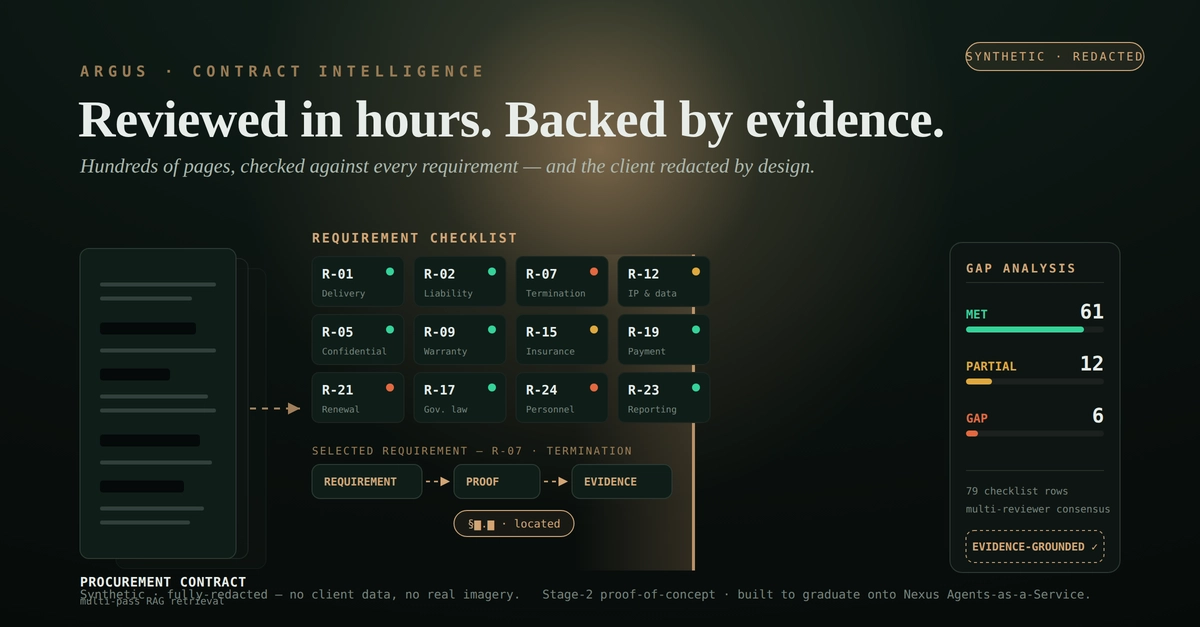
Premiere of The Teardown — the show where we take one real product and open it up: what it does, how it actually runs, and where it honestly stands today. No demos-that-only-work-on-stage, no outcome we can't point at. First up: Argus.
Reviewing a defense procurement contract used to be a job measured in weeks. Argus does it in hours — and, more importantly, it can show you why it reached every conclusion it reached. "Hours, not weeks" is the headline. "Every verdict backed by evidence" is the part that makes the headline safe to believe.
This is the first episode of The Teardown, so the format is worth stating once: we pick a real product, we walk through the problem it solves, the crew that solves it, and the discipline that keeps it honest — then we tell you plainly where it stands, badges and redactions included. No product gets torn down here on the strength of a slide. If we can't point at the mechanism, it doesn't air.
The problem: a contract nobody has time to read the way it deserves
Start with the artifact itself. A defense procurement contract runs to hundreds of pages — dense, cross-referenced, and unforgiving. Buried inside it is a set of obligations the delivered work has to satisfy, and in the engagement Argus was built around, those obligations came to a structured requirement checklist of 79 rows — each row a specific thing the contract demands.