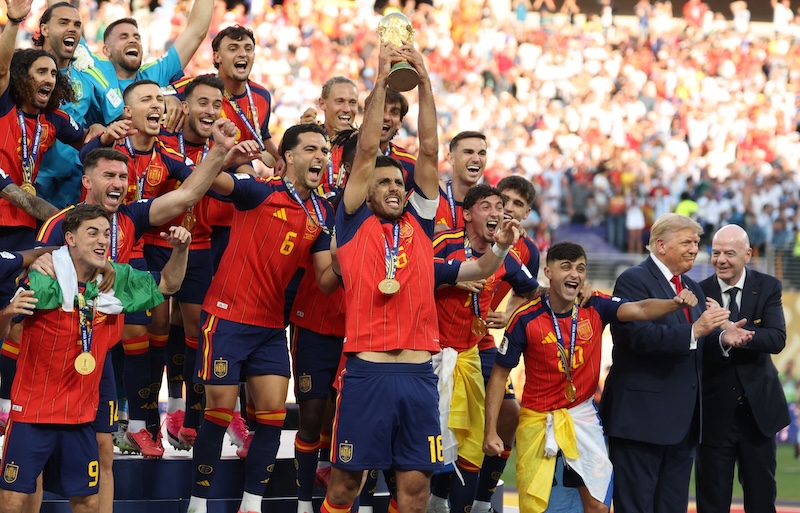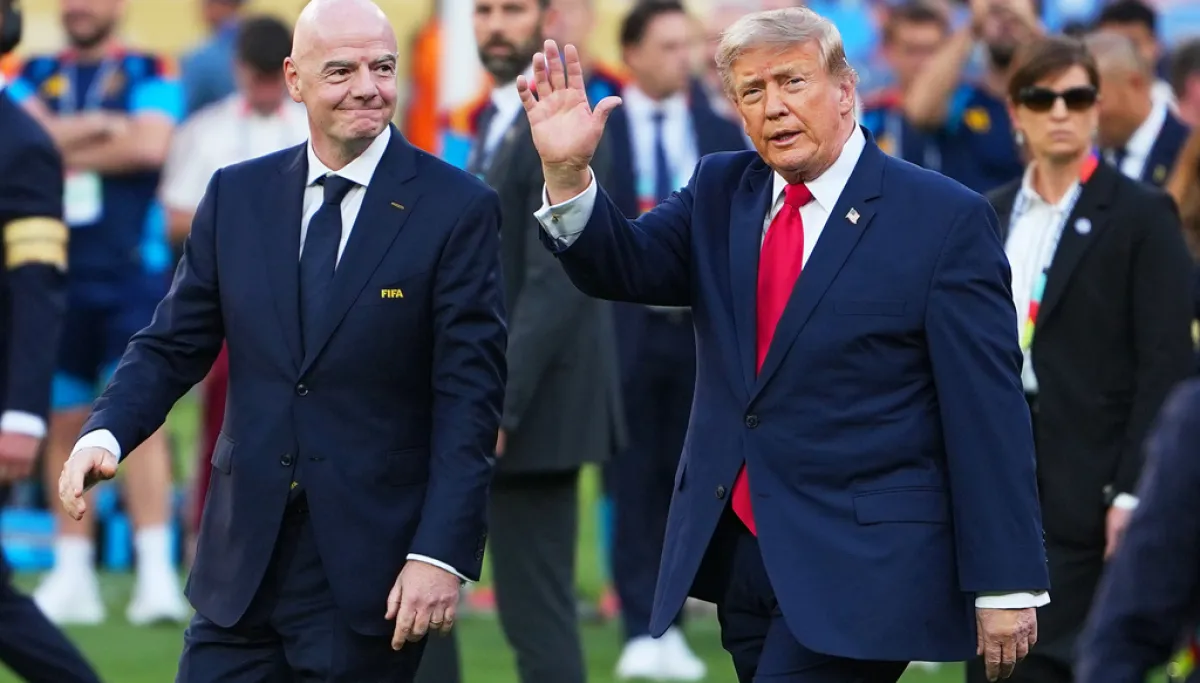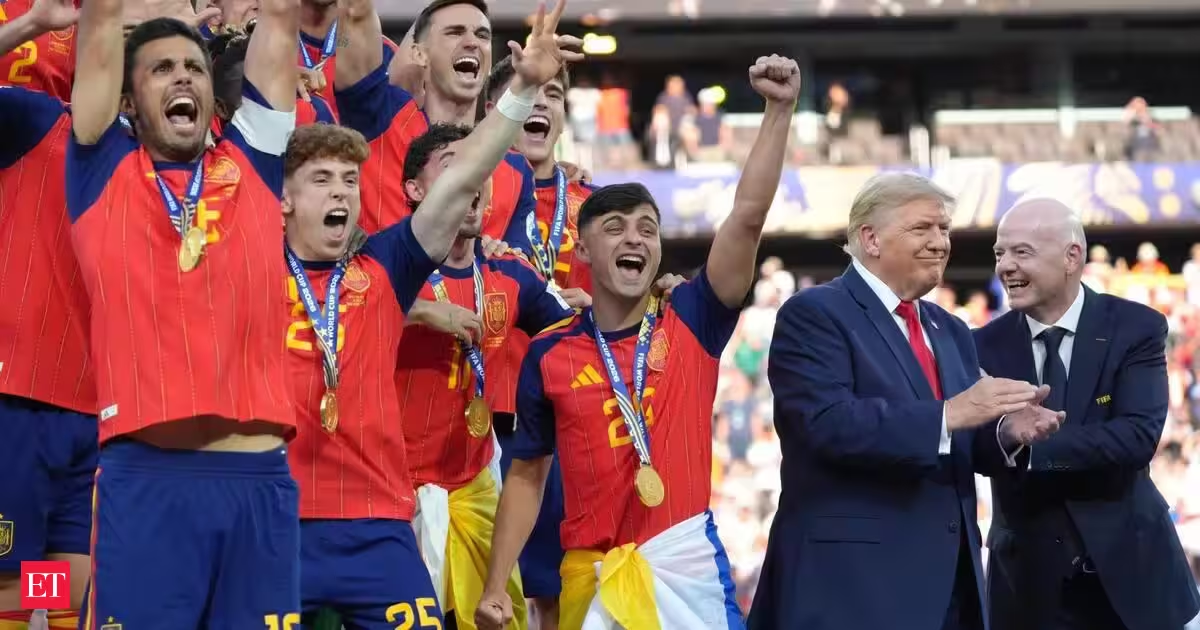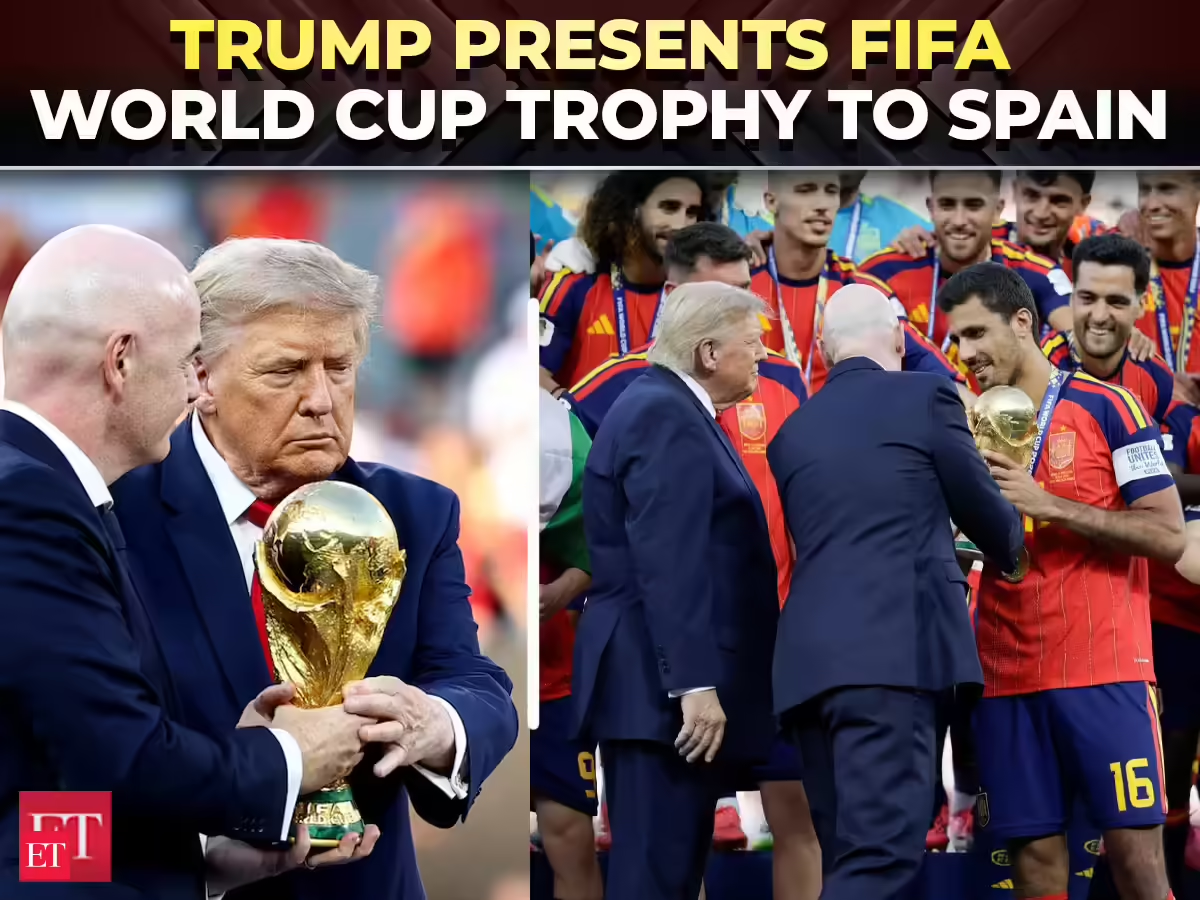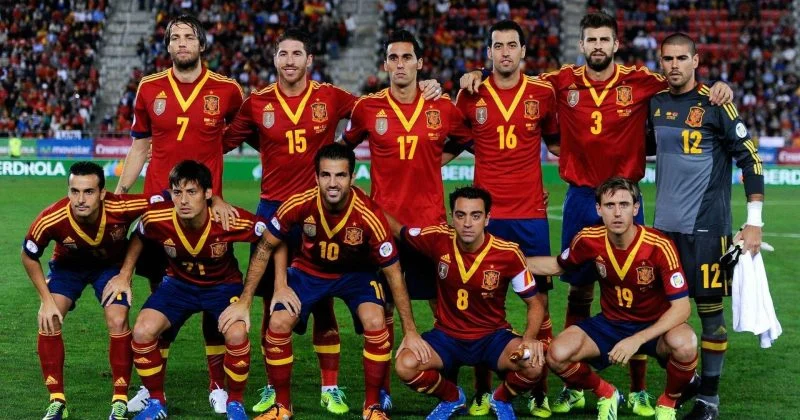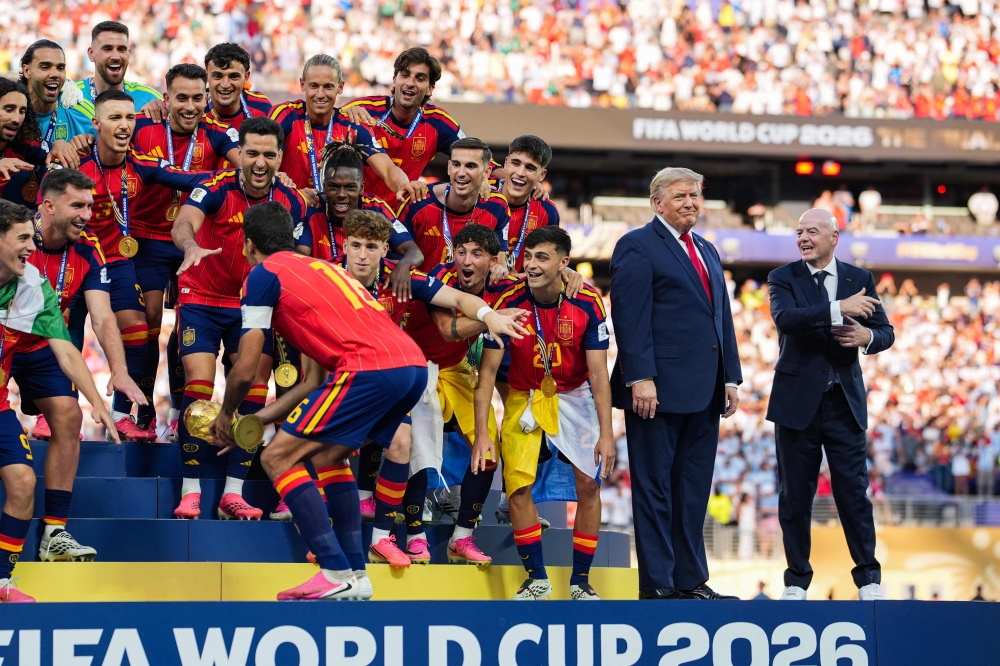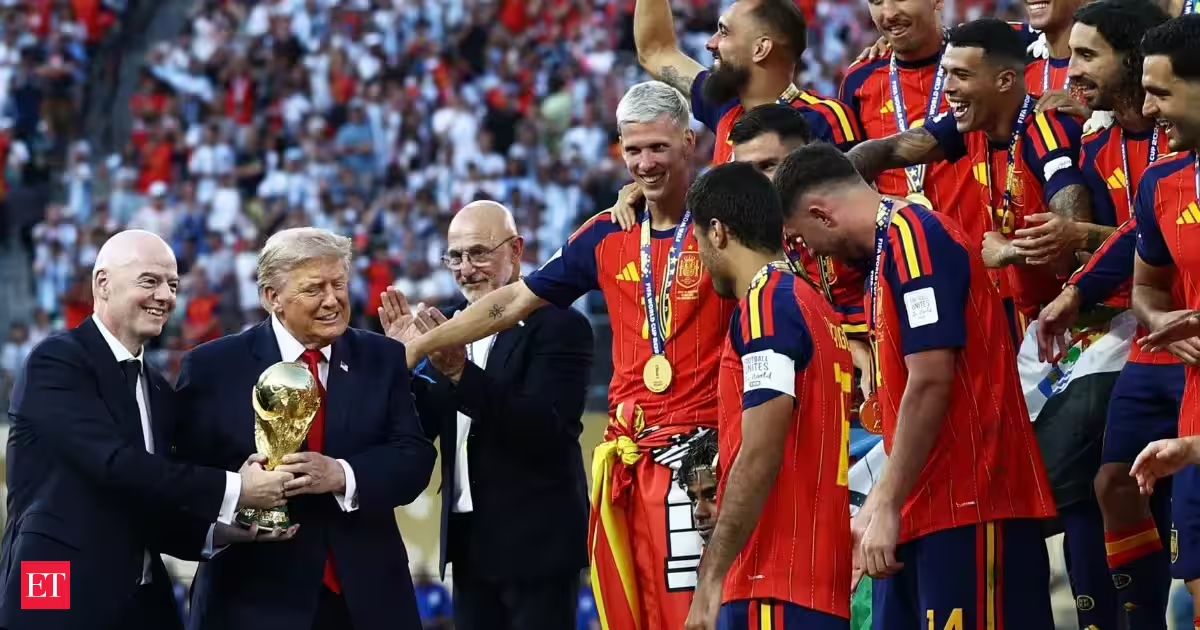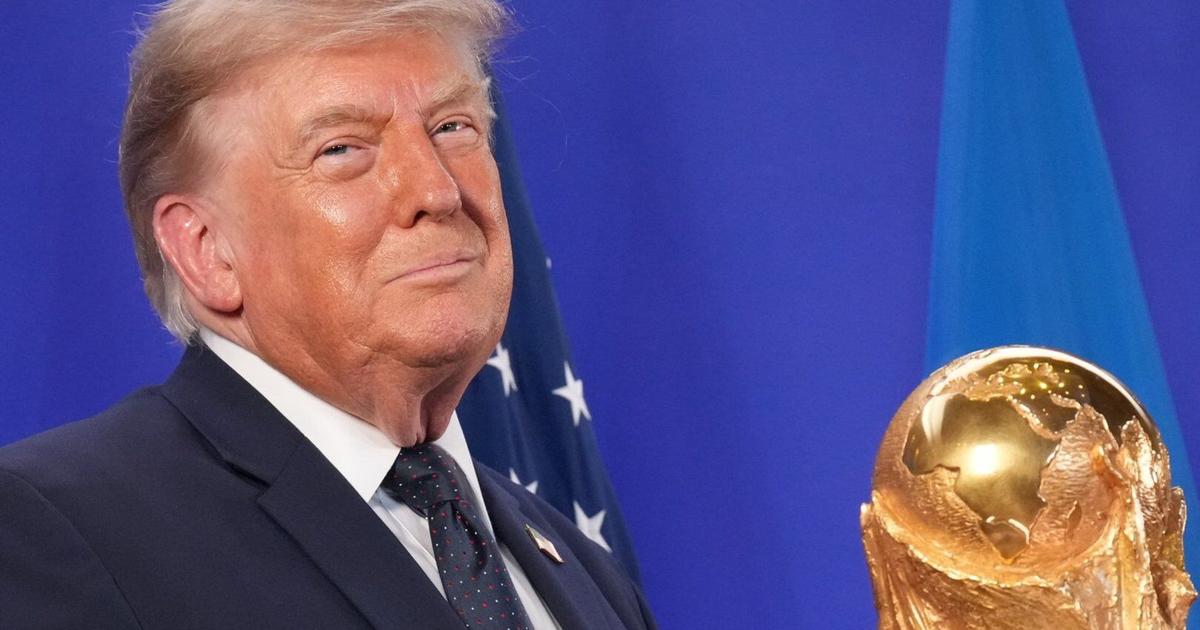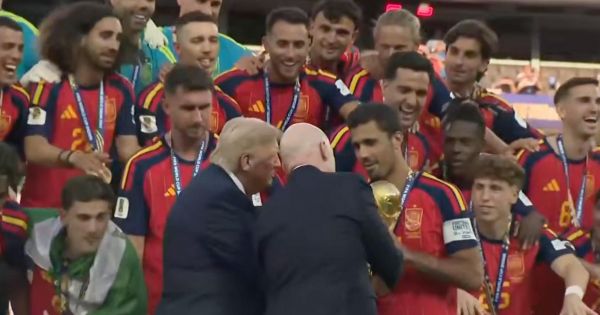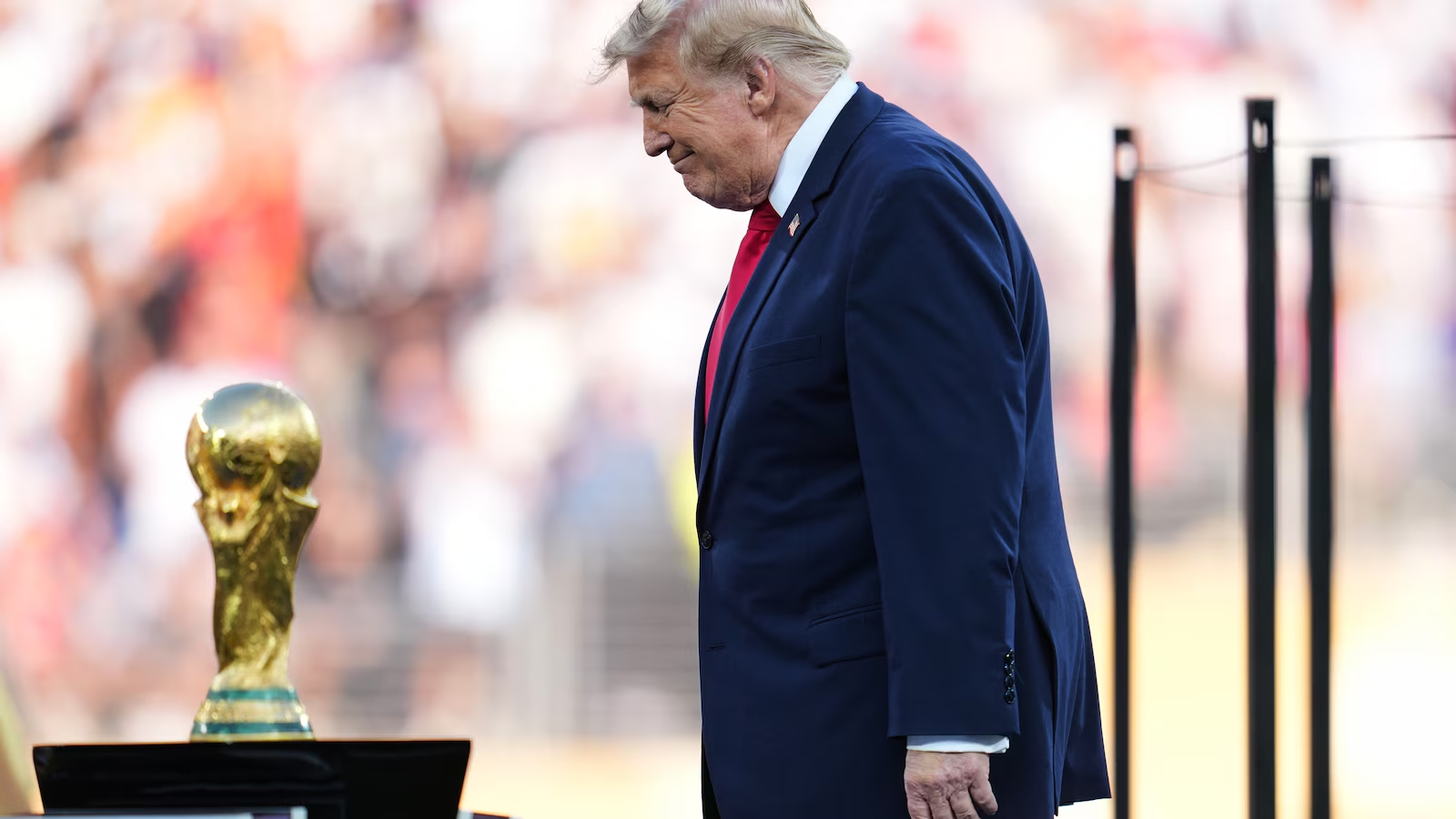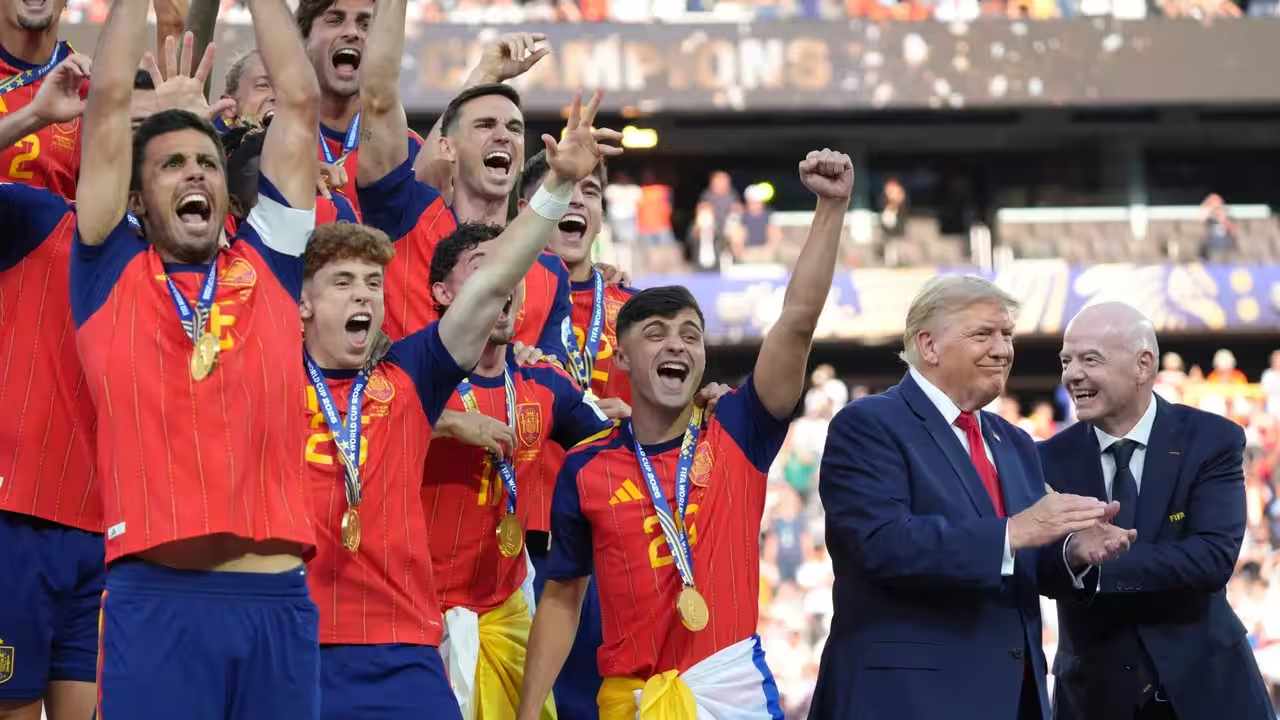
Spain players, from left, cheer alongside President Donald Trump and FIFA President Gianni Infantino at the conclusion of the World Cup championship final soccer match between Spain and Argentina in East Rutherford, N.J., Sunday, July 19, 2026. (AP Photo/Jacquelyn Martin)Spain won the 2026 FIFA World Cup on Sunday, beating Argentina 1-0 after extra time in New Jersey, with Ferran Torres scoring the decisive goal in the 106th minute. It was Spain’s second men’s World Cup title, their first since 2010, and it came in the United States, with Donald Trump on the presentation stage alongside FIFA president Gianni Infantino.Before the tournament began, there was already a secondary political question around the final: how prominently would Trump place himself in football’s biggest global event? The answer came during the trophy ceremony, when Spain’s players were trying to celebrate and Trump remained on stage near the trophy, creating an awkward scene as Mikel Merino broke into the YMCA dance and Infantino eventually guided the US president away. There are, of course, worse Trump interventions than a photobomb. Iran would probably agree.The moment became more pointed because Spain were not just another visiting champion collecting a trophy on American soil. They were the national team of one of Trump’s most difficult European allies, a country whose government has clashed with Washington over Palestine, Gaza, Iran and NATO defence spending. Then Ferran Torres, the match-winner, sharpened the symbolism further during Spain’s celebrations in Madrid by wearing a red cap that read: “Make Spain Great Again.”That joke needs context. Spain is led by Pedro Sánchez, the country’s Socialist prime minister, who has been in power since 2018 and whose government has taken one of Europe’s most assertive pro-Palestinian positions. In May 2024, Spain recognised Palestine as a state, with Sánchez saying the decision was based on “peace, justice and coherence”. He also said he wanted Spaniards to be able to say, “with their heads held high and their consciences clear,” that they were on the right side of history.Spain later went beyond symbolic recognition. As the war in Gaza continued, Sánchez’s government moved to consolidate an arms embargo on Israel, restrict aircraft carrying military material to Israel from Spanish airspace, stop ships carrying fuel for Israeli armed forces from using Spanish ports, and ban imports from illegal Israeli settlements in occupied Palestinian territories. Washington responded sharply. A US State Department spokesperson said Spain, a NATO member, was potentially limiting American operations and warned that such measures would “embolden terrorists”.That is why Spain’s World Cup win carried political meaning in Gaza and the West Bank. Palestinian fans did not embrace Spain simply because of football aesthetics. They did so because Spain had become one of the few major Western countries whose government had publicly confronted Israel over Gaza and backed Palestinian statehood. Before the final, one Gaza fan told Al Jazeera: “I’m completely behind Spain because they stood up for Palestine.” After the final, Palestinians celebrated Spain’s victory as the win of a team they felt had recognised them.Lamine Yamal made that connection even more visible. In May, during Barcelona’s La Liga title parade, the Spanish teenager waved a Palestinian flag from an open-top bus. That moment travelled far beyond club football because Yamal is already a symbol of modern Spain: born in Catalonia to a Moroccan father and a mother from Equatorial Guinea, raised in the working-class Rocafonda neighbourhood, and now one of the faces of the national team. When Israeli officials criticised him, Sánchez defended him, reportedly calling the gesture another reason to be proud of him.This is where Spain’s win becomes uncomfortable for Trump’s political imagination. Trumpism has built much of its appeal around borders, grievance, suspicion of migration, performative nationalism and the idea that greatness must be recovered from outsiders or enemies within. Spain’s World Cup-winning side told a different national story. Yamal, Nico Williams, Rodri, Pau Cubarsí and Ferran Torres represented a team shaped by migration, regional complexity, youth development and collective football. Ferran’s “Make Spain Great Again” cap borrowed Trump’s visual language, but the greatness it celebrated came from a country and a team that looked nothing like MAGA’s fantasy of nationhood.FILE - FC Barcelona player Lamine Yamal holds a Palestinian flag as he celebrates with his team atop a bus after winning the Spanish La Liga title in Barcelona, Spain, May 11, 2026. (AP Photo, File)The timing was also inconvenient . Trump had already attacked Spain over NATO spending, calling the country “a wasted cause” and a “terrible partner in NATO” because Sánchez refused to commit to Trump’s demand that allies spend 5% of GDP on defence. Trump said, “I don’t want anything to do with Spain,” and demanded: “Cut off all trade with Spain.” He was also angry that Spain had denied the US use of Spanish bases and airspace for operations connected to the war with Iran. In other words, Spain arrived at the World Cup final not merely as Argentina’s opponent, but as the ally that had spent months saying no to Trump.The tournament had already shown how far Trump was willing to insert politics into football. After US striker Folarin Balogun was sent off against Bosnia and Herzegovina, Trump pushed FIFA to review the suspension. FIFA deferred Balogun’s one-match ban, allowing him to play against Belgium. The US still lost 4-1. Political pressure had changed the administrative outcome, but it could not change the football.Spain’s victory therefore landed as both a sporting result and a political embarrassment. Trump got the ceremony, the camera angle and the chance to stand beside the trophy. Spain got the actual trophy, the winning goal, the Palestinian celebrations, the Madrid parade and the red cap that turned his own slogan against him.For Trump, the final image was supposed to be American spectacle: the World Cup on US soil, the president on stage, the world watching. Instead, the story ended with Spain having a joke at his expense.
Why Spain's World Cup win will not thrill Donald Trump
Spain won the 2026 FIFA World Cup on Sunday, beating Argentina 1-0 after extra time in New Jersey, with Ferran Torres scoring the decisive goal in the 106th minute. It was Spain’s second men’s World Cup title, their first since 2010, and it came in the United States, with Donald Trump on the presentation stage alongside FIFA president Gianni Infantino.
987 words~4 min read