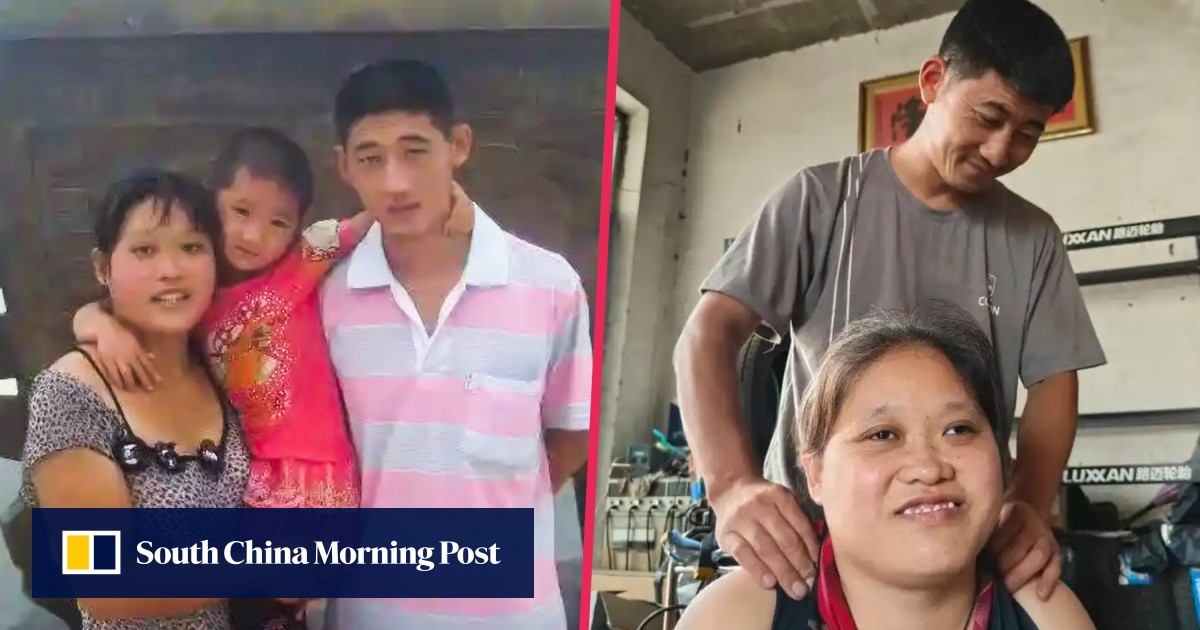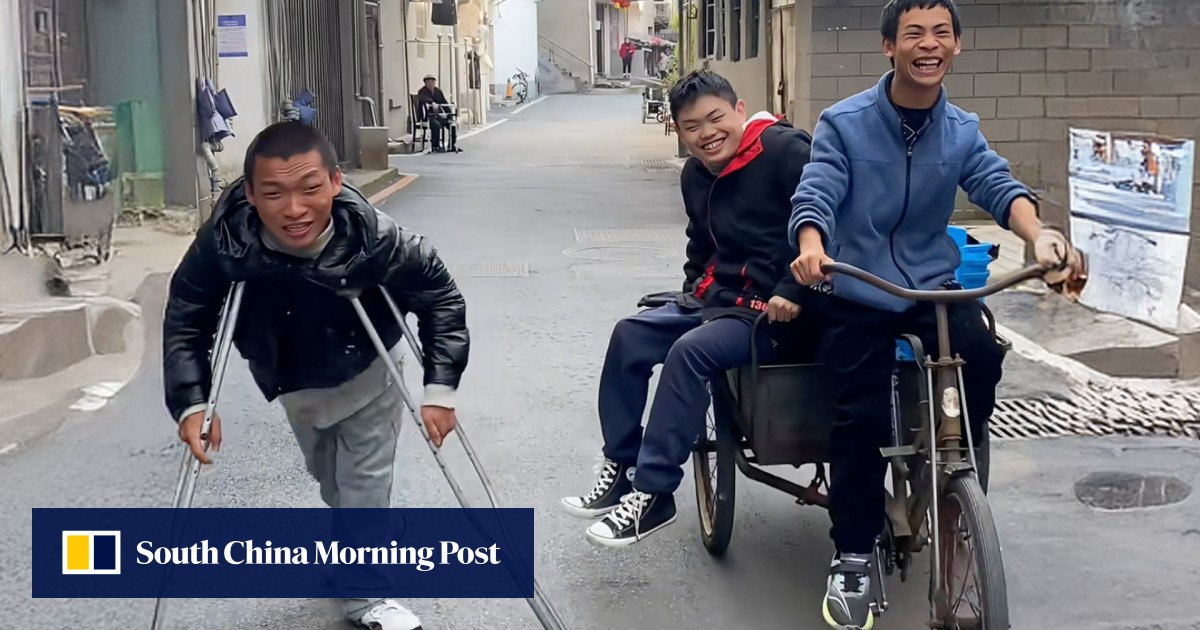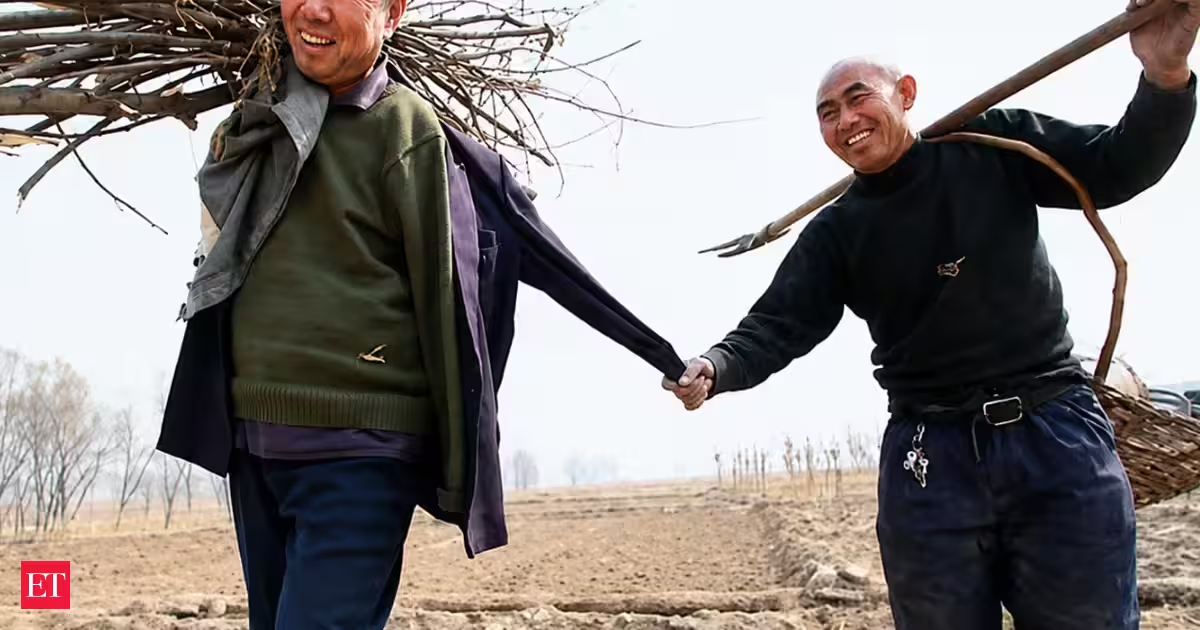
In a small village in China's Hebei province, two lifelong friends did something most people with two working arms and full eyesight would probably find difficult to manage. They rebuilt a dead riverbank into a real forest.Jia Wenqi is the man without arms in this story. He lost both arms as a toddler. Jia Haixia is blind. He lost his sight in an accident years later. Somehow, together, they planted more than 10,000 trees by hand.Their story was documented in a short film by GoPro and covered in an interview with HuffPost, both of which remain the primary public record of what the two men have said about their own lives and work. It's a story worth knowing, especially at a time when conversations about climate change and about how the world treats disability so often stay separate.The accident that changed everythingWenqi was just three years old when he touched a live power line. He lost both arms that day. Haixia was born blind in one eye. Then, in 2000, an accident at the quarry where he worked took the sight in his other eye too. Just like that, he was completely blind.Overnight, a man who supported his wife and young son had no way to earn a living.That's when Wenqi stepped in. The two had grown up together in the village of Yeli, and Wenqi wasn't about to let his friend fade into isolation. "You'll be my arms, I'll be your eyes," he told him, according to GoPro's documentary. It wasn't just a nice line. It became how they actually lived, day after day, for the next 15 years."You'll be my arms, I'll be your eyes": two friends, one forest. Image Credits: @thetropixs/ InstagramTurning a wasteland back into a forestIn 2001, both men began planting trees in an area that had been barren because of quarrying, which had destroyed the local environment. Dust and pollution from the quarry had already killed the animals, including fish, birds, and rabbits, that once lived in the river area. Those were difficult days for Wenqi and Haixia; only two of nearly 800 planted trees survived.Despite such difficulties, they did not give up. Because they could not afford saplings, Haixia would climb on Wenqi's shoulders to cut branches for new cuttings, while Wenqi guided Haixia on where to dig and how to walk. Over 15 years, their routine labor became a forest of 10,000 or so trees.For most people, hard labor is simply hard labor. But for disabled men who do everything on their own, Haixia explained it differently: "Blood and tears," as quoted from HuffPost.Why this story hits differently in AmericaIt's easy to file this away as a nice story from far away. But it's actually closer to home than it seems. In the US, the disability employment gap is still huge. According to the Bureau of Labor Statistics, only 22.8 percent of Americans with a disability had jobs in 2025, compared with 65.2 percent of people without one.Wenqi and Haixia never waited around for someone to hand them an opportunity. They built one themselves, with dirt, cuttings, and trust in each other, at a time when they had no savings and were living off small welfare checks.That's really the part that sticks. Not the size of the forest, but the fact that neither man accepted "unemployable" as the last word on his life.Years of planting trees turned their vision into a lasting legacy. Image Credits: @thetropixs/ InstagramThe science actually backs them upLong before reforestation became a common climate term, Wenqi and Haixia were doing it out of necessity. And it turns out their instincts were right. According to the UN's Food and Agriculture Organization, restoring degraded land through afforestation and reforestation could remove up to 1.5 gigatons of carbon dioxide equivalent from the atmosphere every year between 2020 and 2050, while also helping damaged ecosystems recover.There's a health angle too, especially in China. The Lancet Planetary Health found that air pollution has cut life expectancy significantly across Chinese provinces, largely because of particulate matter and ozone. The study used Global Burden of Disease 2017 data to estimate air-pollution-attributable deaths, DALYs and life expectancy in every province of China from 1990 to 2017. It found that if pollution had fallen to the minimum risk level, average life expectancy would have been 1.25 years higher, with the burden still especially heavy for COPD, lower respiratory infections and lung cancer.So the wasteland Wenqi and Haixia set out to fix was not just visually bleak. It was a real public health problem, and their forest was quietly pushing back against it.A mountain still left to climbBy the time the GoPro film was made, the original plot the two men had been working for years was completely full. The village had already set aside a new 100-acre area for them to work on next, though water was in short supply. Their goal, according to the film, was to eventually cover an entire mountain.Whether that mountain ever gets fully covered or not, the two men had already proven their point. In the documentary, Wenqi says he wants future generations to look at the forest and understand what two disabled men were able to build long after they are gone.
In 2002, a blind man and an armless man teamed up in a Chinese village, one serving as the other's eyes and hands; over the next 15 years, they planted more than 10,000 trees by hand along a barren riverbank
Discover the inspiring story of Jia Wenqi, a man without arms, and Jia Haixia, a blind man, who together planted over 10,000 trees in a barren riverbank of China, demonstrating the power of friendship and resilience against climate change.
871 words~4 min read