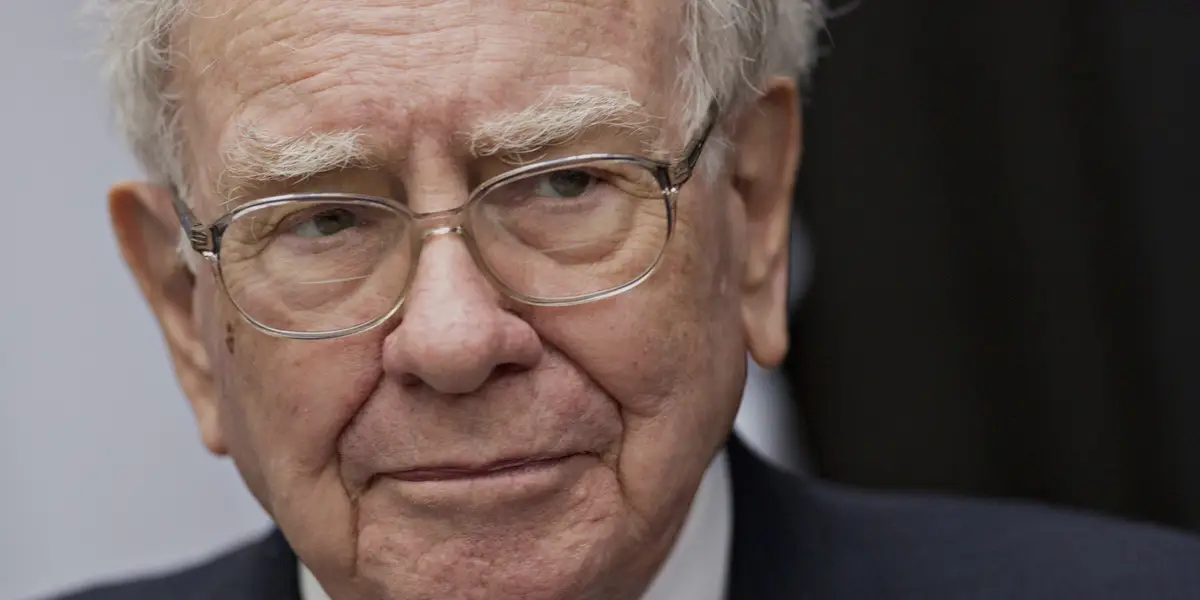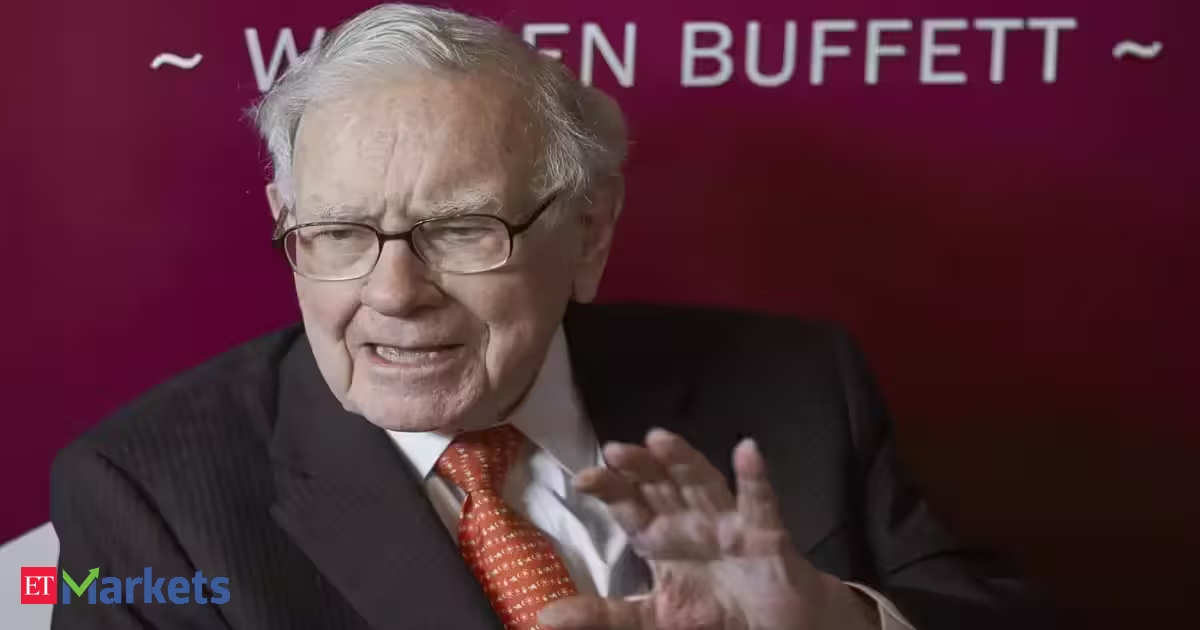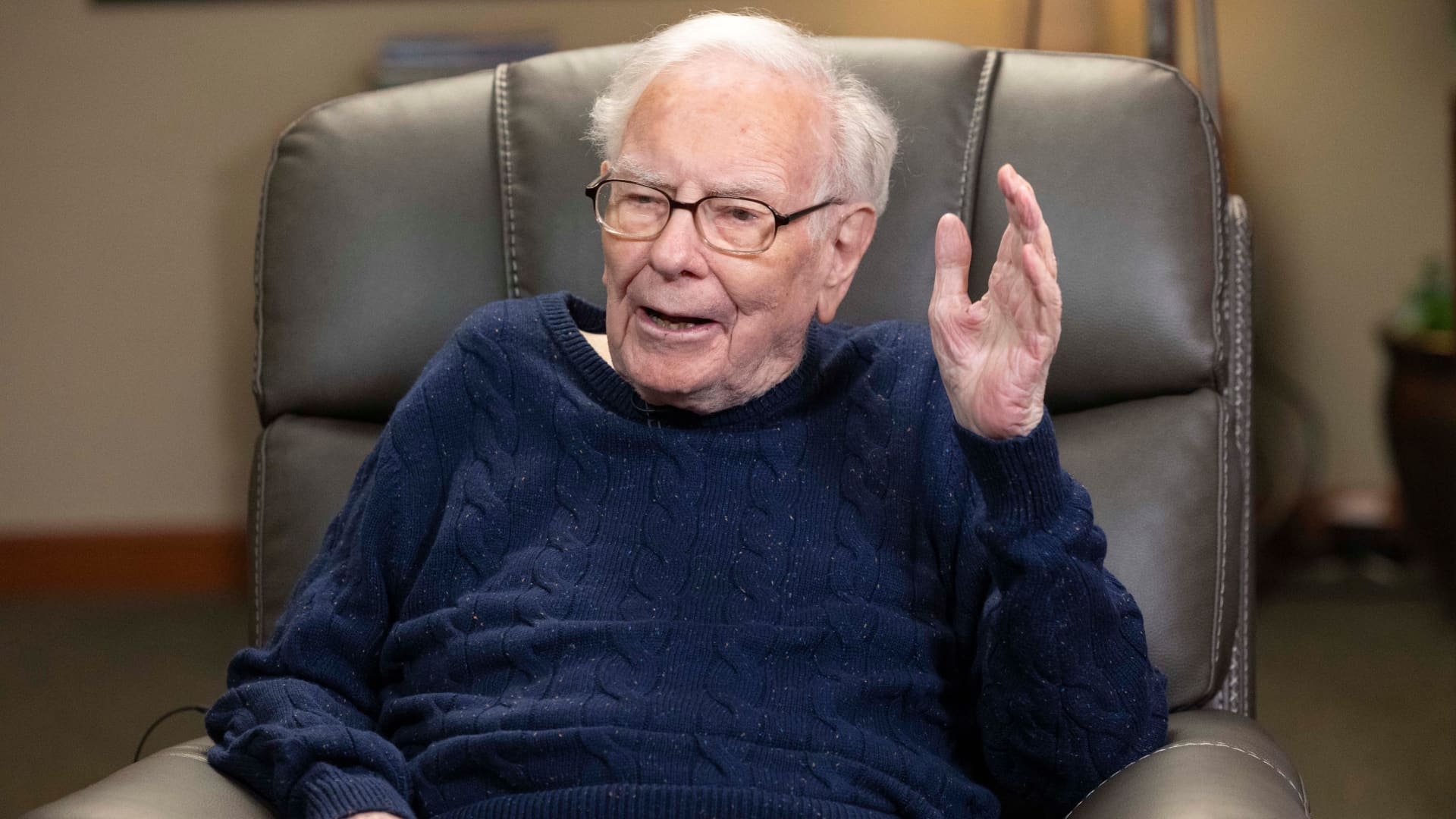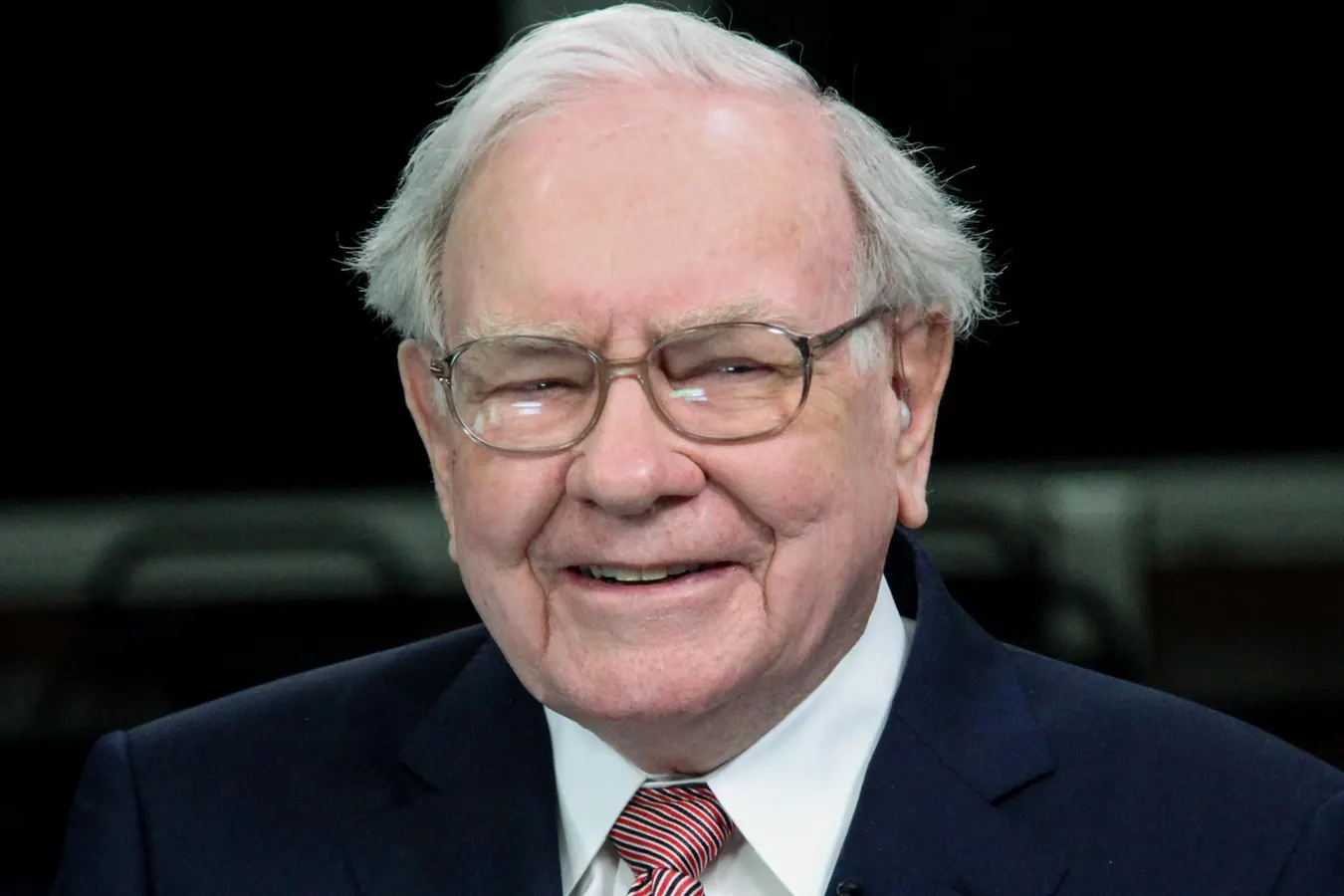
SQUAWK BOX — Pictured: Warren Buffett, chairman and CEO of Berkshire Hathaway, and consistently ranked among the world's wealthiest people, in an interview with Squawk Box on March 2, 2015 — (Photo by: Lacy O'Toole/CNBC/NBCU Photo Bank/NBCUniversal via Getty Images)NBCU Photo Bank/NBCUniversal via Getty ImagesWarren Buffett has spent more than six decades teaching investors that wealth is built through patience, discipline, and a relentless focus on intrinsic value. Few sectors test those principles more than biotechnology, where a single clinical trial, FDA decision, or scientific breakthrough can create—or erase—billions of dollars in market value overnight. Speaking around Berkshire Hathaway’s 2026 annual meeting, Buffett warned that "we’ve never had people in a more gambling mood than now," arguing that today’s markets increasingly reward speculation over long-term investing. He reiterated his long-held observation that the stock market resembles "a church with a casino attached"—except today, the casino has become the main attraction. While Buffett was speaking broadly about these markets, his warning strongly applies to biotechnology, a sector where transformational science and speculative trading compete for investors' attention.Biotechnology has always occupied a unique position on Wall Street. Its inherent uncertainty has long been the special province of long-term scientific investors but has also frequently attracted short-term traders seeking lottery-ticket returns. As options trading, social media investing, and retail speculation continue to expand, the biotechnology sector increasingly reflects both worlds. Buffett's Missing PieceFor an investor who has built Berkshire Hathaway into one of history's greatest capital allocation machines, biotechnology represents perhaps the largest industry he has consciously avoided.That decision was never an indictment of biotechnology itself; instead, Buffett repeatedly explained that he prefers businesses he can understand with reasonable certainty. His investing philosophy depends upon estimating future cash flows decades into the future. Consumer brands, insurance companies, railroads, banks, utilities, and industrial companies generally fit that framework. Drug development does not.A biotechnology company may spend fifteen years developing a therapy only to see it fail during Phase III clinical trials. Conversely, an obscure platform technology may suddenly revolutionize medicine. Clinical success depends not only upon sound science but also on regulatory decisions, manufacturing execution, reimbursement policies, physician adoption, competitive products, intellectual property, and timing. Those variables are extraordinarily difficult to forecast—even for experienced biotechnology specialists. Buffett has frequently acknowledged that the limitation is his own circle of competence rather than a criticism of the industry. To his credit, he rarely wanders outside it.MORE FOR YOUThe One Major ExceptionBerkshire Hathaway briefly owned shares of several large pharmaceutical companies during the COVID-19 pandemic, including AbbVie, Merck, Bristol Myers Squibb, and Pfizer. Those positions appeared more consistent with Buffett's traditional preference for mature cash-generating businesses than speculative biotechnology ventures, and most were later reduced or eliminated. Berkshire has never developed a reputation as a dedicated biotechnology investor.That distinction matters. Large pharmaceutical companies resemble consumer staples in many respects. They generate billions in recurring revenue, possess diversified product portfolios, and pay dividends.Development-stage biotechnology companies are entirely different investments. Many have no revenue whatsoever. Their value often depends upon one molecule, one platform, or one upcoming FDA decision.Biotechnology: Investing or Gambling?Buffett’s casino comments raise an uncomfortable truth. Is biotechnology an investment, or is it more of a gambling casino? The honest answer is that it can be either.Long-term biotechnology investing requires evaluating scientific platforms, understanding disease biology, assessing clinical trial design, studying competitive landscapes, estimating commercial opportunities, and analyzing management execution. Speculation requires none of those things.Today's market increasingly rewards momentum over fundamentals. Clinical catalysts become social-media events. Retail traders pile into weekly options ahead of FDA advisory committee meetings. Artificial intelligence rapidly amplifies excitement surrounding new technologies before meaningful clinical evidence exists. In many cases, share prices move far more on sentiment than science. That is precisely the type of behavior Buffett has warned about for decades.Why Biotechnology Is Especially Vulnerable?Several structural characteristics make biotechnology particularly susceptible to speculative behavior. First, information arrives in binary packets. Unlike industrial companies that report gradually improving earnings, biotechnology companies often experience dramatic valuation changes following a single press release.Second, valuation itself is inherently uncertain. Traditional metrics such as earnings, cash flow, or book value frequently provide little guidance because many biotechnology firms remain years away from commercialization.Third, scientific complexity creates information asymmetry. Most investors cannot independently evaluate immunology, gene editing, RNA therapeutics, complement biology, oncology biomarkers, or statistical powering assumptions in clinical trials. As a result, investors often rely on headlines rather than evidence.Finally, options markets amplify volatility. Buffett specifically criticized one-day options trading as gambling rather than investing. Biotechnology has become one of the most active sectors for short-dated options surrounding FDA decisions and clinical data releases.Buffett's Philosophy Still AppliesThough Buffett has never embraced biotechnology, many of his core investing principles may be as valuable in biotechnology as anywhere else. His emphasis on patience encourages investors to distinguish between temporary volatility and permanent impairment. His insistence upon management quality applies even more to biotechnology executives navigating multi-year clinical development. His focus on capital allocation remains critical for companies dependent upon repeated financing rounds, and his preference for durable competitive advantages translates naturally into intellectual property, platform technologies, manufacturing capabilities, and regulatory expertise. Most importantly, Buffett reminds investors that saying "I don't know" is often the smartest investment decision. Biotechnology specialists understand that not every scientific question has a predictable answer.The Opportunity Buffett May Have MissedWhile Buffett’s avoidance of biotechnology protected Berkshire from countless failed drug developers, it also meant missing one of medicine’s greatest wealth-creation stories. Companies such as Amgen, Gilead Sciences, Regeneron, Vertex Pharmaceuticals, and others generated enormous long-term shareholder value by transforming scientific innovation into commercial success.Entire therapeutic categories—including monoclonal antibodies, CAR-T therapies, RNA medicines, gene therapies, GLP-1 drugs, and complement inhibitors—have fundamentally changed modern medicine while creating hundreds of billions of dollars in market capitalization. These were not spawned in speculative bubbles. They represented genuine scientific revolutions.The challenge has always been identifying them before everyone else; that task requires expertise far beyond conventional value investing.What Is The Answer?Today’s biotechnology landscape is arguably more promising—and more uncertain than at any point in history. While the talk of artificial intelligence accelerating drug discovery, gene editing, personalized oncology continue to advance rapidly; it is, a very long way from commercial maturity. And regenerative medicine, cellular therapies, protein engineering, and synthetic biology while opening entirely new therapeutic frontiers raise the conundrum of who will pay for them. In an era dominated by options trading, meme investing, and prediction markets, Buffett's message remains timeless. Markets may increasingly reward gambling in the short run, but lasting wealth—whether in biotechnology or any other sector—still comes from rigorous analysis, patience, and an unwavering commitment to investing rather than betting.
Is Warren Buffett’s Stock Gambling Warning Bad For Biotechnology?
Buffett’s casino comments raise an uncomfortable truth. Is biotechnology an investment, or is it more of a gambling casino? The honest answer is that it can be either.
1,105 words~5 min read