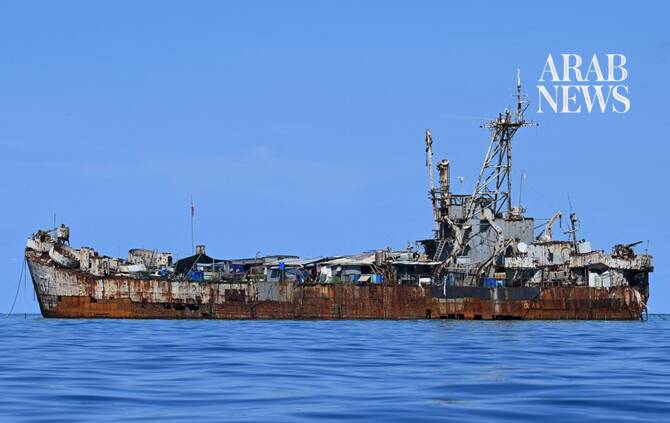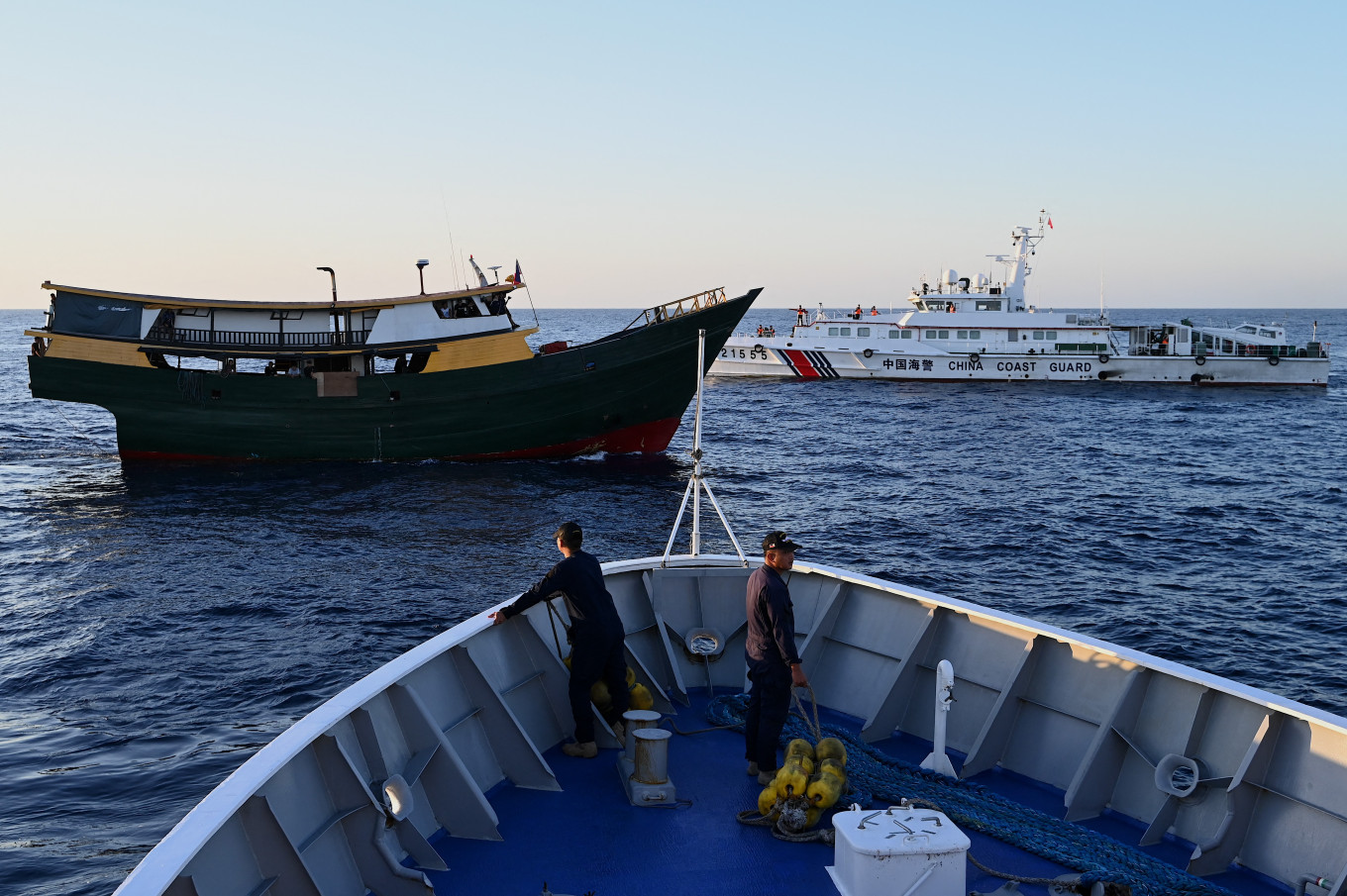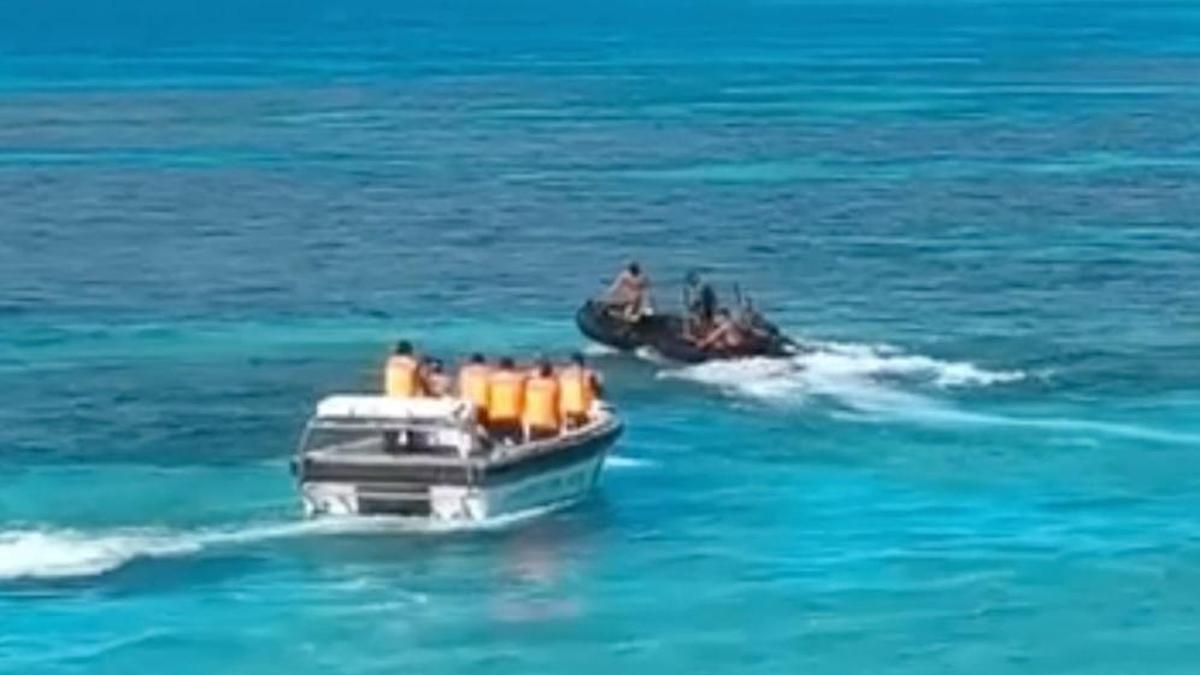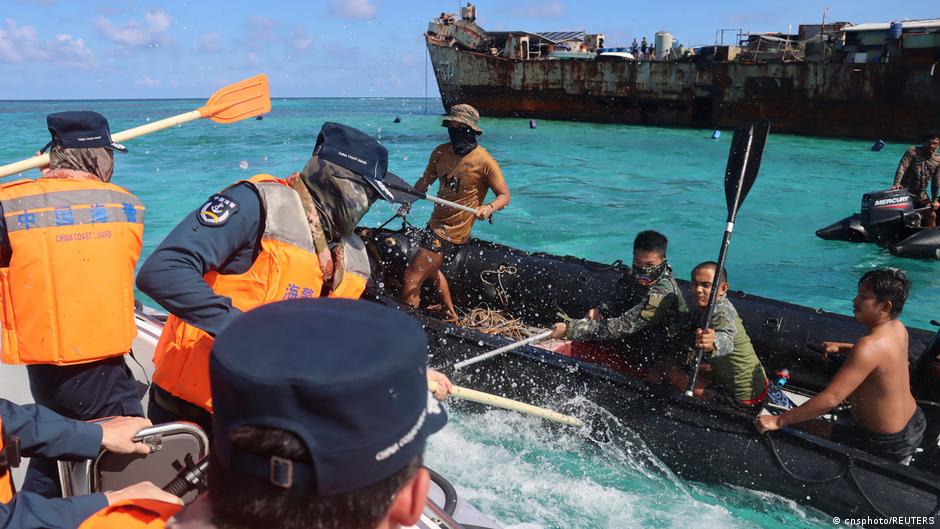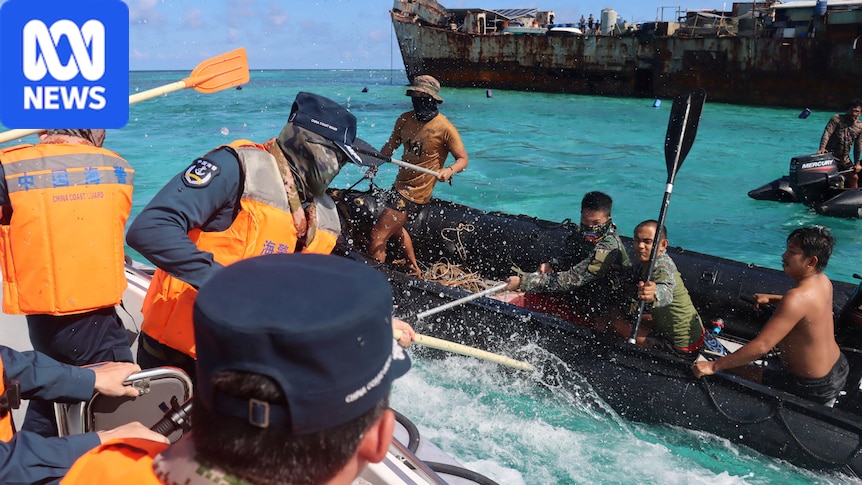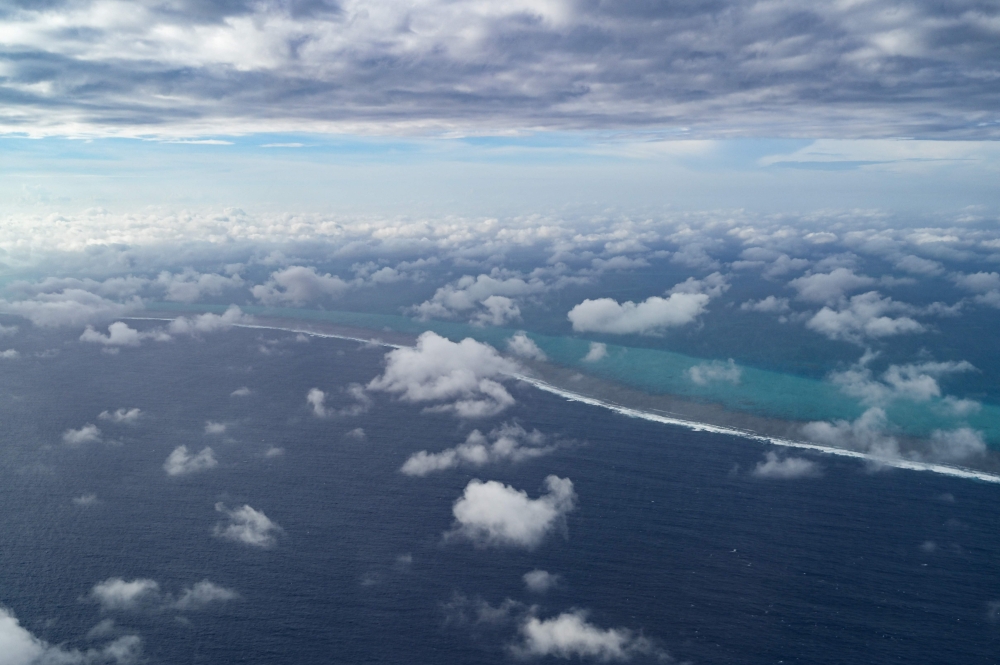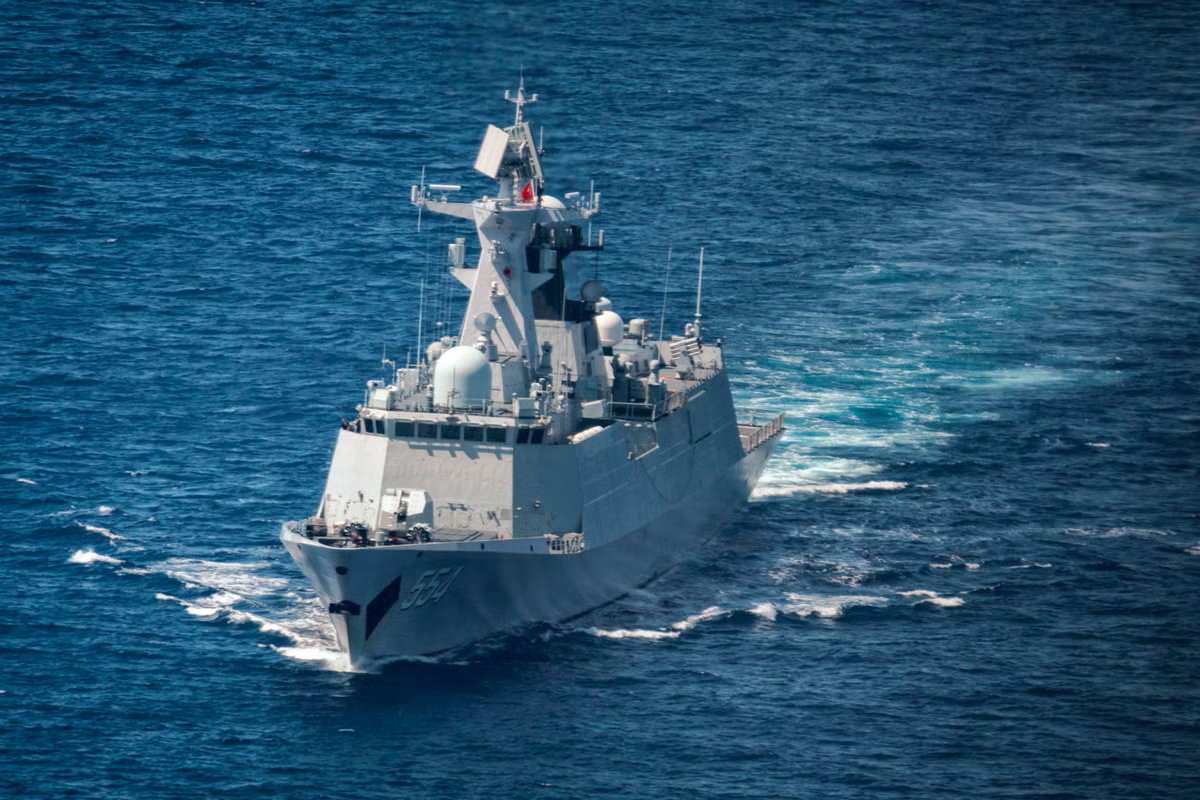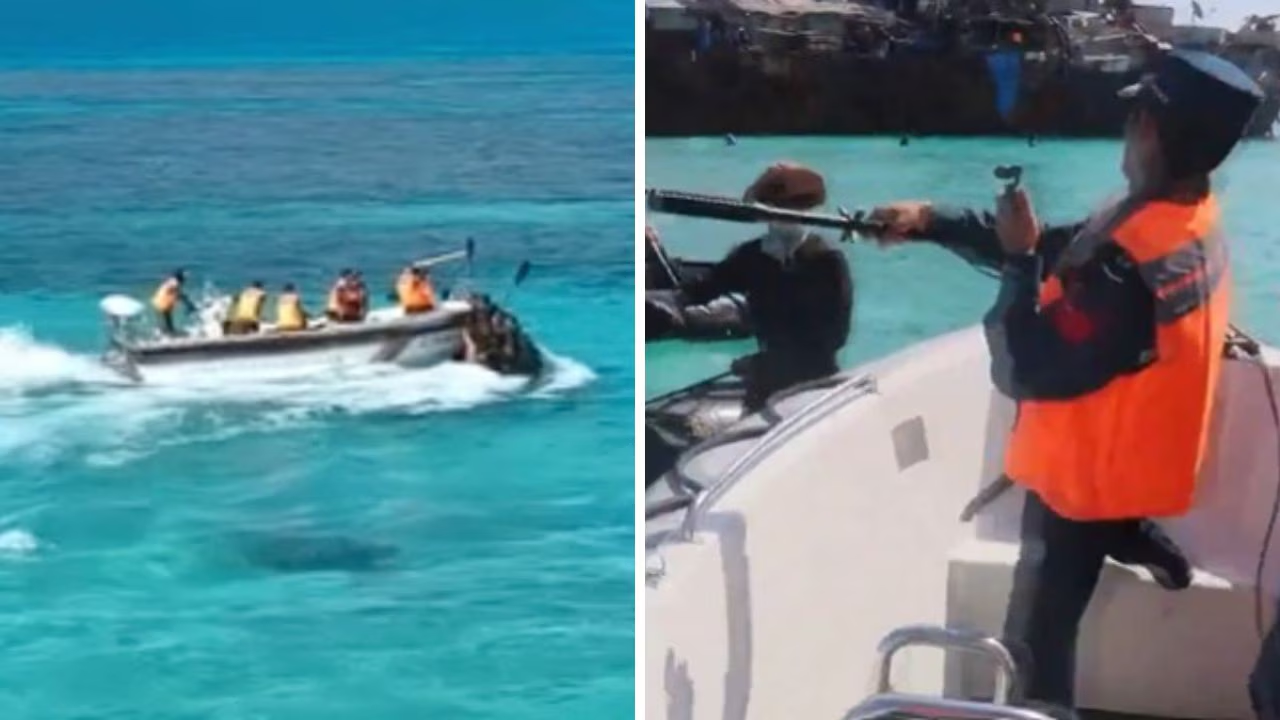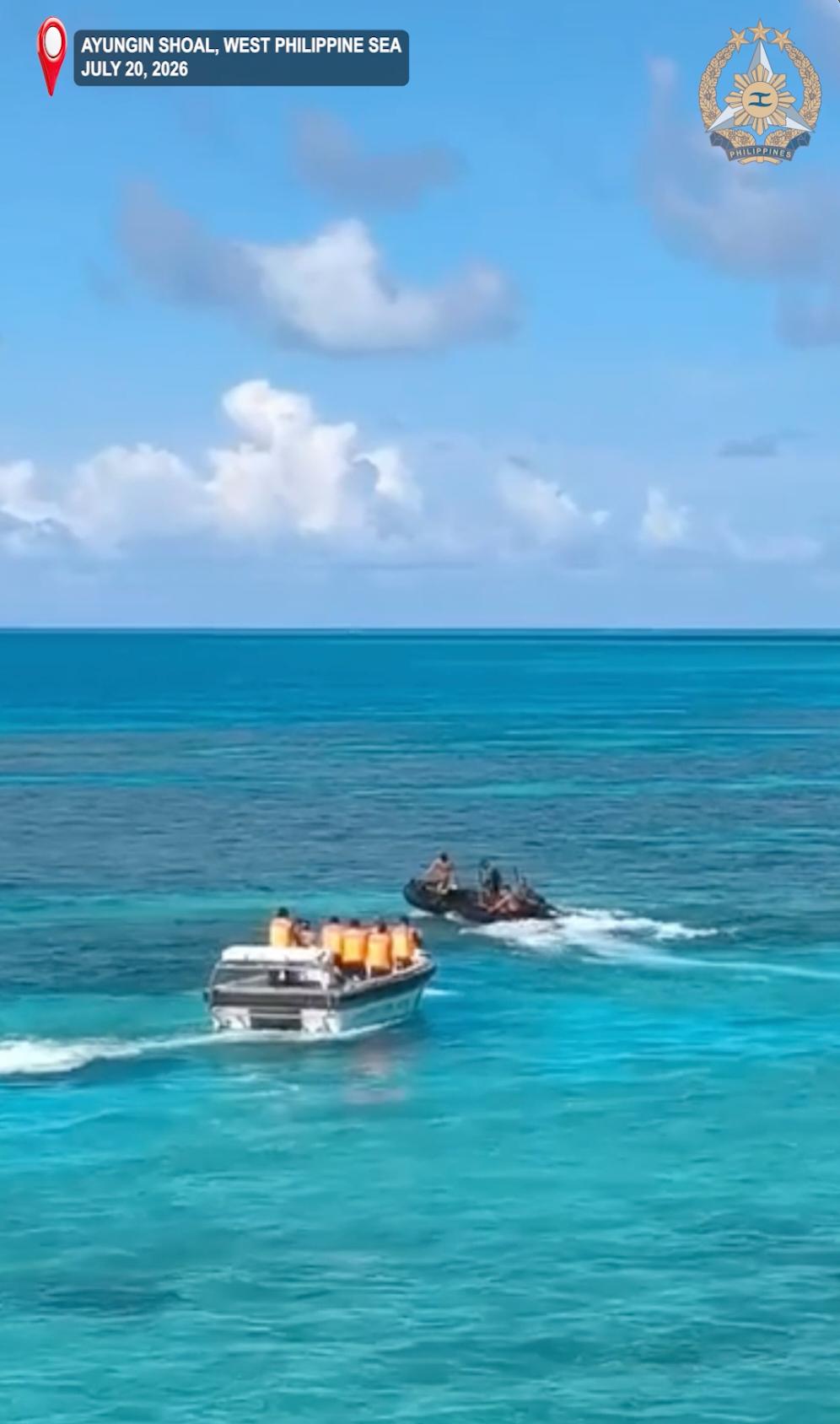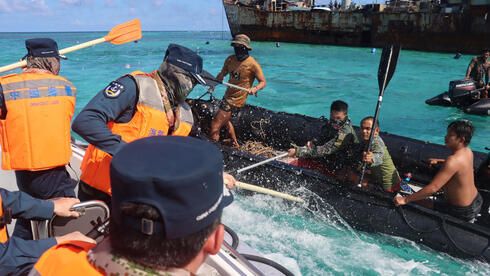
Video shows Chinese personnel striking at Philippine sailors near a disputed outpost as both sides trade blame, diplomats are summoned and fears grow that a future escalation could test Manila’s defense treaty with WashingtonMaritime tensions around China escalated across several fronts over the past day, with a violent confrontation between Chinese coast guard personnel and Philippine sailors, a surge in Chinese government vessels operating around Taiwan and a live-fire naval exercise in waters Japan considers part of its economic zone. The most serious incident occurred Monday at Second Thomas Shoal in the South China Sea, an area claimed by both China and the Philippines.According to the Philippine military, a Chinese coast guard boat carrying eight crew members approached a makeshift Philippine outpost. Philippine sailors moved toward it in two inflatable boats and ordered the Chinese crew to keep away. Manila said the Chinese personnel then attacked them with wooden clubs.The confrontation between China and the Philippines caught on camera at seaGalleryChinese coast guard hits Philippine sailor (Photo: cnsphoto via REUTERS)Video released by the Philippine military shows Chinese coast guard personnel pursuing the sailors in a rigid-hulled boat and striking toward them. One Philippine sailor was hit in the head, and his boat was damaged. Philippine authorities praised the sailors for not responding in a way that could have further escalated the confrontation. Beijing offered the opposite account. China’s coast guard said the two Philippine boats rammed its patrol vessel and that their crews attacked Chinese personnel with paddles and long poles. China later said it allowed the Philippines to evacuate the injured sailor on humanitarian grounds. The Philippine military rejected China’s version of events, calling it false and misleading.The confrontation quickly moved into the diplomatic arena. China’s Foreign Ministry summoned the Philippine ambassador in Beijing for a formal reprimand, while Philippine President Ferdinand Marcos Jr. summoned China’s ambassador in Manila. Such summonses are relatively rare despite the long series of maritime confrontations between the two countries.It was the third time during Marcos’ presidency that China summoned the Philippine ambassador. Marcos last summoned the Chinese ambassador in 2023 after a Chinese vessel aimed what Manila described as a military-grade laser at a Philippine ship. The ambassadors were summoned for reprimands following the maritime incident (Photo: Jay Tarriela via X/Handout via REUTERS)At the center of the dispute is the BRP Sierra Madre, an aging and heavily rusted landing ship that the Philippines deliberately grounded at Second Thomas Shoal in 1999. The vessel has since served as an improvised territorial outpost permanently staffed by Philippine navy personnel.China surrounds the area with ships and demands that Manila remove the vessel, while the Philippines continues delivering food, water and supplies to the sailors stationed there. China claims sovereignty over almost the entire South China Sea, including waters that lie within the exclusive economic zones of neighboring countries. An international tribunal in The Hague rejected the legal basis for Beijing’s expansive claim in 2016, but China has refused to recognize the ruling. The clashes have the potential to extend beyond a local dispute. The United States and the Philippines are bound by a mutual defense treaty, and Washington has said the agreement applies to an armed attack on Philippine armed forces, aircraft or public vessels, including coast guard ships, in the South China Sea.The latest incident does not necessarily meet the threshold of an armed attack, but further escalation could put the American commitment to the test.Trump and Chinese President Xi Jinping. The United States and the Philippines are bound by a mutual defense treaty (Photo: Evan Vucci / POOL / AFP) BRP Sierra Madre (Photo: AP)The confrontation took place as foreign ministers from Southeast Asian countries gathered in Manila alongside Chinese Foreign Minister Wang Yi. One of the central issues in the talks is an effort to formulate a code of conduct or non-aggression arrangement to prevent such incidents from developing into a broader military conflict.At the same time, Taiwan reported a sharp increase in Chinese coast guard and government vessel activity around the island. In June, Taiwan recorded 55 sightings of Chinese vessels, compared with 30 in May and 25 in June last year. That represents a monthly increase of 83% and a rise of 120% over the past year. The figures do not include activity near Taiwan-controlled islands close to the Chinese coast.Taiwanese officials fear Beijing is not merely applying routine pressure but rehearsing how it could cut off supply routes across the Pacific during a war. Those routes would be expected to carry aid, fuel and food to Taiwan if China attempted to impose a blockade.According to Taiwanese coast guard officials, some Chinese coast guard vessels are former destroyers that were converted and repainted but retained their size, range and some military capabilities. The Chinese ships sometimes operate in pairs near the boundary of Taiwan’s exclusive economic zone.They have also contacted commercial vessels by radio and asked about their ports of origin and destination. No ship is known to have altered its course because of a Chinese request.A Taiwan Coast Guard officer watches a Chinese military exercise in 2025 (Photo: Taiwan Coast Guard/Handout via REUTERS)Taiwan describes the activity as part of what it calls legal warfare, an attempt by China to gradually create the appearance of policing authority and sovereignty in the waters surrounding the island. China considers Taiwan part of its territory and has never renounced the use of force to take control of it. Taiwan’s government rejects Beijing’s claim and says only the island’s residents can decide its future.Amid fears of a blockade, cyberattack or invasion, Taiwan will deliberately slow mobile internet service next month as part of a civil defense exercise, the first such move in its history. For half an hour, 4G and 5G speeds will be restricted in 14 cities and counties in northern and central Taiwan, home to about 70% of the population.The service will not be completely disconnected. Phone calls, text messages and the public alert system are expected to continue operating normally. Video calls, streaming services, image and large-file uploads and cloud services, however, are expected to be disrupted.Wired internet, home Wi-Fi networks, military communications and emergency services will not be affected. The exercises will be held on August 10 and 13. During the drills, the public will be asked to switch to voice calls, text messages or wired connections. The purpose is to prepare civilians for a crisis in which they may not be able to rely on data-heavy applications and social media platforms. Images released by Japan from a joint Chinese-Russian exercise in waters Tokyo claims as its own (Photo: Handout / various sources / AFP)The threat to Taiwan’s communications is not theoretical. Several undersea cables connecting Taiwan and its offshore islands to the outside world have been damaged in recent years. It has not always been possible to determine whether the damage was caused by accidents, bad weather or sabotage, but the incidents highlighted the vulnerability of the island’s communications infrastructure.As an additional backup measure, Taiwan’s parliament approved looser restrictions on foreign ownership in satellite communications companies. The change could clear the way for Elon Musk’s Starlink satellite internet service to enter the market and provide an alternative connection if undersea cables and cellular networks are damaged. Taiwan’s Digital Affairs Ministry said, however, that the company is not currently making an active effort to enter the local market.Japan also joined the latest accusations against Beijing. Tokyo said Tuesday that a Chinese destroyer conducted a live-fire exercise Sunday in waters Japan considers part of its exclusive economic zone, about 180 kilometers from the remote island of Okinotori.Russian vessels also participated in the drill. China rejected the accusation, arguing that Okinotori is a reef rather than an island and therefore does not entitle Japan to an exclusive economic zone around it. According to the Japanese military, this was the first time Tokyo publicly disclosed a Chinese live-fire exercise inside waters it claims as part of its economic zone.
Watch: Chinese coast guard hits Philippine sailor in South China Sea clash
Video shows Chinese personnel striking at Philippine sailors near a disputed outpost as both sides trade blame, diplomats are summoned and fears grow that a future escalation could test Manila’s defense treaty with Washington
1,325 words~6 min read