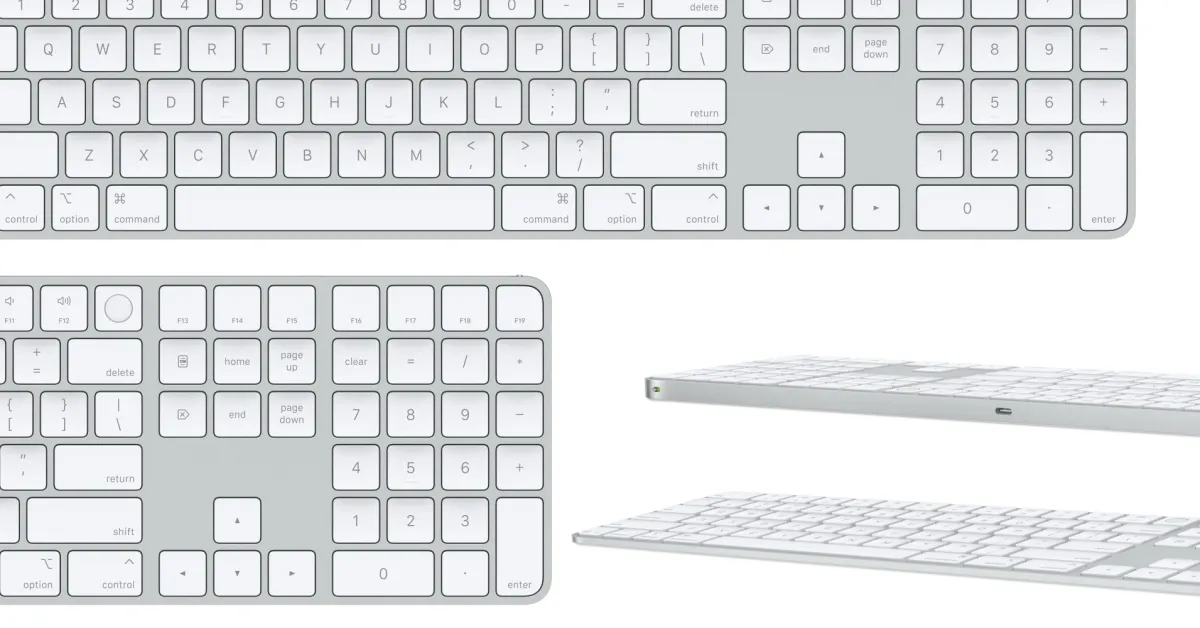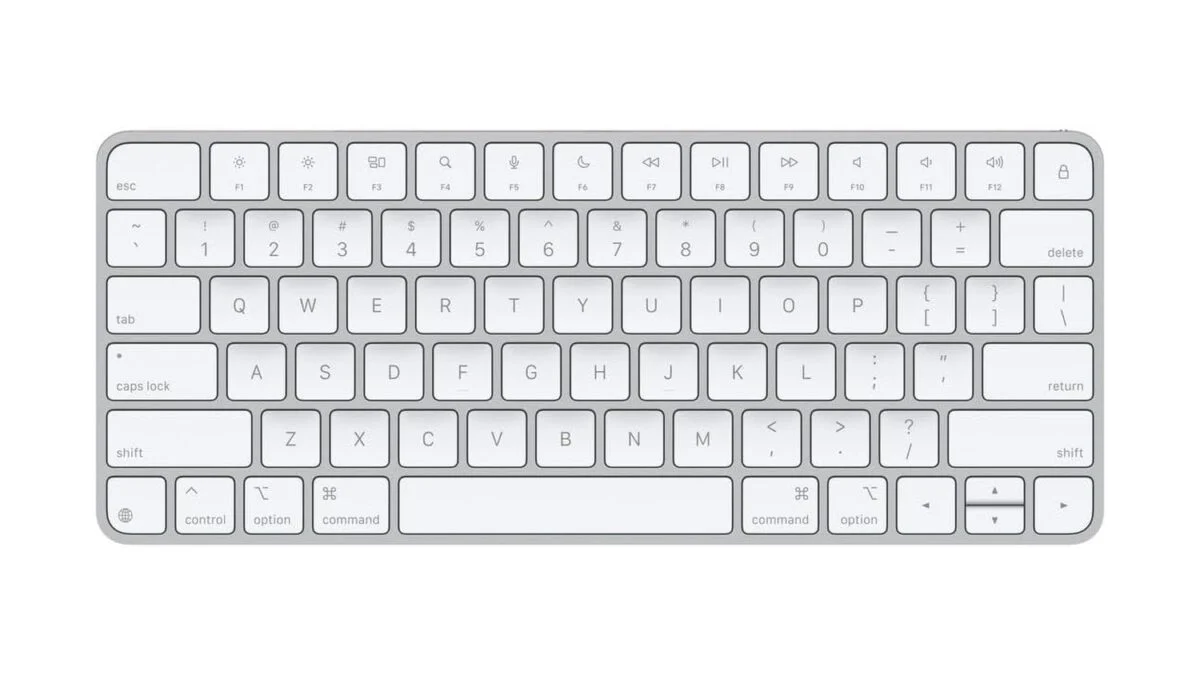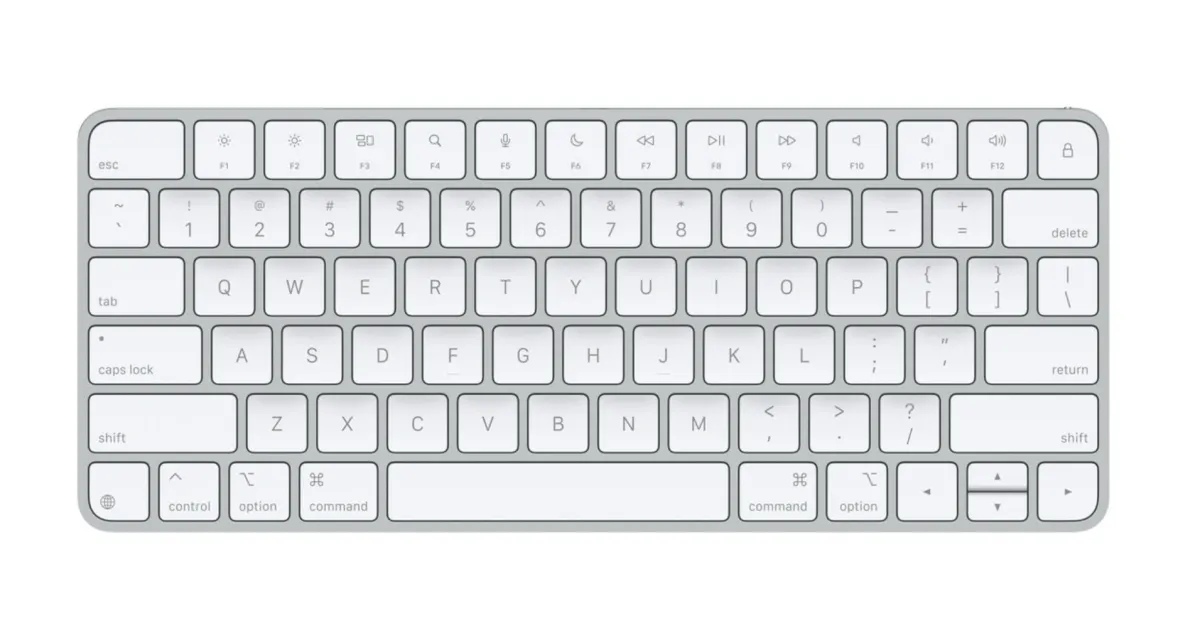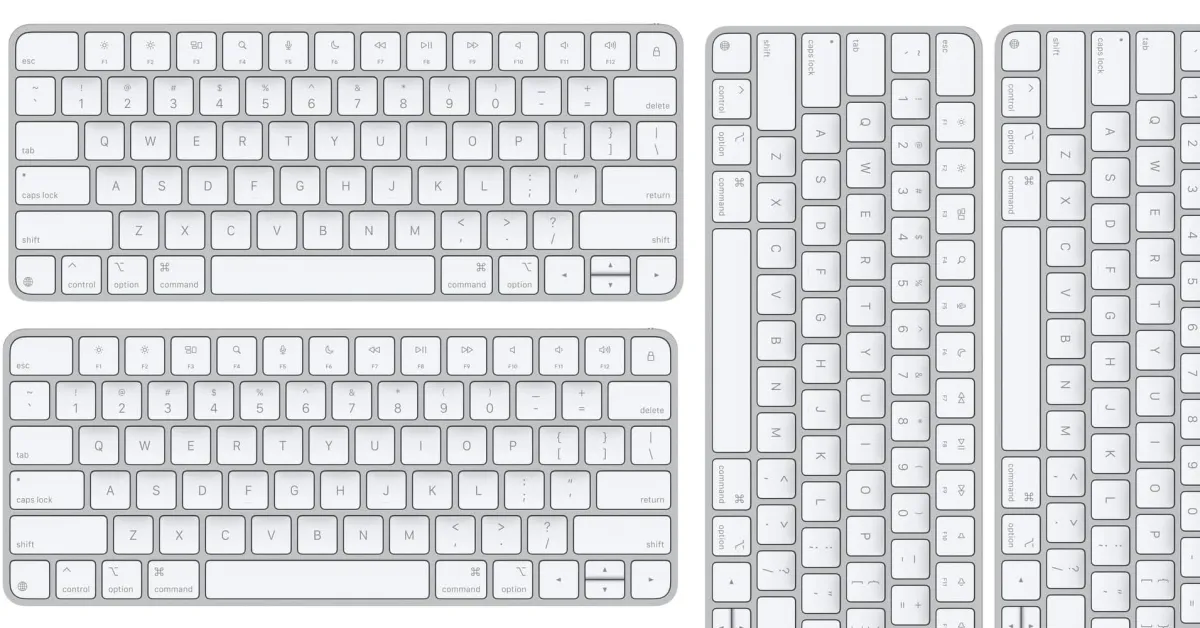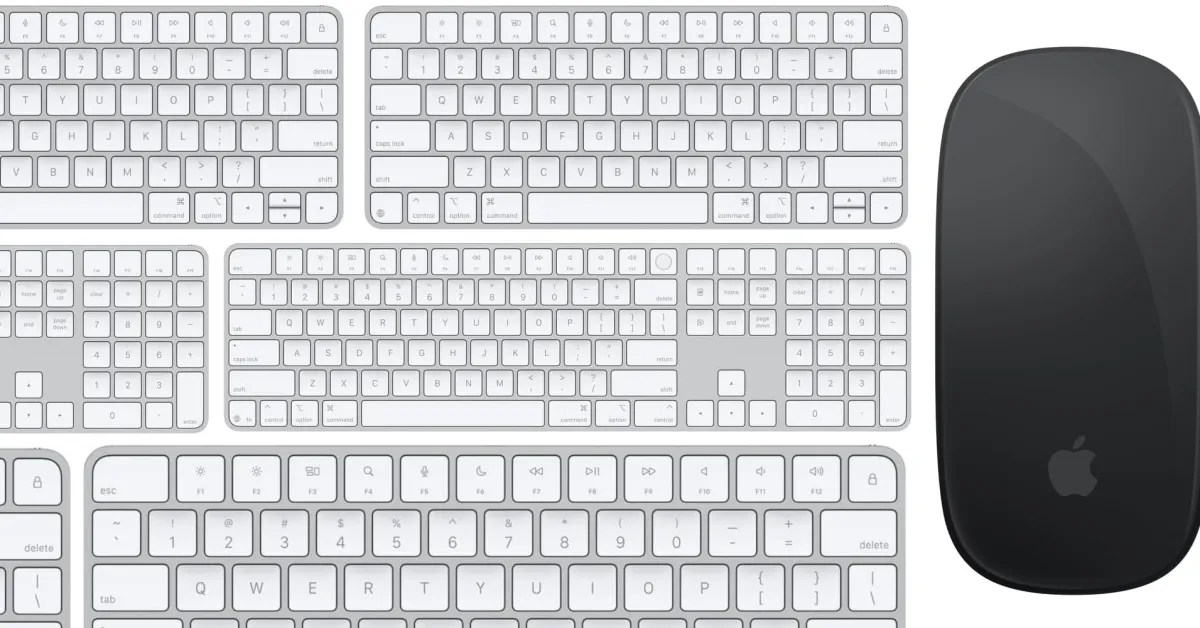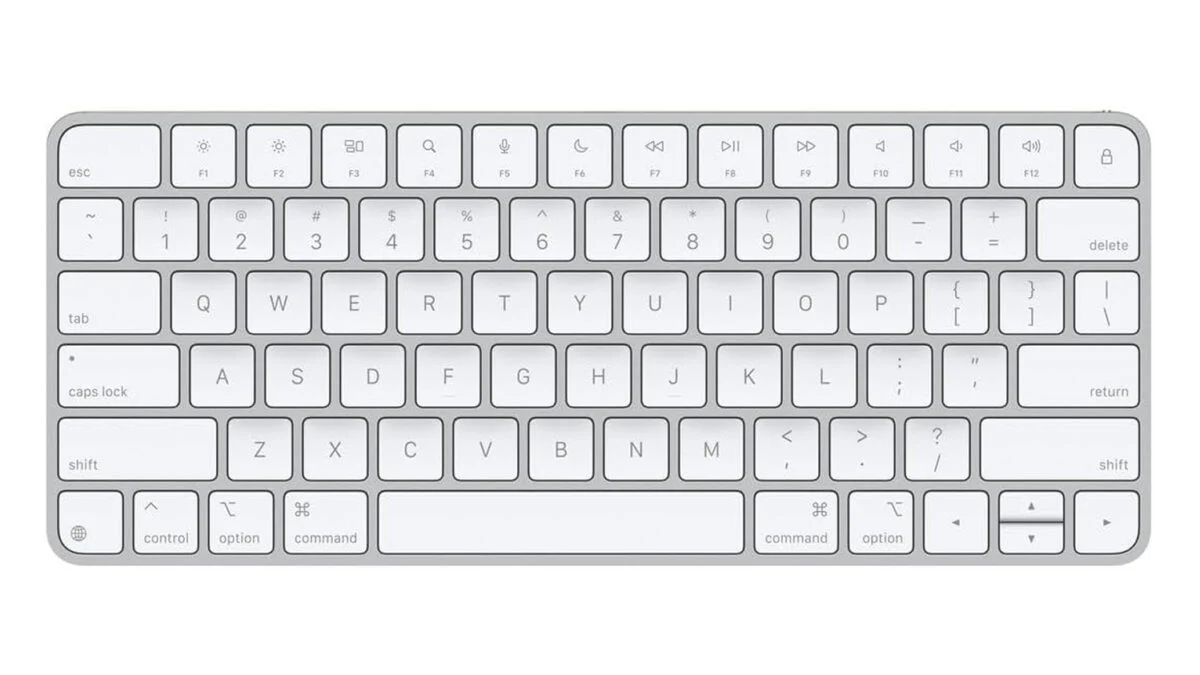
This is the USB-C model, bringing the Magic Keyboard into step with Apple’s transition away from Lightning on its peripherals. The most useful difference is that the charge cable is now the same one you’re already carrying for your MacBook, iPad, or iPhone, and not the separate dedicated cable that Lightning demanded. Charging is handled via USB-C, and once the battery is topped off, you get about a month of wireless use on a full charge. Pairing is automatic with a Mac once you plug in to connect the first time, and it stays connected over Bluetooth from there.
See at Amazon
Keys to the Kingdom
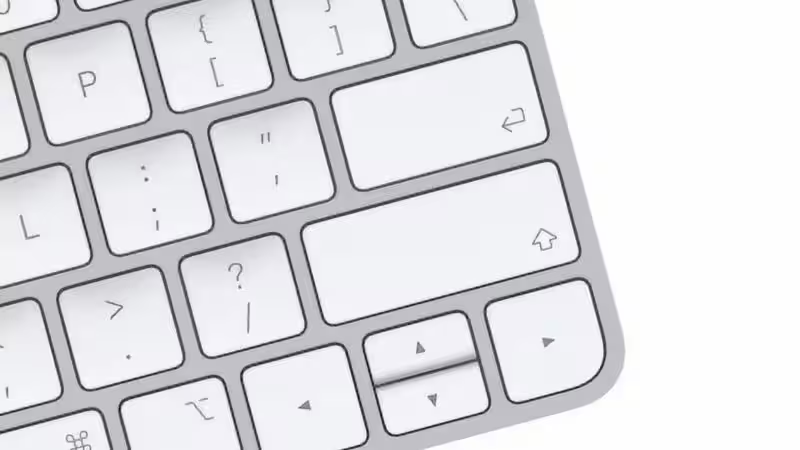
The keyboard itself is the reason it’s been so tenacious about staying at full price. Apple’s scissor-switch mechanism delivers 1mm of key travel with what the company calls “optimized key stability,” a techy way to say that the keys feel consistent across the entire surface rather than mushy at the corners. For people who spend actual hours at a keyboard, that consistency matters more than any spec on the sheet. The layout includes hotkeys and media controls, and the profile is thin enough that wrist fatigue over a long session is less of a concern than it is with taller keyboards.
The Magic Keyboard’s compatibility covers nearly the entire Apple ecosystem. The list runs from the current MacBook Air M5 and MacBook Pro M5 down through iPads going back several generations, iPhones from the XS forward, and even the 7th-gen iPod touch. (Remember those?) If it’s a current Apple device, it’s almost certainly on the compatibility list. The keyboard is also listed as compatible with Apple Vision Pro, for users who need a physical input option with that hardware.