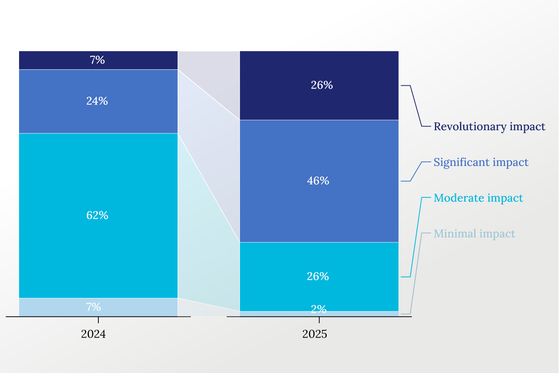
Artificial intelligence (AI) is rapidly being integrated into the legal profession, not just conceptually but as a routine tool in daily legal practice. According to a LexisNexis survey of 404 legal professionals on the Chinese mainland, 88% now use AI tools—an increase of 20 percentage points from the previous year. Among lawyers and trainees, AI adoption rises to 93%, while corporate counsels, compliance officers, and risk managers also report high use at 86%. AI is commonly utilized for drafting emails, memos, and contracts, as well as summarizing case files and condensing lengthy legal documents. Courts are also experimenting, notably with China’s Supreme People’s Court launching the Faxin legal large language model (LLM) in late 2024, highlighting the rapid institutionalization of AI in law[para. 1][para. 2][para. 3][para. 4].The legal profession has unique advantages in AI adoption due to its reliance on publicly available, highly structured texts like statutes, regulations, precedents, and contracts. These features make LLM training straightforward and relevant to legal professionals’ heavy need for text search and analysis. New ventures, such as Beijing Aiyu Intelligent Technology (“AI law firm”), process thousands of lawsuits monthly with AI support except for in-court appearances. In the U.S., Harvey AI achieved a $5 billion valuation in three years. Major database providers like Thomson Reuters and LexisNexis are aggressively investing in AI[para. 5][para. 6].However, there are notable risks, particularly the problem of “AI hallucinations”—producing plausible but false information. Globally, legal professionals have faced embarrassment or disciplinary action for submitting court documents drafted by AI containing fabricated content. Judges remain cautious: in New York, a digital “AI lawyer” was promptly banned from a courtroom. Legal experts stress that only humans can be accountable for legal judgments or errors, given that AI lacks personhood[para. 7][para. 8][para. 9].Despite the risks, AI is transforming legal workflows. Tasks previously requiring substantial time—such as basic document collection and foreign legal system research—are now streamlined by AI, sharpening the focus of engagements with foreign counsel. However, practitioners emphasize the need to double-check AI outputs with trusted databases to counteract errors and incompetence. AI cannot substitute human skills such as negotiation or courtroom presence, and automation is reducing demand for contract review work, shifting lawyers’ focus toward litigation and other arenas where human presence is still essential[para. 10][para. 11][para. 12][para. 13][para. 14][para. 15][para. 16].The ecosystem of legal AI tools is rapidly expanding, with U.S. startups and Chinese firms introducing automated complaint drafting and contract preparation services, sometimes as cheaply as $1.37 per case. U.S.-based Harvey has over 500 clients and $100 million in recurring revenue; LexisNexis and Thomson Reuters are rolling out advanced AI-integrated platforms. However, subscription costs are significant, and value depends on time saved. Some firms, especially in China, target end consumers with results-focused AI products[para. 17][para. 18][para. 19][para. 20][para. 21][para. 22][para. 23][para. 24][para. 25][para. 26].The long-standing fascination with AI in law dates back to the 1980s, but digitization of legal records in the U.S. and China laid the groundwork for modern AI-driven legal research. Processes continue to advance, with China deploying court digital assistants and legal LLMs like Faxin supporting case management and adjudication[para. 27][para. 28][para. 29][para. 30][para. 31][para. 32][para. 33][para. 34][para. 35].Despite this technological wave, the profession overwhelmingly rejects the idea of AI judges or fully automated trials. AI can reduce repetitive work and support clerical tasks, but discretion and judgment are seen as irreplaceably human. Surveys and expert commentary confirm this skepticism: AI will remain a powerful tool for legal practice but will not take the ultimate decision-making role in courtrooms[para. 36][para. 37][para. 38][para. 39][para. 40][para. 41][para. 42].AI generated, for reference only
In Depth: Legal Professionals See a Case for AI, but It’s Not Ironclad
The technology increases speed and efficiency for law firms, but it still can’t replace a judge
595 words~3 min read