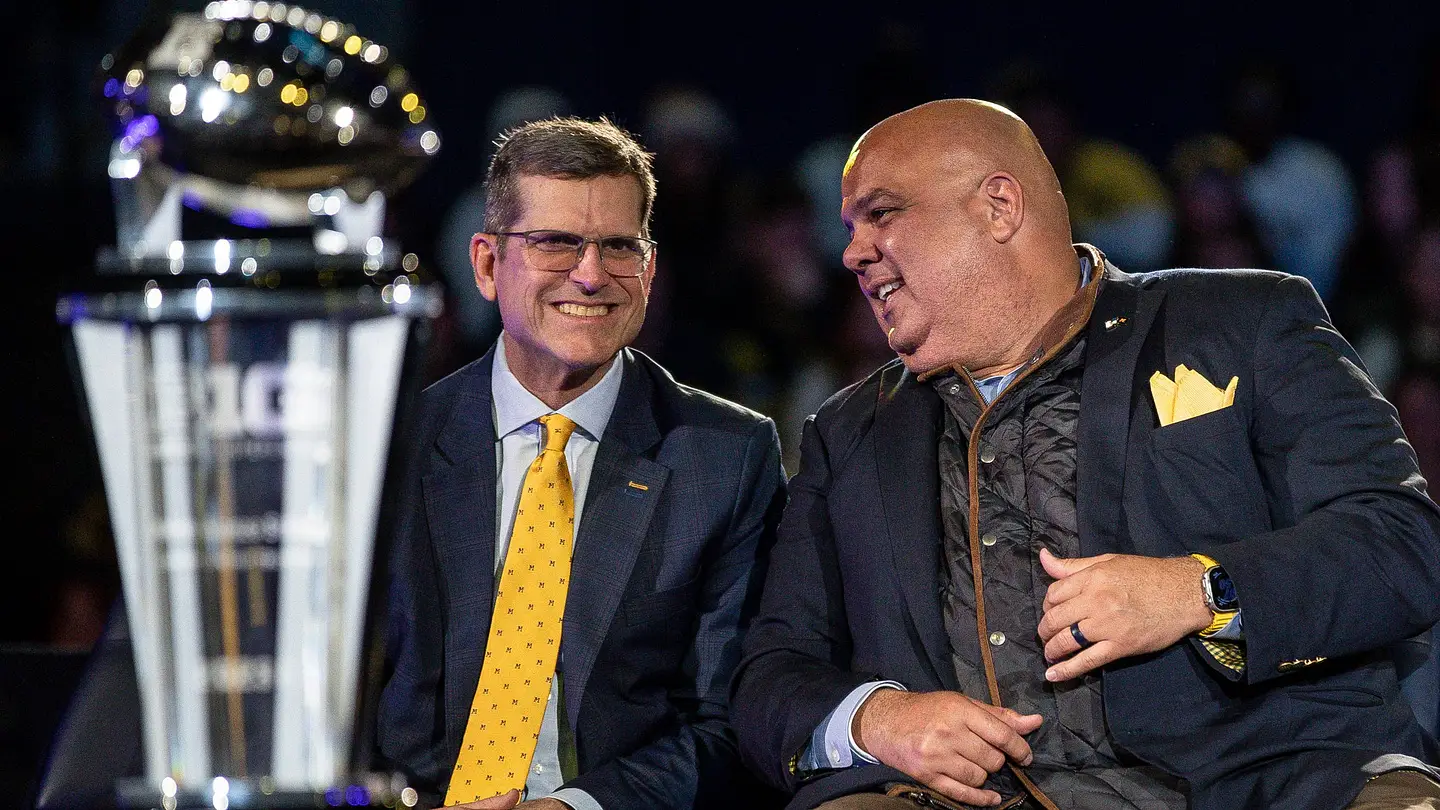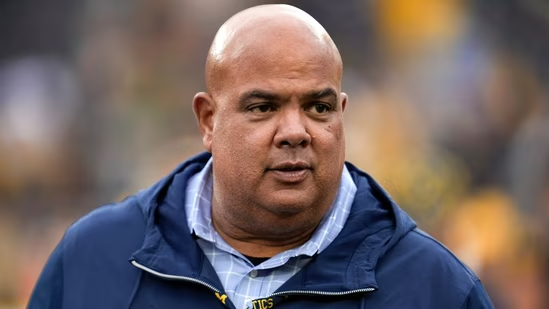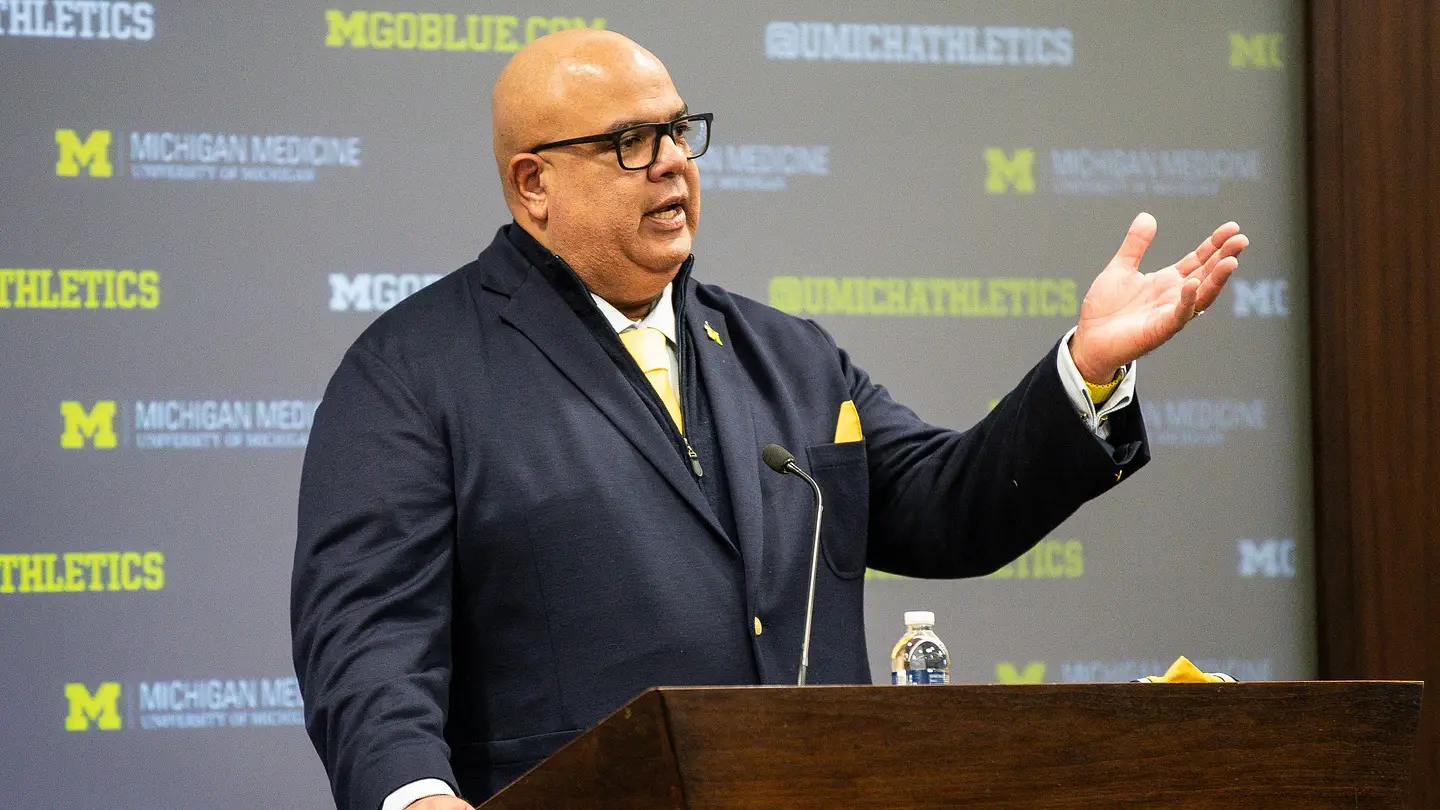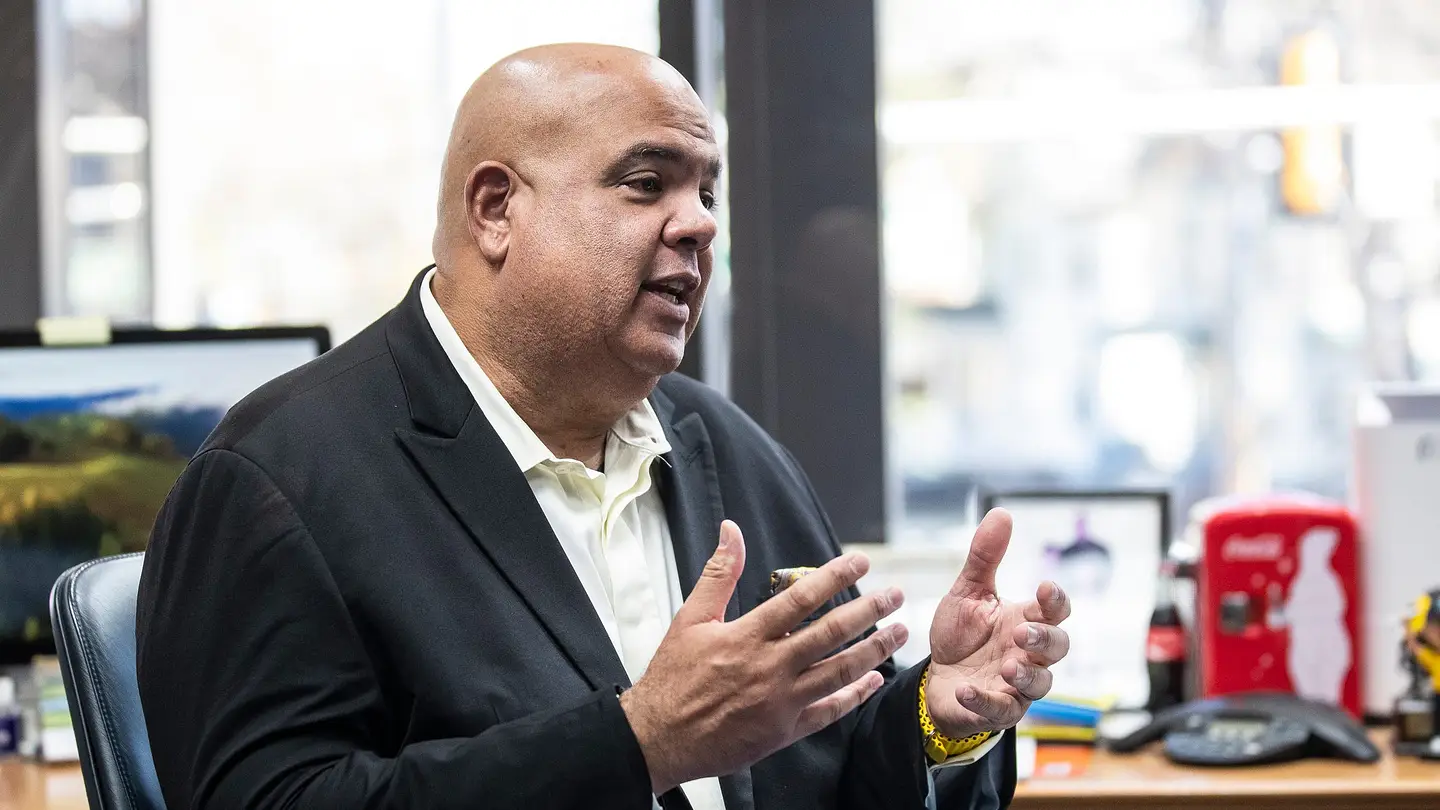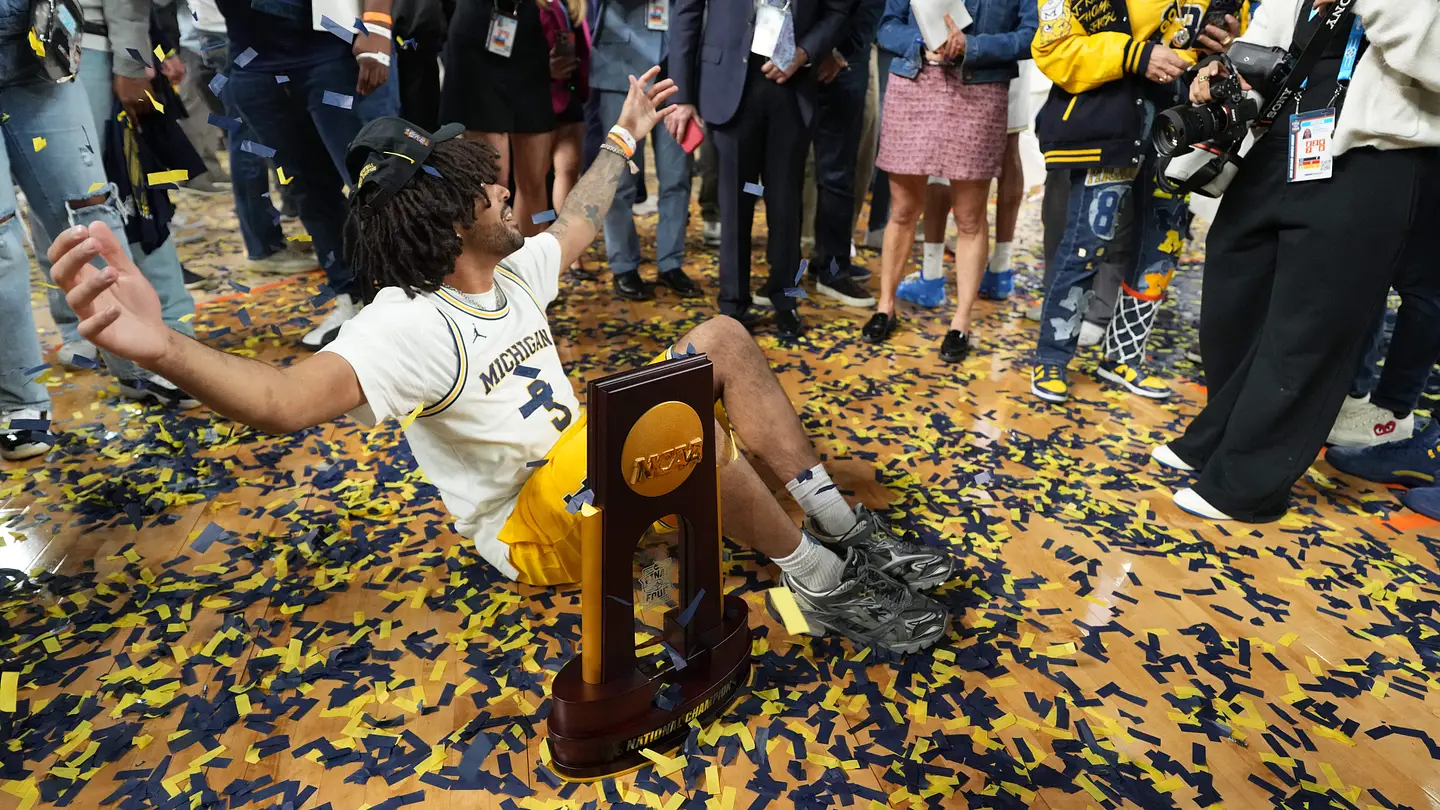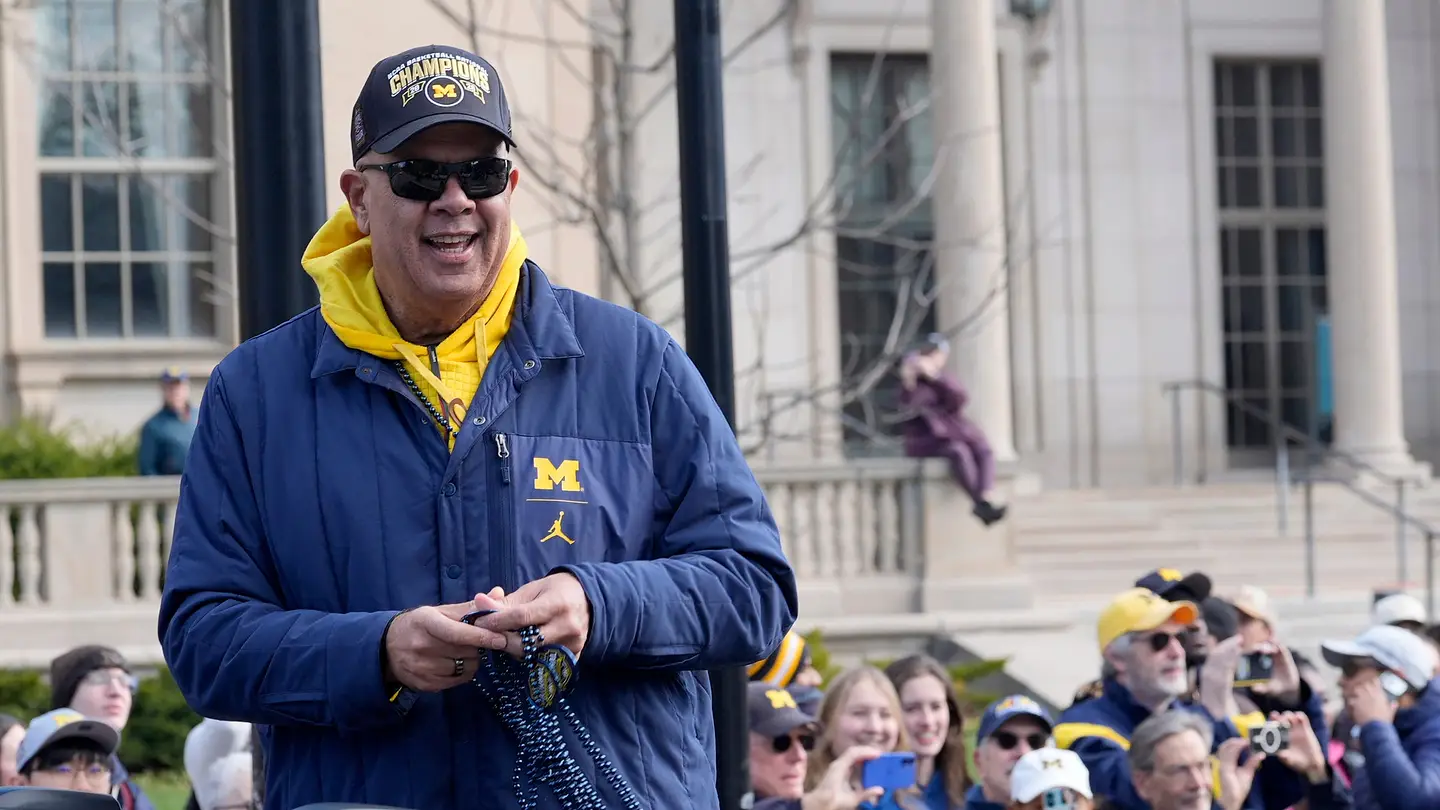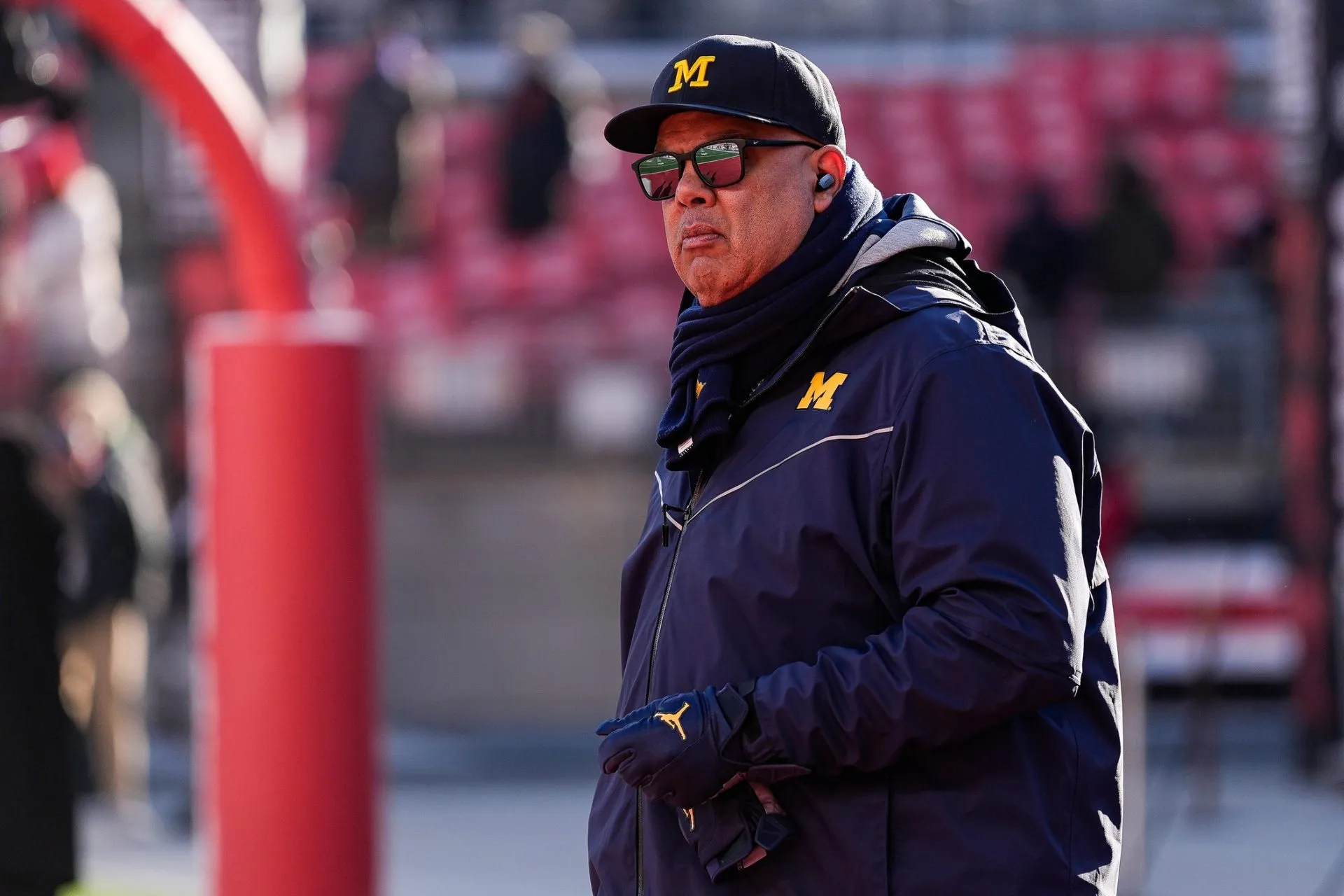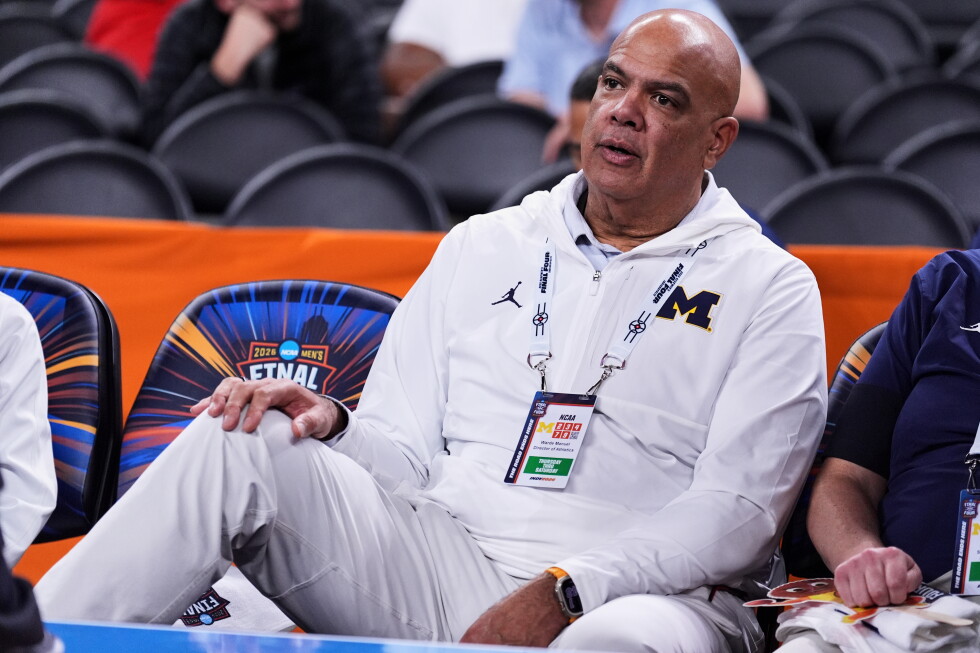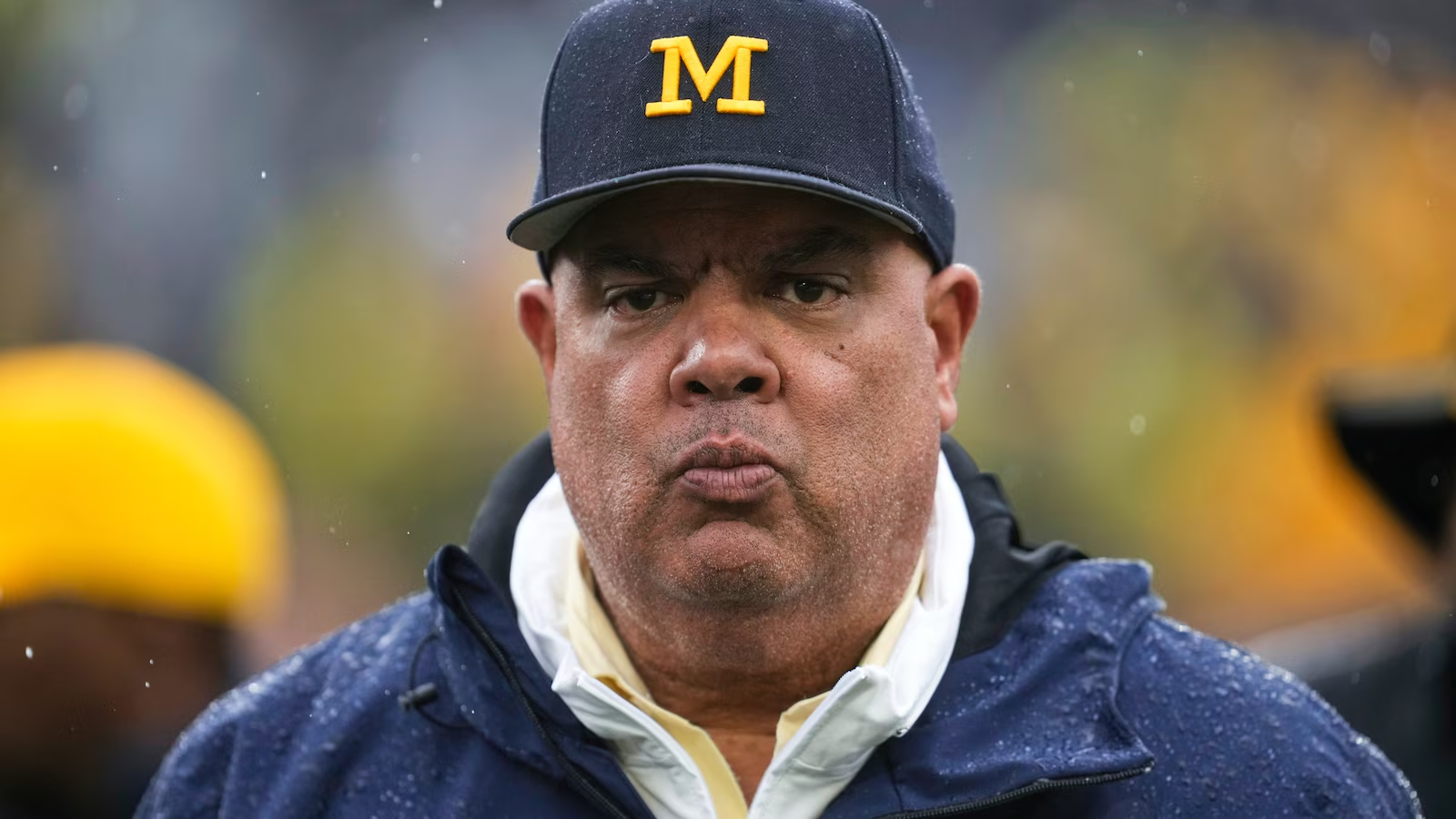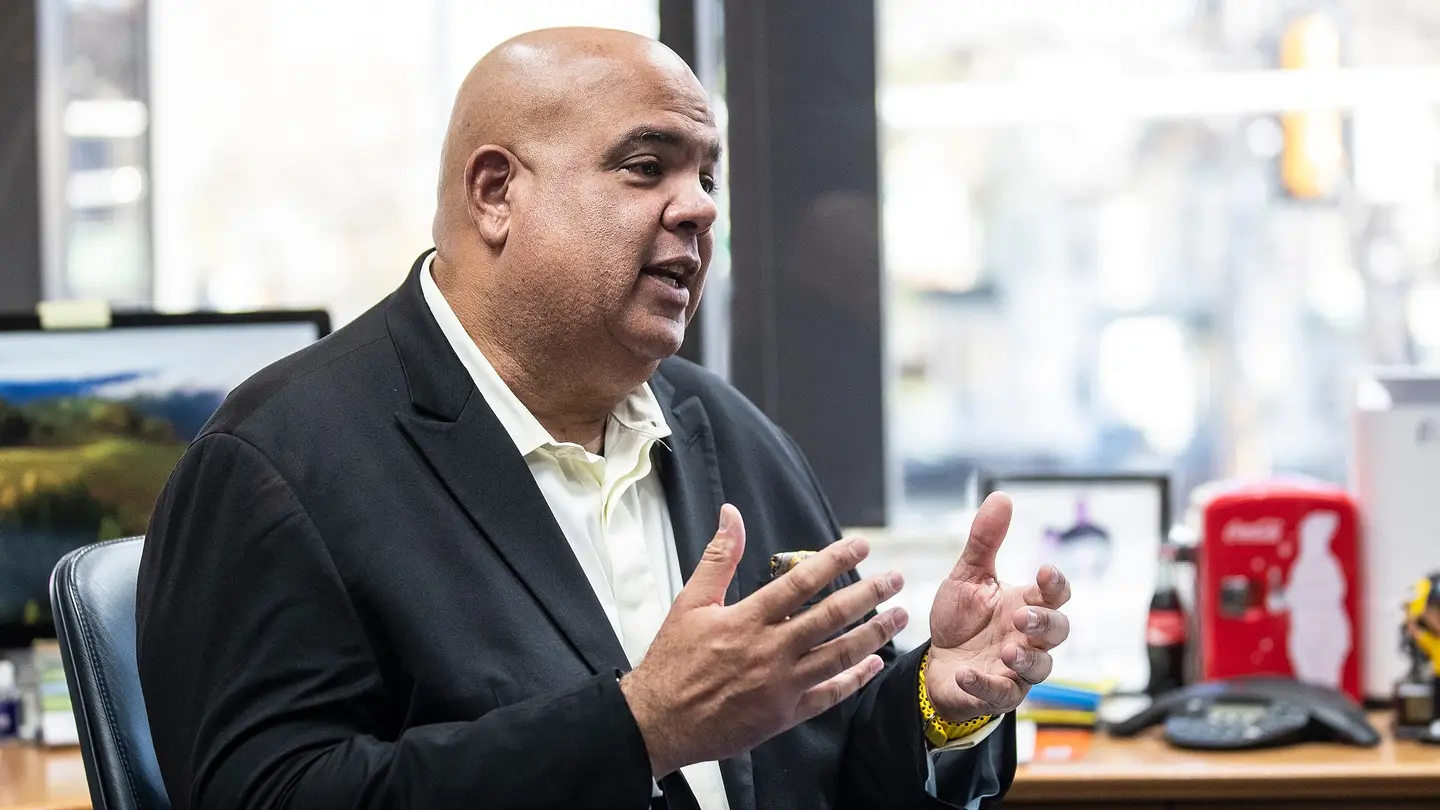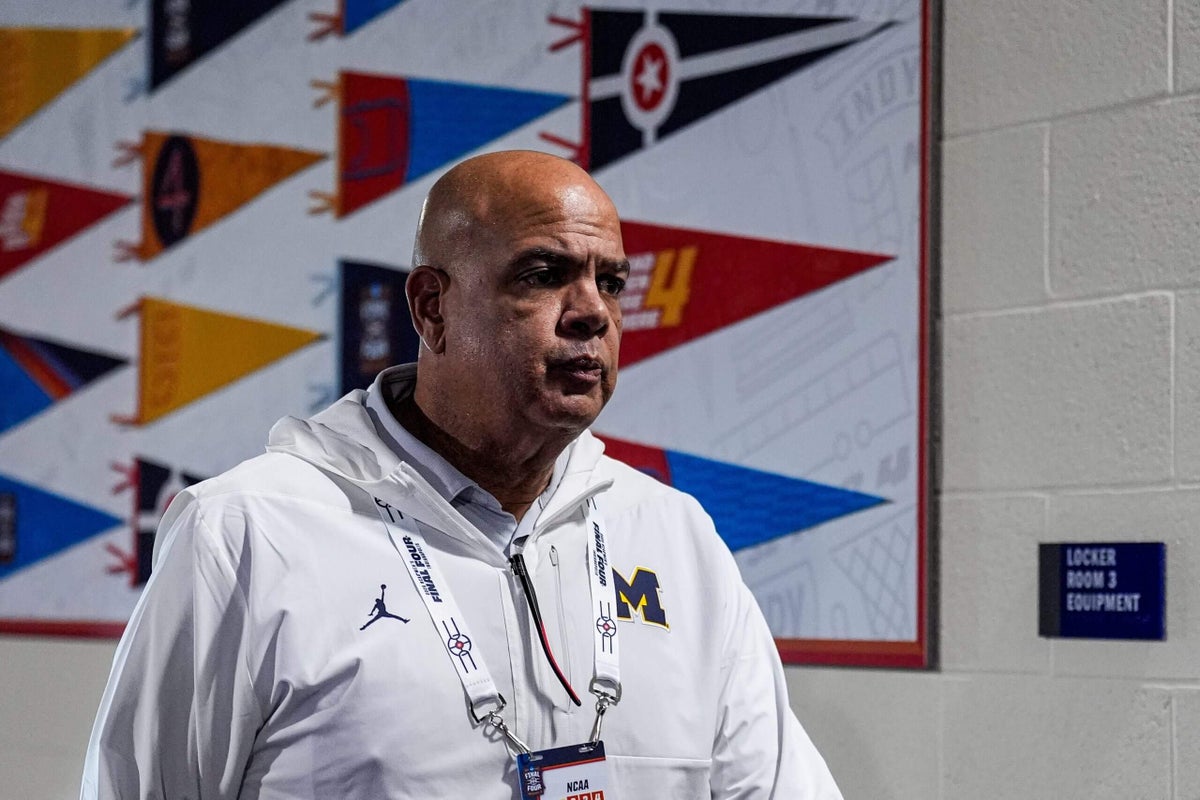
When athletic director Warde Manuel steps down at the end of the year, it will mark a true changing of the guard at Michigan.Manuel is the last man standing from a decade that will go down as one of the greatest — and strangest — in the history of Michigan athletics. The last vestiges of the Jim Harbaugh era have been scrubbed from the football program, which now belongs to Kyle Whittingham. Within the span of a year, Michigan could have a new football coach, a new men’s basketball coach, a new president, a new configuration of its board of regents and a new athletic director.Michigan announced Manuel’s departure Monday, citing issues uncovered by the Jenner & Block investigation into the culture and practices of Michigan’s athletic department. Michigan didn’t put the entire Sherrone Moore scandal at Manuel’s feet, but the summary released by the university pointed to numerous issues that occurred on his watch, including a failure to respond quickly to allegations of misconduct.Manuel’s influence will remain in many areas of Michigan athletics, particularly in the coaches he hired. Like a pitcher exiting the game with men on base, Manuel is on the hook for whatever happens with Whittingham and new men’s basketball coach Mike Boynton. He’ll leave behind banners and trophies, an athletic department in a healthy financial position and some unresolved issues for his successor to address.Here are three thoughts on how Michigan got here and where the Wolverines go next.1. Michigan needed to move onManuel wasn’t to blame for every issue at Michigan, but he was in charge. For all of the good things he accomplished — and there were many — the accumulation of scandals made it untenable for him to continue as athletic director.It’s difficult to move forward with a perpetually embattled athletic director whose future is a constant subject of speculation. In a radio interview last week, Manuel attributed that speculation to internal politics and critics trying to damage him with leaks. It’s true that criticism of Manuel could be over the top, but it often seemed that Michigan’s siege mentality made it harder for Manuel to see that his critics sometimes had a point.“Michigan vs. Everybody,” a slogan that took off during the football team’s run to a national title in 2023, was a fitting description of the institutional mindset the past few years. Michigan always seemed to have someone to blame for its issues: the NCAA, the Big Ten, anonymous sources leaking to the media, rogue actors in the department. The issues were bigger than Manuel, but as AD, he had more power than most to do something about it.Manuel defended his record to the end, responding to several media outlets last week to throw cold water on reports that his exit was imminent. He repeatedly cited the “99.9 percent” of people at Michigan who do things the right way and argued that an athletic department with a bad culture couldn’t have accomplished the things Michigan accomplished in recent years.Those comments, though not completely off-base, revealed a disconnect between the public perception of Michigan and the internal perception. Reports issued by the NCAA in two major infractions cases painted a damning picture of the football program’s attitude toward compliance. Instead of getting its house in order, Michigan allowed that culture to continue under Moore, who repeatedly ran afoul of NCAA rules and university policies before he was fired.In a statement, Manuel thanked president Domenico Grasso for allowing him to stay on for the rest of the year and implement recommendations from Jenner & Block. If Michigan had implemented those changes sooner, Manuel might be staying longer than that.2. Was Manuel Michigan’s last old-school AD?Manuel, a former defensive lineman at Michigan, was a link to the Bo Schembechler era and a throwback to a time when athletic directors were more like ex-coaches than highly polished corporate executives. Without that deep connection to Michigan, Manuel likely would have quit or been fired years ago.“I love this place,” Manuel told the Michigan Insider last week. “My blood, sweat and tears are somewhere inside of Michigan Stadium.”Manuel’s authenticity endeared him to a lot of Michigan fans and many of the school’s big donors. Michigan wasn’t a stepping-stone for him; it was the only place he wanted to be. Manuel rarely presented himself as a voice on big issues of the day in college sports, which was a shame, because he often had smart ideas. His desire to keep a low profile served him well when times were good but created a void in times of crisis.Manuel took over for Dave Brandon, a Domino’s Pizza executive who alienated a lot of Michigan fans with his slick marketing schemes. (Jim Hackett, a former Ford CEO and Michigan football player, hired Harbaugh as interim AD between Manuel and Brandon.) Manuel helped Michigan regain its place among the behemoths in college sports and built a financial juggernaut with an annual budget around $300 million.Manuel took heat from fans for being slow to embrace the potential of name, image and likeness deals, but Michigan made up ground quickly and marshaled the resources to build competitive rosters in its major sports. Though Manuel is leaving Michigan in a solid position, the next athletic director will need a different skill set, particularly in managing organizational culture and being a public face for the athletic department.Jim Harbaugh coached Michigan football to the national title in 2023 under Warde Manuel. (Junfu Han / USA Today Network via Reuters Connect)3. Next AD will have a full plate. Who could it be?Michigan is dealing with ongoing legal matters that may not be resolved before the next athletic director arrives. Those include a lawsuit filed by former linebackers coach Chris Partridge, a class-action complaint tied to hacking allegations against former offensive coordinator Matt Weiss and the potential for further litigation in the case of Moore’s relationship with his executive assistant.Michigan is one of the wealthiest schools in the nation, but the Wolverines aren’t immune from financial pressures felt by everyone. A few weeks ago, Manuel announced Michigan was exploring jersey patches and advertising at Michigan Stadium to generate more money for player compensation. Those moves indicate that finding new revenue streams will be among the new AD’s chief tasks.Hiring an athletic director who can connect with Michigan’s wealthy donors, including Dolphins owner Stephen Ross and Larry and Jolin Ellison, is likely to be a priority. Though Michigan is conducting a search for a new president, Grasso said he would begin the search for a new AD, which suggests Michigan won’t necessarily have to wait for a presidential transition. A few ways Michigan might go:• Michigan could target a sitting athletic director with experience running a major department but no strong ties to Ann Arbor. Clemson’s Graham Neff, South Carolina’s Jeremiah Donati, Tennessee’s Danny White and TCU’s Mike Buddie are a few names who might merit consideration.• Michigan could look for a familiar name who is younger and far enough removed to provide a fresh start — someone like Katie Fraumann, who played basketball at Michigan and worked as an athletic department fundraiser before taking a role at DePaul.• If Michigan wants to take a big swing, it could call Rob Mullens, the longtime AD at Oregon who guided the Ducks’ transition into the Big Ten. Mullens has a son who plays baseball at Michigan and knows how to work with big donors like Nike’s Phil Knight.The new athletic director will have a lot to evaluate regarding Michigan’s coaches. That starts with Whittingham, who will be 71 at the end of his five-year deal. Perhaps he’ll coach beyond that, but it won’t be a surprise if Michigan is back in the market for a football coach within the next few years. Boynton has a two-year deal as men’s basketball coach as the replacement for national title winner Dusty May, meaning Michigan’s new AD will have to decide whether to extend him or move on after Year 1.No matter what, Michigan will be a much different place next year. Much of the past decade was shaped by Harbaugh and Manuel, teammates under Schembechler who guided Michigan through an era of unprecedented success and scandal. That era ended a while ago. Now the next one can begin.— Bruce Feldman contributed to this report.
What’s next at Michigan when Warde Manuel leaves behind both trophies and turmoil?
Three thoughts on Michigan got here and what's next, including potential candidates to take over as athletic director in 2027.
1,383 words~6 min read