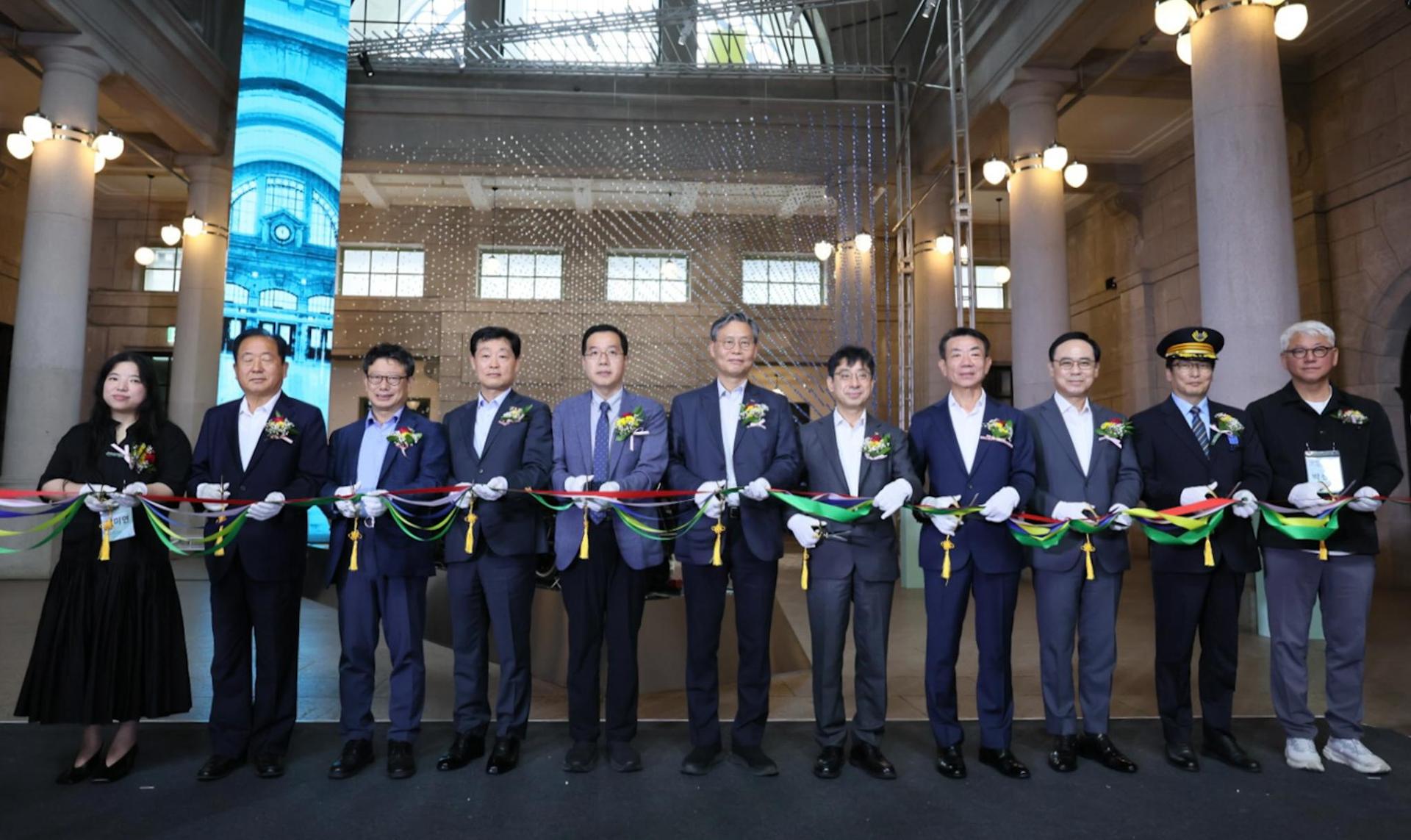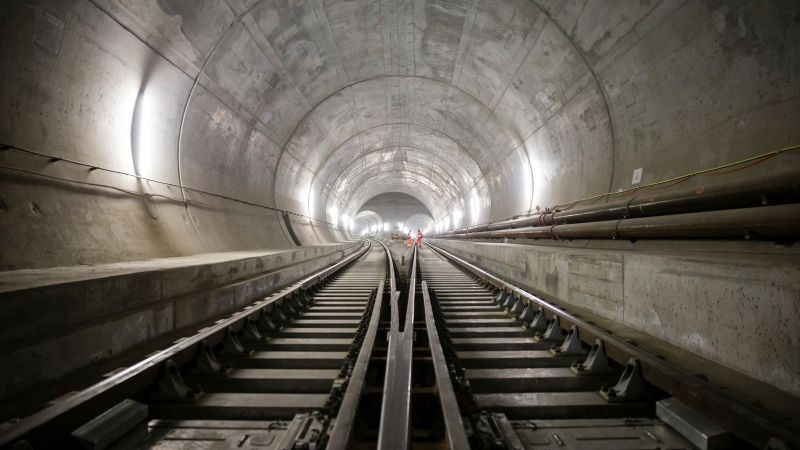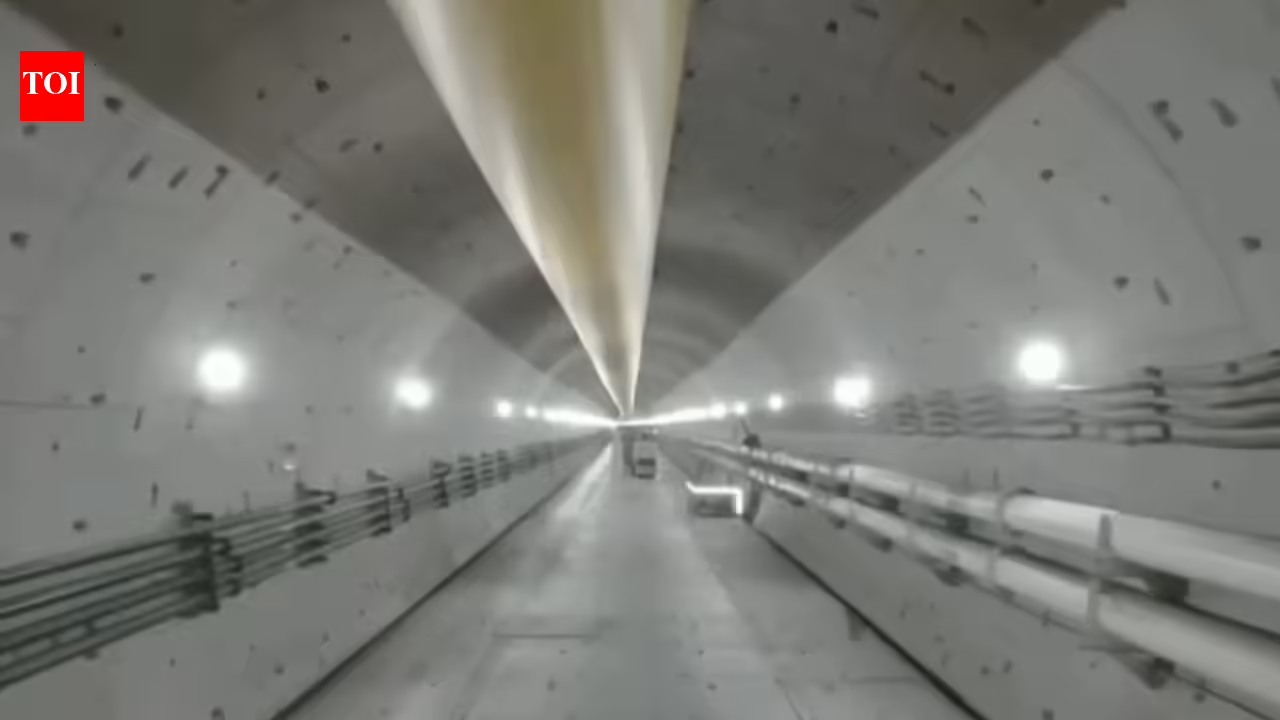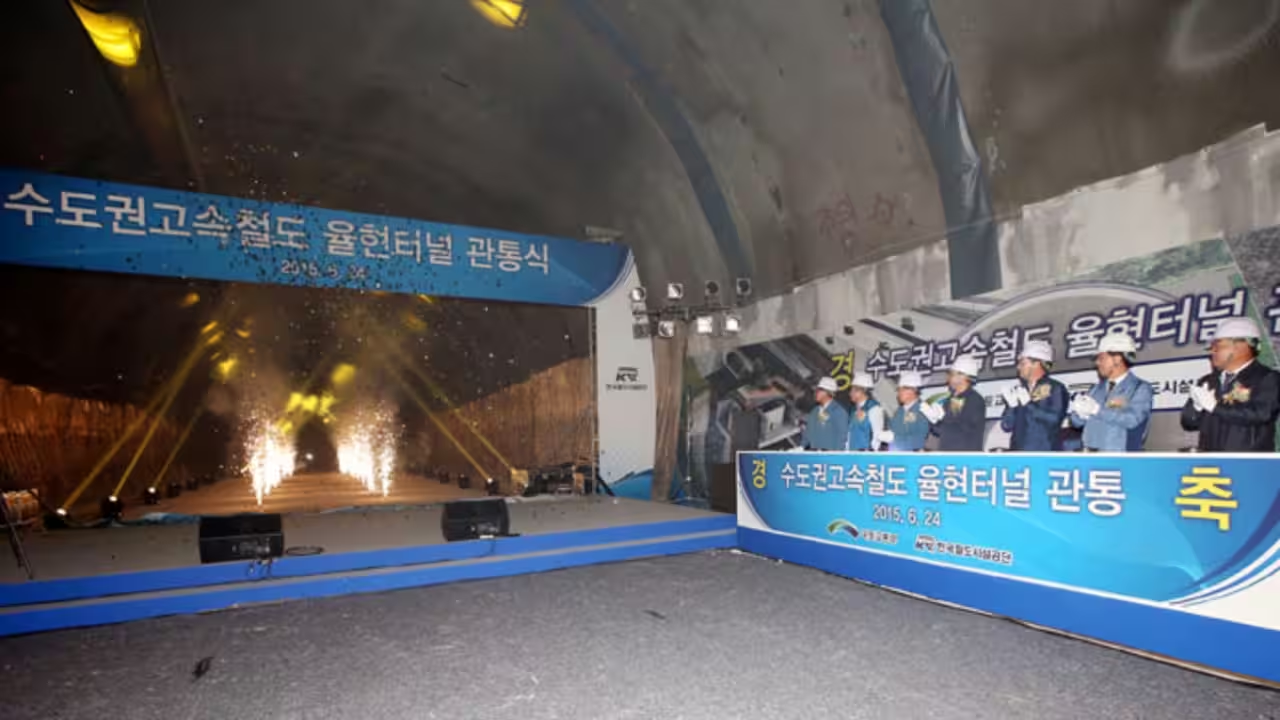
A ceremony is held to mark the opening of the Yulhyeon Tunnel in Yongin-si City, Gyeogngi-do Province | Korea Rail Network Authority, Ministry of Land, Infrastructure and TransportPassengers boarding South Korea’s SRT high-speed trains from Seoul often settle into their seats expecting changing city skylines and mountain scenery. Instead, for much of the trip, the windows show almost nothing. Within minutes of leaving Suseo Station, the train disappears into the Yulhyeon Tunnel, a 50.3-kilometre (31.3-mile) underground passage that remains one of the longest railway tunnel in Asia. Travelling at speeds of up to 300 kilometres an hour (186 mph), passengers spend around 10 minutes racing through solid rock before daylight finally returns. According to Korea.net, the tunnel opened in 2015 as part of South Korea’s Suseo High-Speed Railway project and stretches beneath the Seoul metropolitan area for more than four-fifths of the line between Suseo and Pyeongtaek.A ceremony is held to mark the opening of the Yulhyeon Tunnel in Yongin-si City, Gyeogngi-do Province | Korea Rail Network Authority, Ministry of Land, Infrastructure and TransportFifty kilometres of railway hidden beneath one of Asia’s busiest regionsUnlike mountain tunnels built to cross rugged landscapes, the Yulhyeon Tunnel was designed to carry high-speed rail beneath densely populated suburbs where constructing tracks at the surface would have been disruptive and prohibitively expensive. Construction began in 2012 and continued for three years and five months, requiring engineers to excavate through complex geology while maintaining strict safety standards around urban infrastructure. According to South Korea’s Ministry of Land, Infrastructure and Transport, the completed tunnel measures 50.3 kilometres, making it South Korea’s longest railway tunnel and, at the time of its completion, the third-longest railway tunnel in the world after Switzerland’s Gotthard Base Tunnel and Japan’s Seikan Tunnel. The tunnel alone accounts for roughly 82 to 83 percent of the entire 61.1-kilometre Suseo–Pyeongtaek high-speed railway.Bullet trains cross the darkness in minutesThe tunnel was built for KTX and SRT high-speed trains, which routinely operate at speeds approaching 300 km/h. At that pace, travellers spend only about ten minutes underground despite covering a distance comparable to driving across an entire metropolitan area. The enclosed environment demanded specialised engineering to control air pressure created as trains move through the tunnel at high speed. Engineers also incorporated advanced ventilation, fire protection systems, emergency escape routes and continuous monitoring equipment to meet modern railway safety standards. According to SR, the company operating SRT services, the tunnel was constructed entirely with domestic engineering technologies and advanced excavation methods that prioritised structural stability while addressing concerns about geological fault zones and ground settlement during construction.The project transformed rail travel in southern SeoulBefore the Suseo High-Speed Railway opened, South Korea’s high-speed services primarily departed from Seoul Station and Yongsan Station, requiring many passengers living in the capital’s southeastern districts to cross the city before beginning longer journeys. The Yulhyeon Tunnel helped create a direct high-speed connection from Gangnam’s Suseo Station, significantly improving access for commuters and reducing travel times to destinations such as Busan and Mokpo. According to Korea National Railway’s official history, commercial SRT operations began in December 2016, increasing high-speed rail capacity while shortening travel times by several minutes on major routes and expanding the country’s growing high-speed network. The tunnel remains almost invisible to the millions of passengers who use it each year, yet it has become one of the most important pieces of South Korea’s transport infrastructure.The tunnel was built for KTX and SRT high-speed trains, which routinely operate at speeds approaching 300 km/h | Wikimedia CommonsAn engineering achievement hidden beneath everyday journeysUnlike iconic bridges or mountain viaducts that dominate postcards, the Yulhyeon Tunnel attracts little attention from the people who depend on it. Most passengers experience it simply as an extended stretch of darkness between stations. Beneath the surface, though, lies one of Asia’s most ambitious railway engineering projects, carrying bullet trains safely through 50 kilometres of underground infrastructure every day. For travellers, it lasts only a few minutes. For the engineers who built it, the tunnel represents years of excavation, precision construction and planning that quietly reshaped how millions of people move across South Korea.
Asia’s longest railway tunnel hides 50 kilometres of a South Korean bullet-train line underground: Passengers race through the darkness at 300 kilometres an hour, seeing nothing
Passengers boarding South Korea’s SRT high-speed trains from Seoul often settle into their seats expecting changing city skylines and mountain scenery. Instead, for much of the trip, the windows show almost nothing.
685 words~3 min read