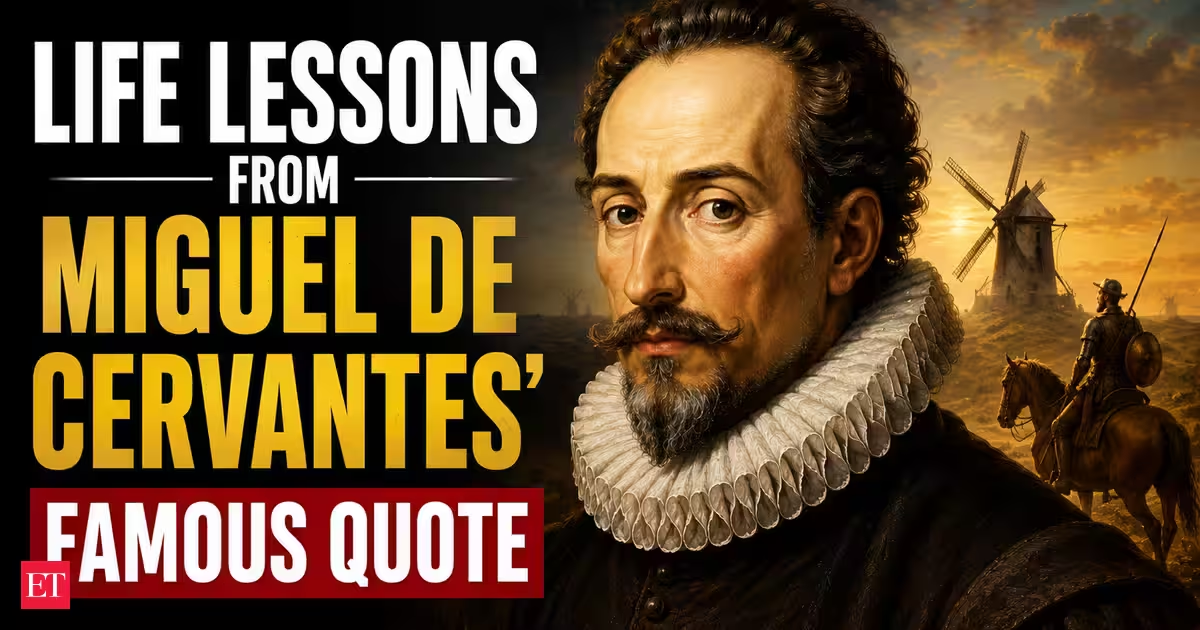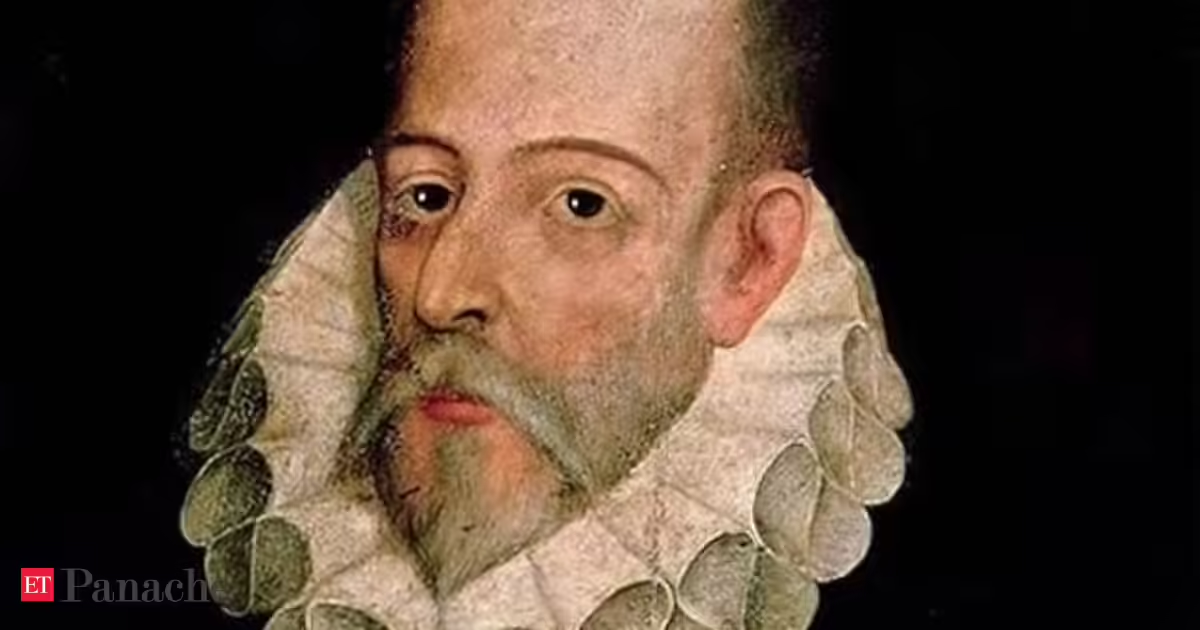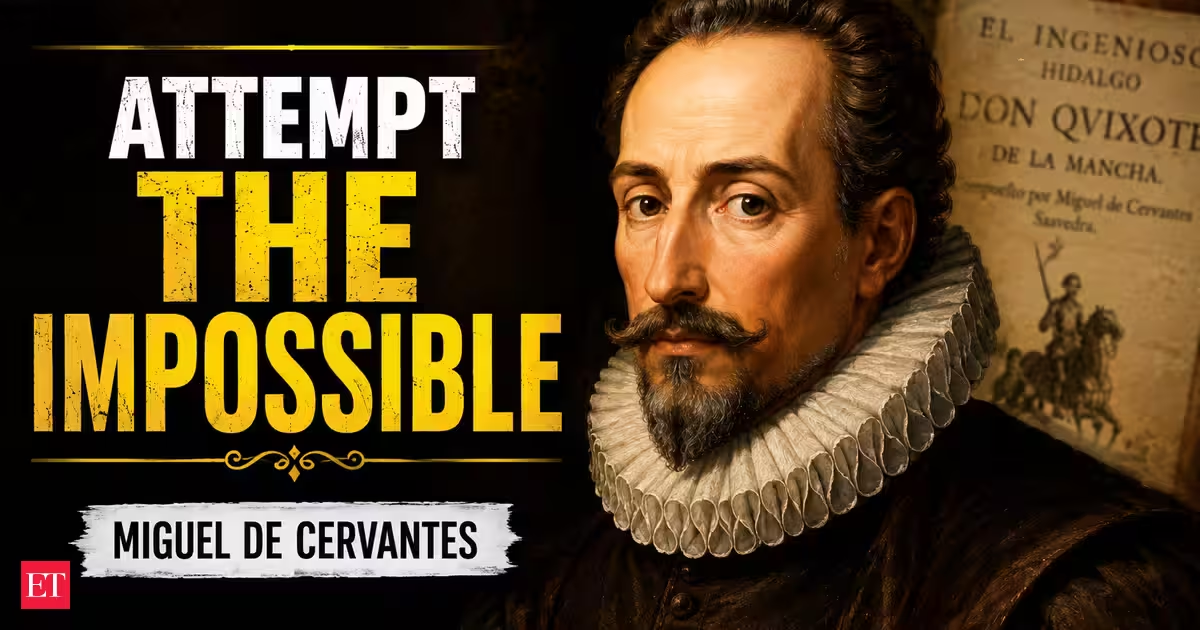
Quote of the Day by Miguel de Cervantes: Most people have abandoned a dream long before they truly tested its limits. The entrepreneur never launches the business because failure seems too expensive. The student avoids applying to a prestigious university, convinced rejection is certain. The artist leaves the canvas blank, fearing criticism more than regret. Often, the greatest barrier isn't lack of talent or opportunity—it is the quiet decision not to try.That hesitation is exactly what makes one observation from Miguel de Cervantes feel as relevant today as it did centuries ago: "In order to attain the impossible, one must attempt the impossible." At first glance, the words sound boldly optimistic. Look a little deeper, and they reveal something more practical. Every breakthrough that once appeared impossible—from scientific discoveries to personal triumphs—began when someone accepted uncertainty instead of avoiding it.In an era where people often compare themselves to carefully edited success stories online, Cervantes' reminder feels refreshingly honest. Extraordinary outcomes rarely come from safe choices. They begin with courageous attempts.Quote of the Day: Why extraordinary achievements always begin with extraordinary attemptsQuote of the Day by Miguel de Cervantes: "In order to attain the impossible, one must attempt the impossible." - Miguel de CervantesThe quote is widely attributed to Miguel de Cervantes, the celebrated Spanish novelist best known for Don Quixote. While its exact appearance in his writings is debated, the statement captures one of the central themes associated with his work: progress begins when people dare to pursue what others dismiss as unrealistic. Quote of the Day by Miguel de Cervantes, “In order to attain the impossible...” reveals why every extraordinary achievement begins with one bold attempt. Discover its meaning, psychology, and timeless life lessons.Its immediate meaning is straightforward. If a goal appears impossible, refusing to try guarantees failure. Only those willing to attempt difficult challenges create the possibility of achieving them.What Does This Quote Really Mean?On the surface, Cervantes encourages bold action.Beneath that simple message lies a richer philosophy.The quote doesn't promise success. Instead, it reminds us that impossible achievements only become possible through repeated attempts. Every remarkable accomplishment begins as an uncertain experiment.Emotionally, the quote speaks to fear.People naturally avoid situations where failure feels public or painful. Yet many life-changing experiences—starting a company, writing a book, changing careers, rebuilding after loss—require stepping into uncertainty before confidence arrives.Symbolically, "the impossible" represents any challenge that seems beyond our current abilities.Psychologically, it challenges a common mental trap: believing our present limitations define our future potential.Instead of asking, "Can I definitely succeed?" Cervantes invites a different question:"Am I willing to make the attempt?"That subtle shift changes everything.Why This Quote Matters More Than Ever TodayModern life often rewards visible success while hiding the countless failures that came before it.Social media highlights promotions, bestselling books, successful startups, and championship victories. Rarely do we see rejected manuscripts, failed interviews, abandoned prototypes, or years of quiet practice.As a result, difficult goals can seem unreachable.Cervantes' words offer a healthier perspective.Innovation depends on people attempting ideas others initially dismiss.Scientists pursue experiments that may never work.Athletes train for records no one has achieved.Entrepreneurs invest years into businesses without guarantees.Teachers encourage students to solve problems they have never encountered before.Even personal relationships require courageous attempts—starting difficult conversations, apologizing sincerely, rebuilding trust, or opening ourselves to vulnerability.The impossible isn't always spectacular.Sometimes it's simply becoming a better version of ourselves than we believed possible.The Psychology Behind the QuoteModern psychology supports many of the principles reflected in Cervantes' words.Growth mindsetPsychologist Carol Dweck's research suggests that people who believe abilities can develop through effort are more likely to embrace difficult challenges than those who see talent as fixed.Attempting difficult goals becomes an opportunity to learn rather than proof of inadequacy.Self-efficacyAlbert Bandura introduced the concept of self-efficacy—the belief that we can successfully perform tasks through effort and learning.Confidence often follows successful experiences rather than preceding them.People become confident because they repeatedly attempt difficult things.ResilienceResilience research consistently shows that overcoming setbacks strengthens future problem-solving abilities.Failure, while uncomfortable, often becomes valuable information instead of permanent defeat.Intrinsic motivationWhen people pursue meaningful goals because they genuinely care about them—not merely for rewards—they persist longer through uncertainty.That persistence often separates remarkable achievements from abandoned ambitions.Life Lessons from Miguel de Cervantes' Quote1. Impossible goals begin as unpopular ideasHistory is filled with innovations that initially seemed unrealistic.The first attempt often attracts skepticism before admiration.2. Courage comes before confidenceMany people wait to feel ready.Successful people often begin before complete confidence arrives.A new manager learns leadership by leading, not by waiting to feel like a leader.3. Failure is part of explorationEvery unsuccessful attempt narrows the path toward a better solution.Inventors, researchers, and athletes rarely succeed on the first try.4. Small actions build extraordinary outcomesAttempting the impossible doesn't require dramatic gestures.Writing one page each day eventually produces a novel.Saving consistently creates financial security.Daily practice builds expertise.5. Fear shrinks after actionThe anticipation of failure often feels worse than failure itself.Taking action replaces imagined obstacles with real experience.6. Ambition should be paired with persistenceBig dreams require sustained effort.Momentary inspiration matters less than consistent progress.How to Practice This Wisdom Every DayApplying Cervantes' message doesn't require chasing world-changing achievements.At work, volunteer for projects that stretch your abilities rather than remaining within familiar tasks.In education, choose courses that genuinely challenge your thinking instead of only protecting your grades.Parents can encourage children to celebrate effort alongside achievement, teaching that trying difficult things matters even when success isn't immediate.In friendships and relationships, attempt honest conversations instead of avoiding uncomfortable truths.If you're building a business, treat setbacks as feedback rather than final verdicts.For personal growth, choose one goal each month that feels slightly beyond your comfort zone.Over time, today's impossible often becomes tomorrow's routine.Miguel de Cervantes Saavedra (1547–1616) was one of Spain's greatest literary figures and one of the most influential writers in world literature.Born near Madrid, Cervantes lived a remarkably eventful life. He served as a soldier, suffered serious injuries during the Battle of Lepanto, spent years in captivity after being captured by pirates, and later worked in several government roles while pursuing writing.His masterpiece, Don Quixote, published in two parts in 1605 and 1615, transformed literature. Often described as one of the first modern novels, it explores imagination, idealism, human dignity, and the tension between dreams and reality.Although Cervantes experienced financial struggles and personal hardships throughout much of his life, his literary legacy eventually became one of the most celebrated in history.Today, his influence extends far beyond Spanish literature, shaping storytelling, satire, and modern fiction around the world.Why Miguel de Cervantes' Words Carry WeightCervantes understood setbacks personally.His life included war, imprisonment, financial difficulties, and years of uncertainty before achieving lasting literary recognition.Rather than presenting effortless optimism, his writing often explored perseverance in imperfect circumstances.That lived experience gives added meaning to the quote.He wasn't encouraging reckless ambition. He was recognizing that meaningful achievements demand persistence despite uncertainty.His characters often chase ideals that others consider unrealistic, reminding readers that human progress frequently begins with people willing to imagine something different.The world changes rapidly, but human emotions remain remarkably consistent.People still wrestle with self-doubt. They still hesitate before major life decisions.They still wonder whether ambitious dreams are worth pursuing.Cervantes' words continue to resonate because they replace certainty with possibility.Instead of promising guaranteed success, they celebrate courageous effort.
Quote of the Day by Miguel de Cervantes: “In order to attain the impossible, one must…” — Inspiring lessons on courage, resilience, fearless ambition, leadership, personal growth, achieving impossible goals, and why every extraordinary success begins with a bold attempt
Quote of the Day by Miguel de Cervantes, “In order to attain the impossible, one must attempt the impossible,” is a timeless reminder that great achievements begin with bold action. Explore the quote's meaning, Miguel de Cervantes' inspiring life, practical lessons on resilience and leadership, and why this wisdom still motivates millions to chase ambitious dreams.
1,203 words~5 min read