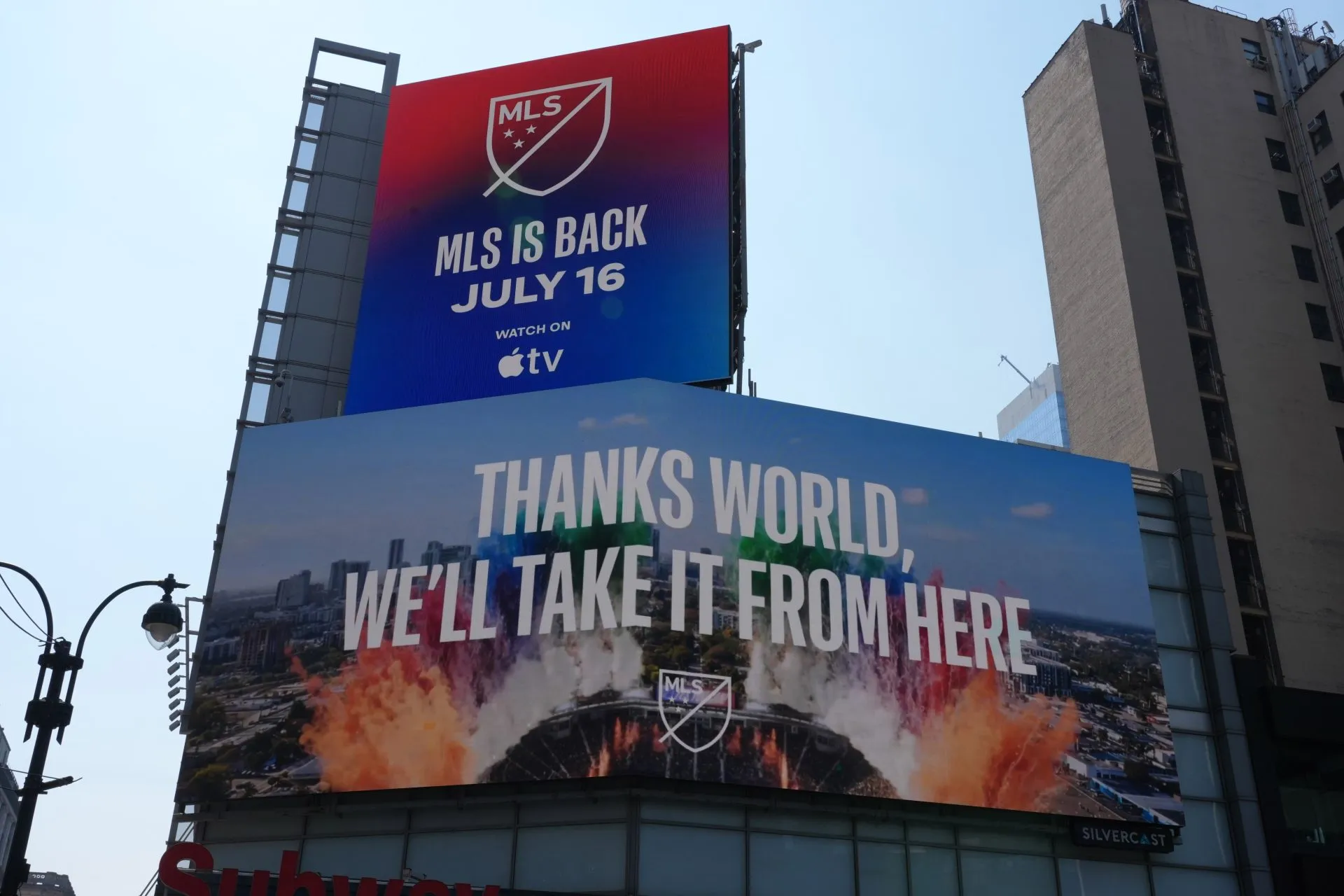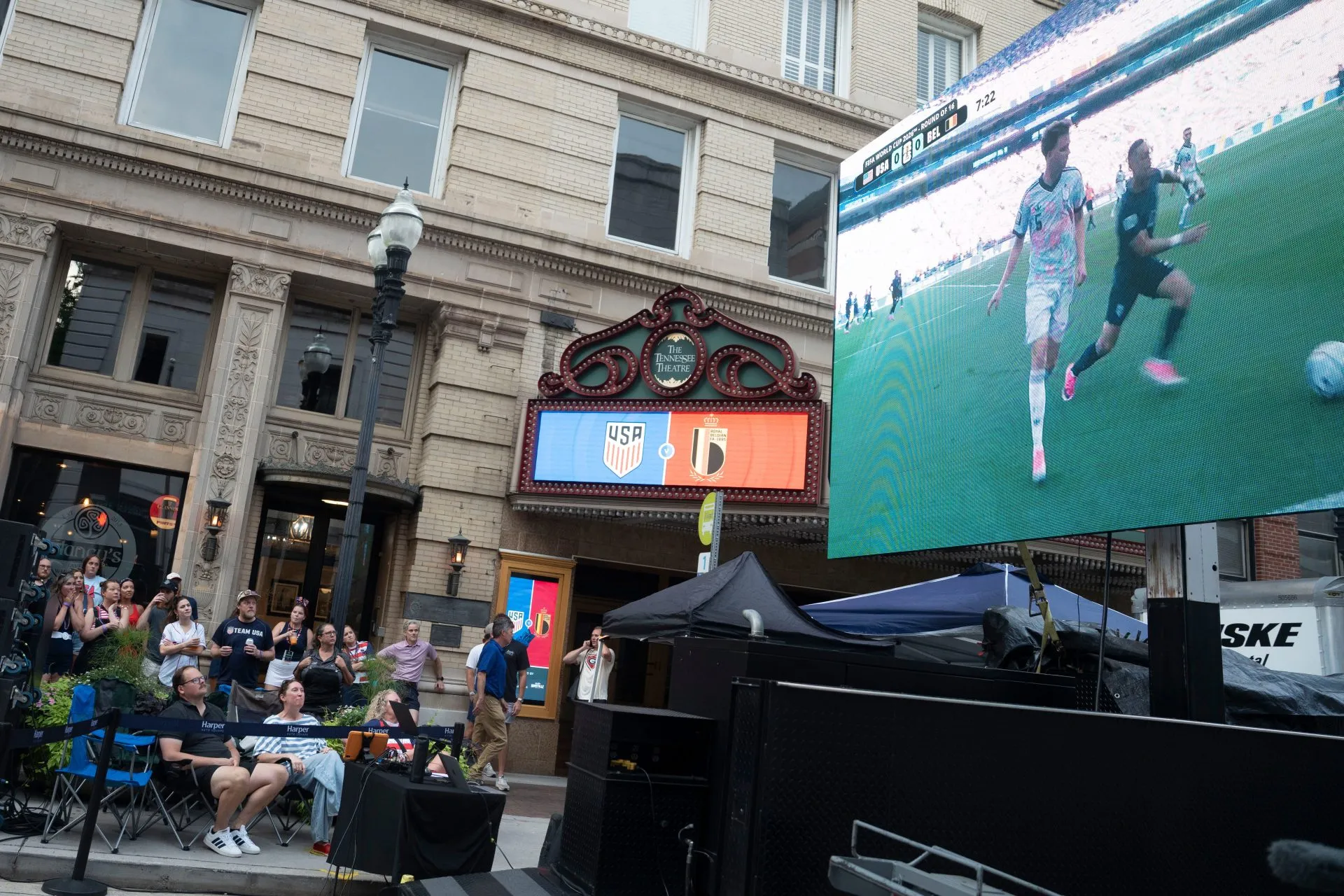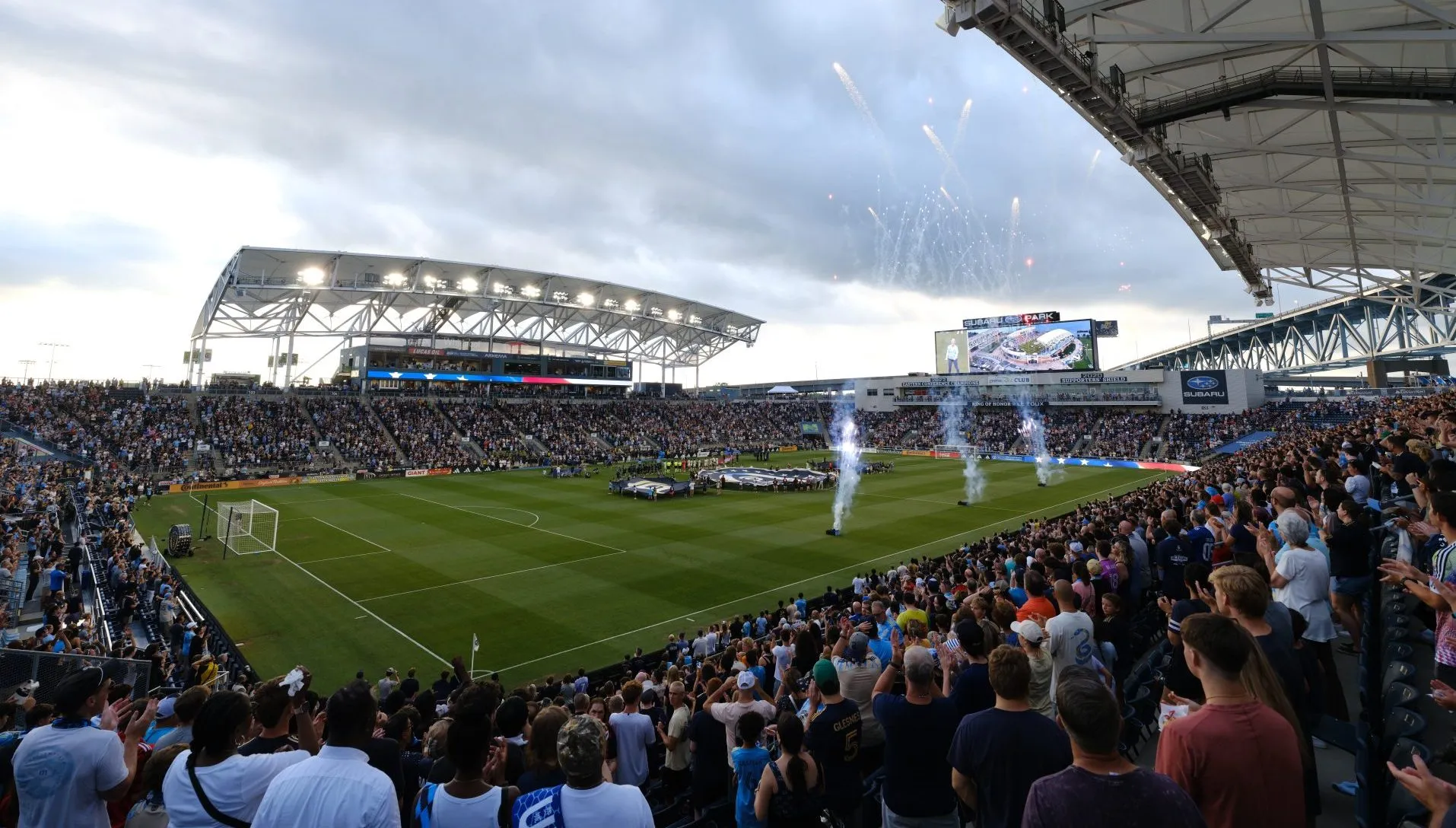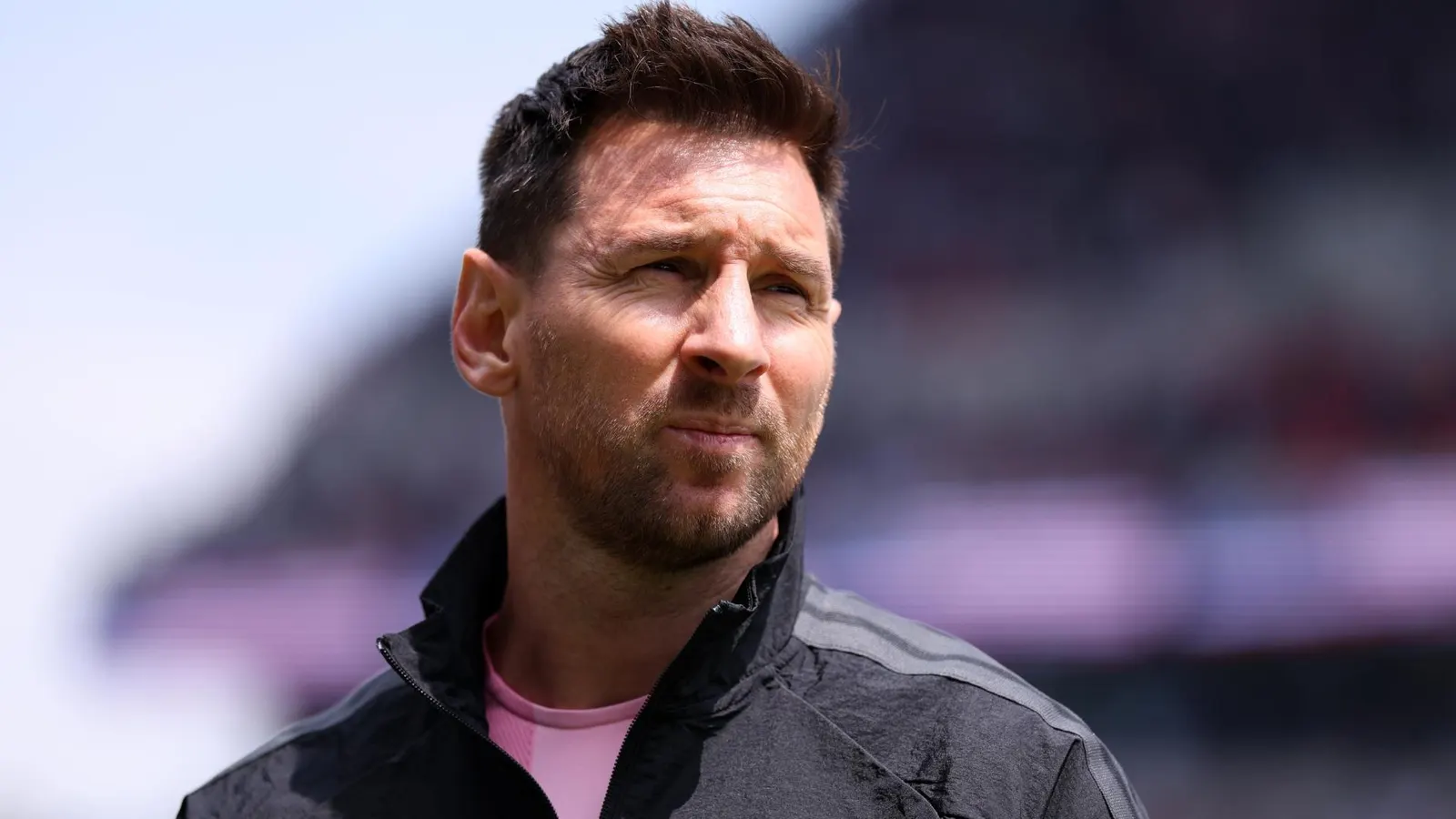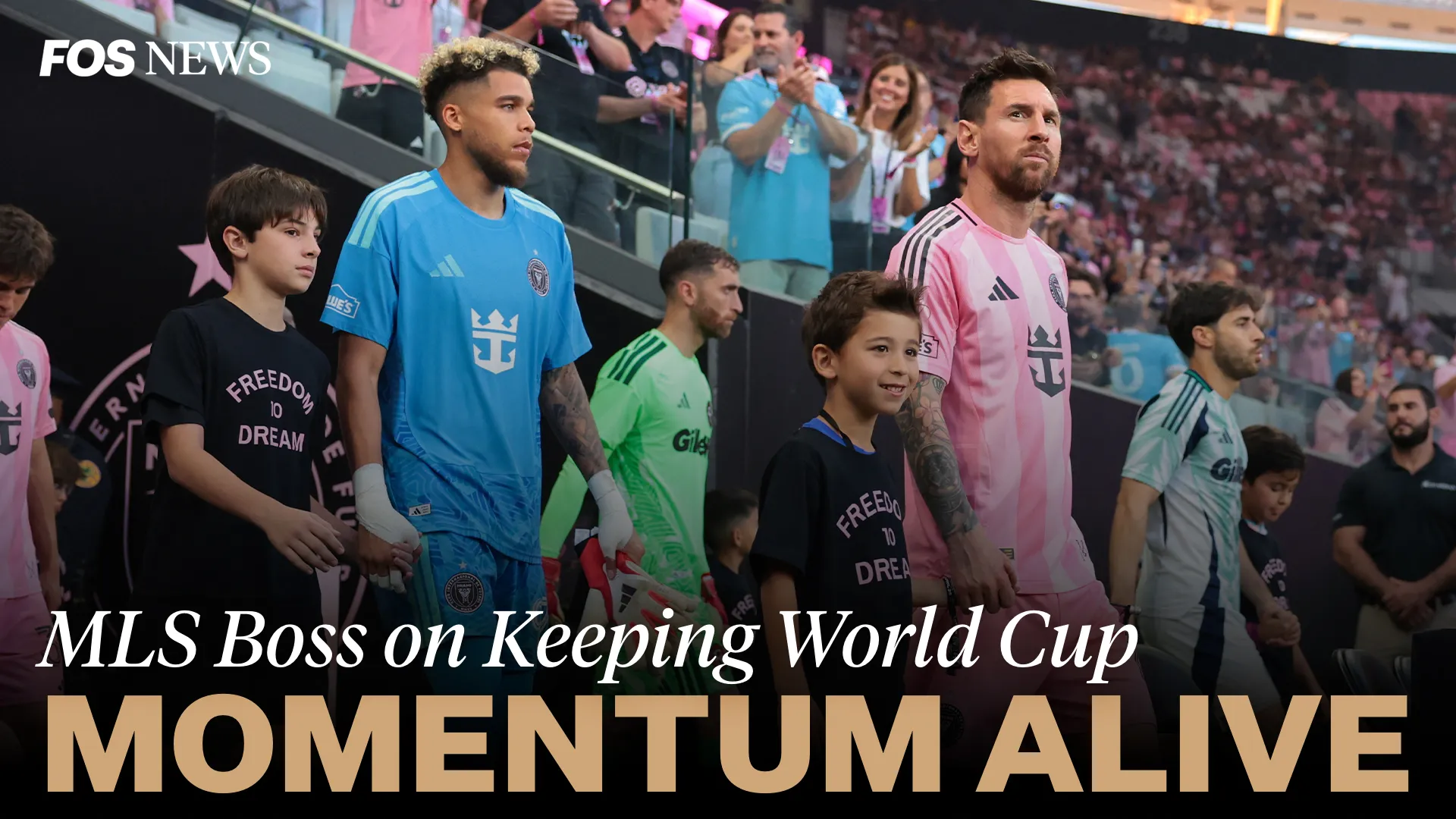
As the World Cup entered its final week, Major League Soccer — which had been, on a national level, almost entirely invisible — launched its national advertising blitz off the summer’s tournament.The campaign, which was billed as the largest effort in league history, centered around a tag line: Thanks world, we’ll take it from here.It was meant to signal that MLS was restarting after its World Cup break, and also that the league was ready to accept any new fans of the game. But the campaign also raised a critical question: Is MLS actually ready to “take it from here?”MLS was created as a direct result of the U.S. hosting the 1994 World Cup. It spent the next 32 years first surviving, then building permanence in the American sports landscape, quite literally, via billions in soccer-specific stadiums and training facilities. That foundation now exists for the league to take its next step.Yet, despite an eight-year runway since North America was awarded the 2026 World Cup, the league won’t be coming out of what has been an enormously popular summer for soccer with major changes. Instead, its major shifts — a new summer-to-spring calendar and a new competition format — won’t launch until at least 2027. And the biggest change, revamping how teams spend on rosters, has yet to be decided.League commissioner Don Garber said MLS was focused on building out infrastructure since the World Cup bid was won in 2018, which included adding eight new teams and several new stadiums. Others counter that the league took too long to begin weighing its evolution on a parallel path. It wasn’t until Lionel Messi’s arrival in 2023 that MLS took up the discussions in earnest.Now, the changes are coming at a time in which the league is going through its first major leadership change in nearly three decades — Garber’s contract ends in 2027 and league owners are expected to soon vote on his replacement — and also in the midst of collective bargaining negotiations with the MLS Players Association.Fox Sports’ Rob Stone interviews MLS commissioner Don Garber at the league’s return-to-play kickoff event in New York (Caleb Bowlin / Getty Images)Interviews with key stakeholders in the league, including Garber, Orlando City owner Mark Wilf, NYCFC CEO and president Brad Sims and three-time MLS Cup-winning general manager Garth Lagerwey, yield an optimistic picture of the league’s future. But all acknowledged that the major decisions in front of them will require a more aggressive stance that will carry more risk.“The uniqueness, the fun, and the excitement of Major League Soccer is it’s always been going through a period of reinvention to capture the opportunity,” Garber told The Athletic last week. “We needed to capture the opportunity of developing players. We needed to capture the opportunity of having some global superstars. We needed to have cathedrals for our sport that were public-private partnerships when MLS wasn’t really even able to ask about that belief in the early 2000s.“And now it is about what ways do we need to perhaps invest differently in the product on the field so that we can capture more attention ultimately from a global media market.”Lagerwey put it more bluntly.“If you want it, it feels like the time is now or never,” he said. “We’ve had this wave. We’ve had all this investment. We’ve leveraged the infrastructure. … Is this the time to lean in? Yeah, it is.”Cardenas on Spain's victory‘It’s a must-do; it’s not a maybe-do’There is agreement on one thing: change must come. It’s what that change looks like that remains unclear.“It’s a must-do; it’s not a maybe-do,” Garber said. “And it’s going to take time to figure out the way to get it right, because everything that MLS is today, in comparison to many leagues around the world, is about the steady growth based on thoughtful strategy and partnership engagement on figuring out what we need to do to move to the next level. And that’s not ripping everything up that got us here. It’s evolving it. It’s making a couple of bold steps.”There is certainly disagreement about whether or not ripping up everything is the way forward.“Take it down to the studs,” Inter Miami owner Jorge Mas told me for my recent book The Messi Effect. “Down. To. The. Studs.”League owners and executives stand on both sides of the issue. It’s proof of a boardroom that has evolved and grown to 30 ownership groups, all with different levels of financial commitment, investment horizons and ambition. Consensus is increasingly rare. And it’s what makes the pick for commissioner so vital. The person must be able to navigate through that room and find solutions without the sort of unanimity MLS has long preferred.What’s inarguable is that MLS’s system is convoluted, and it’s one that has been Frankensteined together over years to satisfy owners’ requests and whims. Many of the rules served a purpose or solved a problem at a specific time, namely to try to keep player costs down and maintain competitive balance. But as MLS teams started to spend more money, the rules have increasingly inhibited teams from competing at a higher level.Current rules, for example, essentially prohibit teams from signing any player with a total cap hit — salary, acquisition cost and bonuses — of more than $1.8 million unless they use a designated player spot. That eliminates enormous swaths of players in their prime around the world, many of whom are squad players in other leagues. The level has plateaued as a result.French World Cup winner Antoine Griezmann is one of MLS’s newest high-profile signings (Alex Menendez / Getty Images)“The total spend for MLS teams is actually quite high,” Lagerwey said. “It is comparable, in a lot of cases, to Spain or France, as examples. Now, I’m not saying PSG, I’m not saying Barça or Atlético Madrid or Real Madrid, but with the exception of those big, big clubs, (the distinguishing factor) is not revenue. It’s TV money.”Lagerwey said the league too often puts caps on things like player development with rules that restrict recruitment in other teams’ “homegrown territories,” which gives MLS teams monopolies on youth talent in their market and disincentivizes youth scouting, or by limiting how much of a player sale can be put back into the roster spend.The way the league splits up spending into different pots — general allocation, targeted allocation, under-22 initiative, designated players, homegrown players, senior roster and reserve roster — makes balanced rosters difficult to construct while also making it tough for both casual and devoted fans to keep up.Sporting directors in the league almost unanimously agree that a salary cap ceiling and floor, with no restrictions and bolstered by designated player spots carved out for Messi-type players that change marketing and commercial equations, would improve MLS without even adding any expenditure. Right now, the vast majority of money is focused on a handful of players.“You have to distribute money across the roster,” Lagerwey said. “You can’t have a top-heavy roster where you have two or three players that are exceptions and then players on minimum salary that are joining them in the starting lineup. And I don’t want to be absolute. (In a more flexible system), an owner can build the team that he wants to build. … (But) do you want that $50 million spent on two guys or three guys at $15 million a pop and then $5 million on the rest of the roster? Or do you want 10 players making $5 million each?”Such a system would encourage some teams to lean into different strategies. Some would prioritize domestic player development, into which league owners have poured hundreds of millions of investment and which ultimately impacts the U.S. men’s national team. Others might invest in bigger-name foreign players. Both strategies would benefit from an overall higher-quality on-field product, which in turn sets the ceiling for elite player development.It would also simply allow more teams to sign more good players at the standard global prices.“We have the opportunity here because a lot of top talent is going to want to come here, but there’s still going to be a price to it,” Wilf said. “There might be some discounting to the fact that we have such a great market and great opportunity, but let’s not kid ourselves: it’s a global market, and we’ve got to be competitive.”Lagerwey said that optionality would also create better storylines away from the pitch, from the different roster-building strategies, to teams in different phases in their roster-build cycles, which leads to a more robust trade and internal transfer market, like in Major League Baseball when some teams are buyers and others sellers at the trade deadline.Lionel Messi shakes hands with MLS commissioner Don Garber after winning the 2025 MLS Cup (Rebecca Blackwell / AP Photo)It all ties into another key benefit of a system with fewer constraints: An easier, more transparent rulebook that would allow fans more ways to interact with the league and salary cap, much as they do around the NFL, MLB, NBA and NHL.Garber acknowledged that transparency is an important step to increased fan engagement. But as the league finalizes its “MLS 3.0” plans around the last arm of a three-tiered change strategy — calendar flip, competition structure and roster rules — he insisted the approach should continue to be patient and deliberate.“Now that we have the hardware, how do we ensure that as the hardware has become best in class, that we have software that can also be best in class,” Garber said. “I think that will happen over time. I will say that it is called MLS 3.0 for a reason, because it is a transformation of the way we’re going to think about going about our business. But it is not a flipping of the switch.”It will be interesting to see whether the next commissioner — likely to be either current LAFC co-owner Larry Berg or former Fox executive David Nathanson — sees things the same way and what the board’s vote says about its take on the direction of the league. Berg is currently co-chair of the powerful sporting and competition committee, which has overseen the process around the MLS 3.0 changes.As the league emerges from this summer of soccer, however, there is a strong belief that missing the immediate moment shouldn’t mean missing the bigger picture.“We can make this thing much, much bigger,” Lagerwey said. “Now it’s time to work together and to seize this moment and to see what MLS can be. Because I think there’s such potential and such a great opportunity right now.”Going from local entertainment to a global productMLS has, especially over the last 20 years, built up a fairly consistent local business.Most teams sell out their stadiums and fill suites and premium hospitality. They have local corporate partnerships and thriving youth programs. And yet, many still lose money. It’s because professional sports revolve less around those local revenue streams.“The hole is broadcast (revenue),” Sims said. “And everywhere else around the world is the opposite.”The task of finding that national and global audience has been the focus of much of MLS’s strategy in recent years. Its deal with Apple — originally a 10-year, $2.5 billion deal that was eventually shortened to end in 2029 and also includes MLS carrying production costs — was based on the idea that MLS could be watched almost anywhere in the world.League owners and executives wanted to open up access. But while MLS says its audience has increased this year now that it is out from behind the subscription-paywall service under which it first launched, MLS still has yet to fully resonate nationally. And that’s despite the greatest player of all time, Messi, who just led Argentina back to the World Cup final at age 39, playing for Inter Miami.It is not a coincidence that Nathanson, who led Fox when it won the World Cup rights, is a finalist for the commissioner job. League owners understand how critical increased broadcast rights are to the future of MLS.MLS and Apple altered the terms of their broadcast rights deal, which could lead to a change for the league in 2029 (Isaiah Vazquez / Getty Images)Finding a solution will require bridging the two perception gaps that exist around the league. The first is fans who think MLS is far worse than it is. The second is league owners who think MLS is better than it is. MLS needs to convince fans it’s worth watching, and it needs to convince owners that spending differently will improve the league and drive more viewers.Sims has a strong idea of just how far behind the league is in terms of broadcast revenue. As the American arm of City Football Group, the United Arab Emirates-run group that owns Manchester City, he has seen first-hand how European teams operate.“Our City Football Group club Girona in Spain, their broadcast revenue that they get from La Liga deals, both domestically and globally, in the past, is like 20x what New York City FC gets,” Sims said.Solving for that problem is not easy, but theories over how to influence it revolve mostly around one key idea: improving the product on the field.“MLS owners have put their money where their mouth is (in terms of infrastructure and youth development),” Lagerwey said. “But take that investment now and plow it into the product.”There are layers to that issue, though. The first revolves around the competition itself and the long-glorified guiding principle of MLS: competitive balance. It is canon carried over from the NFL by, among others, the Hunt and Kraft families, two of the founding owners of MLS.Some believe it’s a fading north star.The NFL, unlike MLS, operates in a closed market. The best American football players aspire to play only in the NFL. There is no real alternative. But MLS exists in a global marketplace. It can’t control the price of players. And in an increasingly competitive landscape in which Americans can watch any soccer league in the world, in order to win over soccer fans, MLS needs to prove it can measure up to those other leagues. That hasn’t happened.MLS teams have failed to win 24 of the last 25 Concacaf Champions League/Champions Cup competitions, which has been dominated by Liga MX, the Mexican first division. (Lagerwey was general manager of the only team to win the competition in that span, the 2022 Seattle Sounders). Meanwhile, the FIFA Club World Cup has provided another enormous stage for MLS to compete against top leagues and to convince fans it boasts a better product than many think. Despite the expanded 2025 tournament taking place in the U.S., a Messi-led Inter Miami was the only MLS team to win or advance. The Sounders and LAFC went a combined 0-5-1.What will it take for MLS clubs to share the same stratosphere as the likes of Champions League winner PSG? (Buda Mendes / Getty Images)Rather than lean into those results and insist to fans they would focus on improving, MLS declared the tournament a success. (MLS has so far failed to qualify a team for the 2029 Club World Cup after seeing its clubs fall in both the 2025 and ’26 Concacaf Champions Cup.)Some owners believe MLS needs to craft a new plan that carves out room for competitive balance while giving some teams more room to build rosters that can better compete on those global stages, thus helping bolster MLS’s reputation. Lagerwey and Sims pointed out that the league’s playoff system, which doesn’t exist in Europe and regularly features upsets, including Atlanta United’s stunning ouster of Messi’s Miami in 2024, adds a layer of competitive balance that would protect against one or two teams dominating the competition.Wilf, who owns Orlando City and the NWSL’s Orlando Pride, as well as the NFL’s Minnesota Vikings, said it was “a debate as ownership we’re constantly having.”“I think you need maybe an element of both,” he said. “You have some leagues where it’s complete parity, and maybe you have to balance the fact that we’re global here, and maybe you need some clubs that have the talent that can compete on that (global) level. But overall, I think parity is a good thing. I think the fans want to see competitive action; they want to see their teams competing at the highest level, yet at the same time having very thrilling matches. So it’s always a balance.”At a time when MLS is trying to pull in a bigger audience, however, Sims said there is plenty of evidence that sports fans follow dominant teams, whether in global soccer or in the NFL, MLB or NBA. MLS is trying, essentially, to be the exception to that rule.“Nobody is bidding on La Liga rights because they really want to be able to show Girona games or Getafe games or Osasuna games or whoever else,” Sims said. “It’s two teams that drive that. And in Italy it’s two or three teams, and in England it’s six or seven teams. I feel like there’s a model there. And what’s prevented us from going that way is (that) the league was rooted in this idea of parity.“It’s a matter of owners trying to grapple with it. In some ways they want their cake and to eat it too. They want bigger broadcast revenues, but they also want parity. And I don’t know that that’s really possible.”There are no easy solutions, but there is belief that MLS can get to the right ones. Whether it does will determine just how ready the league was to “take it from here.” MLS may have missed the opportunity to capitalize immediately off of the 2026 World Cup. It puts even more at stake around getting everything aligned in 2027.“This is the logical next step for MLS,” Lagerwey said. “To say, hey, we’re going to address the product, we are going to simplify the rules, we are going to lower all the barriers to entry for domestic players, foreign players, television audience — and we’re all in.”
MLS says it’ll ‘take it from here’ after the World Cup. So where is the league going?
MLS has made a bold proclamation amid its quest to crack the global elite. Will its actions match the stated ambition?
3,004 words~14 min read