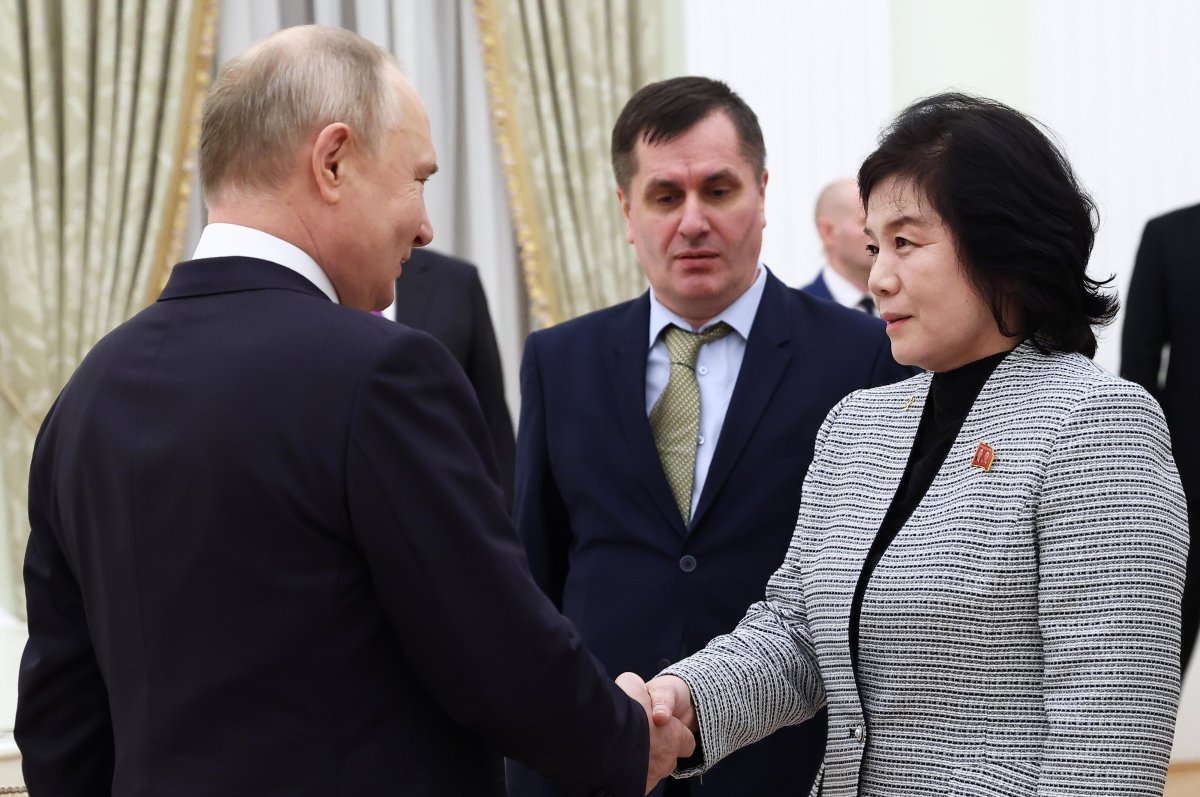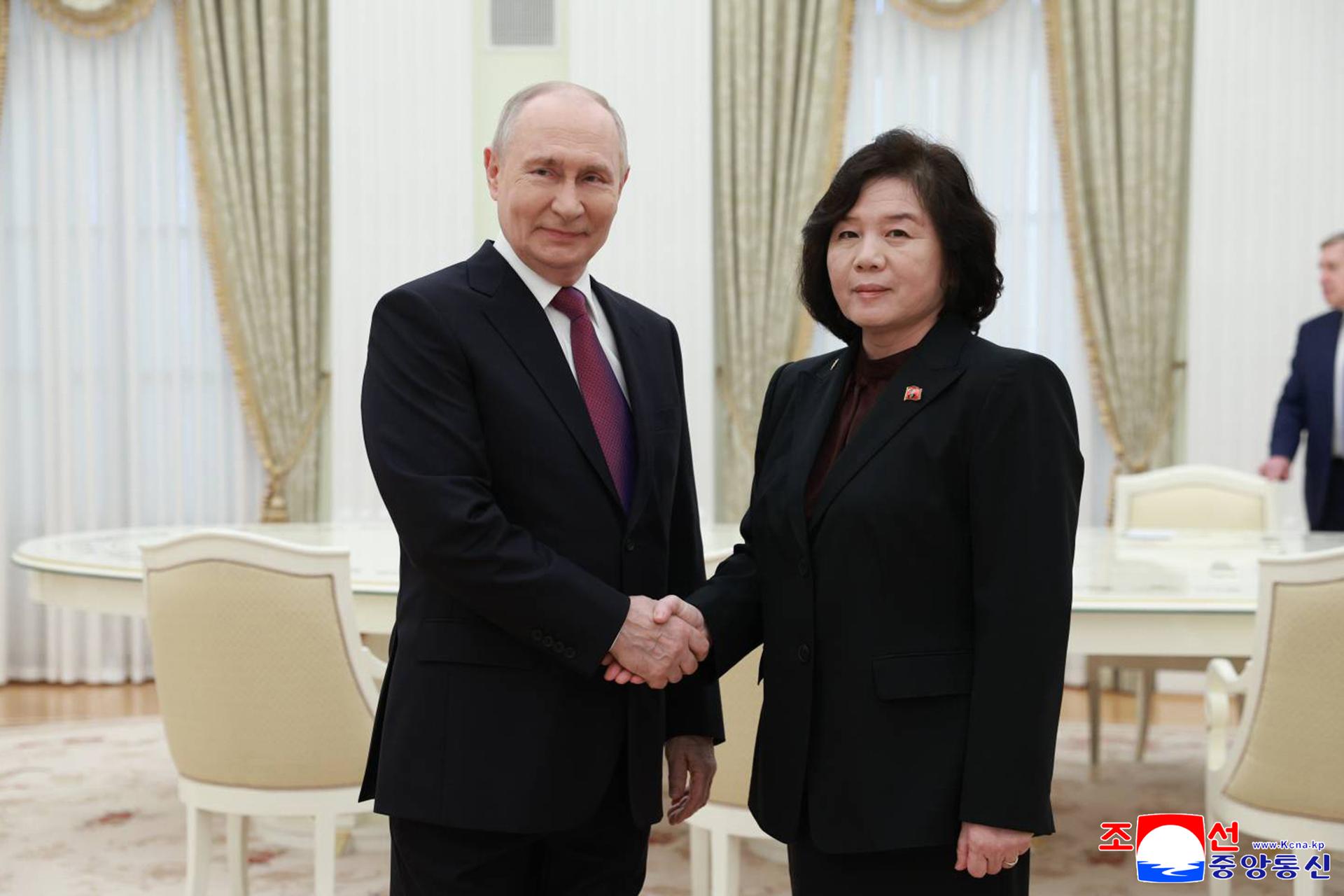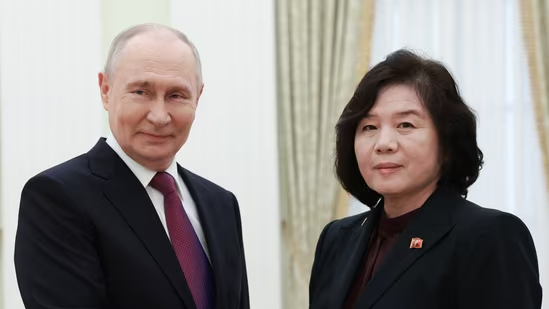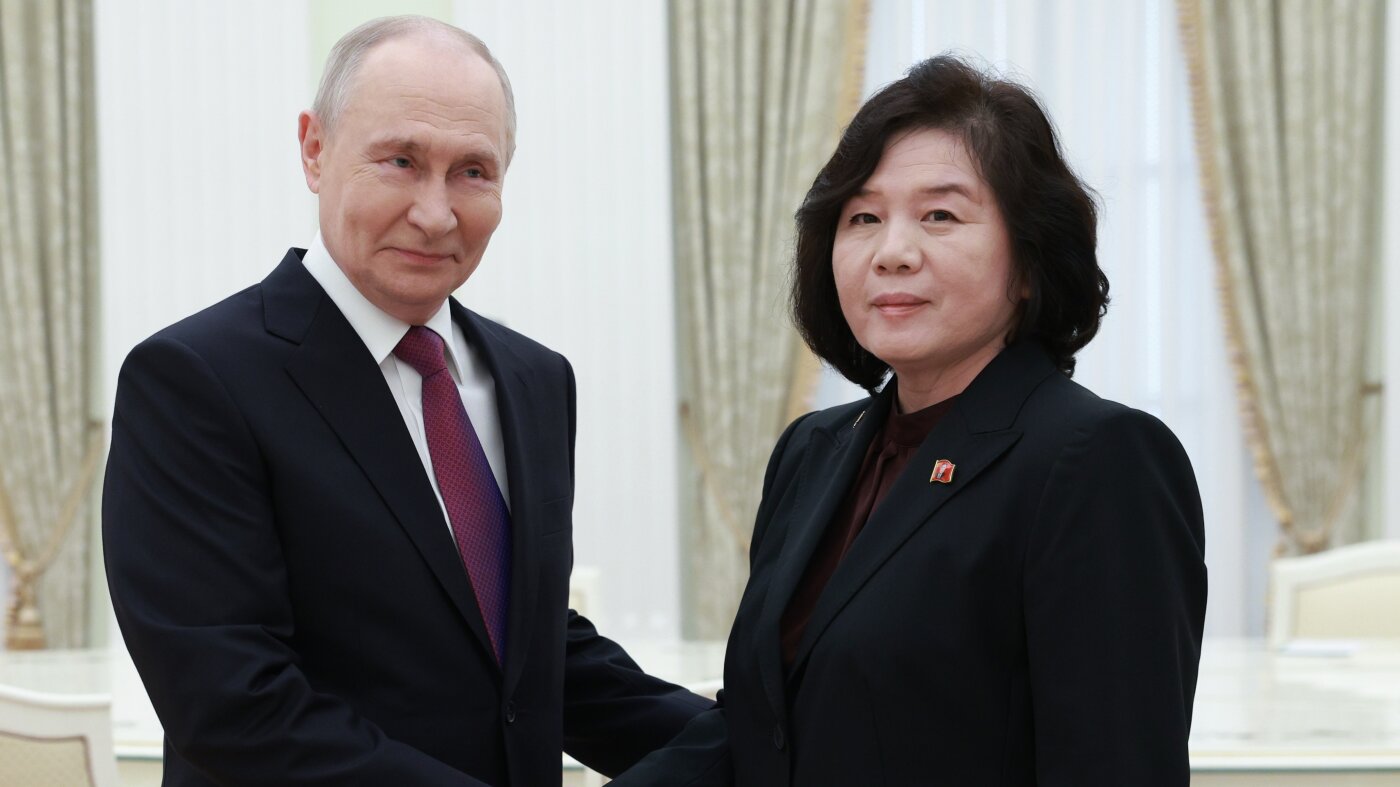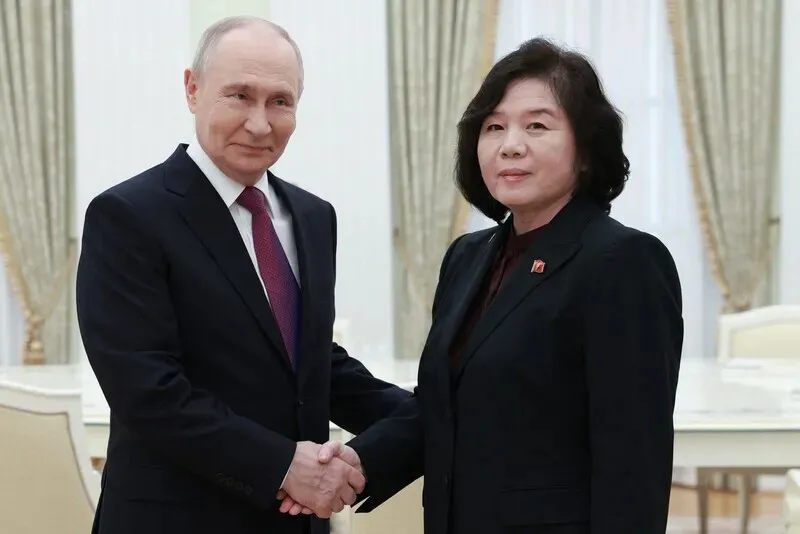
President Vladimir Putin of Russia greets Foreign Minister Choe Son-hui of North Korea at the Kremlin on July 19, 2026. (AFP/Yonhap)
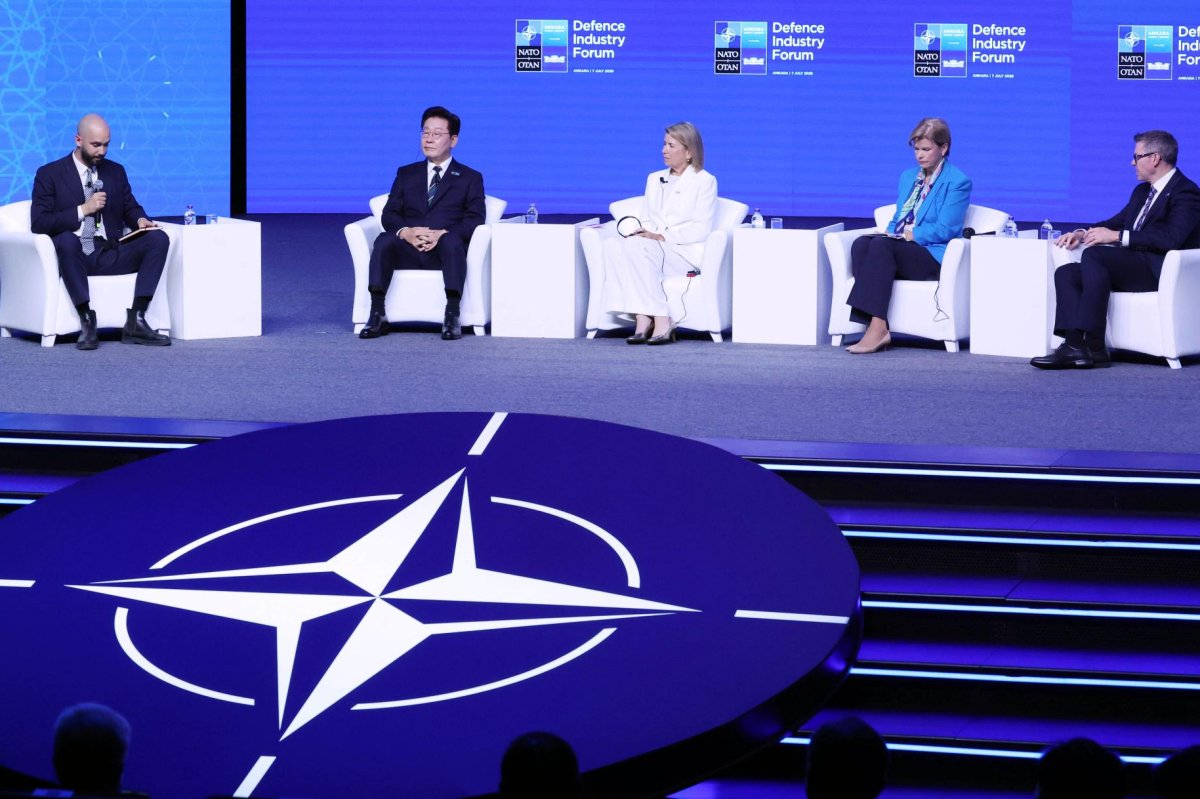
A little over a week after South Korean President Lee Jae Myung proposed a new vision for elevating bilateral defense cooperation with NATO, Russia invited North Korean Foreign Minister Choe Son-hui to Moscow for talks. The North and China also agreed to level up their strategic alignment while marking the 65th anniversary of the signing of their friendship treaty.South Korea is once again caught in a vicious cycle in which bolstering ties with the US, Japan and NATO only pushes the North closer to China and Russia. A momentary pause is needed to calmly reflect on Seoul’s diplomatic goals and the best ways to achieve them.Russian President Vladimir Putin on Sunday hosted Choe for talks, pledging to “never forget” the North’s assistance to Russia in the war in Ukraine. Choe responded by saying that North Korea would “continue to steadfastly support all Russia's efforts.” On Thursday, North Korean leader Kim Jong-un pledged to Wang Huning, a high-ranking member of the Chinese Communist Party, to “vigorously develop the traditional friendly and cooperative relations” between their two countries during the latter’s visit to Pyongyang to mark the 65th anniversary of their treaty of friendship. Seoul is closely monitoring the diplomatic moves of Pyongyang, Beijing and Moscow because their interactions can greatly disrupt the balance of power on the Korean Peninsula.Since forming ties with South Korea in the early 1990s, China and Russia have firmly maintained the stance of no tolerance for the North’s nuclear program, but much has changed since. Moscow has effectively accepted Pyongyang’s nuclear ambitions and Beijing no longer even mentions denuclearization of the peninsula.The strategic advantage South Korea held over the North over the past 30 years has thus gone up in smoke. The peninsula is rapidly turning into a front line between the bloc of South Korea, the US and Japan openly clashing with that of North Korea, China and Russia.After Seoul demonstrated its commitment to upgrading cooperation with NATO, Moscow on Thursday summoned South Korean Ambassador to Russia Lee Seok-bae to file a protest and boosted strategic communication with Pyongyang immediately afterward.Analysts say talks on the proposed visit to Russia by the North’s leader Kim were likely held at this point.If North Korea and Russia further level up their military cooperation, South Korea bears greater geopolitical risk. The most obvious counter to this threat is a stronger trilateral alliance with the US and Japan. Coincidentally, the chairmen of the Joint Chiefs of Staff of the three allies on Wednesday decided to continue their annual joint exercise Freedom Edge. In response, the spokesperson of the North’s Ministry of National Defence on Saturday issued a threat, saying this “absolutely cannot be overlooked.” The formula for managing the crisis in the region is growing more complex. But abandoning dialogue with China and Russia could lead to an even worse crisis and danger.Please direct questions or comments to [english@hani.co.kr]