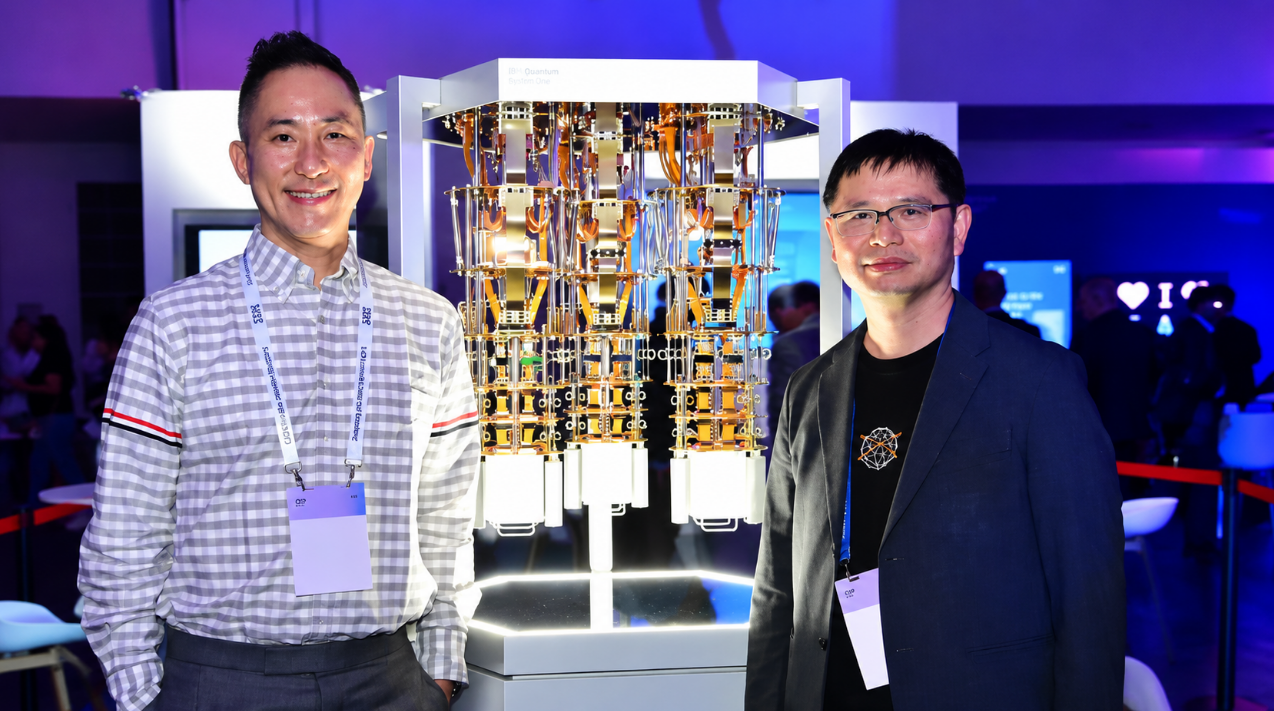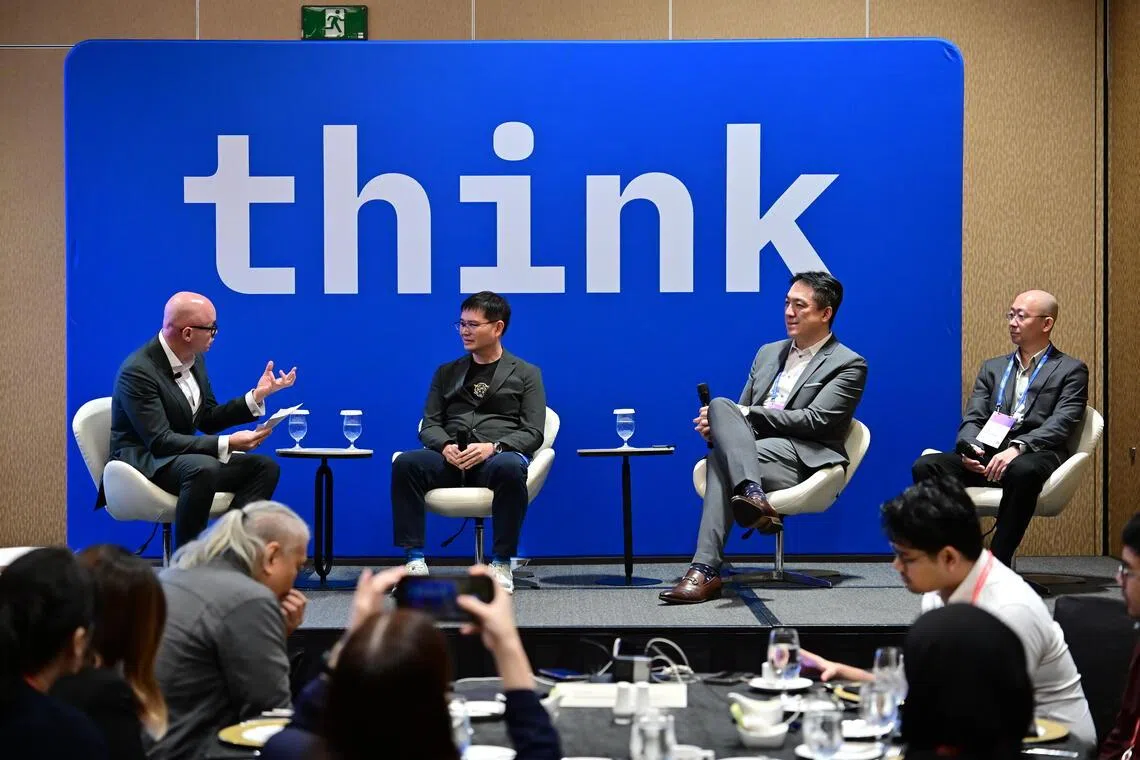
SINGAPORE - The military is assessing if quantum computers can be used to optimise mission and drill planning, possibly involving unmanned drones to identify hostile forces.On July 21, tech giant IBM, the Singapore Armed Forces’ Digital and Intelligence Service (DIS), and the Defence Science and Technology Agency (DSTA) announced a tie-up to drive this initiative.Other potential applications include the efficient routing of supply trucks and fuel bowsers to complete resupply missions in the shortest time.As part of the collaboration, DIS and DSTA will also build quantum computing expertise and receive access to IBM’s quantum computing resources.“There is significant advantage in national security for us to see how we can apply quantum computing, even though it’s still nascent, and utility and advantage is still some years away,” said Military Expert 7 Guo Jinghua.Quantum computers are said to be more superior than traditional computers as the former can examine a countless number of possibilities to pinpoint a probable solution in hours, while a traditional computer would take hundreds and thousands of years to do the same task.“We need to make sure that within defence, there is a group of engineers and developers with an understanding of quantum computing, algorithms, and the programming frameworks,” said Guo, commander of the SAF C4 and digitalisation command.Quantum computers are tipped to lead new discoveries in fields such as encryption, medicine, and more sophisticated AI. Experts project that quantum computers will be running complex algorithms reliably and self-correct any hardware errors by 2030.“It’s important for us to start so that we can closely track the progress of it,” said Guo, who was speaking on the sidelines of IBM Think Singapore, the tech firm’s annual flagship conference, attended by business leaders, policymakers, and analysts.Noting that logistics is an important defence issue, he cited how distributing supplies using 20 trucks across 50 locations alone creates a quintillion possible route combinations.Each variable added to the scenario will also scale the problem exponentially, said Guo, adding this will take a classical computer a longer time to search for the most optimal path.Besides the military, ports and banks in Singapore are also looking to tap the power of quantum computing.Take port logistics, where millions of container movements are handled each year.“It makes a difference whether the container you are unloading from one vessel is stacked at level two or at level eight,” said Minister for Digital Development Information Josephine Teo during a fireside chat at IBM’s event on July 21.If stacked efficiently, there would be a lot less work to reload the container onto the next vessel. “But these are very complex computations,” she said.In the financial sector, OCBC Bank has been working with local universities to use quantum algorithms and computers to strengthen fraud detection, perform derivative pricing and beef up cryptography techniques.Minister for Digital Development Information Josephine Teo (right) speaking during a fireside chat with Ana Paula Assis, senior vice-president and chair of IBM Europe, Middle East, Africa and Asia Pacific, at IBM Think Singapore 2026 on July 21. ST PHOTO: BRIAN TEOQuantum computing can also be used to accelerate the development of AI models, said Ana Paula Assis, senior vice-president for IBM Europe, Middle East, Africa, and Asia-Pacific.“They are not competing technologies; they are convergent,” said Paula Assis during a keynote session on July 21.Quantum computers uncover new things such as how molecules interact and new materials, and analyse financial outcomes. AI models then learn from the increased knowledge base.“AI learning from quantum discoveries creates a powerful flywheel.”
S’pore military explores quantum computing for mission, logistics planning
Read more at straitstimes.com. Read more at straitstimes.com.
579 words~3 min read