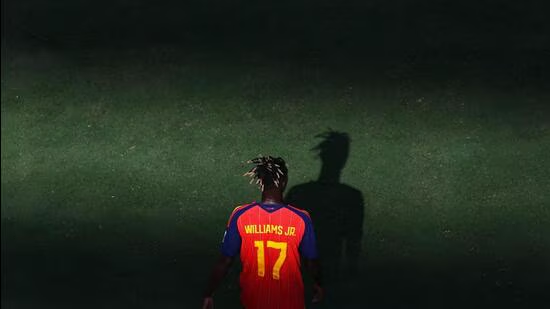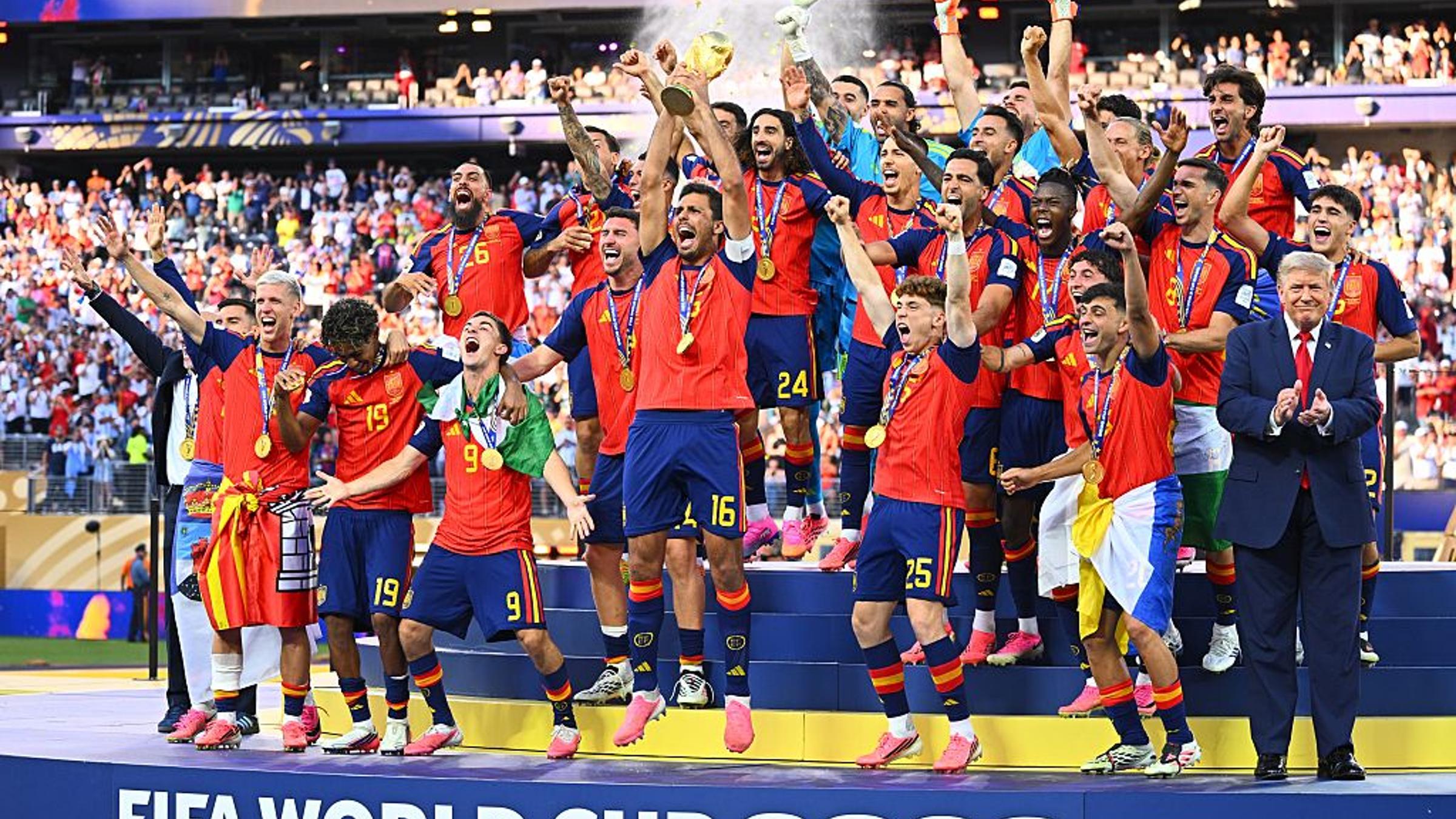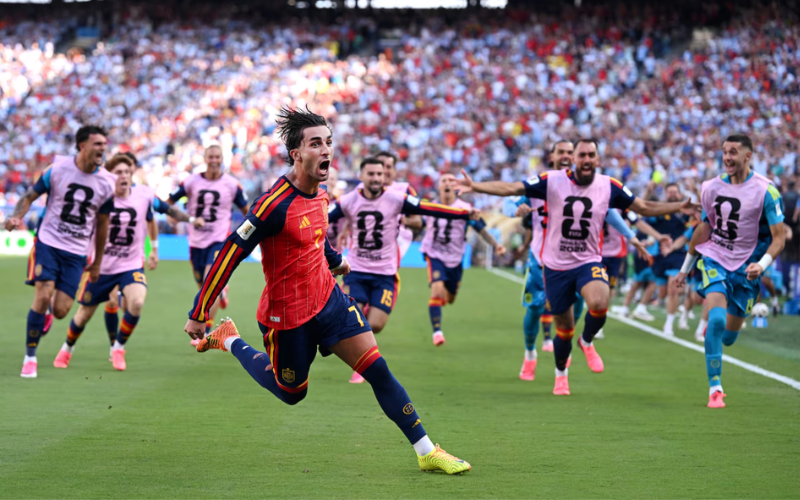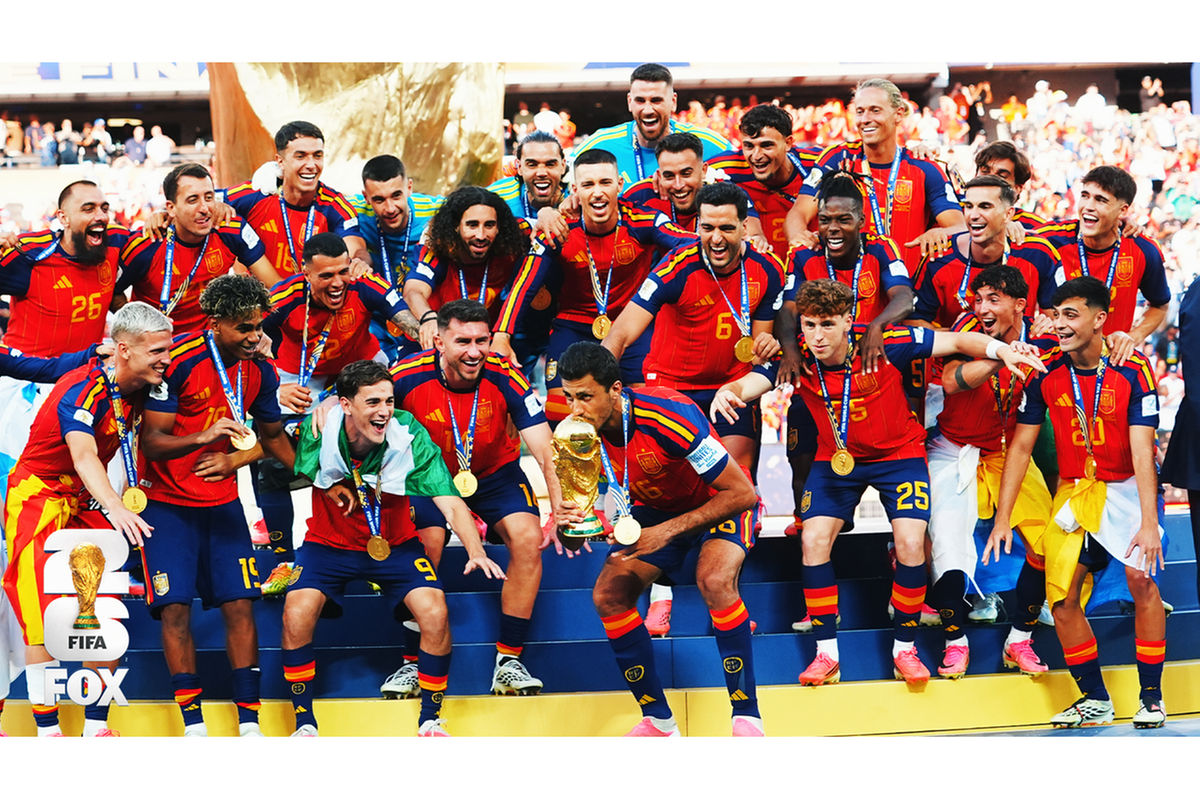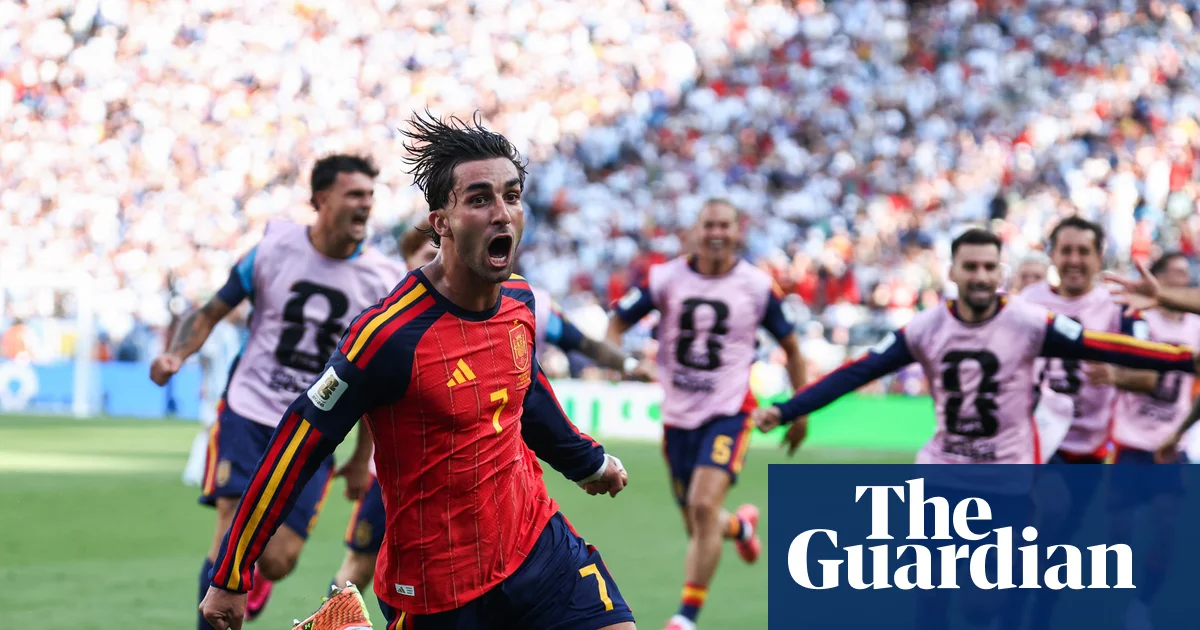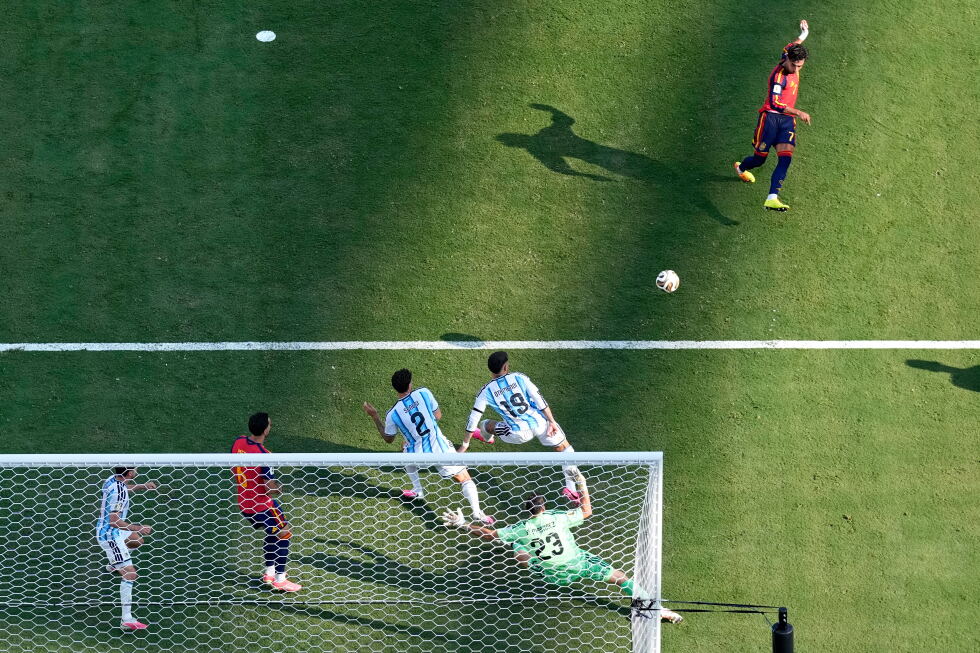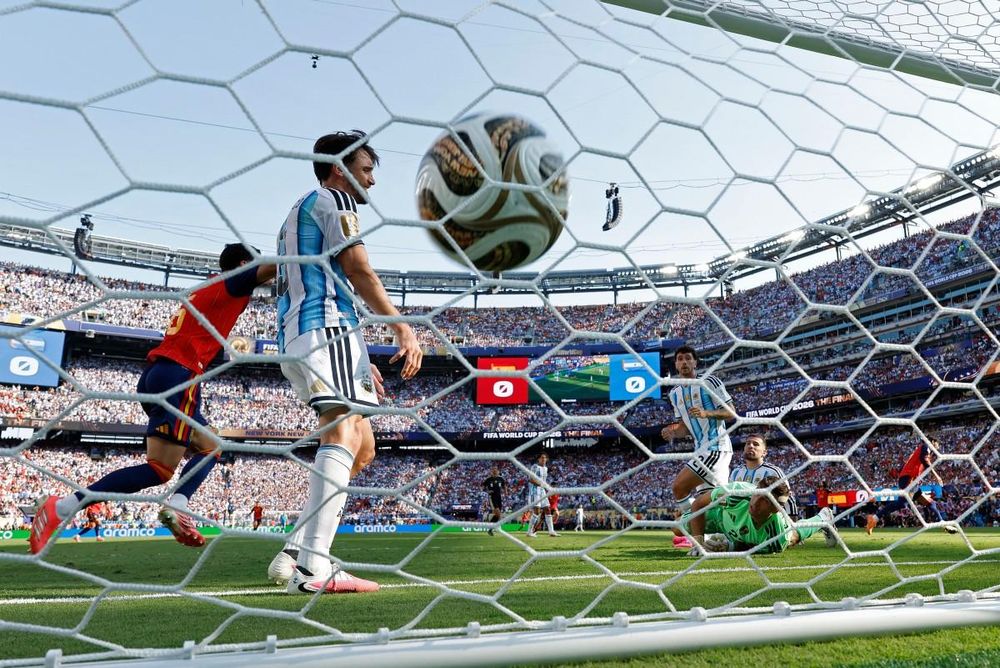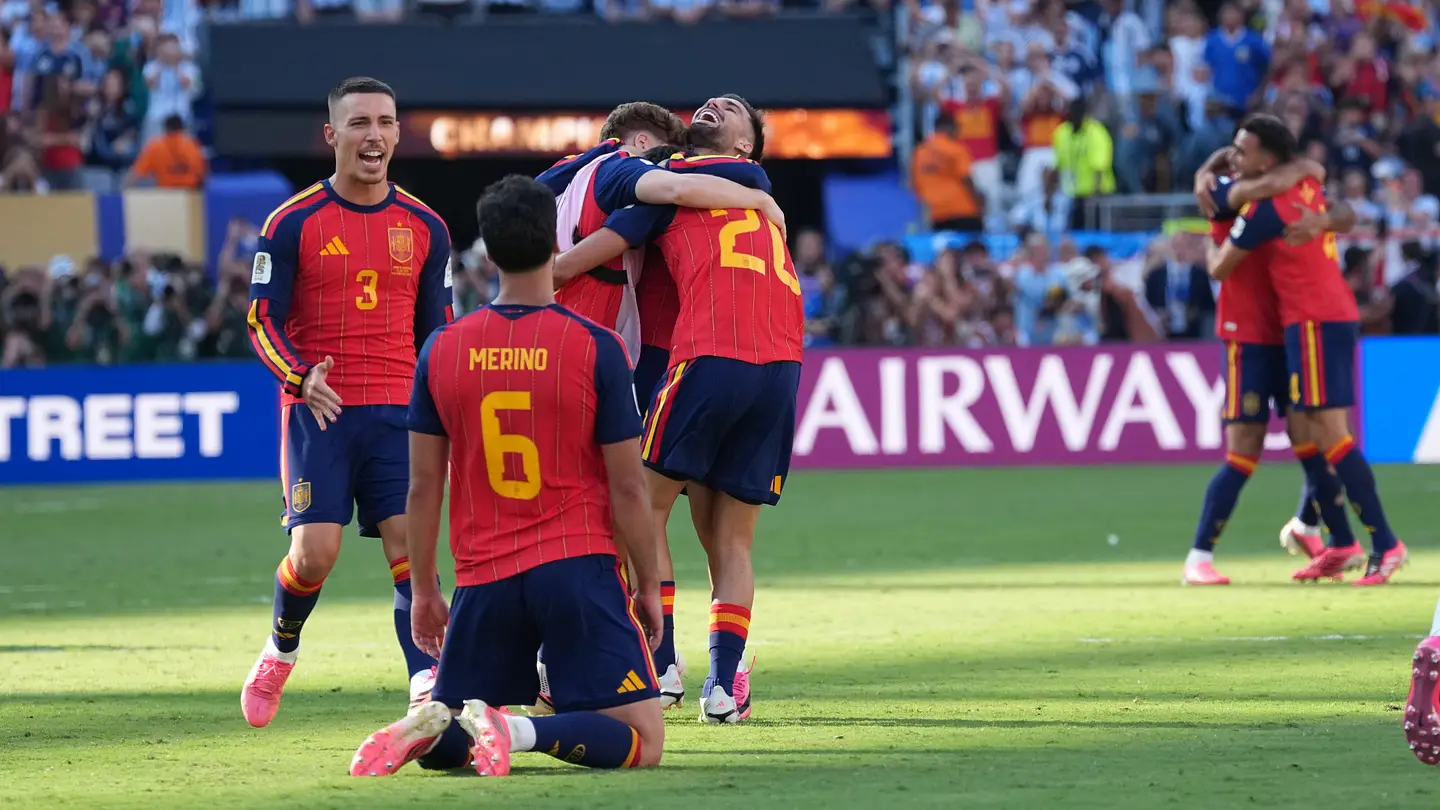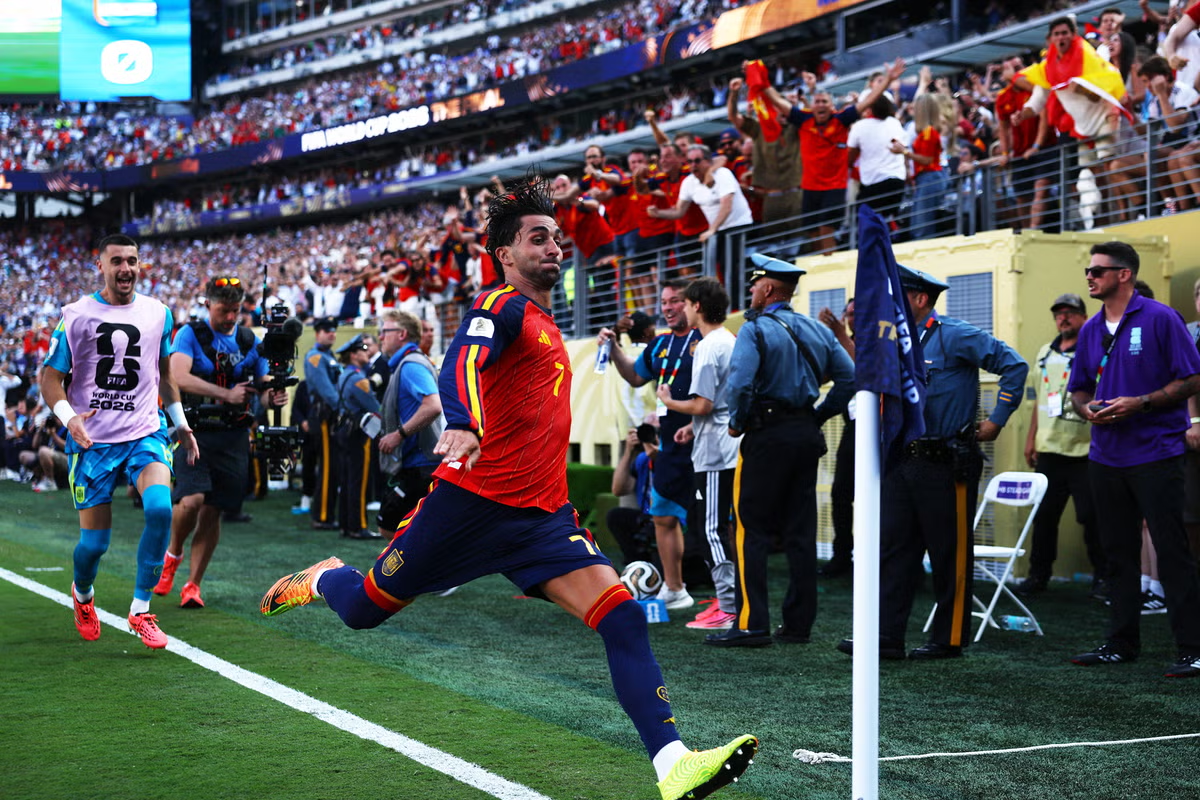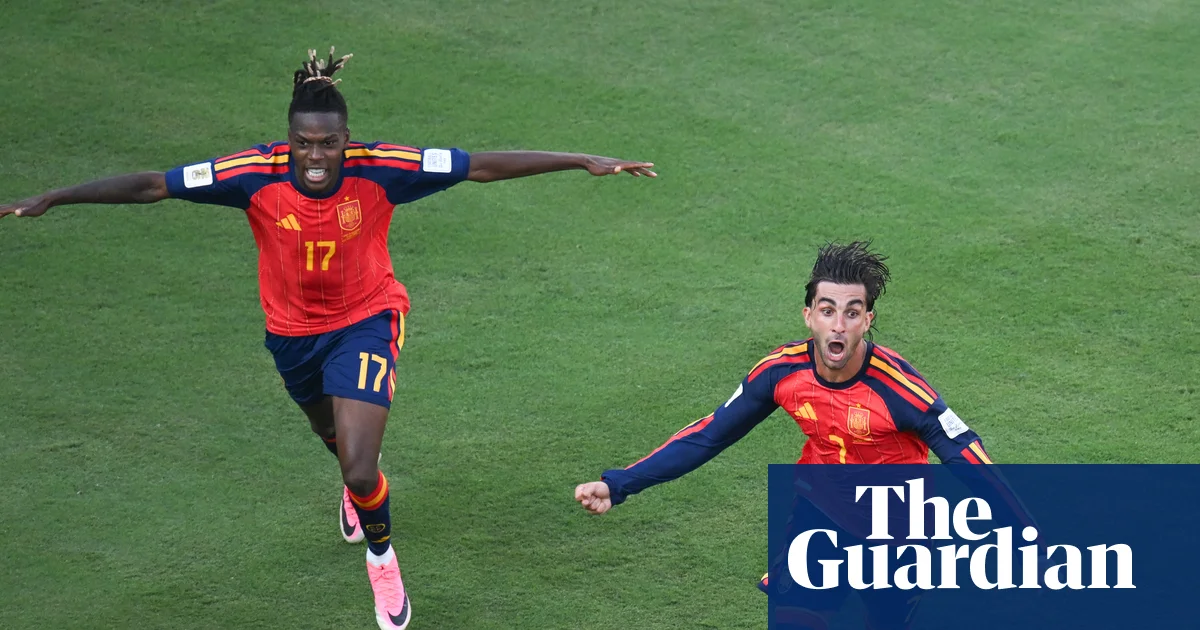
As Spain built into the second half of extra-time of Sunday’s World Cup final, it was already clear that Argentina hoped to make them suffer. Every challenge left no stud unshown. Their defenders labored to prevent striker Mikel Oyarzabal from his typical lanes of service, with Spain taking eleven of their 20 attempts from beyond the box.Lionel Scaloni’s side may have been aggressive, but they were also just structured enough to withstand the endless monsoon of Spanish pressure. Ever since the 62nd minute, when Luis de la Fuente brought his first two charges off of the bench, Spain had adapted to find new avenues to attack, adjusting with Enzo Fernández’s sending off near the end of normal time.In his 106th minute at right-back, and with Lamine Yamal sizing up Argentina’s defensive shape at the edge of the box, Pedro Porro looked at the developing scrum outside the box. Fresh from the kickoff, his teammates were largely running parallel to him, but were just restrained enough in their movement to create precious yards of open terrain beyond the backline. As Yamal passed back to his flank-side running mate, many in the stadium thought it was another of countless recirculations to start an approach up another pathway.Instead, Porro lobbed in a cross. The Tottenham defender bent it to perfection, powerful enough for some defenders to be in two minds about how to react but not so overhit that it risked crossing the byline. Nico Williams was quick to it, finding that his supporting numbers were trailing a bit beyond the ball for late arrivals into the box.Williams spent far more of his time at the 2026 World Cup watching on from the sideline than he would’ve liked. A starter for all six games of Spain’s triumphant run through Euro 2024, Williams arrived stateside with a groin strain and hamstring issues incurred late in the La Liga season before leaving the group stage finale against Uruguay with an adductor injury.The Athletic Club winger never started a game at this World Cup, with his 45-minute shift against Argentina being his longest of the tournament. On Sunday, his entrance promised greater verve and unpredictability than the winger he replaced, Alex Baena, who had largely been ineffective as an outlet before exiting.Nico Williams shrugged off Nahuel Molina to head the ball back for Ferran Torres to finish. Photograph: James Lang/IMAGN IMAGES/ReutersBetter late than never, Williams did not waste his opportunity once it finally arrived. As Porro’s cross fell back to Earth, the 24-year-old got his head to the ball not to square right into the heart of the six-yard box, but instead to deftly doff it beyond the nearby defenders and into the stride of another second-half substitute, Ferran Torres. It was a goal borne of preternatural assessments of space, the only way Spain could break down a dogged Argentine side desperate to get Emiliano Martínez into penalties.Like Williams, Torres had checked into try exploiting Argentina’s approach to the final. While Oyarzabal proved invaluable for a possession-dominant Spain, able to drop deep and help with buildup while backing himself to find seams along the backline to move into, Argentina had structured themselves to allow that, but prevent him from getting the ball any closer to goal. Torres offered a bit more finesse, more of a natural off-ball mover in the game’s most dynamic phases, but also came on with more gas in the tank that helped him stay sharp against a rapidly tiring group of Argentine veterans.In a final of clattering challenges, Torres’ run went entirely unchecked. Giuliano Simeone, the player closest to Torres, had almost cartoonishly taken himself out of the play right as Torres blew past him. Just before Williams kept the ball from going out of play, Simeone had assessed the pass to have come in overcooked and was already bent over to adjust his sock as Williams’ header bounced to Torres. Three Argentine defenders had glommed on to Mikel Merino, who scored match-winners against Portugal and Belgium, leaving Torres with equally unusual time and a void of defensive pressure to finally get Spain on track for their second men’s World Cup title.Throughout the tournament’s business end, Spain were discussed as being the best team of the tournament. The collective approach had become so cohesive that, even if they didn’t score, the team’s focus on their buildup seldom waned. Players had gotten so confident in their mettle under de la Fuente that each seemed eager to embrace their role even if it meant less of an individual spotlight in a World Cup headlined by its stars.That’s a rare balance in modern international soccer. While the club side of the game has gotten meticulously curated, with every pressing trigger and passing sequence being carefully rehearsed, playing for a national team is usually where stars go to enjoy their game with a team largely built to account for their strengths in weaknesses. Thomas Tuchel tried to foster a similar culture with his squad selections, but found himself light on midfielders after Jordan Henderson’s klutzy celebration.It makes it all too easy to distill teams down to the star they’re designed to support. When it works, as it largely did for Messi’s Argentina, few question the wisdom of the approach. When it doesn’t, as we saw with Cristiano Ronaldo’s Portugal, it’s an equally obvious problem that the coach was unwilling to solve.Like the world’s best clubs, de la Fuente was able to change Spain’s approach during games by bringing in players who could occupy identical spaces to the starters they would replace because each interpreted their role differently. Williams's approach on the wing gave him greater license to put the opponent on the back foot than Baena’s; Torres came into the game and would later successfully stretch a shorthanded Argentina. Even Pedri – who checked in with Torres just after the hour mark – made life more difficult for Argentina, as a more dribbly midfield complement to Rodri than Fabián Ruiz.While Argentina looked to labor in the mid-afternoon New Jersey sun, Spain adapted. Their continued to morph to find new methods to make the defending champions sweat further. And, with an expert looping cross, a brilliant and deft header, and an opportunistic scamper into space, it’s Spain who will enter the 2030 World Cup cycle at the pinnacle of the sport.
Nico Williams, Ferran Torres and Spain’s adaptable World Cup excellence | Jeff Rueter
The two substitutes combined on the World Cup winning goal not by changing the game, but by offering it what it needed, when it was needed
1,054 words~5 min read