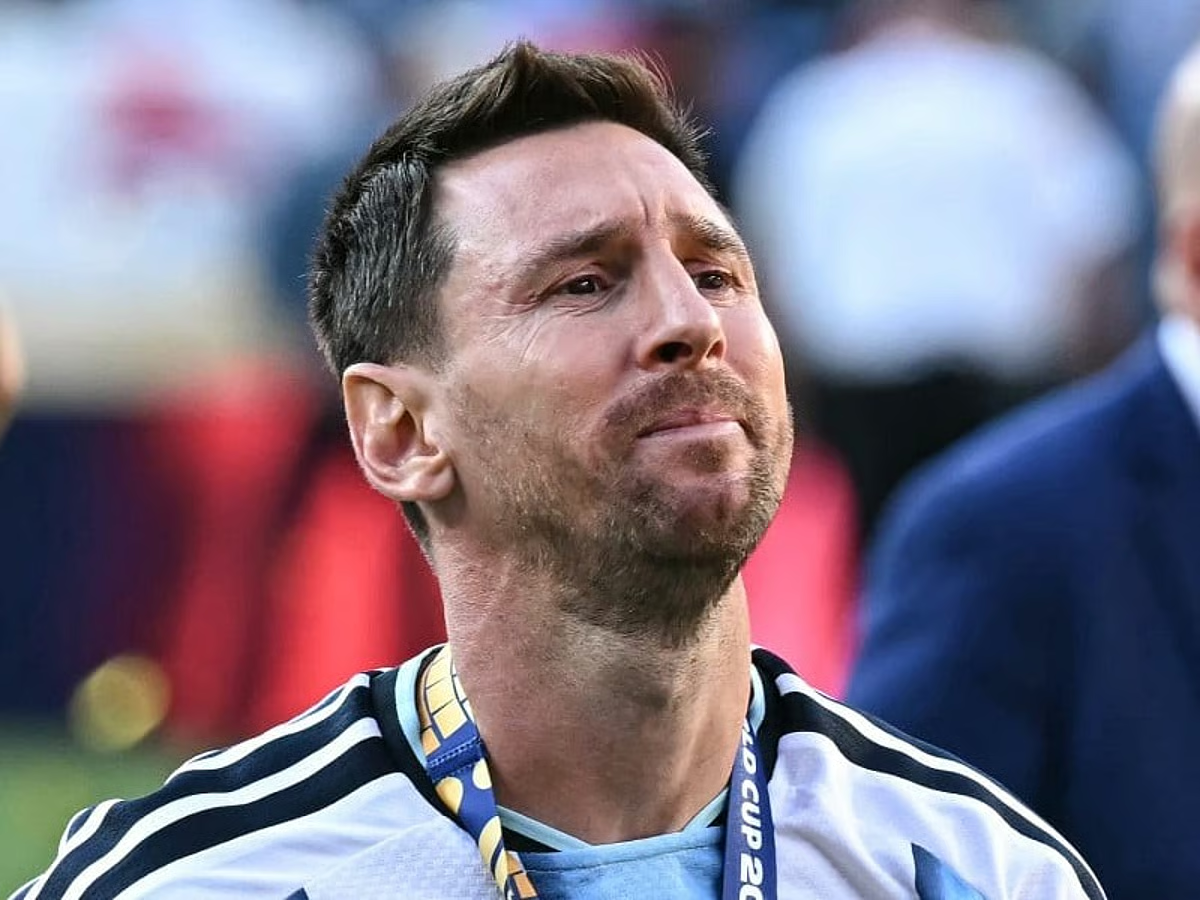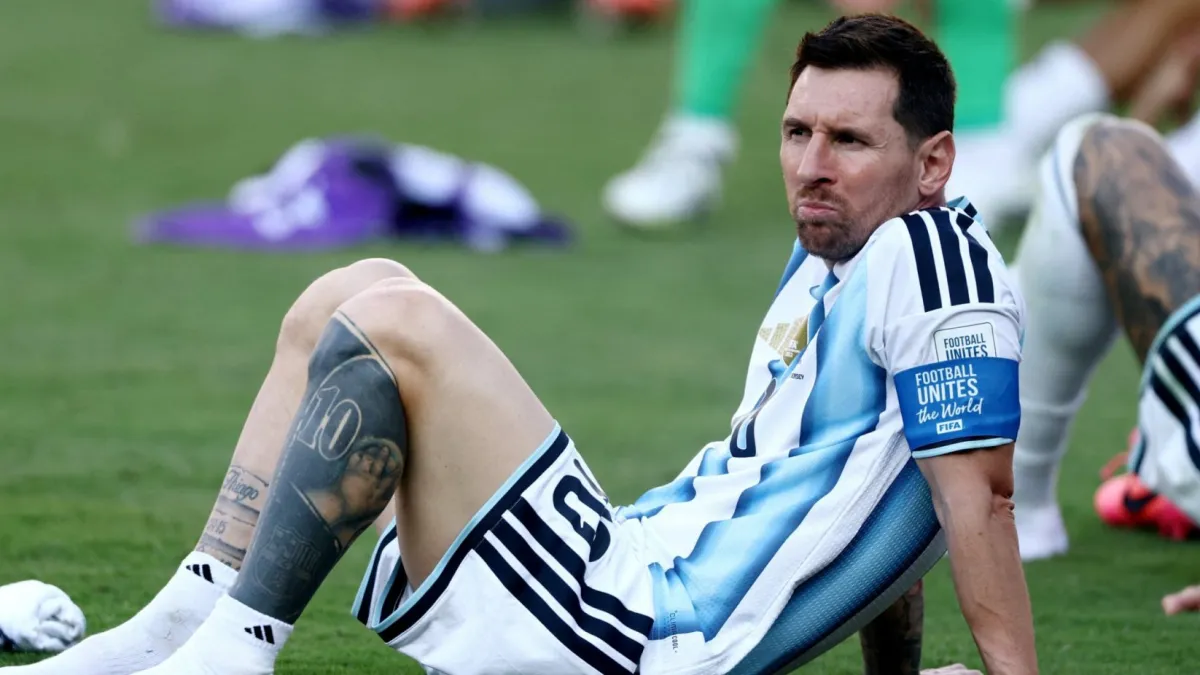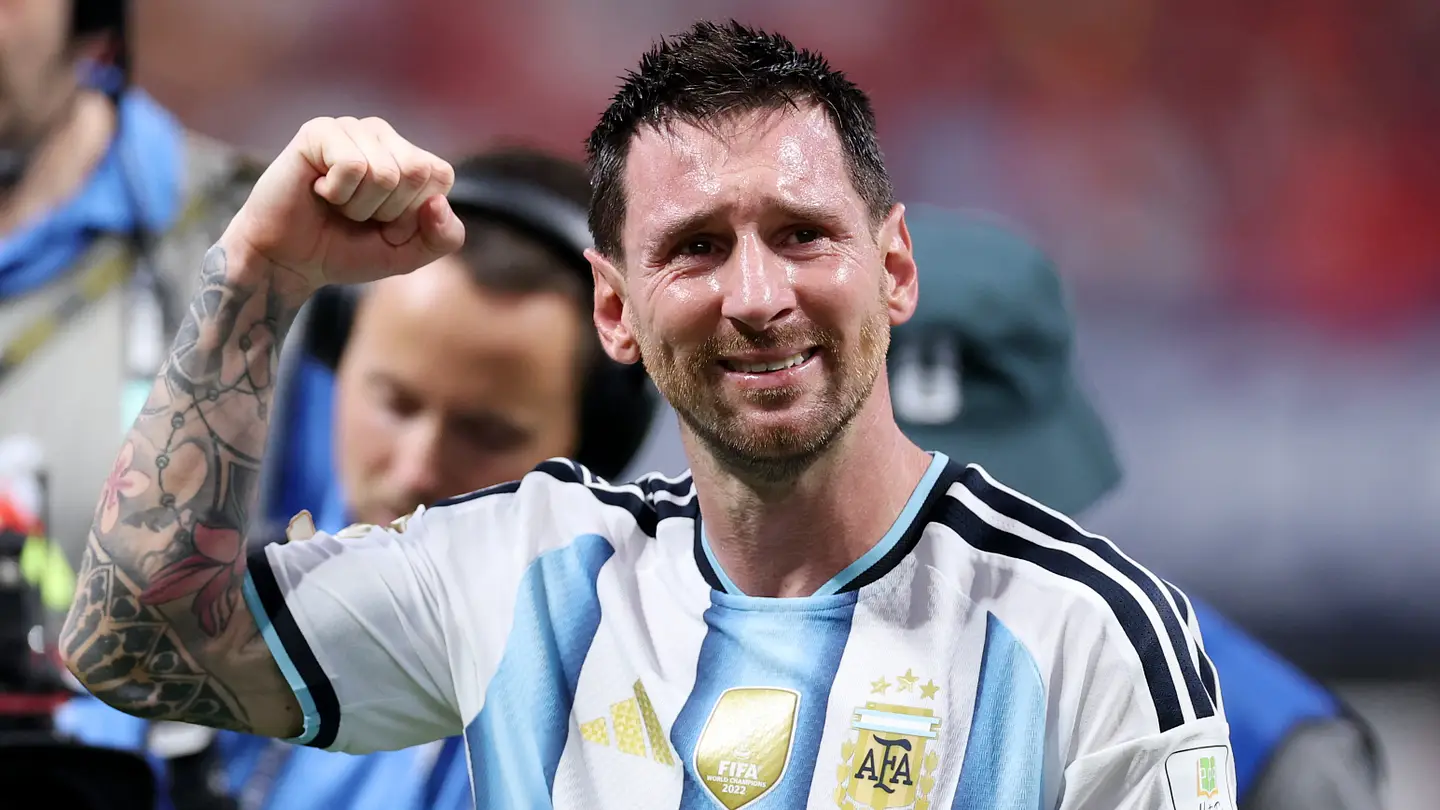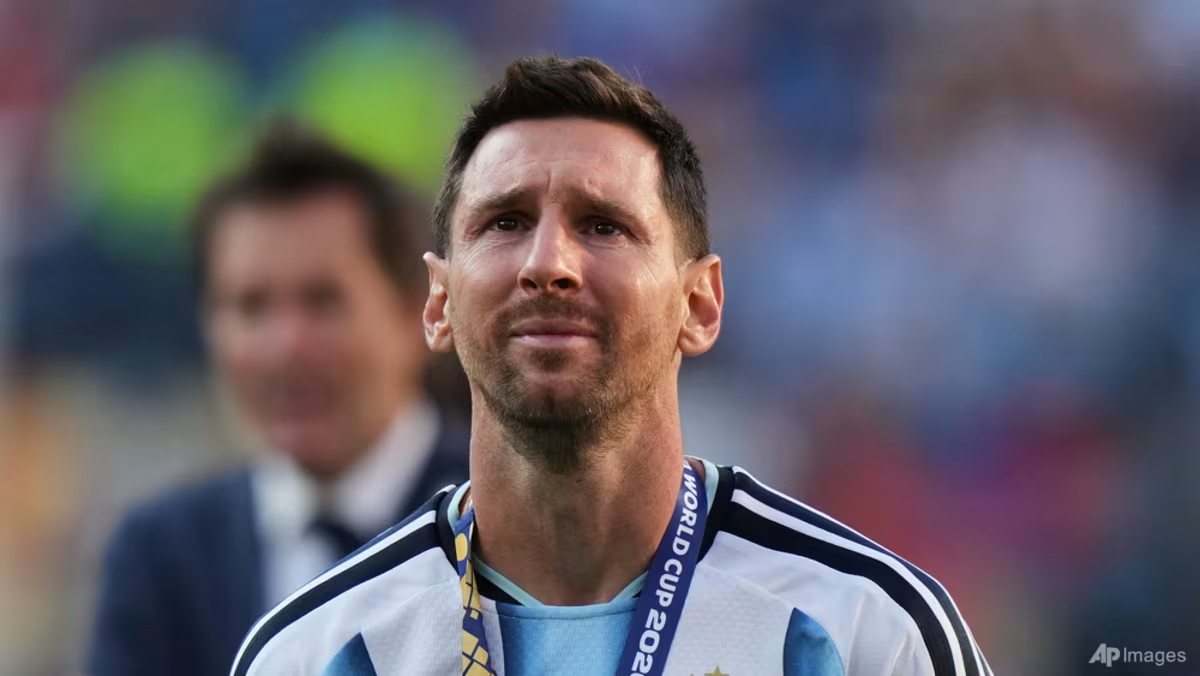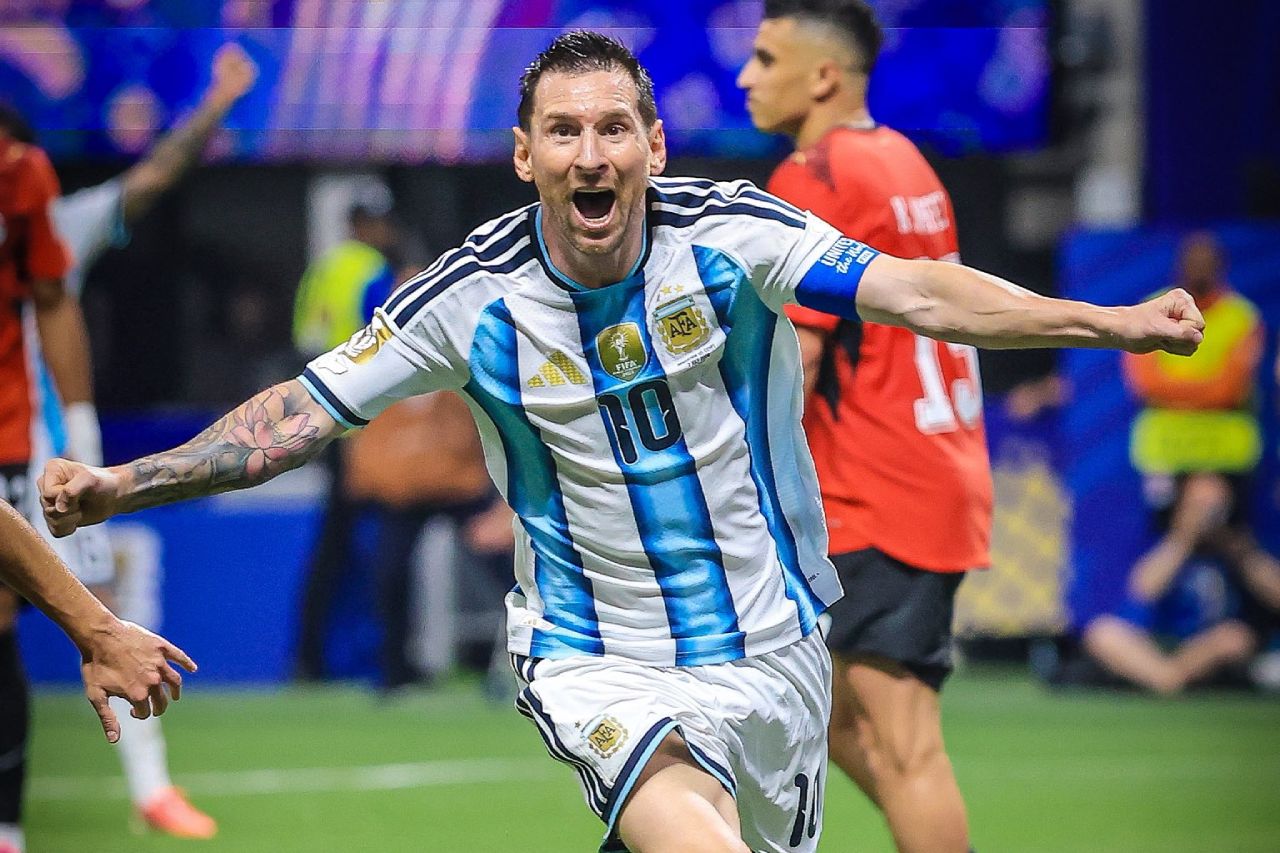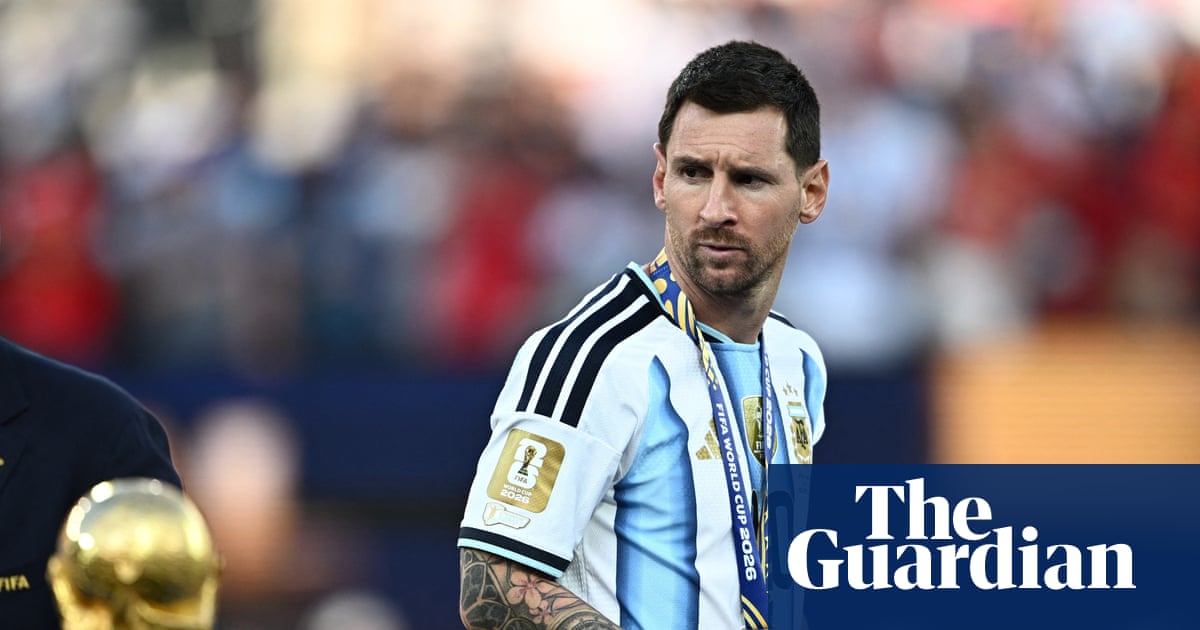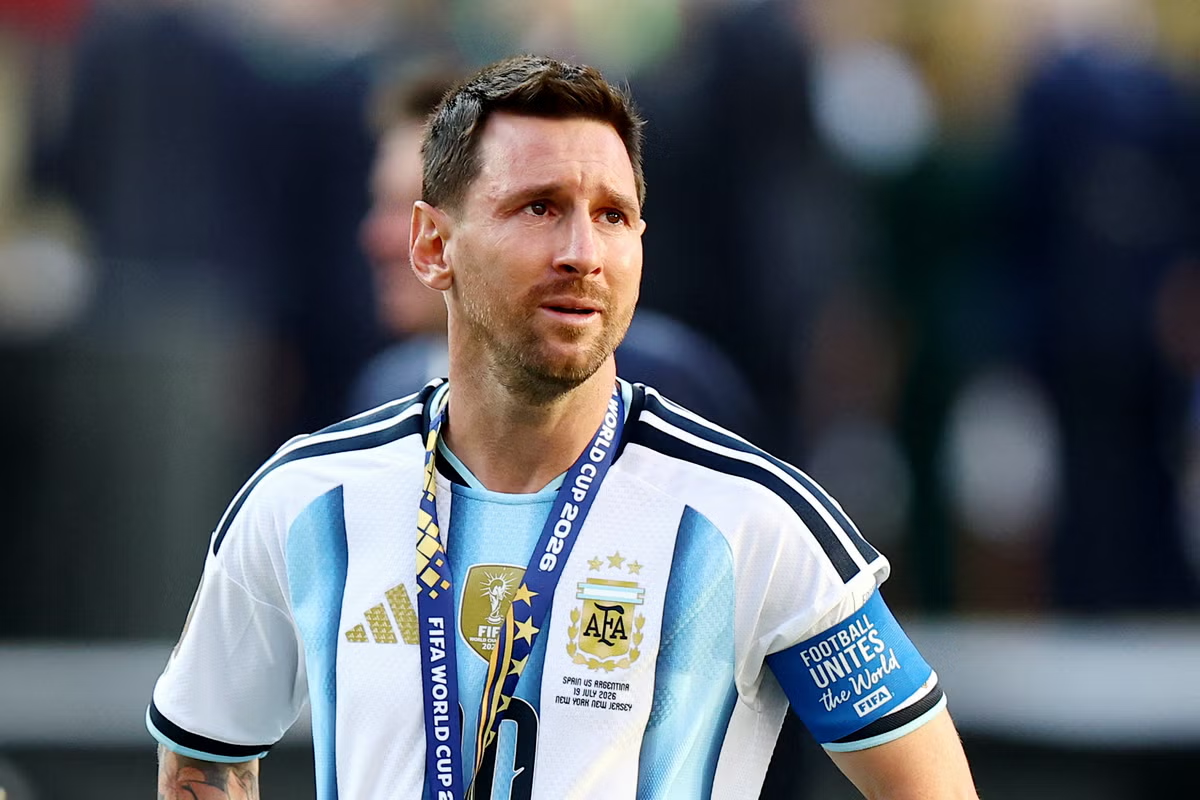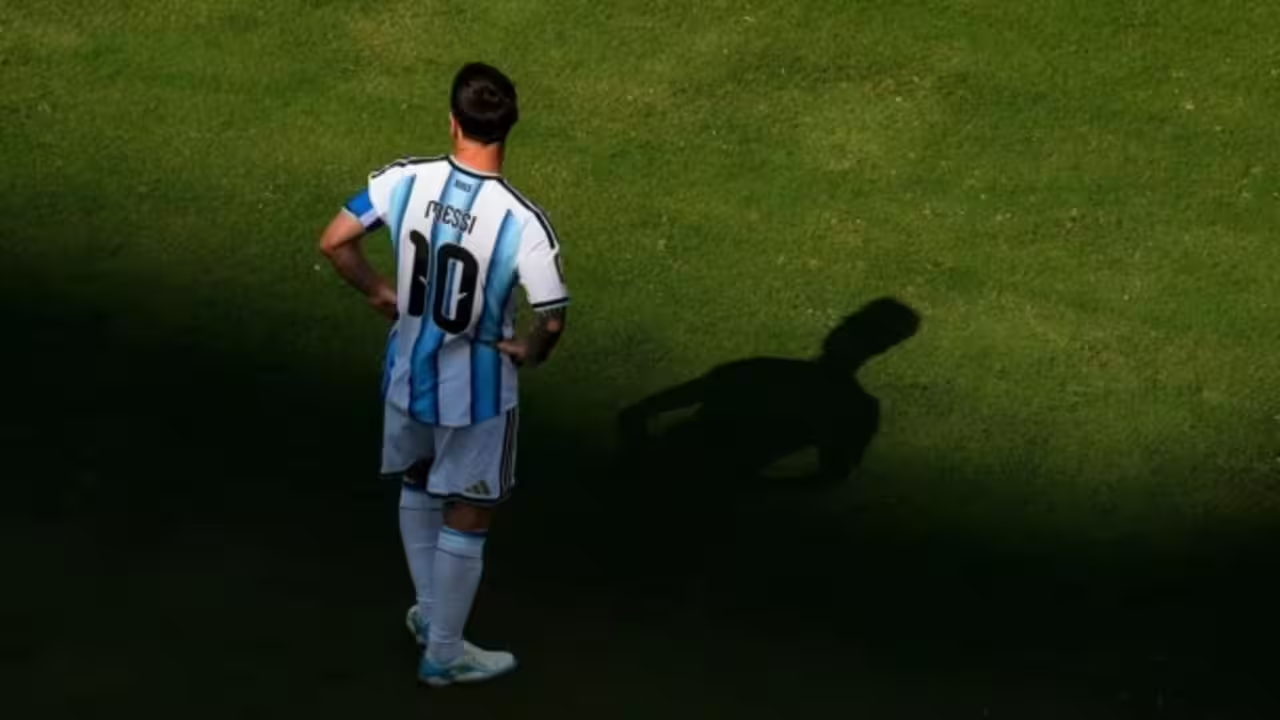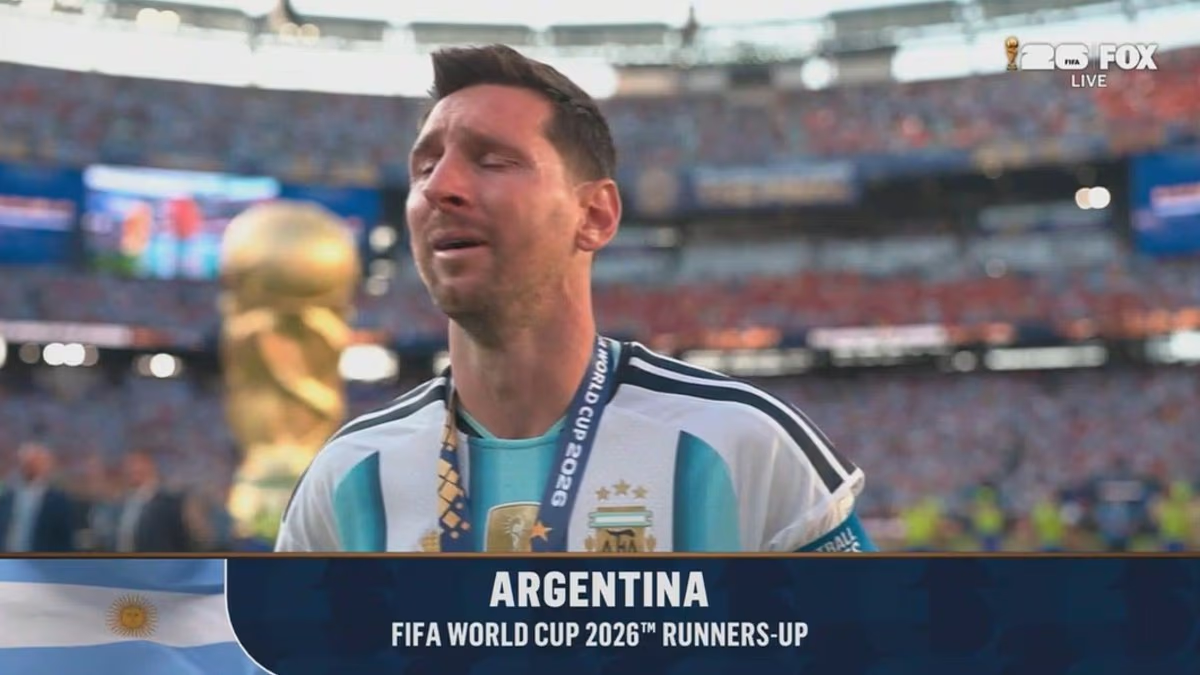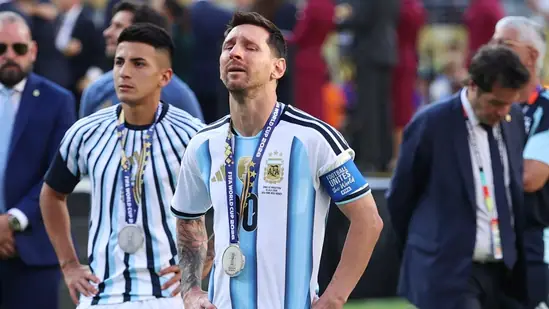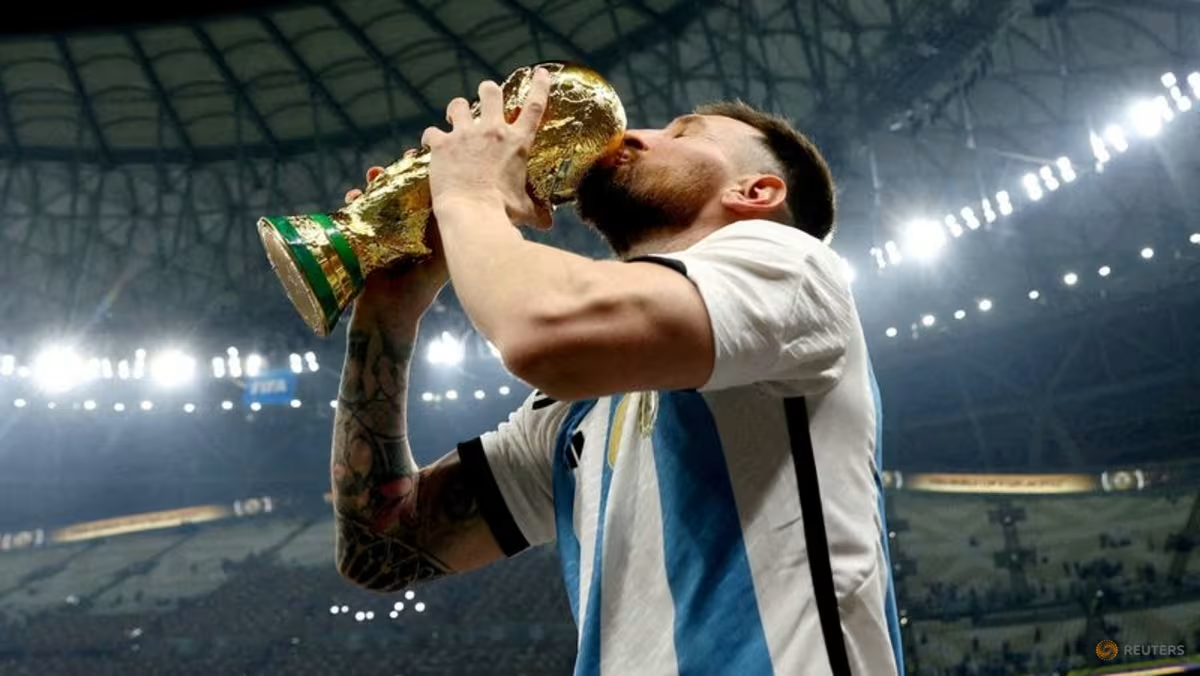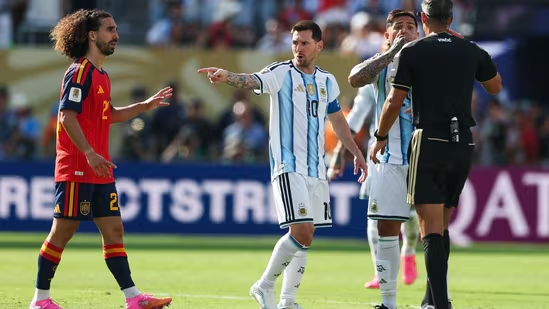
If this truly was Lionel Messi's final appearance in an Argentina shirt, it was an ending few would have imagined for one of football's greatest careers. On Saturday night, Argentina and Lionel Messi stood on the brink of history. Leaving aside the controversies that followed their run, La Albiceleste had reached a second consecutive World Cup final and stood a win away from becoming the first team in 64 years to successfully defend the title, joining Brazil's legendary side of 1962.Lionel Messi points at Marc Cucurella as Slovenian referee Slavko Vincic and Enzo Fernandez argue during the 2026 World Cup final (AFP)Even defeat would not have erased what Argentina had achieved over the previous month, the resilience they showed, the late comebacks they scripted and the brilliance Messi continued to summon at 39. Yet, by the end of 120 minutes at MetLife Stadium in New York, the conversation had shifted dramatically. Instead of discussing Argentina's courage, much of the focus turned to their increasingly cynical approach, which overshadowed their football as Spain claimed a deserved 1-0 victory.Argentina did not simply lose the World Cup final. They lost control of it. First through their football, then through their discipline, and finally through their conduct. If this truly was Messi's final appearance in an Argentina shirt, it was an ending few would have imagined for one of football's greatest careers.ALSO READ: The blueprint that broke Lionel Messi: How Spain dismantled Argentina to win the World CupArgentina's football has long been defined by a fascinating duality. On one side lies la nuestra, the country's traditional philosophy of expressive, attacking football, immortalised by the brilliant 1957 Copa America-winning side. On the other hand, there is an unapologetic embrace of football's darker arts. Diego Maradona embodied both sides in one unforgettable evening against England, following his infamous "Hand of God" goal with the "Goal of the Century."The contrast continued through the decades. Cesar Luis Menotti's adventurous World Cup winners of 1978 celebrated artistry, while Carlos Bilardo's pragmatic champions of 1986 valued results above aesthetics. Together, they shaped Argentina's footballing identity, one capable of producing both beauty and brutality.For much of Messi's international career, particularly under Lionel Scaloni, Argentina seemed to lean towards the former. Since 2018, Scaloni built a side admired as much for its togetherness as its football, winning two Copa America titles and the 2022 World Cup. Even during this tournament, Messi's brilliance, eight goals and four assists, powered another run to the final.But against Spain, that balance tilted decisively.From the opening minutes, Argentina appeared more interested in disrupting Spain than matching them technically. Alexis Mac Allister's early challenge on Dani Olmo set the tone. Nicolas Tagliafico repeatedly tested the limits with Lamine Yamal, while Leandro Paredes, after coming off the bench, spent much of his time provoking opponents as much as competing with them.This was not entirely new. Similar patterns had surfaced against England, where Argentina's physical edge was ultimately overshadowed by moments of genuine quality. Against Spain, however, the football never arrived.Argentina's Nicolas Otamendi clashes with England's Jude Bellingham at the end of the match (REUTERS)Spain defender Aymeric Laporte had anticipated exactly that. "In the last few matches we've seen incidents that really surprised us, especially with Argentina. They are a team that constantly leave little messages with their challenges," he said before the match.His concerns echoed a wider debate surrounding Argentina's tournament. Their victory over Egypt had prompted accusations of favourable officiating, while earlier in the competition Messi escaped dismissal for a challenge that drew comparisons with the red card initially shown to Folarin Balogun before it was overturned on review.Referee Slavko Vincic again allowed several robust challenges to pass without severe punishment. But rather than unsettling Spain, the leniency only seemed to encourage Argentina's increasingly desperate attempts to slow the game.Spain never responded. They never intended. They stuck to football. They slowed everything down, passed the ball around Argentina's frustration and let the South Americans wear themselves out chasing shadows and grudges instead of the ball. Argentina had shut down superior opposition through sheer force of will before, memorably against England in the semifinal. They even bounced back from the dead against Cape Verde, Egypt and Switzerland. This time, the plan curdled into something with no football left in it at all.EAST RUTHERFORD, NEW JERSEY - JULY 19: Referee Slavko Vincic shows a red card to Enzo Fernandez #24 of Argentina during the FIFA World Cup 2026 Final match between Spain and Argentina at New York New Jersey Stadium on July 19, 2026 in East Rutherford, New Jersey. Lars Baron/Getty Images/AFP (Photo by Lars Baron / GETTY IMAGES NORTH AMERICA / Getty Images via AFP) (Getty Images via AFP)By the time Enzo saw red in stoppage time for a reckless challenge on Pau Cubarsi, Argentina had stopped playing football or even looking for a comeback. They were simply trying to survive by every means possible. And when the final whistle came, "survive" gave way to something uglier still — Nahuel Molina squaring up to Rodri, Paredes grabbing Eric Garcia by the throat, a chaotic scramble that had nothing to do with sport and everything to do with wounded pride.Yet, Spain extended the olive branch. The players gave a guard of honour to Argentina. But when Spain's players climbed the podium as world champions, Argentina turned their backs, huddling instead at the other end of the pitch with their own fans, who tried to drown out Rodri's Golden Ball ceremony with chants for Messi. It was merely another petty, small gesture from a team that, for two hours, had given their opponents every reason to humiliate them, yet had instead been shown mercy by Spain's restraint.Messi, inevitably, stood at the centre of it all.Spain understood that stopping Messi meant stopping Argentina. Rather than assigning him an individual marker, they cut off his supply line. Rodri, Fabián Ruiz and Dani Olmo controlled midfield, while Spain's high defensive line compressed the spaces Messi usually exploits.Argentina's Lionel Messi cries during the trophy ceremony at the end of the 2026 World Cup football tournament final match (AFP)The result was startling. Messi finished with just 54 touches, none inside Spain's penalty area, and failed to create a single chance across 120 minutes—an extraordinary statistic for the player who had carried Argentina through much of the tournament.Frustration inevitably crept in, and he, too, was drawn into pettiness, trying to get Marc Cucurella booked for covering his mouth mid-argument. Later, fresh footage showed him appealing against Enzo's dismissal by pointing the referee towards Tagliafico, who had gone down clutching his face despite no Spain player being anywhere near him. It was an uncharacteristic attempt to influence the decision, something rarely associated with Messi's image.As tempers flared after the final whistle, culminating in Paredes shoving Garcia and Gavi to the ground, Messi remained detached. He neither intervened nor tried to calm his teammate, standing frozen by the weight of defeat while the ugly scenes unfolded around him.None of this diminishes Messi's place in football history. He remains a World Cup winner, an eight-time Ballon d'Or recipient and arguably the defining player of his generation.But finals often become the lens through which careers are remembered. If this was indeed Messi's final World Cup appearance, it ended not with one last masterpiece, but with Spain systematically neutralising him while Argentina lost both the match and, in its closing moments, some of the admiration it had earned throughout the tournament.Aratrick Mondal is a senior sports journalist based in New Delhi. In his eight years as a sports writer, Aratrick has worked at leading media organisations, including The Times of India, Times Now, Zee, India TV and currently works at a senior position at Hindustan Times Digital. He writes on cricket, football, pickleball and tennis, among other sports.
How Argentina's anti-football turned Lionel Messi's final World Cup into football's ugliest goodbye
If this truly was Lionel Messi's final appearance in an Argentina shirt, it was an ending few would have imagined for one of football's greatest careers. | Football News
1,588 words~7 min read