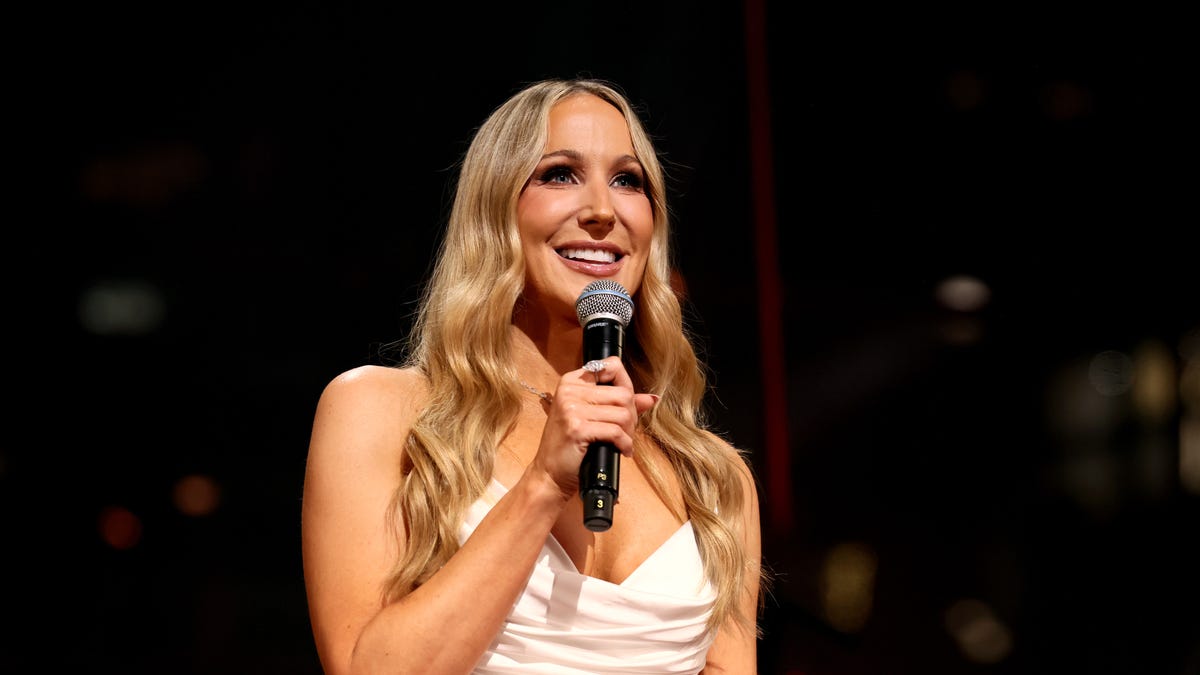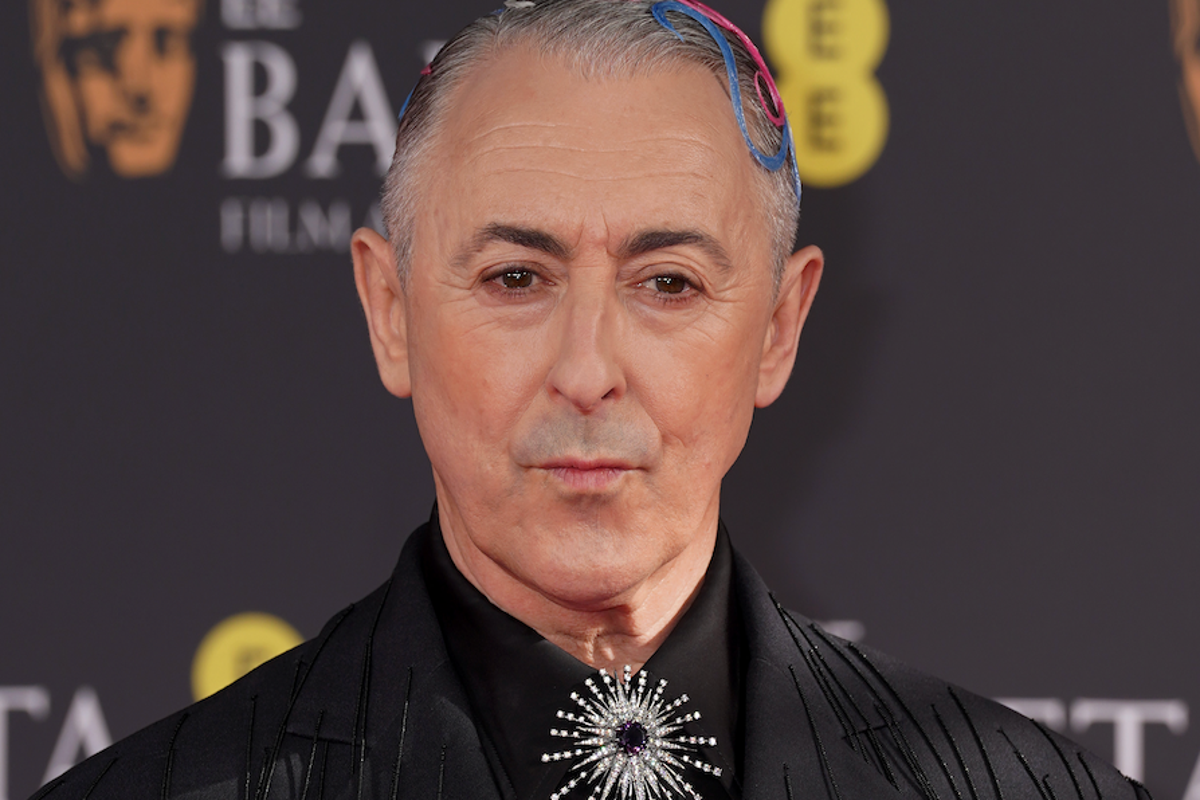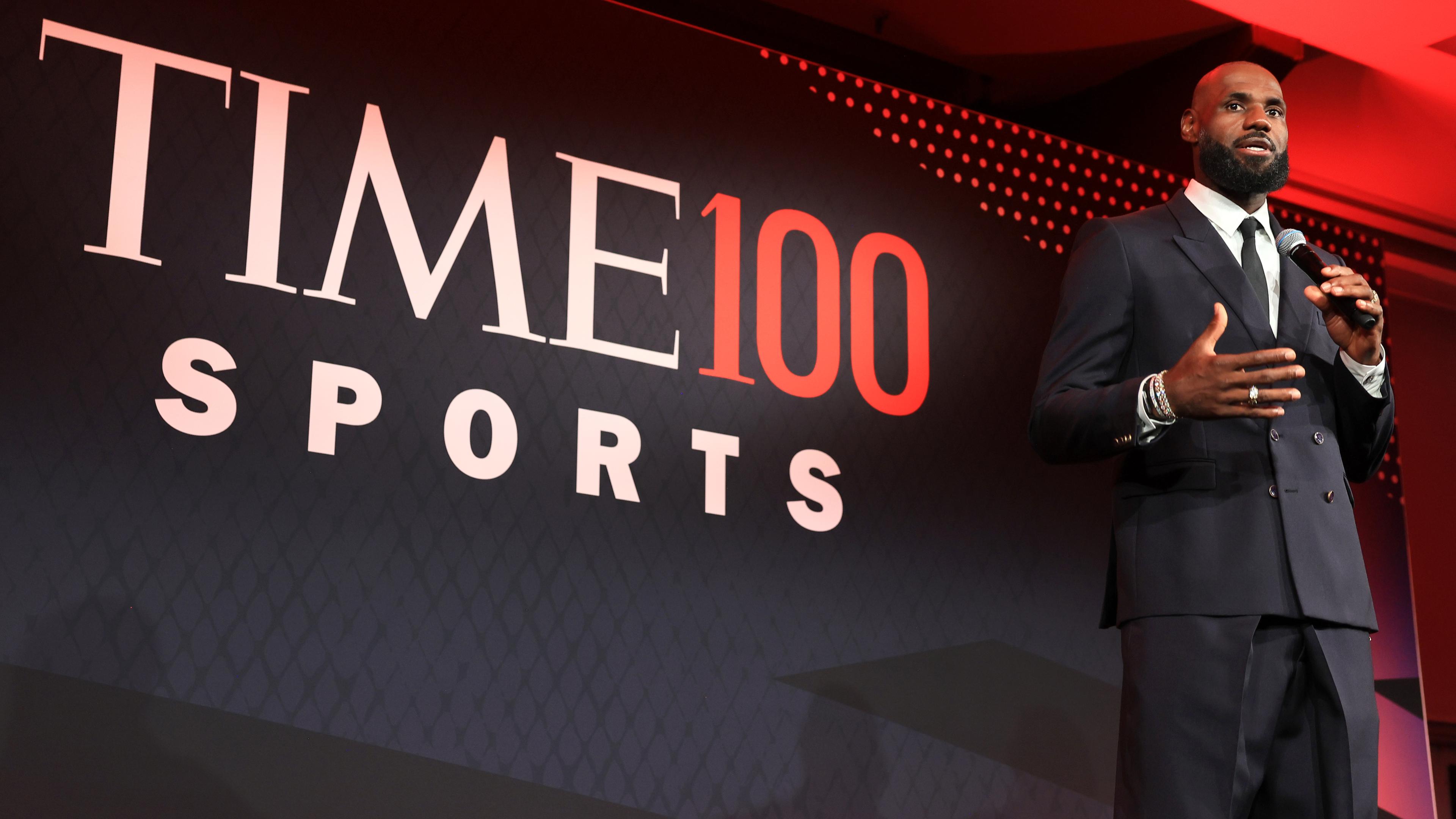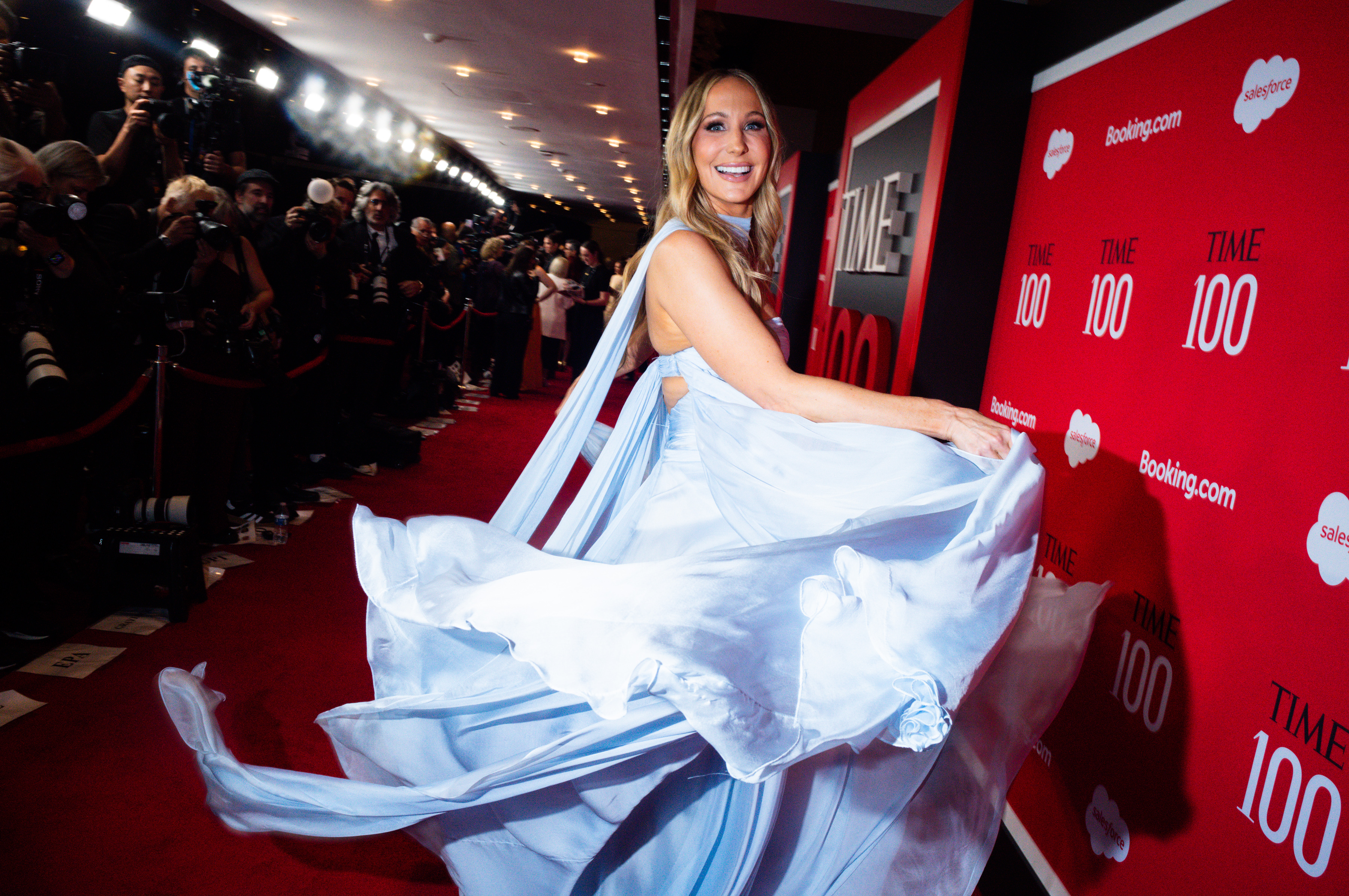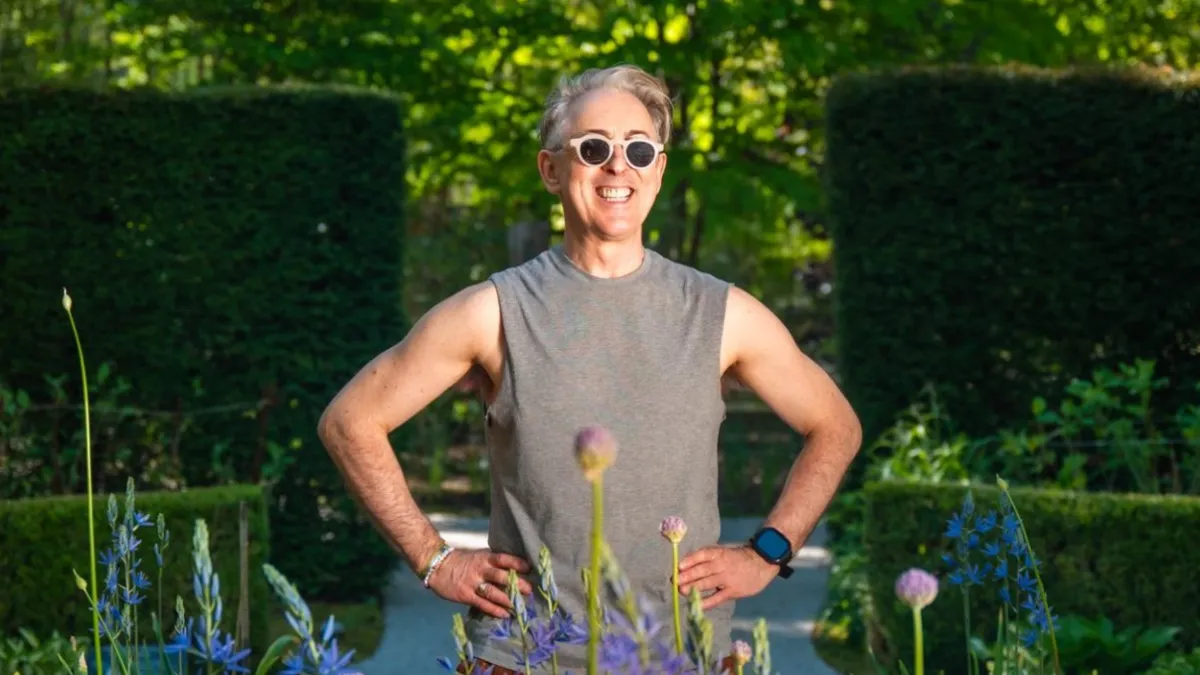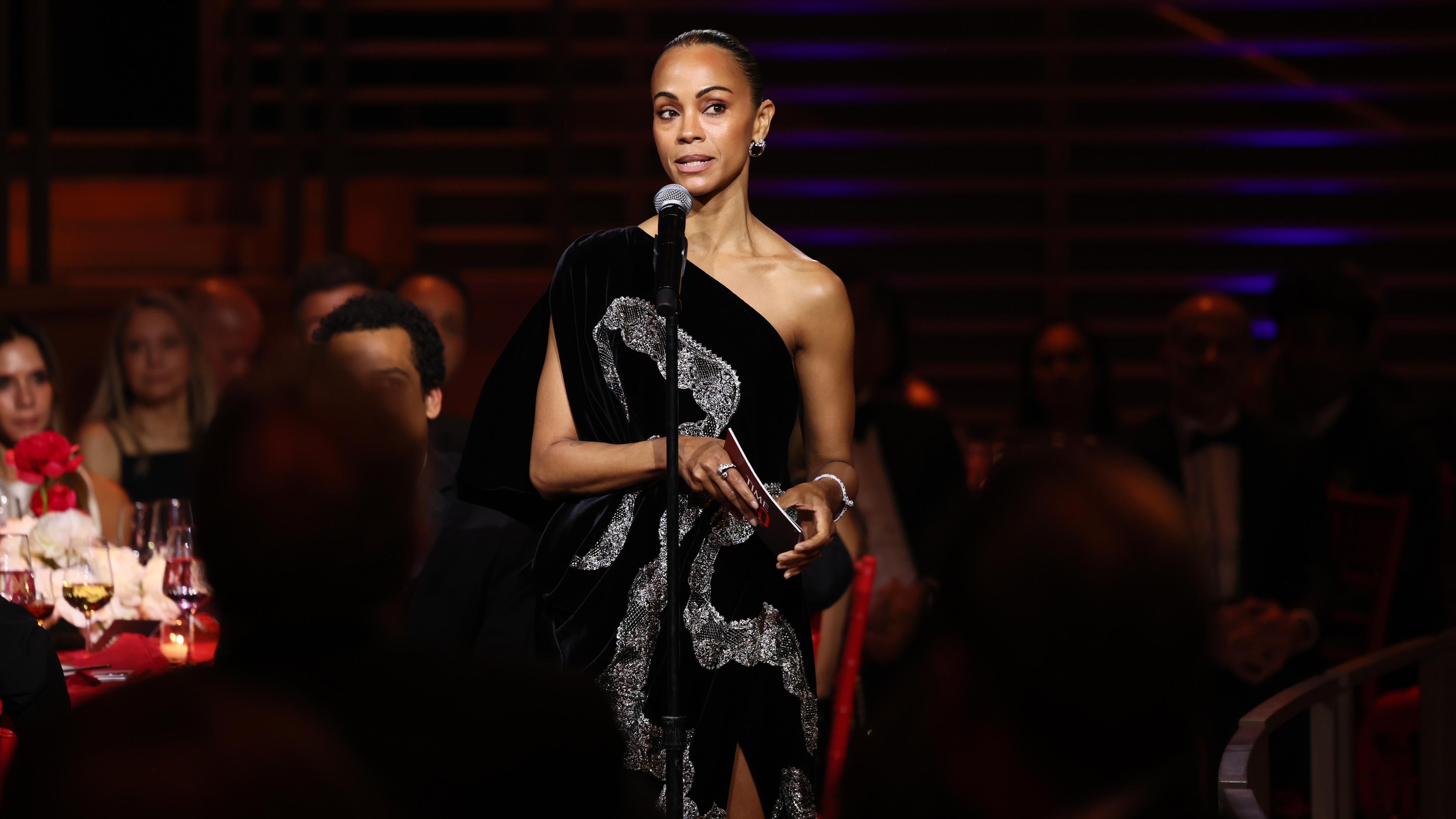
Alan CummingCumming, who hosts the reality game show The Traitors, kicked off the evening’s toasts by unpacking what “influence” really means.“I feel really lucky that over the last 40 years … I forged a career where I can span many genres and forms and outfits,” he said. “Because of that work, I have a platform and an opportunity to talk about things that I feel are important and need to be talked about in the world.”Cumming focused on three “basic tenants” that are important to him: justice, equality, and kindness. “I feel that most of us in the room, I would think, also agree with that—that those are really important things to use our influence to propagate,” he continued.But Cumming acknowledged that there are “some people on [the TIME100] list who don’t propagate those tenants at all.” While he didn’t specify who he was referring to, he said that these people “propagate hatred and bigotry and inequity and violence.”“It’s made me realize that influence itself is a two-way street—just because you have influence, that is not necessarily a positive thing,” Cumming said. “It’s made me understand that the influence I have, the platform that I do have is not just a privilege, it’s a duty.”“I want to thank TIME Magazine for including those people whose values I despise on the list because it has been not just a sign, but a rallying call for me—and I hope for you—to make sure that we continue to use our influence for good and for positivity,” Cumming said.Kim went on to talk about how, at 26, she has “lived a very full life.”“I have learned that life rarely unfolds in a straight line,” she said. “It asks us to adapt. To fall and get back up. To keep believing, even when belief feels difficult. And through every chapter of my life, the one thing I have remained forever indebted to is my community.”She thanked her family, her friends, her team, and everyone else who has believed in her. And she even thanked those who haven’t.“Strangely enough, I am grateful to the people who did not believe in me too because they taught me something equally valuable: that our worth cannot be determined by one’s limited imagination,” Kim said. “Sometimes, the greatest gift is being underestimated. It forces us to discover our own strength, our own voice, and our own conviction.”Kim said that, while the world may feel divided right now and it can feel “easier to retreat into corners than it is to reach across them,” she still believes in the importance of unity. And by unity, she doesn’t mean think or speak the same, but “a stronger kind of unity; the kind that allows us to remain curious about one another.”“Because no matter our backgrounds or our beliefs, we all want many of the same things: to be seen, to be heard, to feel safe, to belong, and to leave this world better than when we found it,” she said. “That is why I believe so deeply in nurturing our minds, especially for the next generation.”She urged the audience to encourage young people to stay informed and engaged with the world and to be curious.“If we want a more united future, we must raise a generation that is not afraid of complexity, not afraid of dialogue, and not afraid to care,” Kim said. “So tonight, on my 26th birthday, if there is one thing I know for certain, it is this: None of us gets through this life alone. We need one another. We need community. We need courage. And above all, we need the willingness to keep showing up for one another—even when it is uncomfortable, even when it is difficult, and especially when it matters most.”Precious MatsosoMatsoso was honored on the TIME100 list for her work with her fellow co-chair of the World Health Organization’s Intergovernmental Negotiating Body Anne-Claire Amprou to pass the world's first-ever global pandemic agreement—a historic feat in the wake of the COVID-19 pandemic.In her toast, Matsoso honored the “experts, researchers, and stakeholders” from 194 countries who helped make the agreement possible.“It was a collective refusal to repeat the devastation and inequities of COVID,” she said. “As a survivor, that refusal is personal.”She enumerated issues of inequity that were exposed during the height of the pandemic—including a lack of “basic protection” for health workers and unequal access to vaccines in the Global South. “Half the world, notably Africa, lacked access to diagnostics, therapeutics, and vaccines. That was not an accident,” she continued. “The system was designed for charity after the fact, not equity from the start.”The agreement she worked to help pass works to embed principles of justice into the practice of preparing for a pandemic. For Matsoso, however, the agreement is not the “finish line,” but the start of work that will continue in labs around the world.“To science that is rigorous and accessible,” she toasted at the end of her speech. “To policy grounded in evidence and empathy. And to a global health system where every frontline worker is protected.”“My grandmother arrived in 1961 with very little except her courage, her faith, and a vision for something better,” Saldaña said. “She was our matriarch, our anchor and our compass.”She went on to say that her experience being first generation and bilingual was not unique in New York City, nor in America more broadly—a truth that she called “profoundly powerful.”“We are shaped by journeys that began long before we arrived, by dreams we inherited before we even knew how to name them,” she continued. “And there is something profoundly powerful in that—because it means we are all, in some way, living proof that hope travels.”She saw this in her grandmother who worked to “imagine a brighter future” for herself and build it. And Saldaña said she saw the same thing in the honorees present in the room. Each person, she said, had a mixture of imagination, courage, and intention to build that brighter future.“Scientists working to protect lives we may never meet. Activists pushing forward even when progress feels impossibly slow,” she said, looking around the room at Jazz at Lincoln Center. “Artists telling stories that challenge, that heal, that remind us of our shared humanity.”She finished the evening by challenging those in the room to “hold onto” the stories that remind them of who they are, and let those stories guide them.“We are here because of unlikely bravery,” she concluded. “Because somewhere along the way, someone believed a better future was possible—and refused to give up on it.”———The TIME100 Gala is an annual celebration of the TIME100 list, which highlights the world’s most influential people. The Gala brings together icons, leaders, change-makers, and celebrities from across industries and nations for one lively evening of meaningful dialogue and celebration.The 2026 TIME100 Gala is hosted by comedian Nikki Glaser and features remarks from advocate Dolores Huerta; actor Alan Cumming; Olympian Chloe Kim, and many more, plus performances by Coco Jones and Luke Combs.For the first time ever, viewers can watch exclusive Gala red carpet coverage—hosted by Terrence J and Maura Higgins—on TIME’s YouTube.The 2026 TIME100 Gala was presented by Booking.com, Rolex, JPMorganChase, Toyota, Reliance, PepsiCo, and The Macallan.
At TIME100 Gala, Honorees Toast to Kindness, Community, and Courage
Alan Cumming, Chloe Kim, Precious Matsoso, and Zoe Saldaña delivered toasts at the event.
1,201 words~5 min read