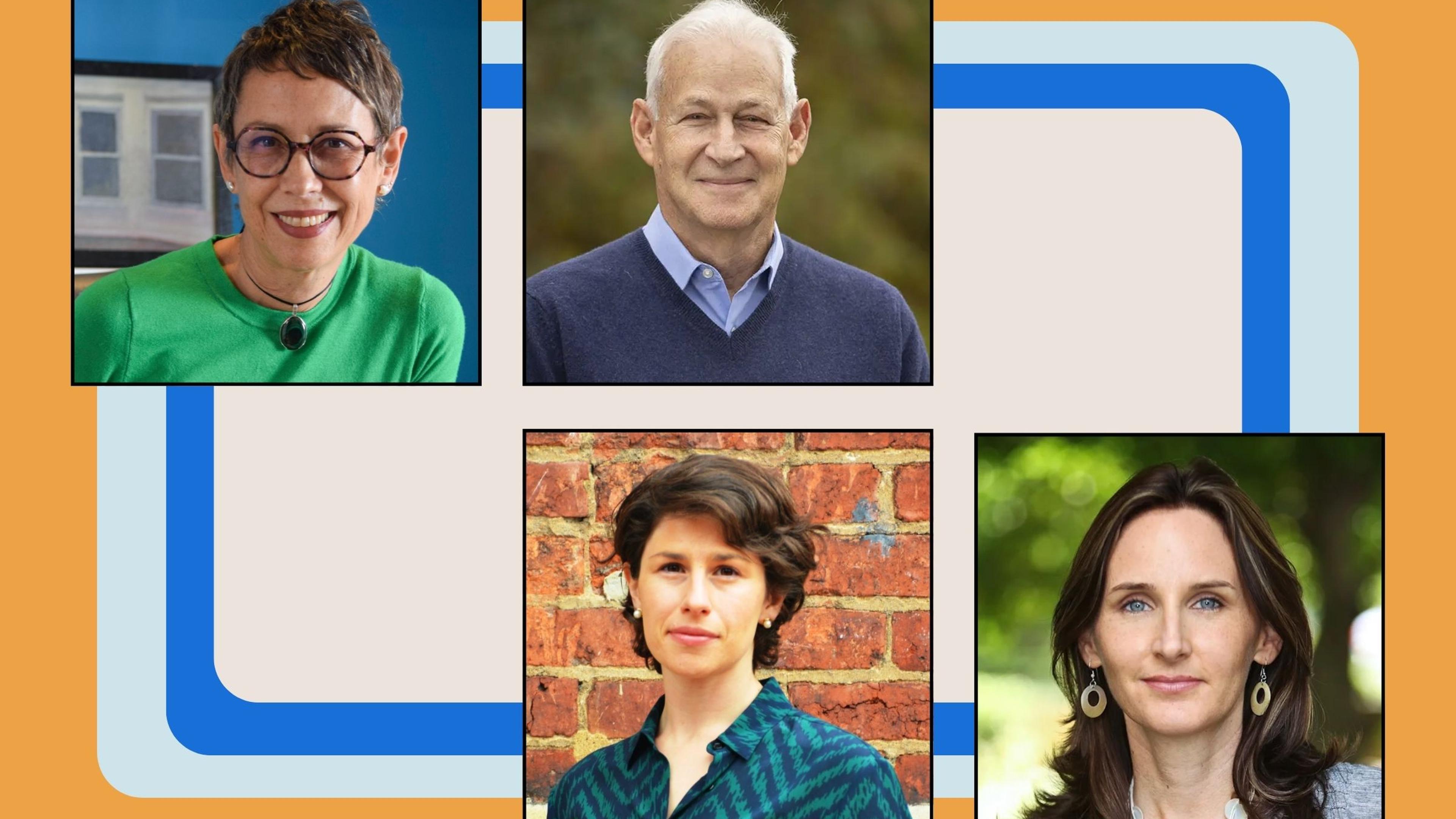
Devercelli explained that the World Bank offers advice and financial support to nation leaders it works with to tackle the issue. She said that there are “three basic things we want to make sure happen for all children.”“We want to make sure they’re healthy and well-nourished, we want to make sure they have opportunities to learn and be supported from birth, and we want to make sure they’re nurtured and protected from stress,” she said. “We know from decades of research … that if we do these three things, children end up on a fundamentally different trajectory for their lives.”Devercelli said that “there’s always a way to link early childhood development to public policies.” New York’s recent initiative to expand child care, for instance, ties childhood development to job creation, she noted, since it will create more jobs in the child care sector.“Governments aren’t always going to make the choice to invest in early childhood, but they will put the money into increasing the workforce,” Devercelli said. “My biggest advice is: find ways to make early childhood relevant to the policy space that the government is in.”Gustafsson-Wright continued the discussion by explaining her research on “results-based financing.” According to the World Bank, this is a type of financing that “ensures that development funding is linked to pre-agreed and verified results, and that funding is provided when the results are achieved.” Gustafsson-Wright cited an example in Utah: policymakers saw that enrolling children in pre-K prevented them from needing special education services later on, she said, which “resulted in a fiscal savings” and led to an expansion of such child care opportunities in the state.“Investing in early childhood is the best investment that you can make, and politicians aren’t necessarily always convinced of that or maybe it’s not the priority because these results may be in the longer-term,” she said. “So this has been a really interesting way in the early childhood space to ensure that investment.”Lopez spoke about her experience leading aeioTU, an organization focused on early childhood education that says it has reached the lives of about 2 million children. She said that this work “was about inviting others, understanding what was needed, and working in a very collaborative way.”“It’s not just designing an educational experience, copy it, and paste it,” she said. “It’s understanding each context, understanding different regions, different daily lives, rituals, and conflicts, and problems, and different situations.”Devercelli said that, compared to about a decade ago, more government officials and education leaders are listing early childhood education as one of their priorities, which is a good sign of progress. But along with that progress, she said, come more challenges. “Unfortunately, there’s a lot of risk in the world today for children: climate, conflict, technology that can be both a positive or a negative,” she said. “So we haven’t solved all the challenges we have, but there are all these new challenges around the corner, and I think that investments in early childhood are going to be absolutely critical to address those challenges. And we know that young children are going to be the most vulnerable.”Shonkoff emphasized the importance of early childhood beyond education as well.“I’d like to put on the table the idea that would be helpful if a lot of people at this meeting stop thinking about this as early childhood education only, and think about it as early childhood development,” he said. “This is not just an educational issue.”
Experts Discuss the Importance of Early Childhood Education
“Investing in early childhood is the best investment that you can make," Brookings Institution senior fellow Emily Gustafsson-Wright said at the TIME100 Summit.
574 words~3 min read