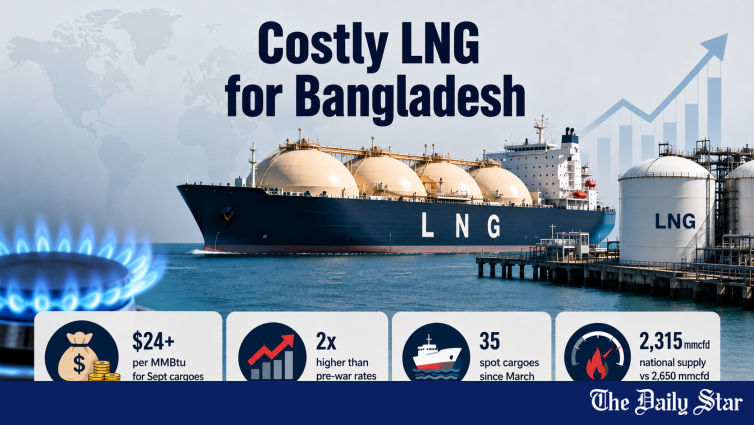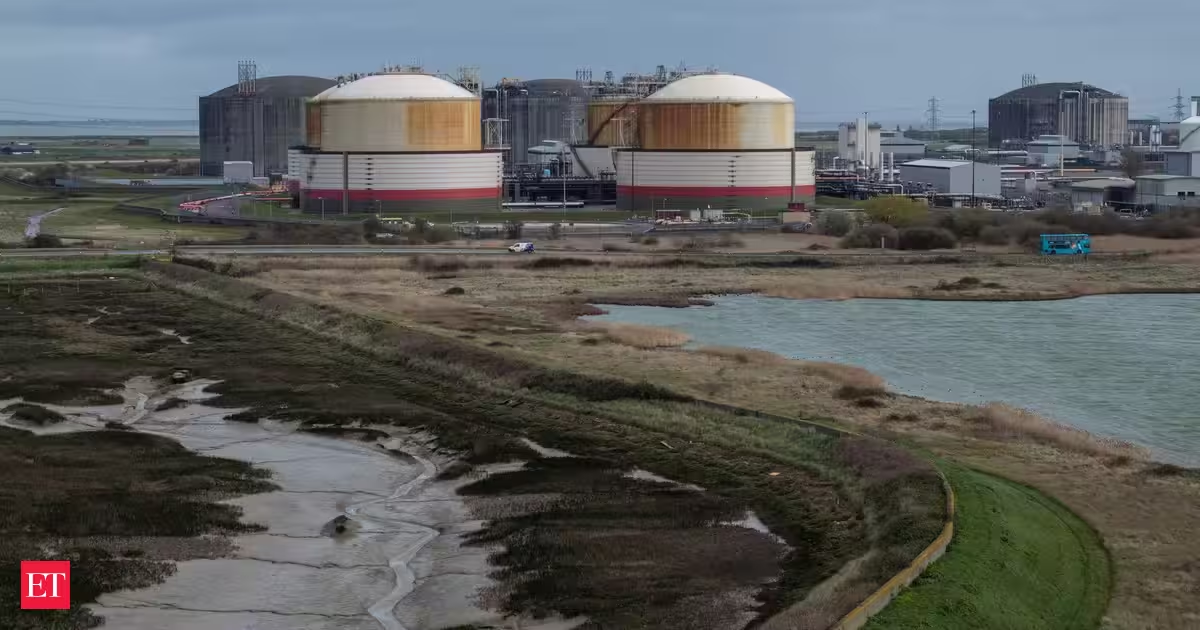
Pakistan and Bangladesh were forced to buy some of their most expensive liquefied natural gas shipments in years as the Middle East conflict chokes supply, straining government finances and prompting both countries to rethink their reliance on the super-chilled fuel.State-owned Pakistan LNG Ltd. bought a shipment for late July at about $21.88 per million British thermal units on Monday, its highest price since 2022, according to traders with knowledge of the matter. Bangladesh’s state-run buyer procured at least one shipment for August at an elevated level last week, the traders said.Also read: LNG consumption declines 6.5% on costly import, lower outputThe prolonged disruption to the Strait of Hormuz — a key conduit for about a fifth of global LNG supplies — has sent spot prices higher and deepened an energy crunch across South Asia’s most vulnerable nations. Pakistan and Bangladesh have been grappling with rolling blackouts after Qatar — their largest supplier — canceled scheduled deliveries as it closed its export facilities in March following an Iranian attack. The spot shipments cost about double what the two countries would have paid for long-term supply from Qatar. The Persian Gulf producer has delayed plans to restore output following the recent flare-up around Hormuz.BloombergWhile the emergency purchases may help avert deeper power shortages in the near term, the elevated prices are straining government finances and adding pressure on both countries to raise electricity and gas tariffs. The crisis is also accelerating efforts to reduce reliance on imported LNG. Bangladesh is moving faster to expand renewable energy, as policymakers across the region reassess the risks of relying on Middle Eastern energy. Authorities in Dhaka rolled out a package last month to boost renewables, including tax exemptions for the solar power sector through 2035, according to PV Magazine.The nation is already buying more of the technology, with imports of solar panels and cells from China steadily increasing. While still relatively small, deliveries from the world’s biggest manufacturer rose 40% in the first half of 2026 from the same period last year.Also read: HPCL invites LNG suppliers for spot and long-term import dealsBangladesh has also urged nongovernmental organizations to help accelerate investments in the solar sector, with a goal to reach 10 gigawatts of installed capacity by 2030, according to a report by Bangladesh-based Bdsnews24.com, citing Power Minister Iqbal Hassan Mahmood at a conference on Monday. Bangladesh had about 1.7 gigawatts of installed solar capacity as of 2024, according to BloombergNEF.Pakistan, meanwhile, is depending more on nuclear, coal and renewables to fill the gap left by LNG. Nuclear generation surged 30% in June compared with the same month last year, while coal increased 5%, according to data compiled by Optimus.
Iran war forces cash-strapped Asian nations to buy expensive LNG
Pakistan and Bangladesh face high LNG costs due to Middle East conflict. This situation strains government finances and prompts rethinking fuel reliance. Both nations are accelerating renewable energy expansion and increasing solar imports. Pakistan is also boosting nuclear, coal, and renewable energy generation. These shifts aim to reduce dependence on imported liquefied natural gas.
445 words~2 min read