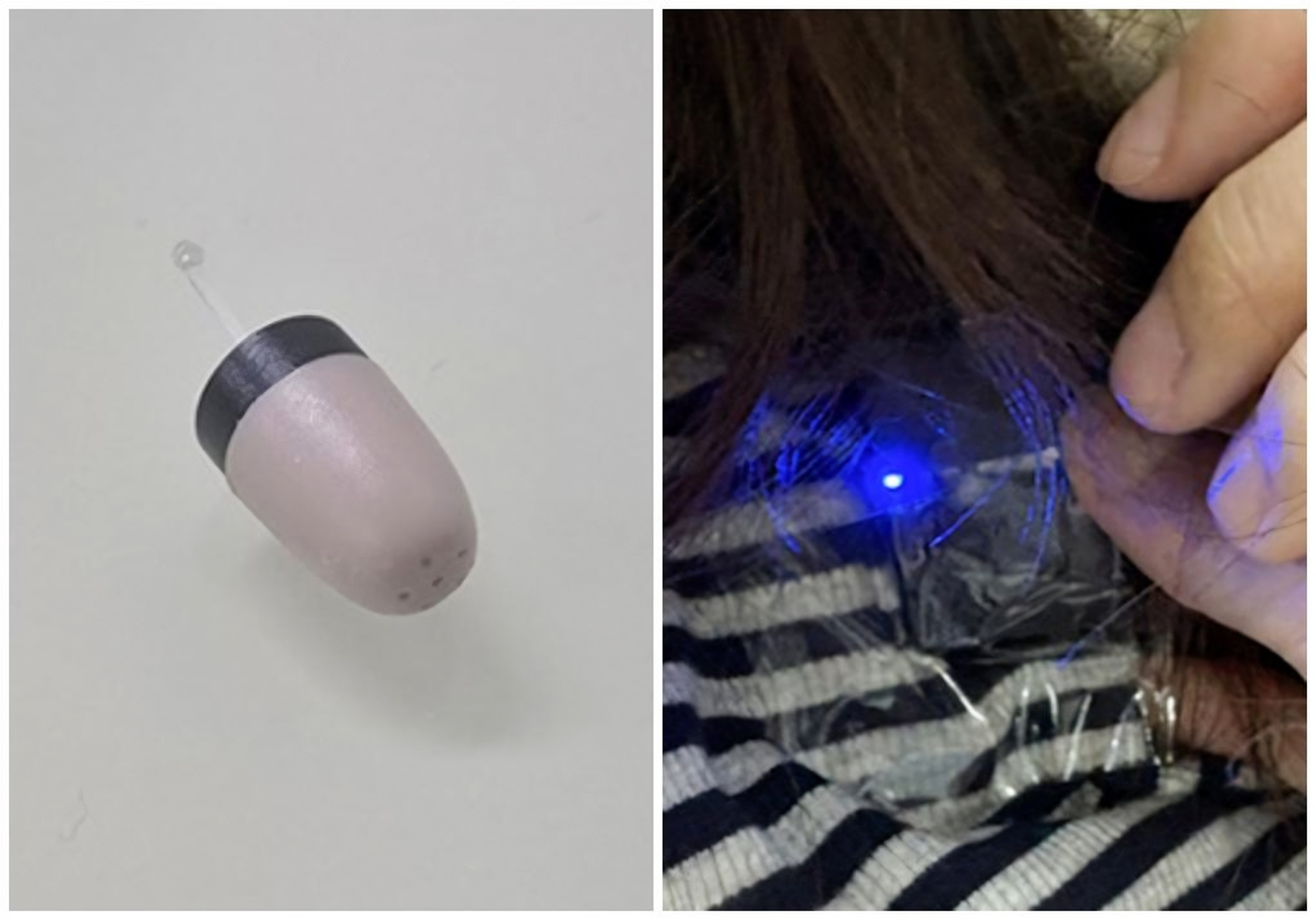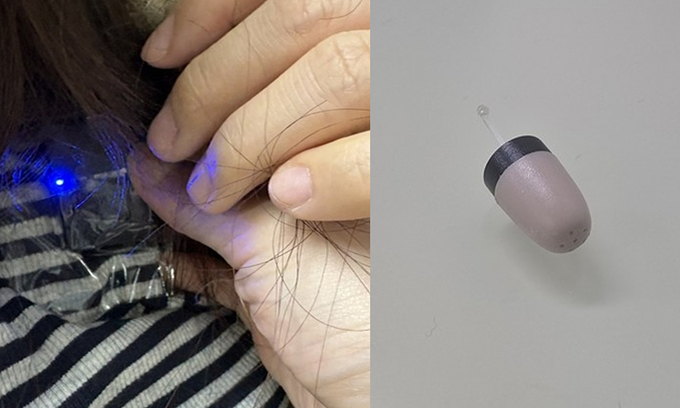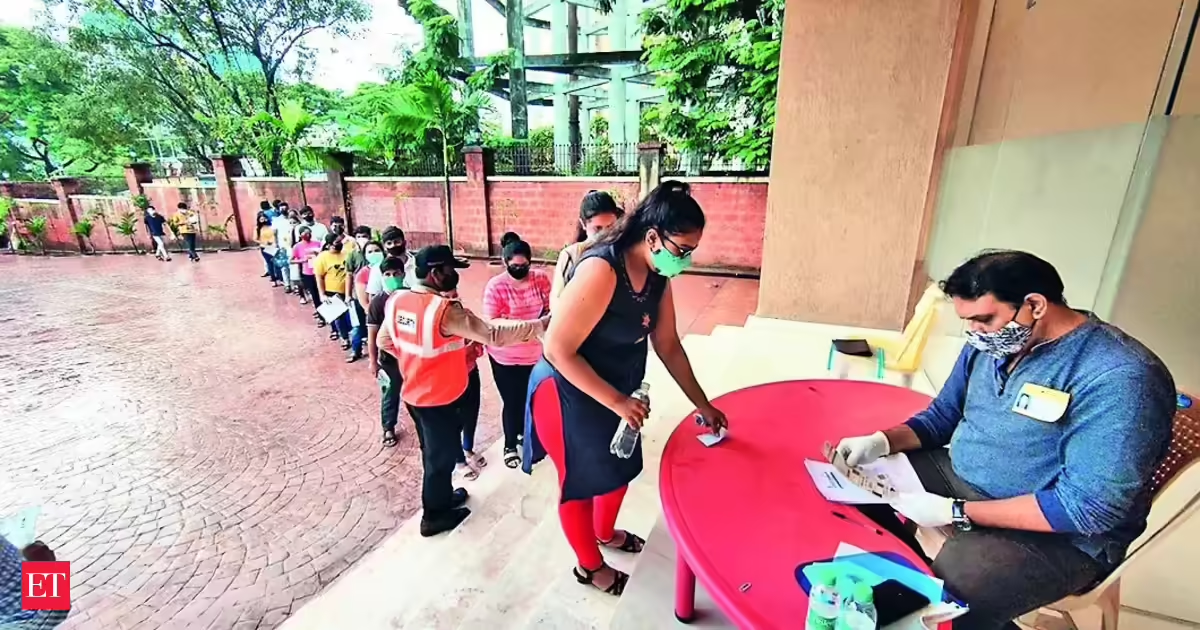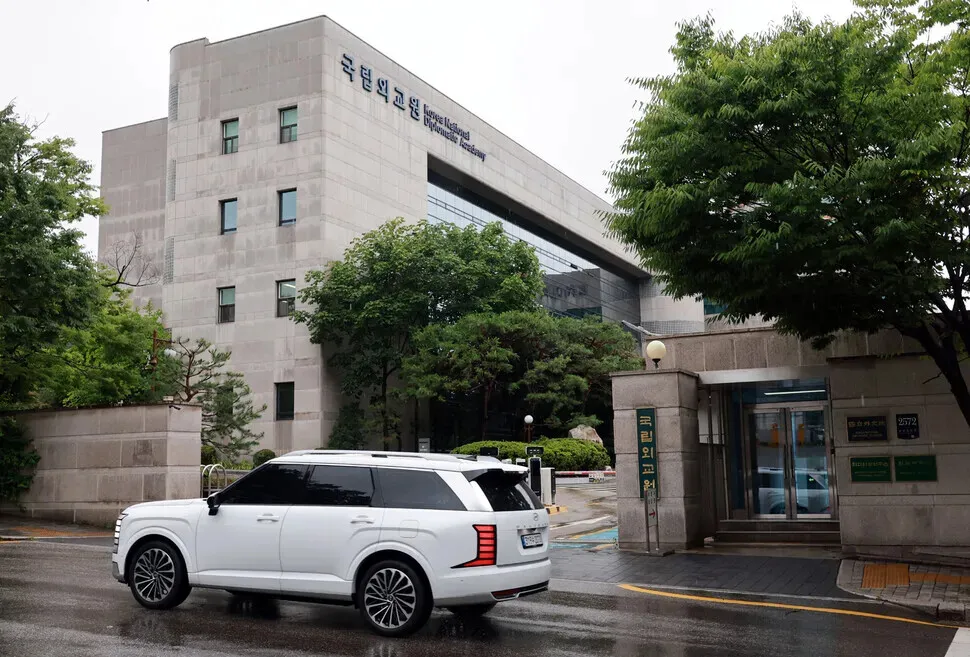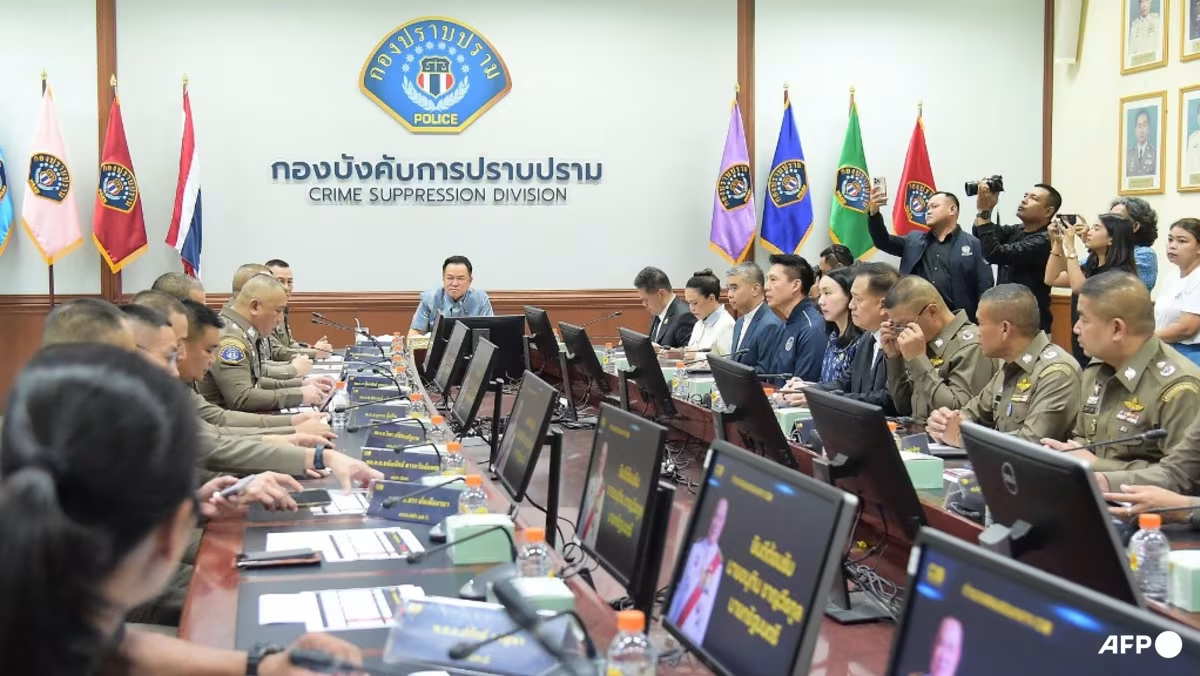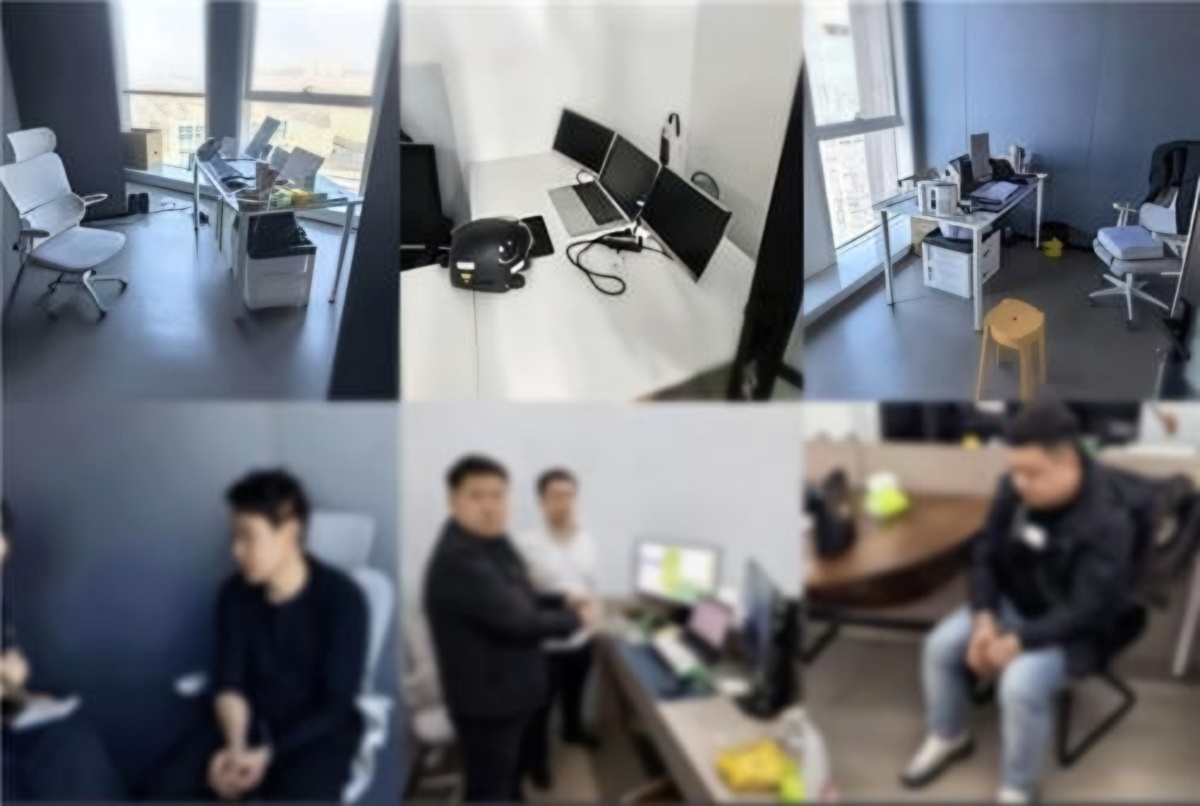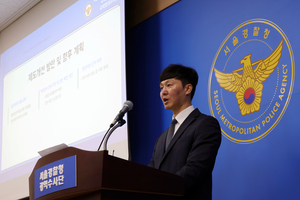
Education Ministry vows tighter checks as universities review admissions, degrees and scholarships tied to fraudulent scores Kim Sung-ho, head of an international crime investigation unit at the Seoul Metropolitan Police Agency, briefs reporters Tuesday at the agency’s investigative headquarters in Mapo-gu, Seoul, on the arrest of foreign nationals accused of fraudulently obtaining TOPIK scores. (Newsis) South Korean police have uncovered an organized cheating scheme involving 113 Chinese nationals who allegedly used proxy test-takers, forged identification documents and concealed electronic devices to obtain high scores on the Test of Proficiency in Korean exam.The Seoul Metropolitan Police Agency’s international crime investigation unit said Tuesday that it arrested a Korea-based Chinese broker and referred the suspect to prosecutors on Jan. 29 on charges of obstructing official duties through fraudulent means.Police also booked 112 others without detention, including 101 clients and 11 proxy test-takers, and have been referring them to prosecutors in stages since last year.Those accused of using forged identification documents also face charges of forgery and use of forged official documents. All of the suspects are Chinese nationals, police said.Police found that fraudulently obtained scores had been used for university admission, degree completion, scholarships and immigration status. They have notified the relevant authorities, with agencies including the Education Ministry and the Justice Ministry expected to review possible follow-up measures.TOPIK scores are widely used in Korea for visa applications, university admission and graduation requirements, scholarship eligibility, and employment.Police also sought to confiscate around 150 million won ($102,000) in alleged criminal proceeds.How the scheme worked This screenshot of surveillance footage shows a broker handing an electronic device to a client ahead of a TOPIK exam. (National Police Agency) According to investigators, an alleged ringleader based in China recruited clients through advertisements posted on Chinese social media platform Xiaohongshu, promising high scores on the TOPIK exam.A Korea-based broker, who studied computer engineering at a Korean university, collected the clients’ personal information and managed the registration process, including securing preferred test sites, using a self-designed computer program to automatically book available seats.For clients seeking proxy test-takers, the group recruited people who resembled them and produced forged identification documents that allowed the stand-ins to take the exam in their place.The scheme exploited a weakness in the exam’s identity verification system, under which proctors visually compare a candidate’s face with the photograph on an identification document.Other clients allegedly took the exam themselves while using transmitters attached below their necks and miniature earphones concealed in their ears, allowing them to receive spoken answers during the test.They also carried two smartphones. One was surrendered to proctors before the exam, while the other was hidden and connected to the transmitter and earphones.Police have not determined how the group obtained the exam questions or answers that were relayed to candidates, leaving parts of the operation unclear.Clients paid between 10,000 yuan and 35,000 yuan ($1,500 to $5,200) for the service, according to police.Education Ministry vows action A transmitter and an earpiece used by test-takers. (National Police Agency) The Education Ministry and the National Institute for International Education said Tuesday that they would notify the universities attended by the suspects and request follow-up measures.Depending on the circumstances, those measures could include revoking admissions or degrees and recovering scholarship payments. The Justice Ministry and other relevant agencies are also expected to examine measures involving immigration status obtained using fraudulent scores.Under current TOPIK regulations, those who take part in a proxy test can have their test results invalidated and be barred from taking the exam for four years.The Education Ministry said it would introduce additional safeguards following the case, including stricter limits on acceptable forms of identification and tougher penalties for candidates who use forged documents.It also plans to classify proxy testing, question leaks and the use of advanced electronic devices as serious misconduct subject to harsher sanctions.The NIIED introduced radio-frequency detectors this year to identify Bluetooth-enabled equipment, including miniature earphones and artificial intelligence-equipped glasses.Police, however, said the case exposed broader weaknesses in the current exam management system, particularly the limitations of relying solely on visual checks to detect forged identities and concealed devices.Investigators said they would recommend that relevant authorities consider facial-recognition-based identity verification systems and metal detectors at test sites.Police have obtained arrest warrants for two equipment couriers accused of supplying test-takers with miniature earphones, transmitters and receivers, and are pursuing them after they fled to China.
113 Chinese nationals caught in TOPIK cheating ring
South Korean police have uncovered an organized cheating scheme involving 113 Chinese nationals who allegedly used proxy test-takers, forged identification docu
724 words~3 min read