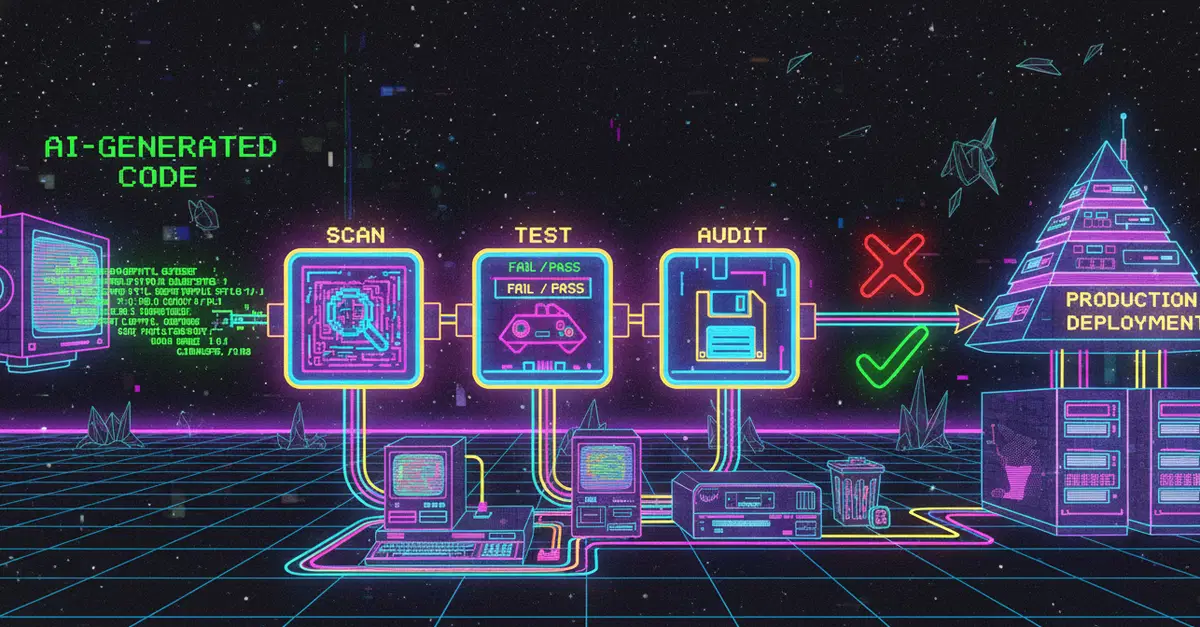
If you ship enough side projects, something in your automation is always quietly on fire — and you usually find out days too late. This is the next installment in my "automation foundation for mass-producing side projects" series, following "How I split Claude Code's memory into four layers" and "Running Claude Code and Codex together on one machine." This time I'll walk through the design and implementation of an unattended watchdog that lets an AI detect, repair, and verify broken automation scripts, and pushes changes to production without approval only when verification passes. Using real code as the anchor, I'll explain how to stack guardrails so the AI runs safely instead of "rampaging without limits."
Why "fix itself when it breaks" became necessary
When you mass-produce side projects, the number of always-on automation scripts keeps growing. Auto-posting affiliate articles, scrapers, delivering briefs to Discord, checking the review status of iOS apps. Each runs under launchd or cron, so when one breaks, days can pass without anyone noticing.
Monitoring and fixing everything by hand hits its limit quickly. But just "letting the AI fix it" carries risks: unintended code rewrites, committing secrets, or reporting a repair as done when it's actually still broken and pushing that to production.