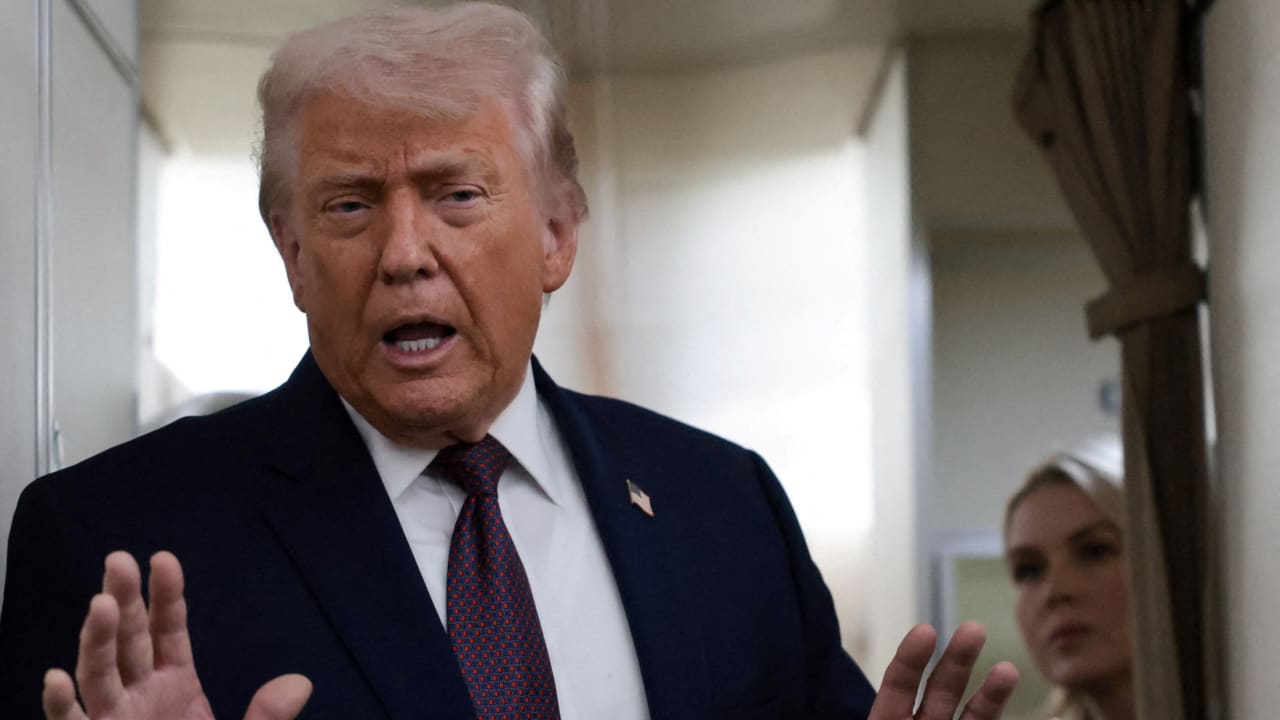
ByREUTERSJULY 21, 2026 07:16Updated: JULY 21, 2026 07:18US President Donald Trump unveiled 50% tariffs on a wide range of imports from Canada on Monday in response to what the US administration called its discriminatory treatment of American-made cars, alcohol and dairy goods, threatening a new front in a global trade war.In slapping import taxes on goods ranging from wine to cement and ice hockey gear, Trump invoked Section 338 of the Tariff Act of 1930, which permits a president to impose punitive tariffs of up to 50% against trading partners deemed to have discriminated against US goods. That marked the law's first known usage in nearly a century of existence.The new tariffs, set to take effect in 30 days, would also apply to dairy products, swimming pools, furniture, fishing rods, seeds, clothing and wigs, among other items.The US Trade Representative's office said that the tariffs would apply to nearly $20 billion of imports from Canada. That's about 5.2% of the $382 billion in goods the US imported from Canada in 2025, according to US Census Bureau data."While the Administration continues to secure fair and reciprocal trade deals with our trading partners, Canada, unlike other partners and allies, continues to retaliate against the United States for its efforts to rebalance trade and protect US industry in national-security sensitive sectors," US Trade Representative Jamieson Greer said in a statement.Canadian Prime Minister Mark Carney speaks at the Economic Club Of New York in New York City, May 28, 2026. (credit: MICHAEL M. SANTIAGO/GETTY IMAGES)Canadian Prime Minister Mark Carney said in a statement that his government has made comprehensive proposals to resolve trade disputes with Washington, asserting that Trump's past tariffs violated the North American trade pact."This trade dispute has raised costs for families, particularly in the US," he said. "Canada stands ready to engage intensively to address outstanding issues with the US to the mutual benefit of our citizens."The Trump administration has long complained that Canada and China implemented retaliatory measures in response to the barrage of tariffs Trump has tried to impose since returning to the White House last year.Greer has pointedly left Canada out of negotiations underway with Mexico on changes the US wants in the USMCA. He holds bilateral talks on USMCA in Mexico City this week.When Trump and Carney met at the FIFA World Cup Final in New Jersey on Sunday, Trump demanded that Carney take action to contain wildfires that have sent smoke billowing across swaths of the US. The US president threatened last week to add the "incalculable cost" of dealing with pollution to existing tariffs on Canadian goods.First usage of Tariff ActThe Tariff Act of 1930 and its Section 338 are better known for massive US tariff increases and subsequent retaliation that economic historians say worsened the Great Depression of the 1930s.Section 338 was intended to ensure countries apply tariffs equally and don't give preferential rates to some countries at the expense of US exports, said John Veroneau, a US trade official in President George W. Bush's administration who has extensively researched the statute.He said that some presidents, including Franklin D. Roosevelt, considered imposing tariffs under Section 338, but no record could be found of any president taking such action until Trump's proclamations on Monday."It is ironic, to say the least, to use this authority to impose tariffs to retaliate against tariffs that were imposed in response to actions taken by the US," said Veroneau, senior counsel with the Covington and Burling law firm."These tariffs may be lawful under Section 338, but they at a minimum violate the spirit of Section 338, which was to create a world where countries apply the same tariffs on the same goods to all countries," he said, adding Trump has moved away from this principle "in a maximalist way."After World War Two, major countries created the "most-favored-nation" tariff system through the General Agreement on Tariffs and Trade to try to prevent a return to the pre-war "beggar-thy-neighbor" economic policies marked by competitive trade restrictions and currency devaluations.Trump's new levies are set to take effect on August 19 and apply regardless of whether goods qualify for tariff exemptions under the USMCA, although Trump exempted a range of key goods, including energy, potash, fish, critical minerals, and products already covered by Section 232 tariffs.Washington cites Canada's dairy supply system as grounds for tariffsAmong the grounds for the tariffs, the White House cited Canada's "protectionist" dairy supply management system, as well as tariffs and quotas on cars imported into Canada from the US but not from other countries. Carney said that Canada "as is its right, merely matched" US tariffs on the auto sector that were in violation of the USMCA.Washington also noted that most Canadian provinces have halted the sale of US alcohol, a move in response to prior US tariffs.The White House said Canadian imports of US motor vehicles dropped by 22% and of US alcoholic beverages by 81% over the past year.Diamond Isinger, a former senior adviser to former Canadian prime minister Justin Trudeau on US-Canada relations, said Carney would have limited ability to compel provinces to resume selling American alcohol.“Unless there are some sort of extraordinary measures invoked here, the premiers of those provinces are the ones who decide whether to restock alcohol,” Isinger said.Follow us on Google
US imposes new tariffs on billions of dollars worth of Canadian products | The Jerusalem Post
The Trump administration has long complained that Canada and China implemented retaliatory measures in response to the barrage of tariffs Trump has tried to impose since returning to the White House.
879 words~4 min read