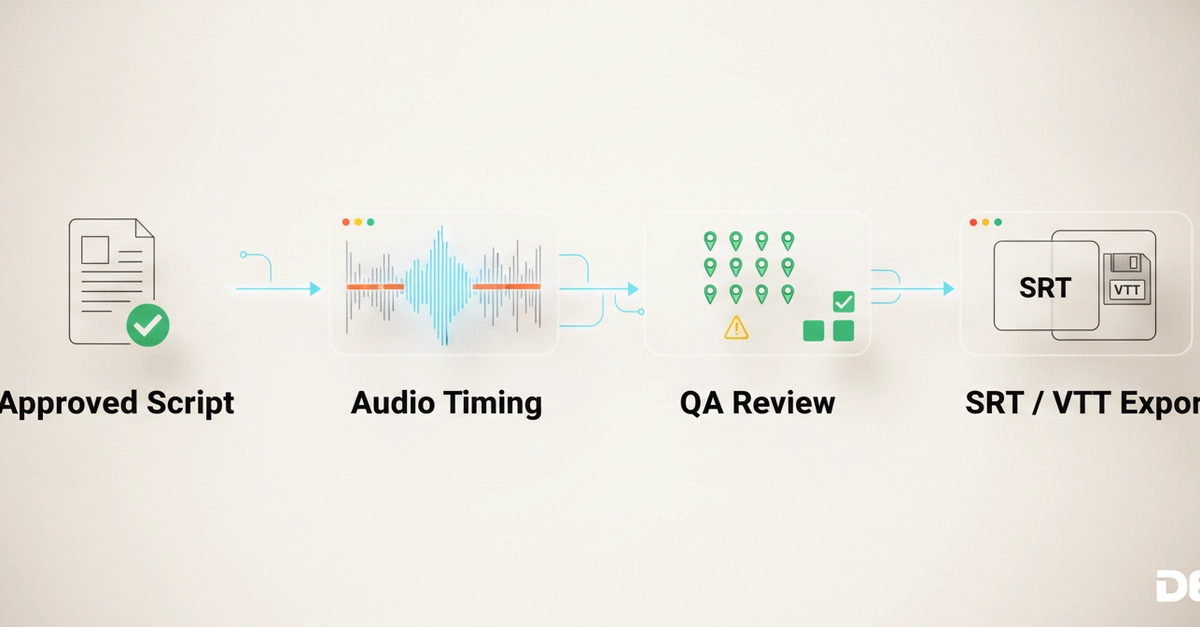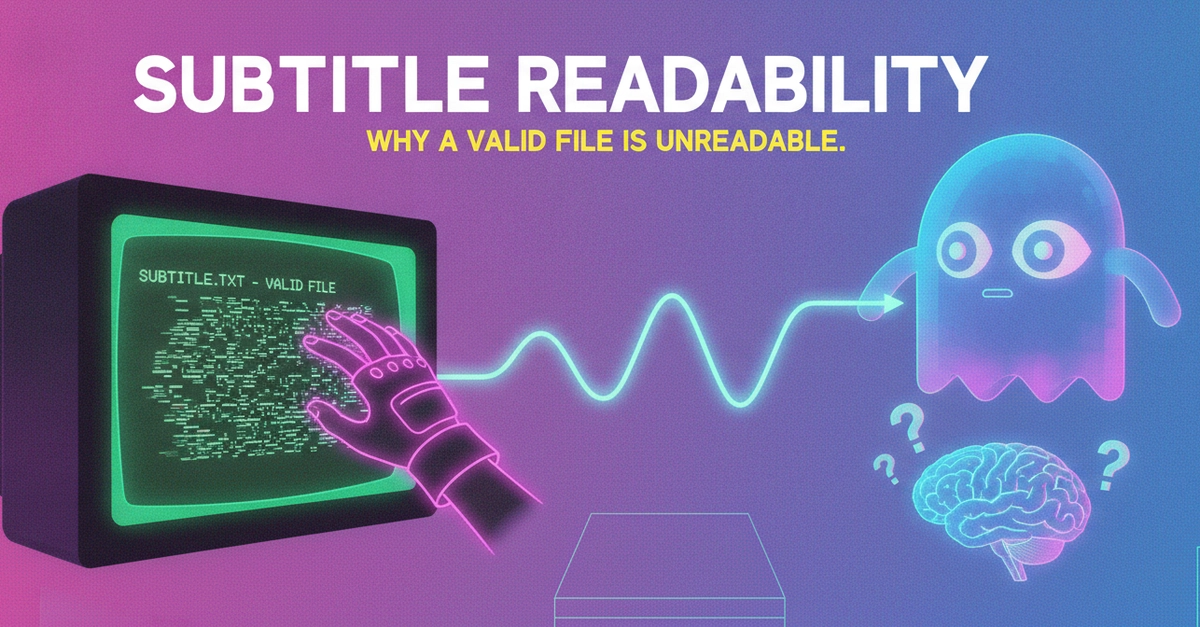
I publish the same scripted show in five languages: Spanish, English, Japanese, German, and Chinese. Every episode ships with subtitles, and every language has taught me the same lesson from a different angle: a subtitle file that passes every technical check can still be genuinely hard to read.
Validators catch broken timestamps, overlapping cues, and malformed syntax. Those checks matter, and you should run them — a free subtitle checker does it in your browser in seconds. But validators catch none of the things that actually make viewers give up on subtitles. Those live in a different layer, and this article is about reviewing that layer without any special tooling.
The validation gap
A subtitle file is two promises at once. The first is technical: timestamps are legal, cues do not overlap, the syntax parses. The second is human: a person watching at normal speed can read every line comfortably while also watching the video.
File formats only encode the first promise. Nothing in SRT or VTT stores "this line is comfortable to read." That is why a file can be simultaneously perfect and unusable, and why the readability layer needs its own review.