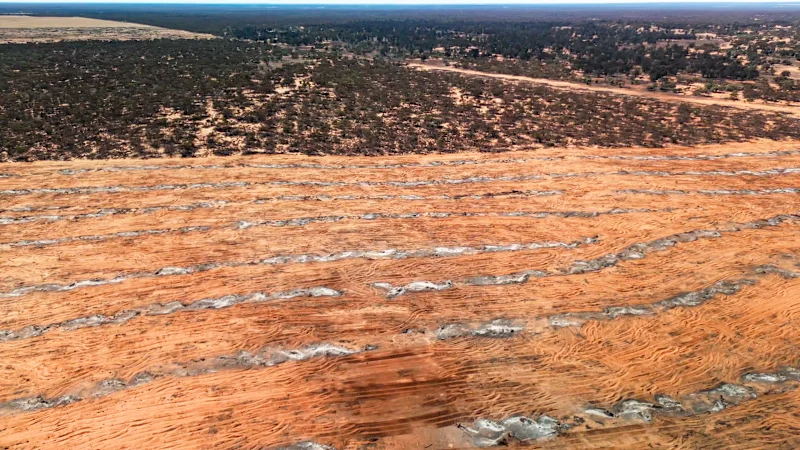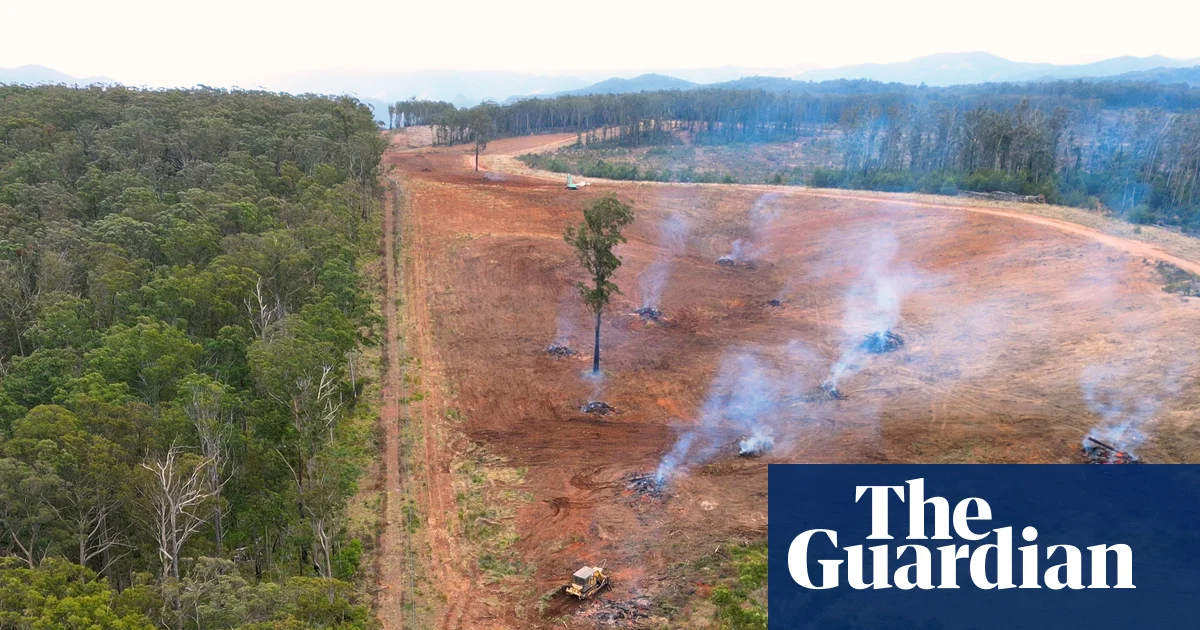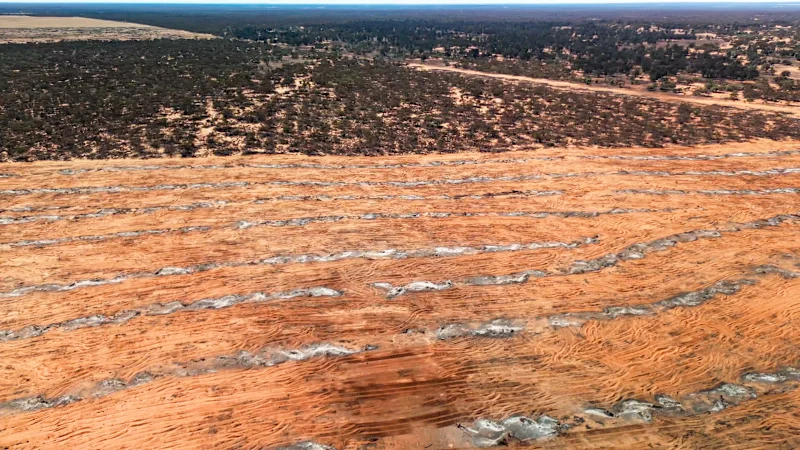
Updated July 21, 2026 — 2:57pm,first published 12:02pmLand clearing across NSW jumped 16 per cent in 2024, the first full year after the Minns government came to power promising to rein in excessive clearing.In the Statewide Landcover and Tree Study (SLATS) released on Tuesday, the clearing of trees or “native woody vegetation” was down, while the clearing of grasses and scrub or “non-woody vegetation” was up. Most clearing was in western NSW.Ken Henry, chair of the Australian Climate and Biodiversity Foundation, said it was “inexplicable” that the overall rate of land clearing was going up.Australian Conservation FoundationNature Conservation Council chief executive Jacqui Mumford said she was “incredibly disappointed” that the Minns government was yet to keep its promise to fix land clearing laws that were loosened by the former Coalition government at the behest of former Nationals leader John Barilaro.“There’s been ample time for the government to deliver on these reforms, but it clearly hasn’t been prioritised,” Mumford said. “It’s very disappointing to see, and it’s at the detriment of our beautiful native species here in NSW.”Trees were cleared from 24,103 hectares of land, the figures show. While this is 19 per cent below the 2018-2024 average, it is still much higher than before 2016 when the former Coalition government changed the laws.Non-woody vegetation, including both native and non-native shrubs and grasses, was cleared from 57,190 hectares – 13 per cent more than the 2018 -2024 average of 50,700 hectares.The Minns government vociferously opposed the 2016 changes to land clearing laws, and made repeated election promises to fix them, but is yet to do so. A statement from the Department of Climate Change, Energy, the Environment and Water said the government was progressing reforms under the NSW Plan for Nature, and these would be shaped by advice from the Natural Resources Commission.Greens MP Sue Higginson said the government was taking too long to act on runaway land clearing, and the minor party would introduce a private member’s bill to repeal the Coalition’s “disastrous laws”.Agriculture is the biggest cause of deforestation, counting for 71,220 hectares of the total clearing. This was up from an average of 66,800 hectares from 2018 to 2024.Clearing for infrastructure was 7268 hectares in 2024, while public and private native forestry was 2805 hectares. Both were down on the 2018-2024 average.Unallocated land clearing – where the government has no record of authorisation – was 60 per cent of all clearing in 2024. This includes lawful routine activities requiring no permit, unrecorded non-woody clearing, and illegal deforestation.Land clearing in Yarrowitch in the NSW Northern Tablelands in 2023. There is no allegation the clearing was illegal.Australian Conservation FoundationDr Ken Henry, chair of the Australian Climate and Biodiversity Foundation, who led the NSW review of the Biodiversity Conservation Act in 2023, said it was “inexplicable” that the government was yet to curb excessive land clearing.“The general public is unable to tell what more than half of the land clearing has affected because it’s unallocated,” Henry said. “Nobody knows, or if they do know, they’re not telling. It’s not good enough.”An aerial image of land clearing at Yarrowitch in the NSW Northern Tablelands. There is no suggestion of illegality.Australian Conservation FoundationThe passage of federal environmental laws last year also meant land clearing in NSW might be subject to a higher hurdle now, Henry said.A study by the Wentworth Group of Concerned Scientists published earlier this year found the land clearing in NSW was contributing to the state’s extinction crisis.Professor Richard Kingsford, a conservation biologist at the University of NSW and Wentworth Group, said an average of more than 17,000 hectares was cleared each year between 2010 and 2014, which then soared to nearly 31,000 hectares a year between 2018 and 2023.“It is important that the NSW government turns around the state’s reputation as one of the more recalcitrant states when it comes to land clearing,” Kingsford said.NSW Farmers president Xavier Martin said nothing in the report indicated “excessive” land clearing, and the unallocated amount was mostly landowners legally dealing with ground cover where exotic weeds outnumbered the native vegetation, he said.“It is not illegal to treat this land, but the inability of the environmental regulator to be able to remotely differentiate between the various species sees it termed ‘unallocated’,” Martin said. “We have long called on government to get mapping right.”The SLATS figures are released 18 months after the year the clearing occurred. The Australian Conservation Foundation has 1625 citizen scientists scanning satellite imagery to detect suspected illegal clearing in real time and report it to the authorities.“If Chris Minns continues to sit on his hands, and the supermarkets and fast food giants that promised deforestation-free beef continue to turn a blind eye to the bulldozers, then we don’t need a crystal ball to predict the data will tell a similar story next year,” said Nathaniel Pelle, ACF’s business and nature lead.Debate over invasive native speciesThe SLATS report says 45 per cent of authorised clearing under the Local Land Services Act was for management of “invasive native species”, referring to native woody plants that either regenerate thickly following disturbance or grow in new areas. Many ecologists dispute the category because dense thickets of native scrub have high biodiversity value and can be part of a natural pattern of reforestation.In a 2019 report, the NSW auditor-general was scathing that there was no requirement to demonstrate that a plant was actually invading a landscape before approving its clearing as an invasive native species. The Natural Resources Commission included advice on invasive native species in its report delivered in late May, but it is secret while the government considers its response.Mumford said so-called invasive native species provided habitat for threatened species in NSW, and she believed the Natural Resources Commission would find the classification was unscientific and should be removed. “To have this carve-out where people can clear native vegetation under the name of invasive native species is having a huge impact on the landscape and on our wildlife, and absolutely needs to be removed,” Mumford said.But Martin said removing invasive native species was appropriate management that delivered an environmental benefit and made the land more productive. “Farmers should be rewarded for looking after the landscape like this,” he said.Get to the heart of what’s happening with climate change and the environment. Sign up for our fortnightly Environment newsletter.From our partners
Land clearing rampant as ‘recalcitrant’ NSW lags on reforms
The Minns government promised to fix Barilaro-era laws loosening restrictions on clearing private land, but is yet to do so.
1,057 words~5 min read