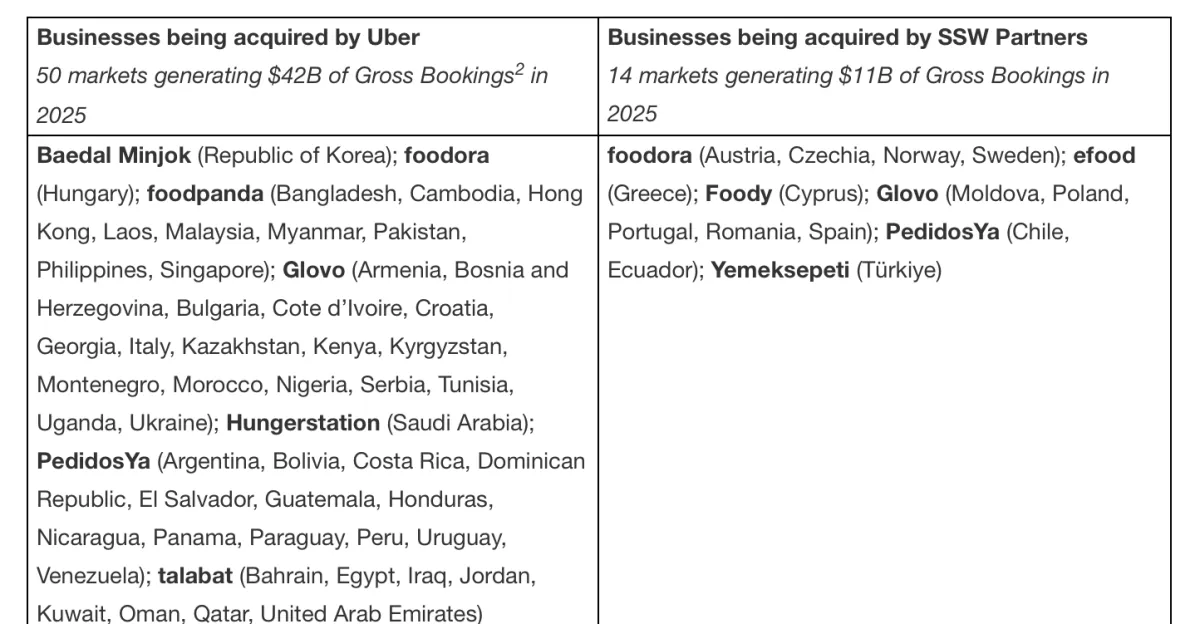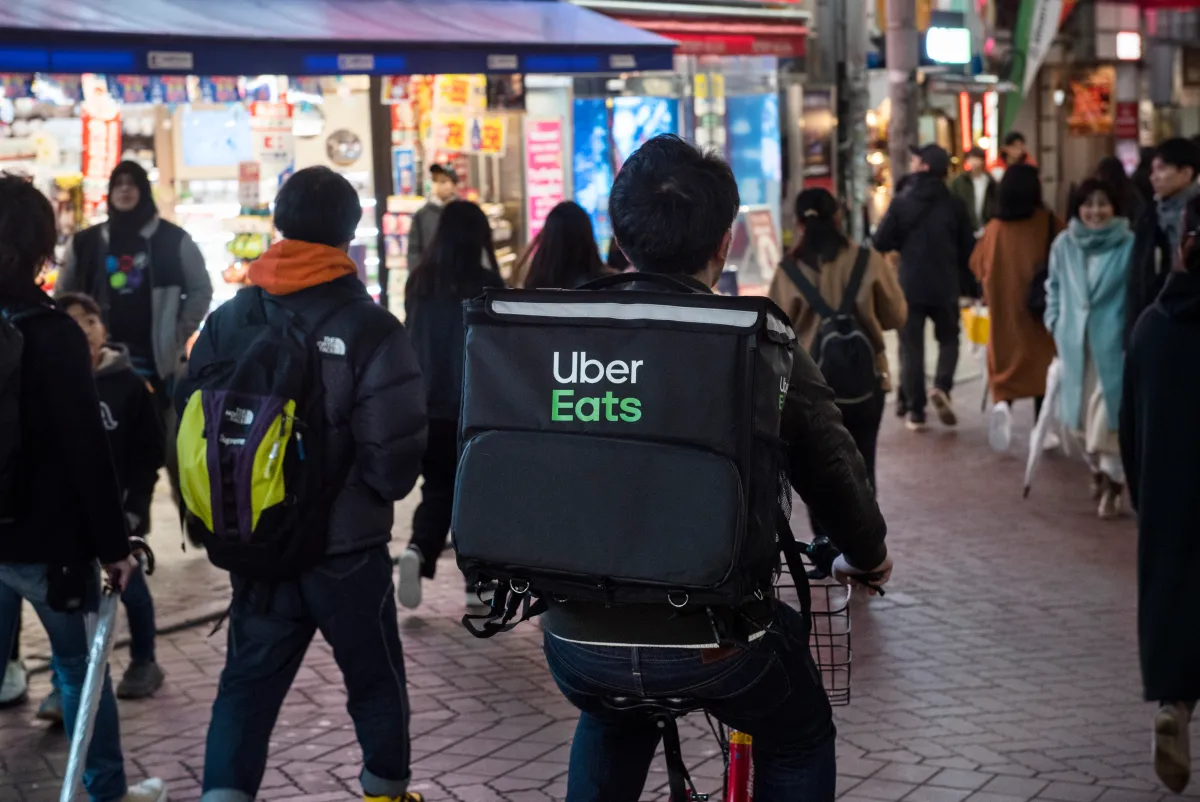
Uber's proxy entry into delivery market may come down to membership-perks contest with Coupang Eats Uber and Delivery Hero logos (Reuters-Yonhap) Uber is coming back to Seoul seven years after the platform bearing its name failed to crack one of Asia's largest food delivery scenes, this time through the very nemesis that thwarted it at the time, Baemin, operated by Woowa Brothers.Uber signed a merger agreement with Baemin's German parent company Delivery Hero on Thursday valued at roughly $14.8 billion, folding Baemin in along with dozens of other platforms. Delivery Hero had run the 2010-born startup since 2019 with an 88 percent stake for 3.6 billion euros ($4.1 billion).Uber's reentry is playing out just as Baemin fights its toughest battle yet against Coupang Eats, a company that did not exist when Uber Eats' two-year bid for the Korean market collapsed in 2019.Long game behind the dealUber's arrival into food delivery has been months in the making. Since May, Uber had reportedly been eyeing Baemin through a consortium with Naver, offering up to 8 trillion won ($5.4 billion) for a full stake on an 8-to-2 split, investment banking sources said.Scrapped as it was, the bid exposed the intent to gain a foothold on Korea's leading platform instead of building one from the ground up. Set against a wider picture, Uber already fights rivals like DoorDash, Deliveroo and Just Eat Takeaway elsewhere, with Korea long lagging as one of its weakest markets."Uber has already built itself into a company where delivery carries more competitive weight than its ride-hailing business," an industry official said. "Baemin's data on Korean consumers would be a highly attractive asset for expanding across Asia.”Unlike other Delivery Hero brands, Baemin will remain independent for now, keeping its own platform and operations intact until the deal closes in the second half of 2027.An Uber official called Korea one of its core markets, with Baemin's stability the top priority. "Baemin is an iconic brand with an unrivaled position in one of the world's most dynamic markets," the company official said.The deal also reads as both bulking up in delivery and building a global commerce platform, spanning mobility and delivery across 50 markets, Baemin among them.Quick commerce emerged as a theme in the deal. Delivery Hero has spent recent years expanding into it alongside food delivery, promising groceries and daily necessities to doorsteps in under an hour. "This is the right partnership to build on Delivery Hero's strengths in local delivery and quick commerce, and take our Everyday App strategy further," said Delivery Hero CEO Niklas Ostberg.It has been a fast-growing segment for Baemin too. Woowa Brothers' annual revenue crossed 5 trillion won for the first time in 2025, with core food delivery and marketplace revenue climbing 26 percent to 4.5 trillion won, driven by an 84 percent surge in grocery sales through retail partners. Bmart, its in-house quick-commerce arm, grew a more modest 3.2 percent to 781.1 billion won. (Woowa Brothers) Delivery as key membership perkUber is now set to face the real battle ahead: Coupang Eats, backed by e-commerce giant Coupang, which bundles online shopping, food delivery and streaming into a single monthly Wow membership. Over 70 percent of Coupang's paid members use Coupang Eats, industry data shows.That perk-bundling strategy has been chipping away at Baemin's lead.According to Mobile Index data, Baemin’s estimated first-half card payment volume was roughly 5.73 trillion won, compared with 4.27 trillion won for Coupang Eats. While Baemin still led in transaction value, its year-over-year growth was slower at 11.9 percent, versus 19.8 percent for Coupang Eats.The shift is also evident in user growth. According to IGAWorks, Coupang Eats’ monthly active users more than doubled to 11.36 million in 2025 from 5.53 million in 2023, while Baemin’s user base was largely flat at 22.60 million, up only slightly from 22.45 million over the same period.Baemin already runs its own membership program, but industry watchers believe Uber's mobility perks could become its next growth engine.Uber One, the company's global attempt to fold ride-hailing and delivery into a single membership, already pairs cashback on taxi rides with free delivery in dozens of markets. In Korea, the same logic would mean stitching Baemin's delivery network to Uber Taxi, a mobility service Uber has run outright since absorbing its joint venture with Tmap Mobility in 2024."If Baemin's integration with Uber Taxi materializes, the taxi-hailing business could gain real momentum," one industry source said, adding that a combined membership would help Uber Taxi's standing against Kakao Mobility's lion's share of ride-hailing.Naver may end up standing with Uber against Coupang Eats.The two companies have spent the past year quietly deepening a membership tie-up, linking Naver's benefits to Uber rides, with some suspecting that arrangement could eventually stretch into food delivery.Naver has already taken a similar tack with Kurly, borrowing its logistics strength to shore up its own delivery service and challenge Coupang's hold on fresh grocery delivery. It now owns 6.2 percent of Kurly, more than its founder Sophie Kim holds. (Uber Taxi)
Uber rides Baemin back into Korea's delivery race. What's at stake now?
Uber is coming back to Seoul seven years after the platform bearing its name failed to crack one of Asia's largest food delivery scenes, this time through the v
832 words~4 min read