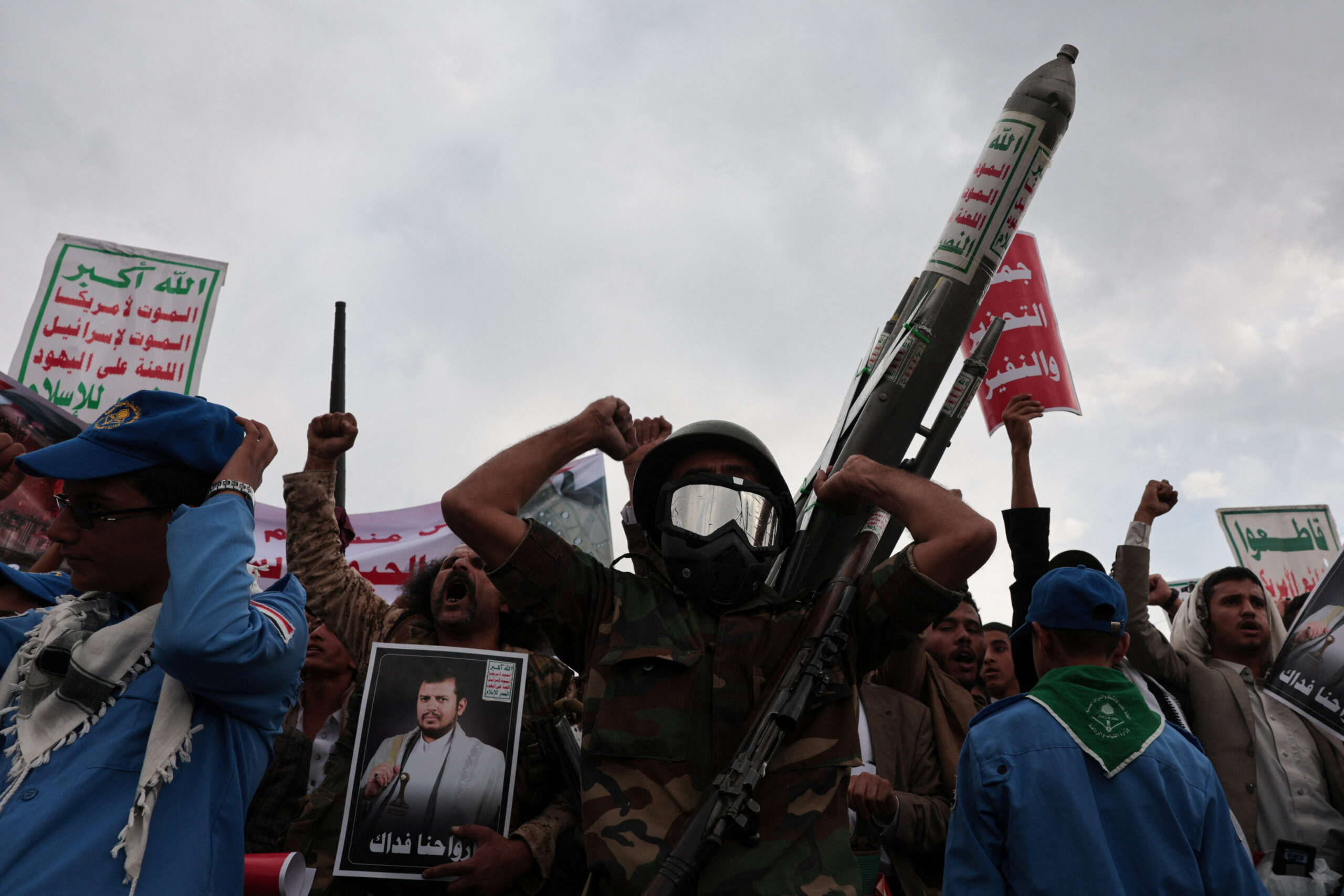
WASHINGTON—This morning, the Iran-backed Houthis announced a blockade of Saudi Arabia, threatening a critical lifeline for the Gulf and global oil supplies. The announcement follows weeks of escalating rhetoric between the Houthis and Saudi Arabia, and an exchange of missiles last week that disrupted a four-year-long détente between the Yemeni group and the Saudi-led coalition and their partners in the Yemen government. Saudi Arabia is currently exporting approximately four million barrels of oil per day from the Red Sea port of Yanbu, up 400 percent from pre-Iran war levels. And the Bab el-Mandeb strait has emerged as a much-needed alternative to the Strait of Hormuz for global oil flows, with more than seven million barrels per day transiting the strait in June, up from roughly four million barrels before the Iran war.
Three factors will determine how disruptive the new Houthi campaign will be to global oil markets and Gulf economic stability:
1. Can the Houthis threaten Yanbu itself or just the Bab el-Mandeb?
The Houthis have demonstrated that they can disrupt maritime traffic through the Bab el-Mandeb using weapons that can be either produced domestically or procured through the Houthis’ diverse supply chains. While the Houthis don’t control the coastline along the strait itself, they used a variety of small boats, drones, and missiles to attack more than a hundred commercial ships between 2023 and 2025. These attacks rendered the waters of the twenty-mile-wide strait too risky for most shippers, even those ships that the Houthis said were not targets. The Houthi campaign also proved difficult to combat: the Trump administration declared a hasty ceasefire with the Houthis following an aggressive air campaign, but the Houthis continued to sink ships in the Red Sea. The Houthis suffered significant military and economic damage from aggressive US and Israeli strikes during 2024 and 2025, but they quickly began rebuilding their arsenal.