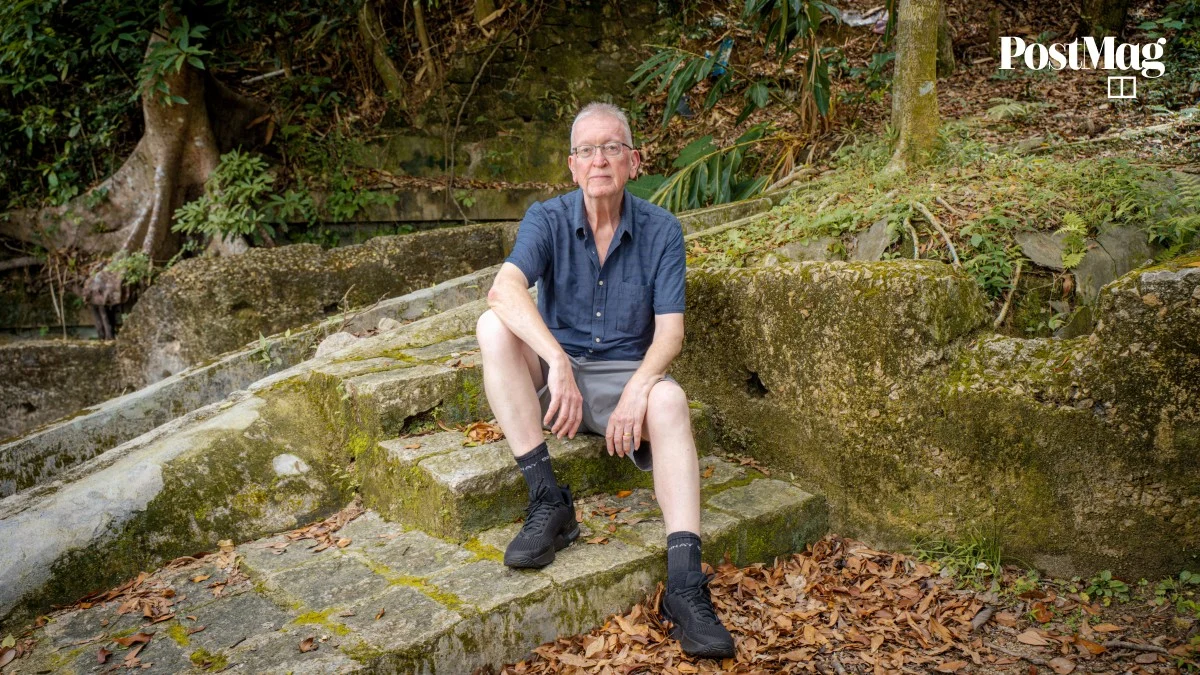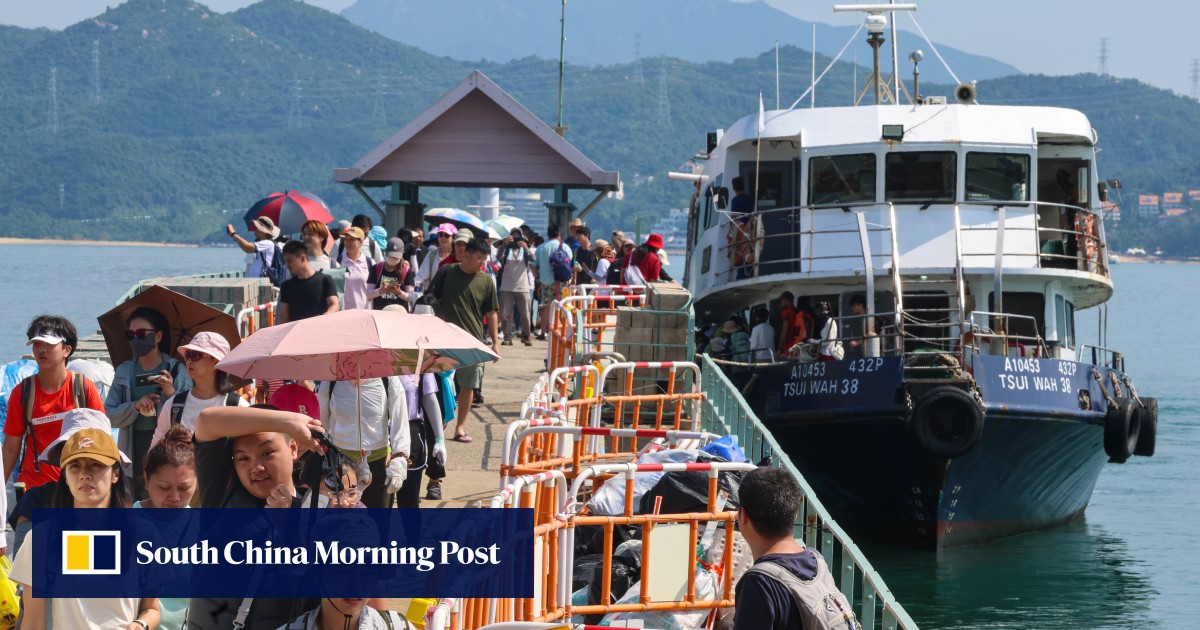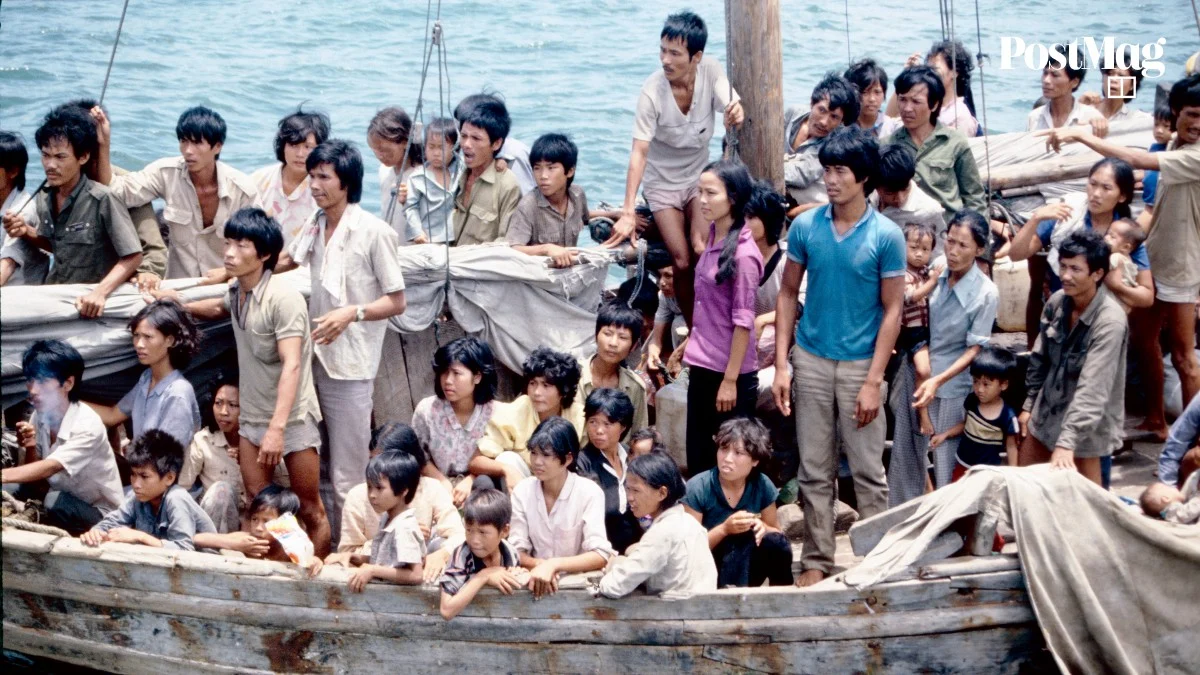
“This is where my bed was.”Katie Aung stands at the centre of Tai A Chau, an uninhabited island south of Lantau, with former marine police officer Les Bird, pointing to a spot on the ground.“This is where I lived.” She turns slightly, and gestures again. “My bed faced this way. Head this end, feet down here. I lived right here for many years of my childhood.”In the 1990s, it was to this 1.2 sq km speck of land in the South China Sea that Aung, a former Vietnamese refugee, was confined.Katie Aung (right) and Les Bird at Tai A Chau during Katie’s return visit. They are standing where ramshackle boats full of desperate refugees arrived 35 years earlier. Photo: courtesy Les BirdTai A Chau today is almost entirely reclaimed by nature – a deserted outcrop. But its past as a detention centre remains etched into the landscape, lingering beneath the undergrowth: the concrete spine of a former camp cutting through the island, the foundations of village houses that once stood there – quiet, stubborn reminders of what once was. It is this past that Aung and Bird, who oversaw the search-and-rescue operations for tens of thousands of Vietnamese refugees in Hong Kong across three decades, have come to recall.After disembarking at the old jetty of Tai A Chau, Aung walks inland with Bird. Along the way, they spot an ornate, rocky fish pond, built by other refugees who had once inhabited the island. Aung recognises it immediately; she and the other children would gather around its edge, watching the colourful fish that darted through the water.
A Vietnamese refugee returns to the Hong Kong island where echoes of a lost childhood remain
Entrepreneur Katie Aung revisits the remote site of the detention camp that shaped her younger years.
266 words~1 min read