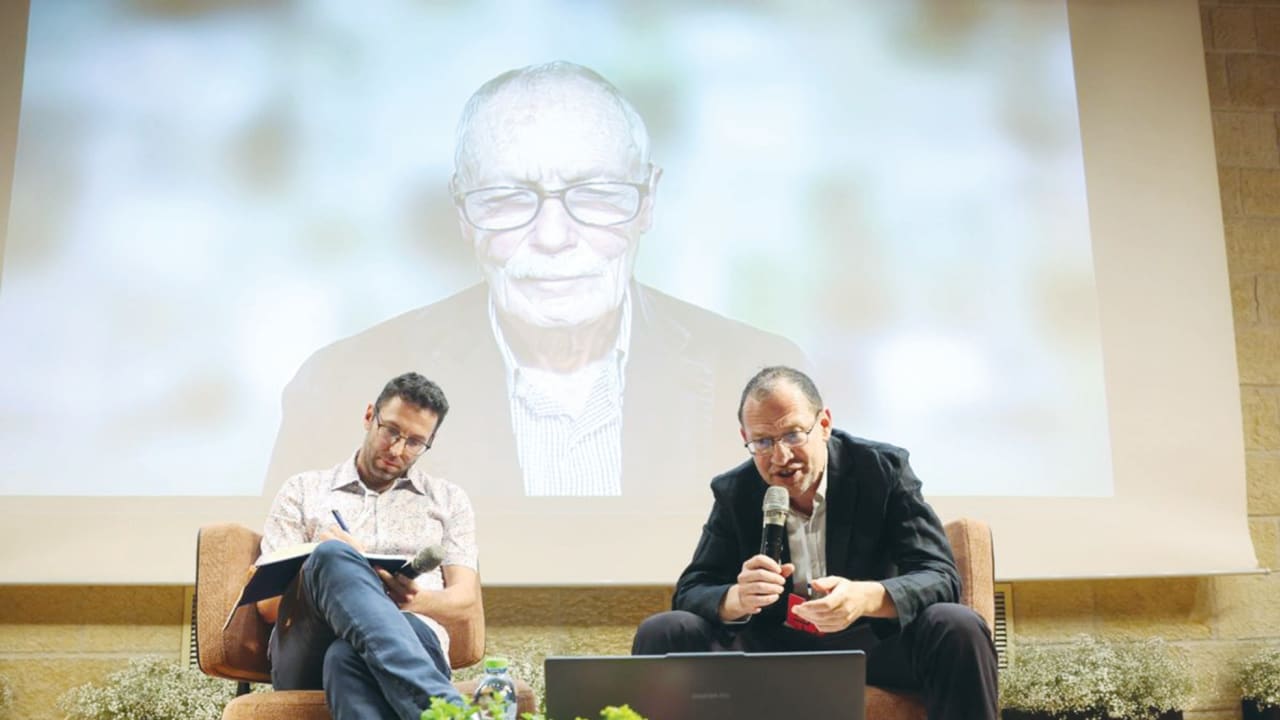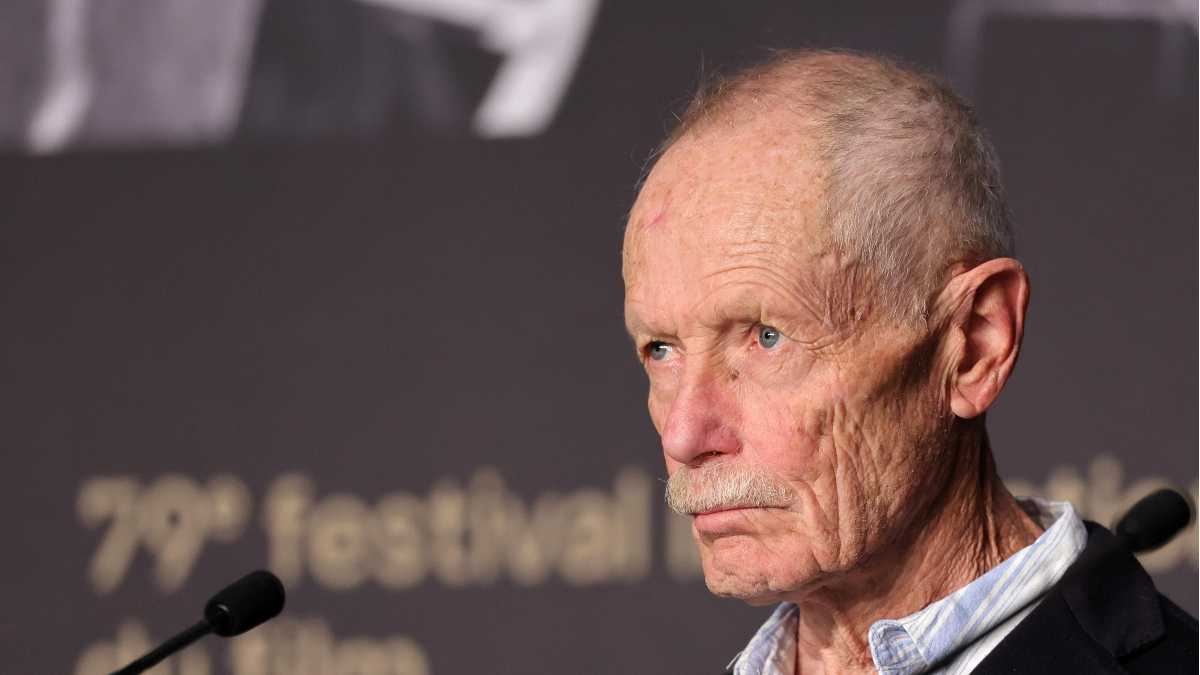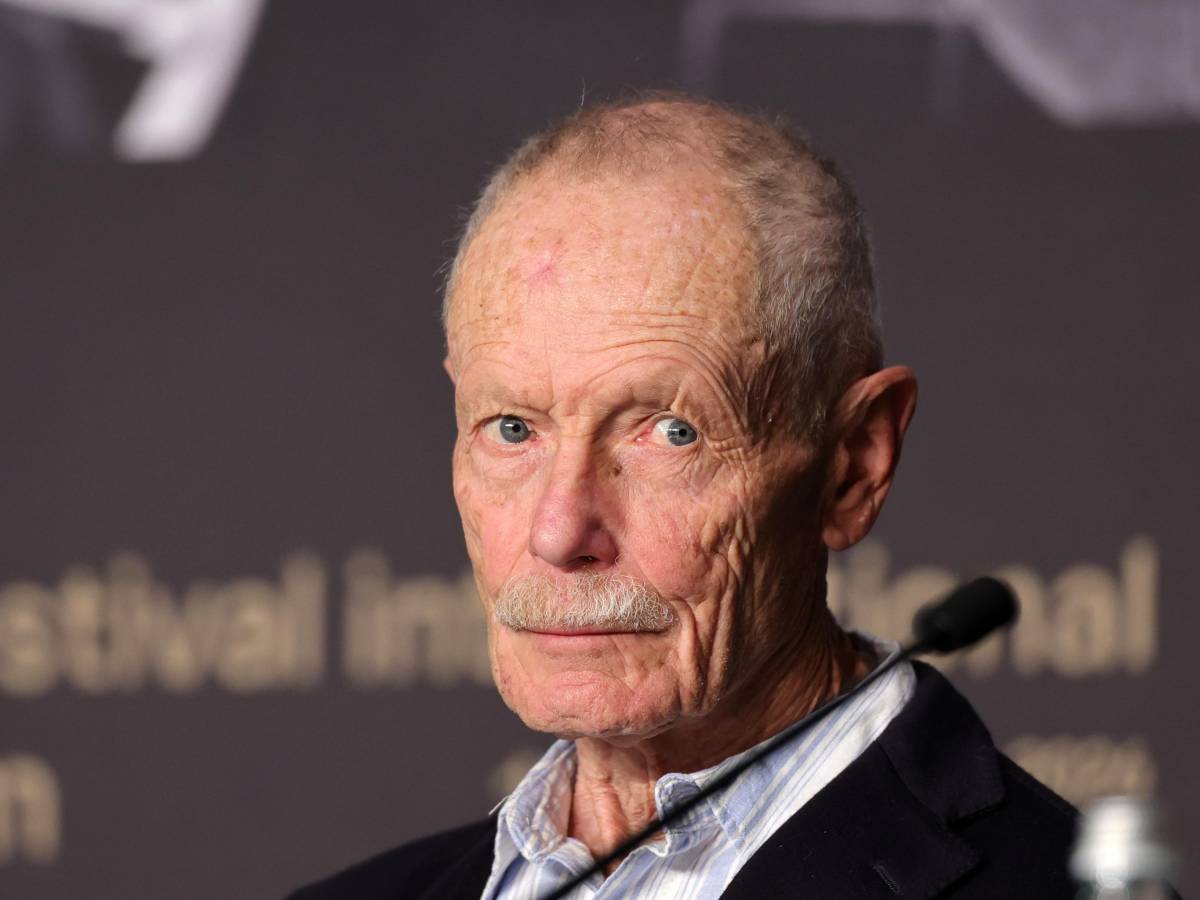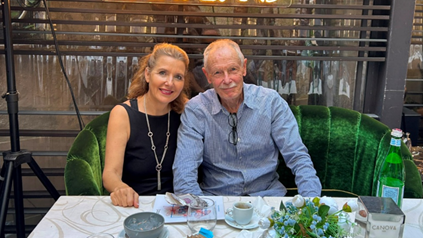
The acclaimed Italian writer reflects on translating the Bible, learning Yiddish after the Holocaust, his enduring connection to Israel and why, in his seventies, he believes the best years of his life are still unfolding"10:30. Piazza del Popolo. Under the Obelisk." That was Erri De Luca's entire email.I thought the Obelisk was the name of a café. It wasn't. It was the ancient obelisk standing in the middle of the piazza, exposed on all sides.Hadar Galron and Erri De Luca (Photo: Courtesy)We had never met before. I was with my daughter, Na'ama, who is studying in Italy and speaks fluent Italian, which is useful for an awkward, "Excuse me... are you Erri De Luca?" I'd seen photographs of him, but I didn't know his height or the way he walked. From which direction would he come? Maybe I should retreat to one of the cafés and email him that I was there? He doesn't text. Only email.There was a man sitting on the steps who vaguely resembled the photograph I remembered, but somehow it didn't seem like De Luca's style. Besides, Piazza del Popolo in July is one of the most crowded places in Rome. Tourists were flowing through the square from every direction.How would I recognize him?As it turned out, there was no need to worry.He crossed the square with steady strides, tall and upright, a cap shading his face. Yet I knew instantly it was him. There was no performance in the way he carried himself, only a rare kind of modesty. He walked like someone with a mission, like a hiker.Then he smiled.It was one of those smiles that begins in the eyes. Honest, kind, curious eyes, yet sharp enough not to miss a thing. Our eyes met. He, apparently, had never doubted that we would recognize each other.Without hesitation, he led us into a nearby café. He exchanged a few words with the waiter, who smiled knowingly and guided us through the bustling front room into a beautiful hidden garden at the back, completely sheltered from the noise of the street. The walls were decorated with the titles of great Italian films. We found ourselves sitting beneath Fellini's Amarcord. It felt like the only possible place for the conversation that followed.We had come to speak about bringing Montedidio to the stage. And we did. But the conversation soon wandered effortlessly to Hebrew and Yiddish, to Kohelet (Ecclesiastes), to age, to Israel, and to the enduring power of words.Later, I asked his permission to share his words as an interview for ynet."Why not?" he replied.What follows is an edited version of a conversation that began under the Roman sun and wandered far beyond the play we had come to discuss. It is also a portrait of a man who, well into his seventies, remains profoundly curious about the world and fully alive to it.Montedidio seems to connect Naples and Jerusalem. Did you always feel that kinship, or did the novel reveal it to you?
‘I didn’t want death to have the last word’: How Yiddish became Erri De Luca’s answer to the Holocaust
The acclaimed Italian writer reflects on translating the Bible, learning Yiddish after the Holocaust, his enduring connection to Israel and why, in his seventies, he believes the best years of his life are still unfolding
1,168 words~5 min read