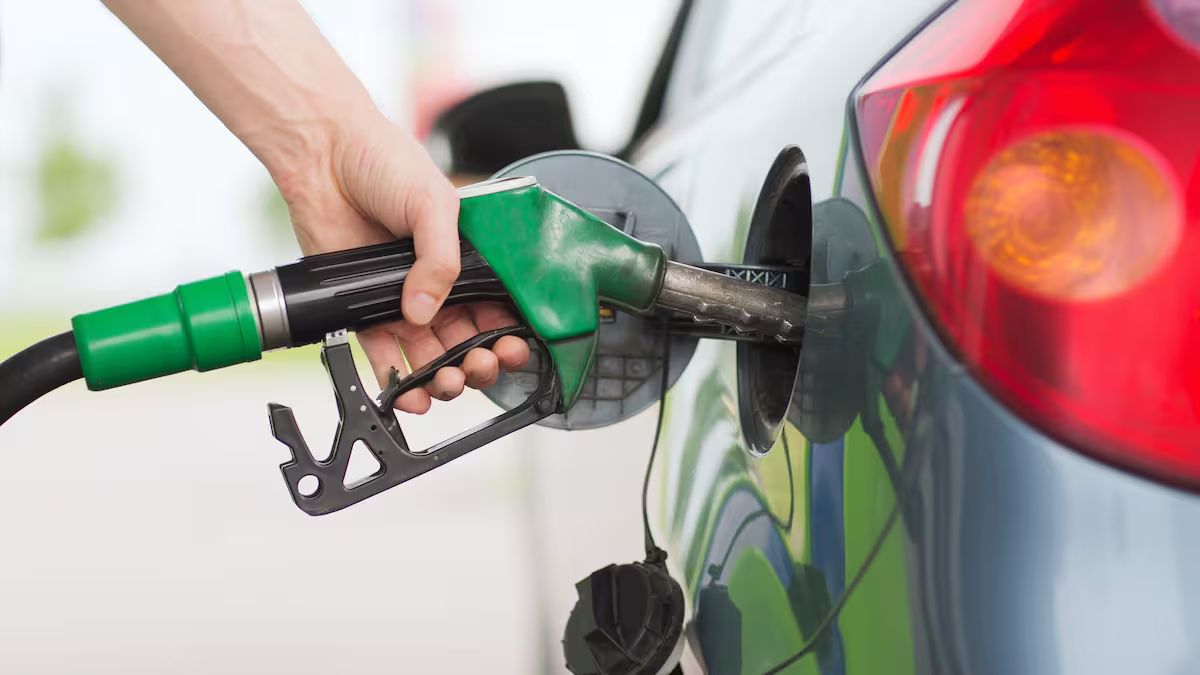
Consumer prices rise 1.5% in June quarter, annual rate hits two-year high of 4.1%Quarterly CPI rise driven by fuel prices, offsets some cheaper foodHigher fuel, electricity, housing drive annual increaseMiddle East conflict the key reason for fuel spike, new fighting may keep inflation higher for longerUnderlying inflation measures towards 3%, RBNZ expected to keep raising cash rate Inflation hit a two year high as the full impact of the Middle East war made itself felt on prices.Stats NZ data showed the consumer price index rose 1.5 percent in the three months ended June, with the annual inflation rate rising to 4.1 percent from 3.1 percent in March.It was the highest annual rate since December 2023, and the quarterly increase the highest since September 2023.Higher petrol prices were the biggest contributor, rising 20 percent in the quarter, with diesel up 48 percent."Together petrol and diesel accounted for almost two-thirds of the 1.5 percent quarterly increase," prices spokesperson Nicola Growden said.The higher petrol prices accounted for about a quarter of the annual inflation rate.Excluding food, fuel and household energy the quarterly inflation rate would have been 0.4 percent and the annual rate 2.5 percent.Domestic inflation takes back seatDomestic prices - non-tradables - such as power, rents and rates were overshadowed by the rise in fuel prices, but still rose 3.4 percent for the year, and by 0.6 percent for the quarter.Building a new house and electricity prices were two significant items to rise.Construction of a new house was 1.6 percent for the quarter, the highest in more than three years, and electricity up 4.4 percent."Respondents reported that the higher costs for materials, subcontractors, fuel, and labour contributed to rising prices for new housing," Growden said.Electricity prices rose 12 percent for the year, and local body rates were nearly 9 percent higher. These offset falls in real estate services, audio visual equipment, and some food items such as milk and cheese.More RBNZ rate rises to comeThe inflation numbers were at the top end of economists' expectations.Various measures of underlying inflation pointed to an annual rate in a range between 2.5 and 3.0 percent.RBNZ governor Anna Breman recently said the central bank was expecting inflation to peak in the just ended quarter at 3.9 percent.But she warned the resumption of hostilities was raising the risk that inflation pressures would spill over and become more entrenched.The RBNZ raised the official cash rate by 25 basis points to 2.5 percent two weeks ago, which Breman likened to taking the foot off the accelerator.Financial markets are betting on at least two more rises in the official cash rate to 3 percent this year.New Zealand's inflation rate was lower than the OECD average of 4.6 percent but trailed Australia, the UK, the US and the European Union.
Inflation rises to highest level in two years
Inflation hit a two year high as the full impact of the Middle East war made itself felt on prices.
459 words~2 min read