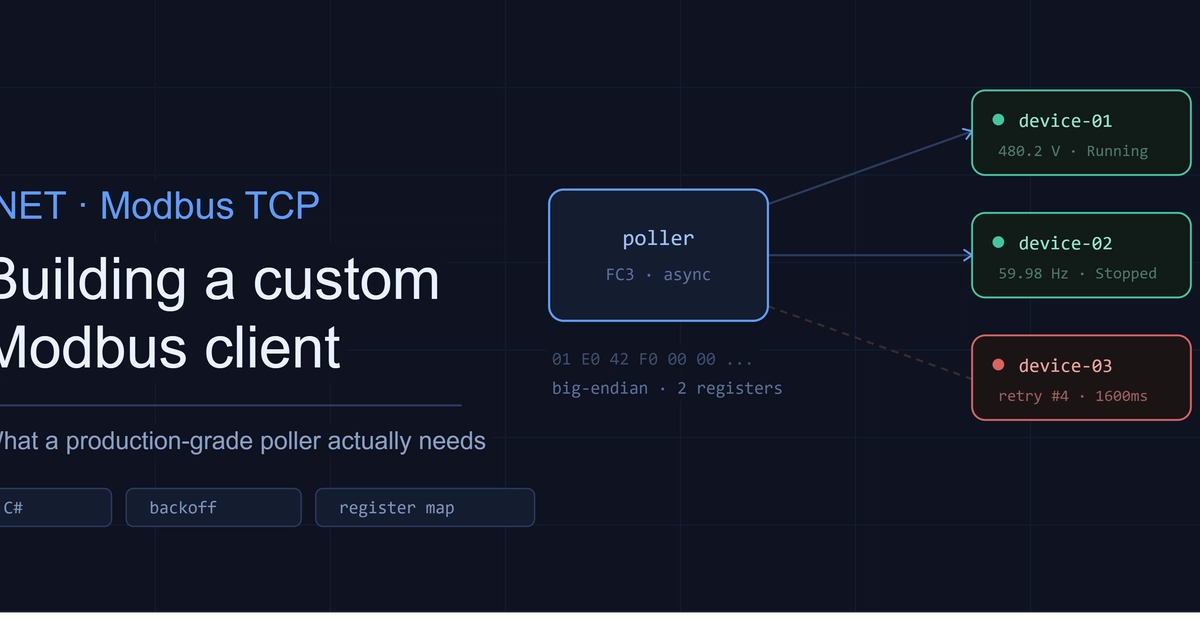
Most Modbus tutorials in .NET end at the same place: install a library, call ReadHoldingRegisters, print a number. That is enough to prove a device is reachable. It is not enough to run anything.
The moment you point that code at more than one device and leave it running, the questions change. What happens when a device stops responding? What happens when one slow device blocks the others? Why is that float reading 3.4e38 instead of 480? Where does the data actually go?
This article covers the layer that answers those questions: the application code you build around a Modbus library. Everything here runs against a simulated device included in the code, so you can execute the whole thing locally with nothing but the .NET SDK. All values and device names are illustrative.
A short Modbus refresher
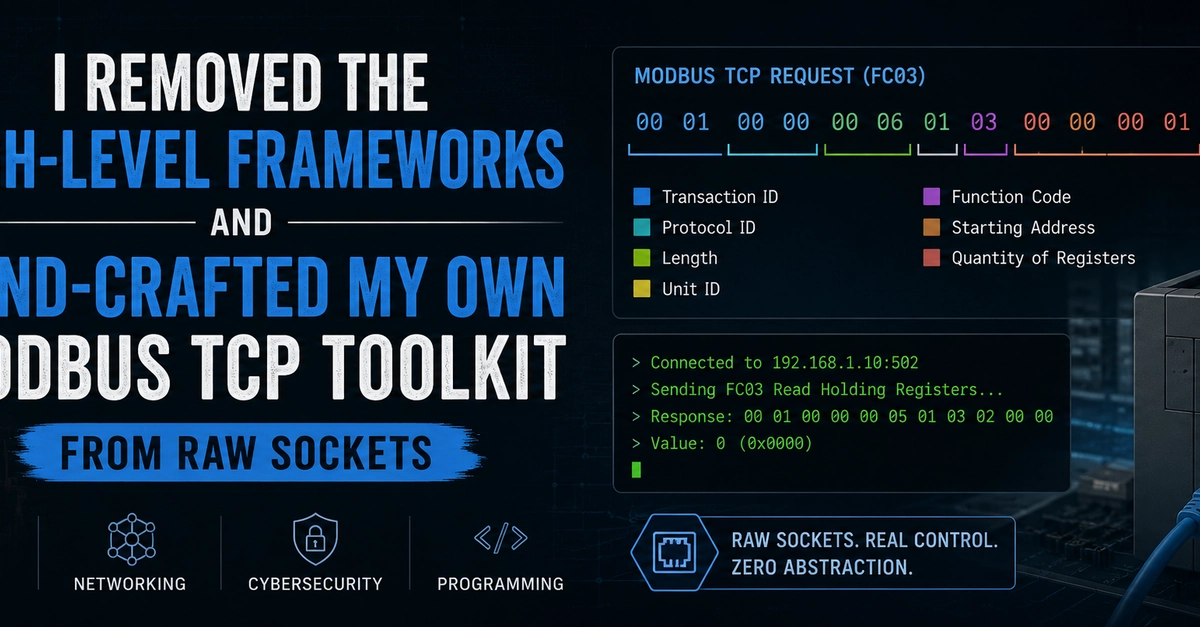
Modbus TCP is a request/reply protocol. A client opens a TCP connection (port 502 by convention) and asks a device for data. The device answers. There is no subscription and no push, so the client polls on a schedule.