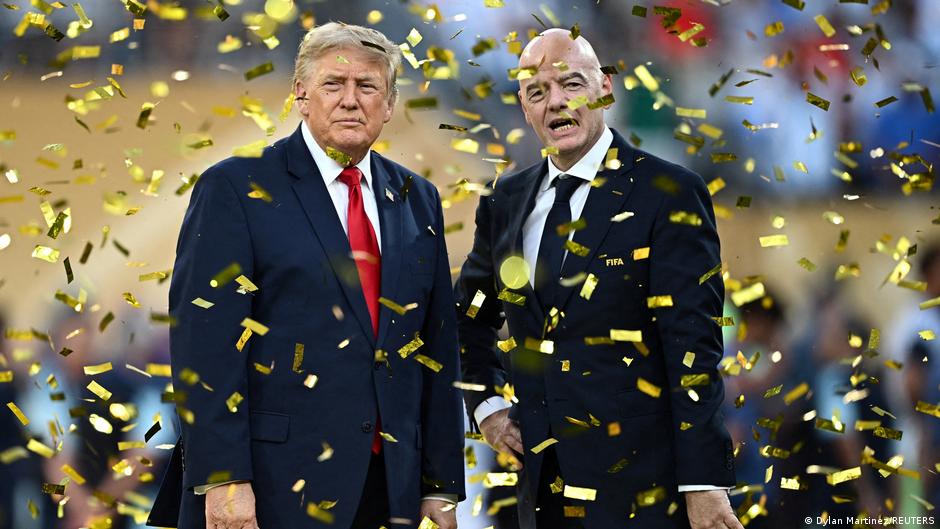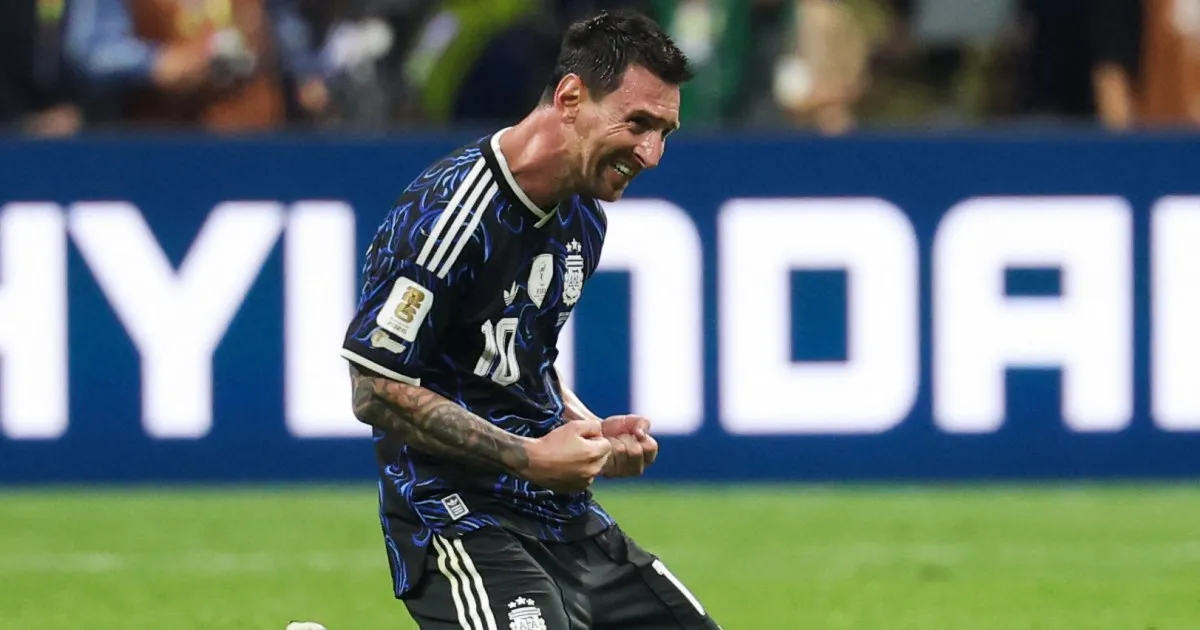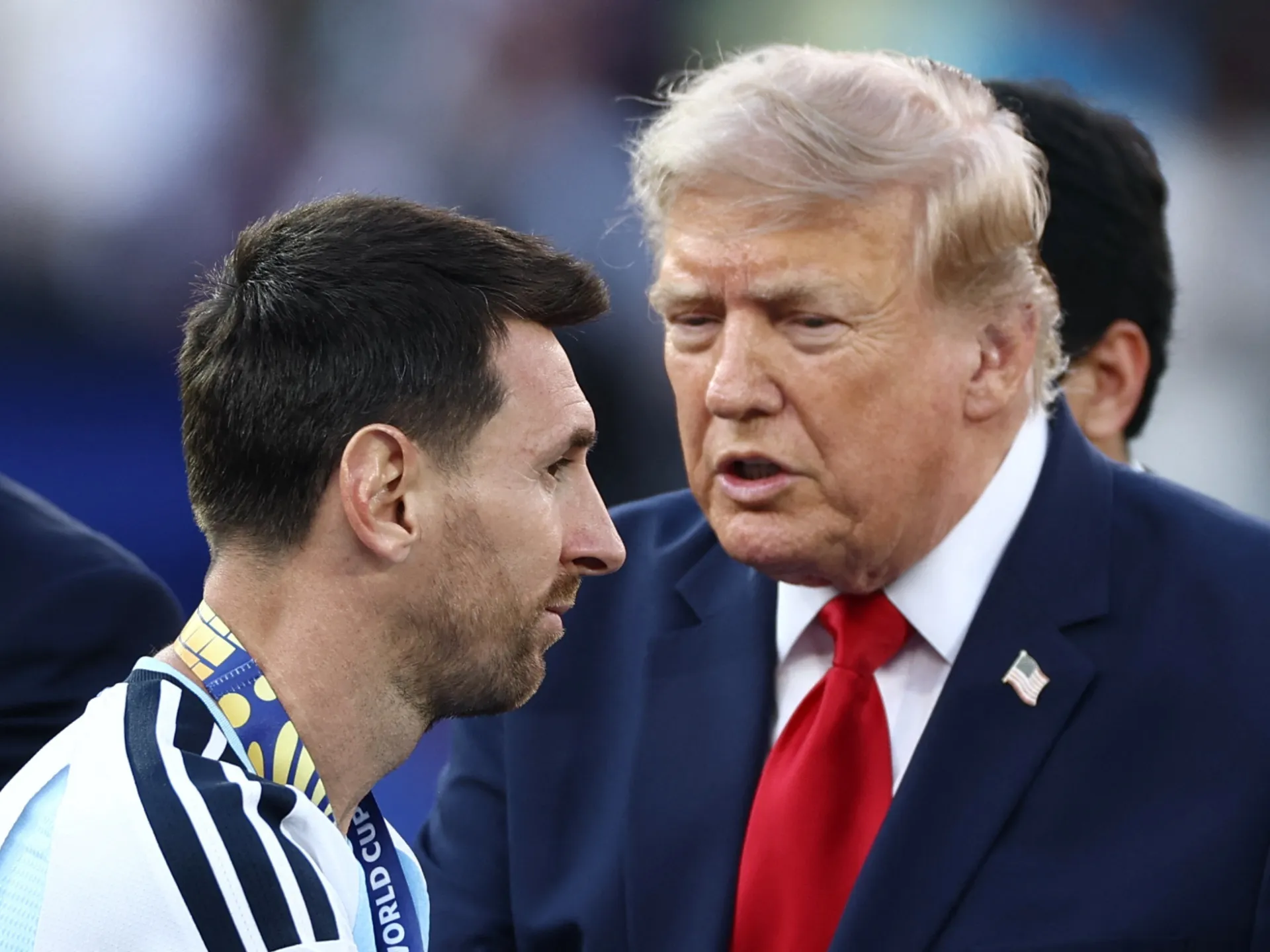
The biggest FIFA World Cup in history has come to a close, and most would agree Spain deserved their victory – certainly in the final against Argentina.The 2026 edition had an additional spotlight on it given one of the host nations – and the team staging the final – the United States, were involved in a joint war with Israel on one of the competitors, Iran.Recommended Stories list of 4 itemslist 1 of 4Spain go back to the top of FIFA rankings, Morocco reach record highlist 2 of 4Former England manager and two-time Ballon d’Or winner Keegan dies aged 75list 3 of 4India’s Rohit Sharma ends retirement talk as World Cup 2027 still in sightlist 4 of 4Iran says Spain World Cup win brings joy to critics of US, Israelend of listEven with the ceasefire agreed on the eve of the competition, political turmoil dominated the headlines, with visa issues also proving problematic not only for the Iranian contingent, but also for fans from around the globe.The length of the expanded 48-team tournament makes many of those headlines feel like a lifetime ago, although hostilities between the US and Iran have now resumed, long after the Iranian team exited the tournament at the group stage.Footballing matters mostly took centre stage as the World Cup wore on, although – as ever – the blurring between sport and politics was never far away.With matters on the field now at an end, however, Al Jazeera takes a look at five of the biggest matters left in question as the game moves forward.Does the FIFA World Cup merit 48 teams – let alone 64?There is no doubt that the biggest footballing concern for this edition of the World Cup was the saturation of teams and games.It turned out to be the least of anyone’s worries, and indeed gave us some of the highlights of the tournament.From debutants to overachievers, the 2026 edition proved that the gap between the very best teams in the world and the rest has narrowed dramatically.In practice, it was only one more game for the eventual finalists to play than had been the case since the expansion to 32 teams for the 1998 edition in France.It seems remarkable now to think that the World Cup was competed for by fewer than 32 teams in the 1994 edition given the rapid expansion and improvement of the professional game around the world.That’s so much the case that there is now barely a grumble that the 2026 edition had 48 teams.For fans it meant more games, more stories, and more new players to look out for. Crucially, though, for those competitors it meant more opportunity – and that is something sport must never turn its back on.Cape Verde won the supporters’ hearts after the debutant band of journeymen professionals and raw youngsters held Spain and Uruguay to draws and forced Argentina into extra time.Cape Verde’s Sidny Lopes Cabral celebrates scoring their second goal against Argentina [Paul Childs/Reuters]FIFA insisted, amid criticism of not only the expansion but also the cost to fans, that the World Cup is their opportunity to make the money they need to continue the game’s growth across the globe.For one more game for the eventual winner, and that has to be the major concern, any downside seems churlish.The conversation now turns to a 64-team World Cup at the 2030 edition. That, crucially, would not add to the number of games for the finalists because only the top two teams would progress from a 16-group initial phase to the last 32.In effect, that doesn’t change anything from the knockout stage onwards. It is hard to imagine the nations like Italy, Nigeria, Cameroon and Ireland would argue against a further expansion – especially the former, who have missed the last three World Cup finals.Argentina’s Lionel Messi, centre, and Spain’s Marc Cucurella, left, during the final’s second-half hydration break [Hannah McKay/Reuters]Hydration breaks – should they stay, or should they go?The controversy surrounding hydration breaks was twofold: Did players need them and, as some alleged, were they only introduced to offer more advert time for television broadcaster partners?Whatever the reasoning, the answer from fans in the stadiums was overwhelming. Boos constantly greeted the hydration breaks. The feeling across that game was that in two 45-minute halves, the breaks disrupted the flow of the play too much.Scientists, coaches and FIFA are likely to strongly argue that they continue for summer World Cups, with global temperatures reaching dangerous levels for the players.There are no plans for the breaks to be introduced to the domestic leagues, where the game is mostly a winter sport. But whether the international tournaments will follow suit, for their summer stagings, remains to be seen.Folarin Balogun of the USA is shown a red card that did not result in a ban for the following game [Phil Noble/Reuters]Rules and regs must be tightened for 2030 World CupThe most controversial moment of the competition was undoubtedly the suspension of the red card that was shown to USA forward Folarin Balogun.The striker was sent off in the 2-0 win against Bosnia and Herzegovina in the last 32, but his ban was controversially suspended by FIFA for a one-year probationary period.USA exited the competition in the last 16, which undoubtedly ended a greater fallout surrounding the suspension, when they were thumped 4-1 by Belgium.The allegation against FIFA was that they bent the rules to please US President Donald Trump.The global football body had announced that it suspended the red card after Trump urged FIFA chief Gianni Infantino to review the case.The elimination of the USA in the following round meant that the furore, which included criticism from Belgium’s football association, Europe’s top football body, a former FIFA boss and multiple top former players, quickly died down.A major tournament cannot have a grey area when it comes to the rules and regulations, and FIFA must not allow a repeat of such a controversy and stamp out any way that Balogun’s reprieve may have set a precedent.Argentina’s in-game antics extended to the post-match in the World Cup final [Mike Segar/Reuters]Do the dark arts highlighted by Argentina need to be quashed?More often than not, major football finals fall flat. The pace, the joy, the skill and the expression of players’ talents are often crushed by the pressure of a final, with both sides desperate to avoid defensive errors and stick to rigid tactics that are set up to avoid them.It is hard to change that, given it is mostly a mentality from finalists, who are reticent to put their foot on the gas in the final stages of tournaments, unless they are trailing.One thing that FIFA can look at – particularly in single-game knockout stages – is how teams that are set up to defend use the “dark arts” to aid their cause.There is no better example than the performances in the semifinal and final by Argentina, but they are not alone. Manchester City were hailed for their short-passing game under manager Pep Guardiola – they were, however, also regarded as a team that would go to any lengths to win. That included small tugs of shirts or trips to break up opposition play high up the pitch where referees are unlikely to brandish a yellow card.Argentina were not even so discreet with their approach. Both in the last-four match and the final itself, the South Americans set out their stall with heavy challenges early in both matches that went unsanctioned by the referee.One of the greatest referees, if not the greatest, Pierluigi Collina was renowned for laying down the law early in matches in his time in the late 1990s and early 2000s – a far more combative time on the field.FIFA would be well advised to urge a similar approach, so the beautiful game has a chance to shine in the modern era of low blocks and sneaky late challenges.US President Donald Trump is greeted by Spain’s captain Rodri ahead of the World Cup trophy lift [Hannah McKay/Reuters]Are the US and Canada here to stay as top teams at World Cups?The last thought should go to the cohosts, not only the US, but also Canada and Mexico.Men’s football in cohost Canada has for years struggled to take off at the higher levels, but the team’s progress to the last 16 signalled that may be changing, with investment in the sport accelerating and games attracting record crowds.By contrast, football is well-established in Mexico. Stadiums were (mostly) packed and fans euphoric, especially when Mexico played. But Mexico’s first World Cup knockout win in 40 years led to four deaths in crowd crushes as fans celebrated, and there has been little sign of long-term benefit to the economy. Reflection is required off the field, but on the pitch Mexico remain a force to be reckoned with.USA fans were frustrated that their team again exited at the round of 16, but the team performed in line with expectations.The US has proved to be the final frontier for a football audience, and there is little doubt that this tournament has helped to build awareness across the country. Major League Soccer (MLS), with Lionel Messi headlining, continues to grow. But ultimately – to truly unlock the American audience – the US will probably need their own superstar to lead a team to at least the brink of glory on the global stage.Then, perhaps, the chant of “U.S.A” will ring more roundly not only in stadiums in the US, but across the entire footballing world.
Five key takeaways from FIFA World Cup 2026
Spain beat Argentina, but talking points remain. Should there be 48 or 64 teams? Hydration breaks? The 'dark arts'?
1,581 words~7 min read