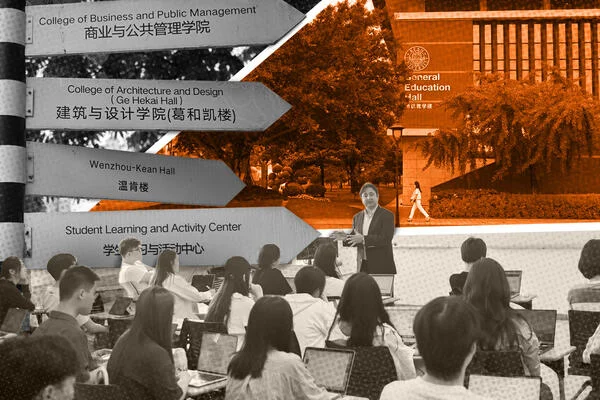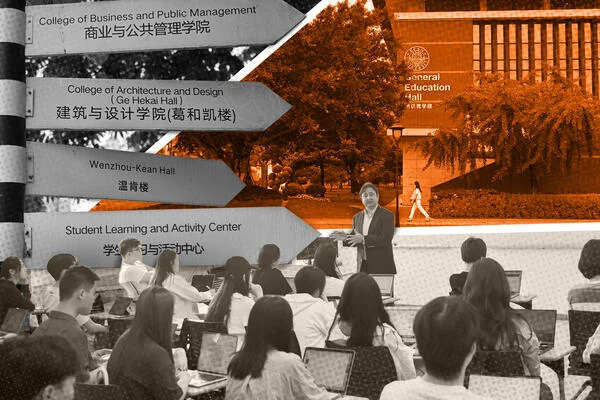
Wenzhou-Kean is one of roughly 20 American-Chinese joint ventures established during a rapprochement of Sino-American relations in the 2000s and 2010s. Eight of the partnerships—including one between Tsinghua University and the University of California, Berkeley, and another between Georgia Tech and Tianjin University—have ended in recent years amid pressure from U.S. lawmakers concerned about suppressed academic freedom and national security risks.
Chinese President Xi Jinping, then-secretary of Zhejiang Province, where Wenzhou-Kean is based, was present when Kean and Wenzhou University inked their deal in 2006. Dawood Farahi, president of Kean at the time, told The New York Times that the decision to open the university was a financial one.
“Education is really a commodity,” Farahi told the Times. “It’s a commodity that can be sold and marketed, so why don’t we take advantage of what we have and market that to China since they want it?”
The working name then was Kean University–Wenzhou, and the institution would grant Kean degrees, teach the public university’s curriculum exclusively in English, follow its admissions standards and uphold American ideals of academic freedom and integrity. If any of those ideals changed—no matter how small—the university would walk away, Farahi said.