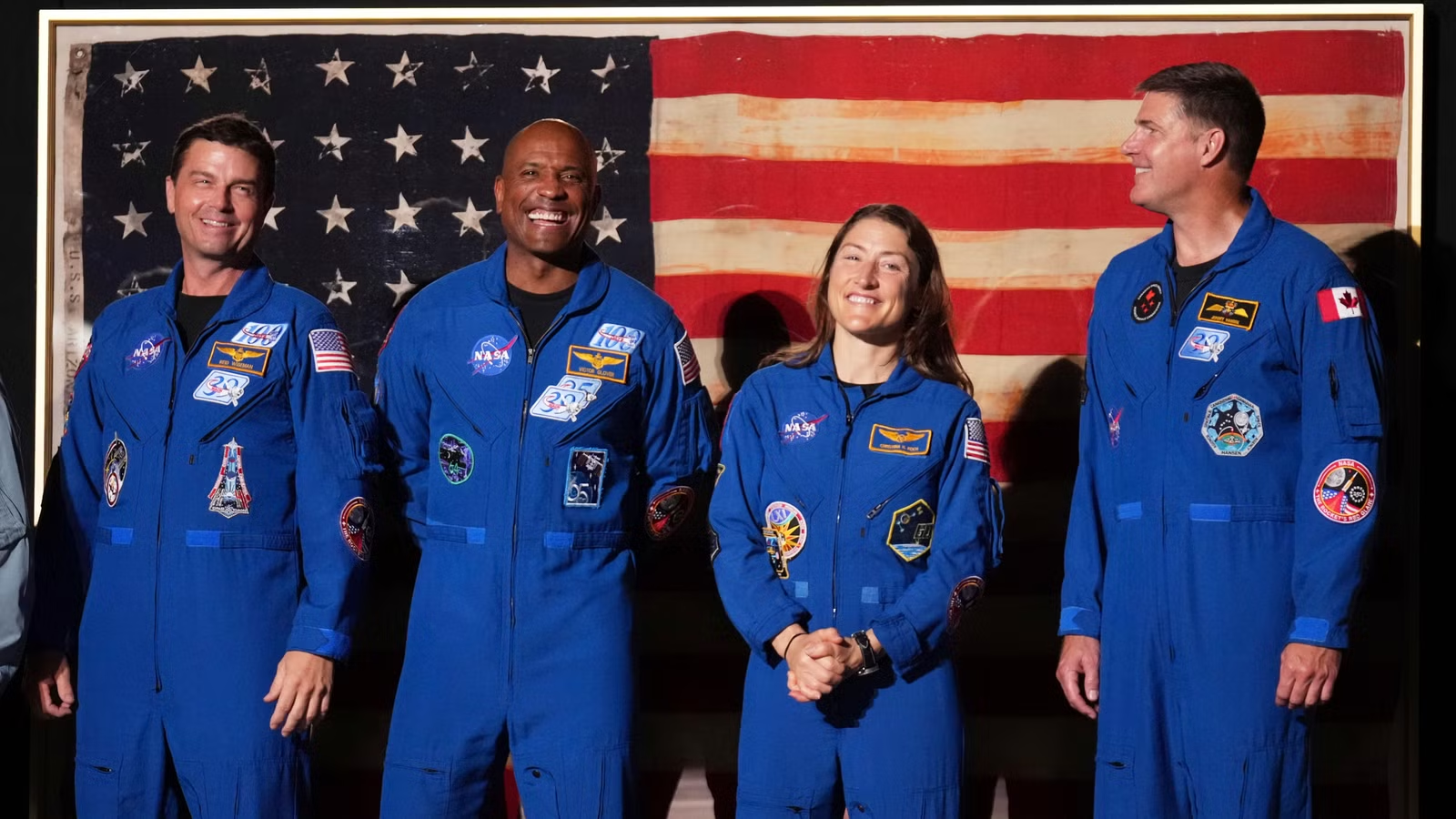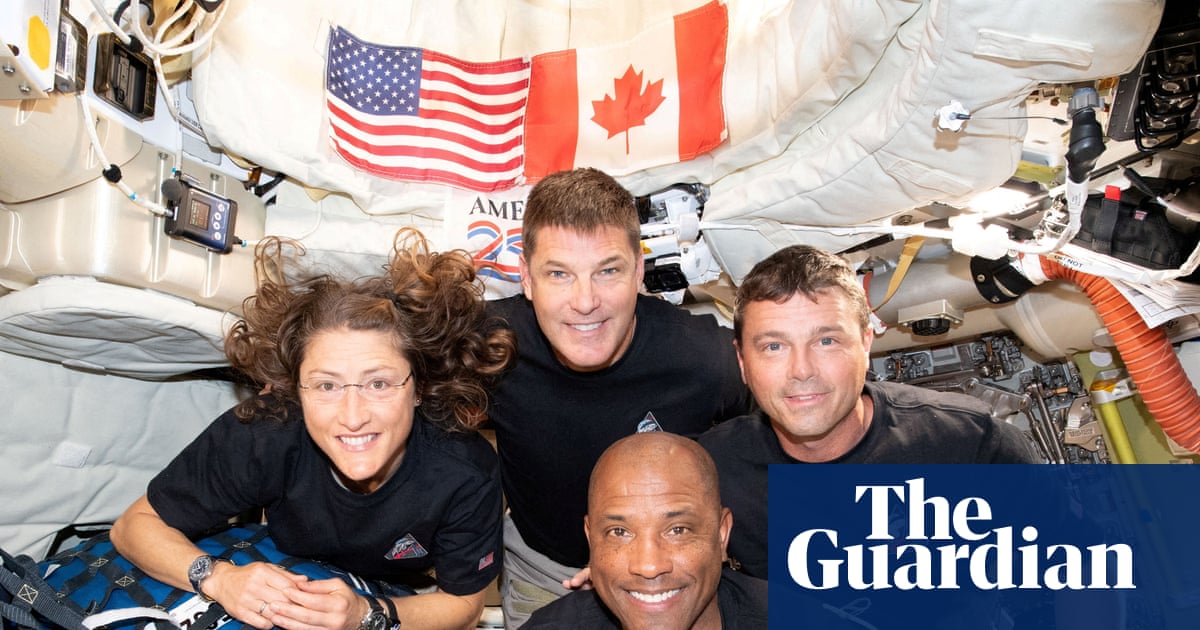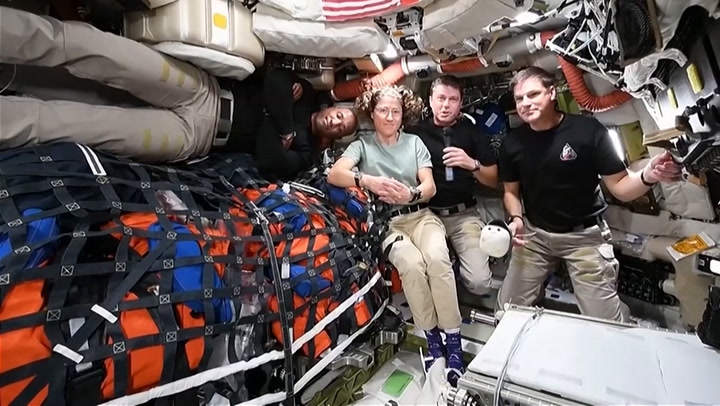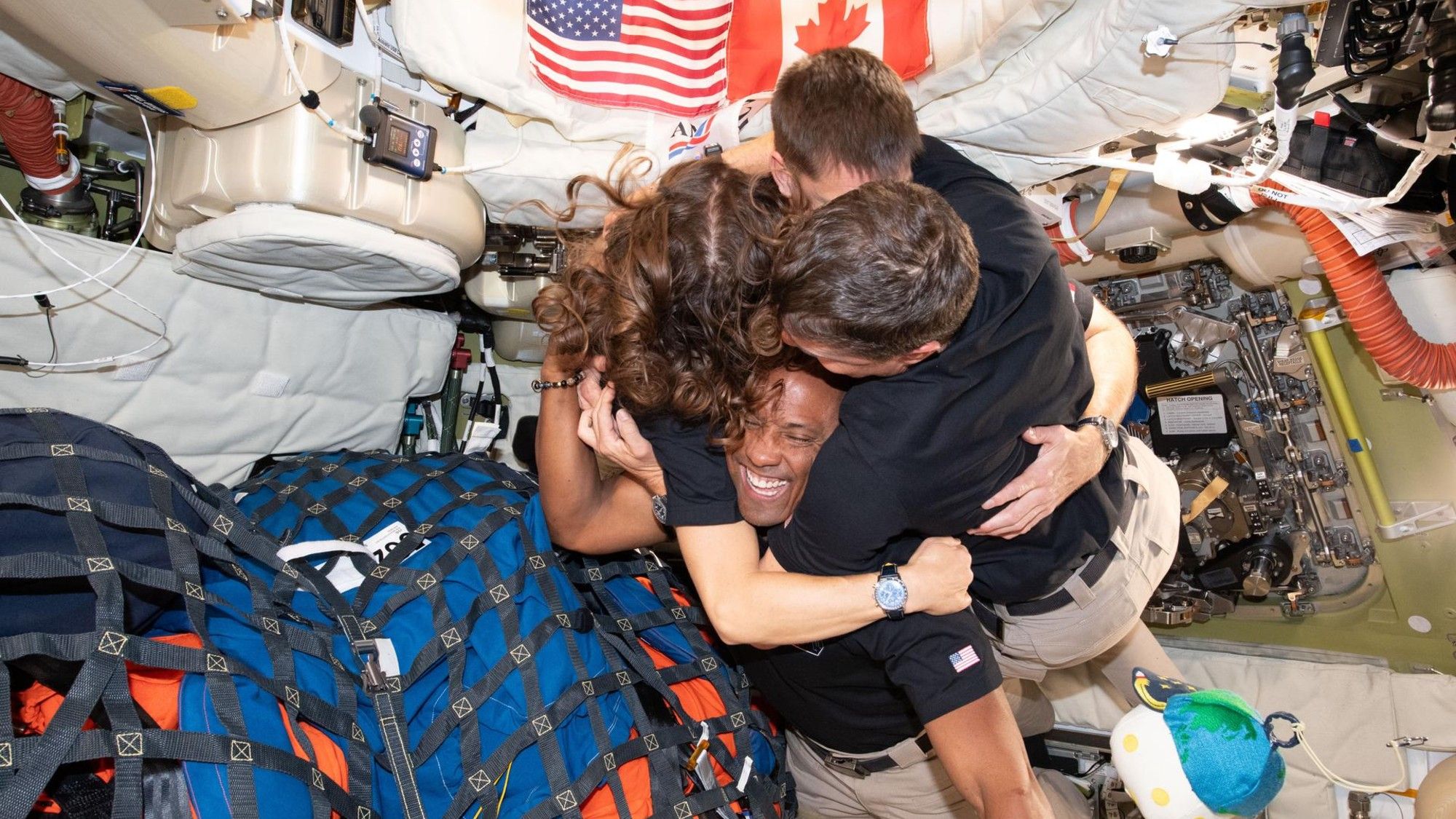
The Artemis II crew – (clockwise from left) Mission Specialist Christina Koch, Mission Specialist Jeremy Hansen, Commander Reid Wiseman, and Pilot Victor Glover – take time out for a group hug inside the Orion spacecraft on their way home.
(Image credit: NASA)
For ten glorious days starting on April 1, 2026, one human endeavor captivated our home planet across continents and time zones: the NASA Artemis II mission to orbit the moon, the first crewed mission to cislunar space since 1972. In an Easter-Passover week that had especially demoralizing headlines on global conflicts, this mission presented a powerful vision of what journeying together and taking enormous risks for a shared purpose towards a shared future could look like.Much has been spoken and written about the scientific and personal achievements of the Artemis II mission and its trailblazing astronauts. Their humanity, and what it did for humankind at large, is perhaps a quieter yet just-as-celebratory achievement.In a time of trillion-dollar AI IPOs, when the seemingly planned obsolescence of humanity itself looms on our collective horizon, the Artemis II astronauts reminded us that they considered it the honor of a lifetime to do this for us - and as us - while transmitting daily that they couldn’t wait to come home to us. As Christina Koch shared at the end of the translunar injection burn (TLI) on day 2, while Artemis II set its course to leave Earth's orbital space for the moon as well as its return trajectory: "With this translunar injection burn, we do not leave Earth. We choose it."