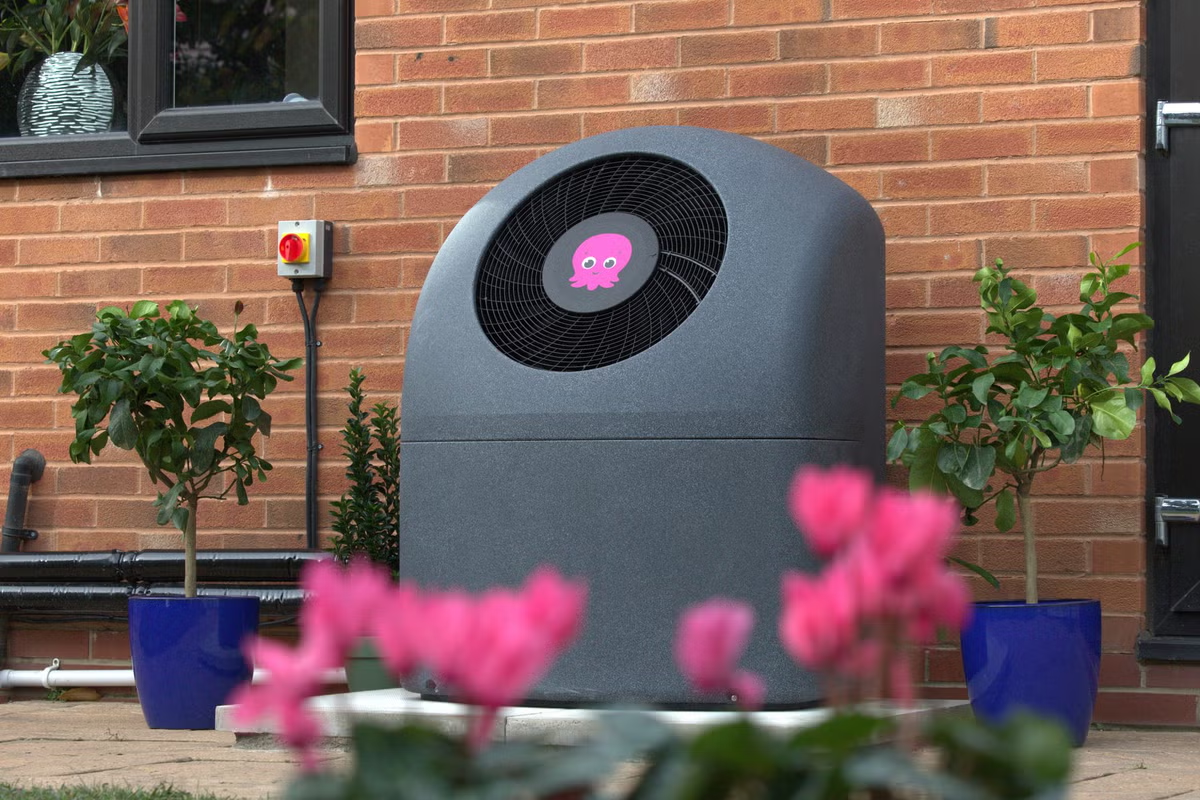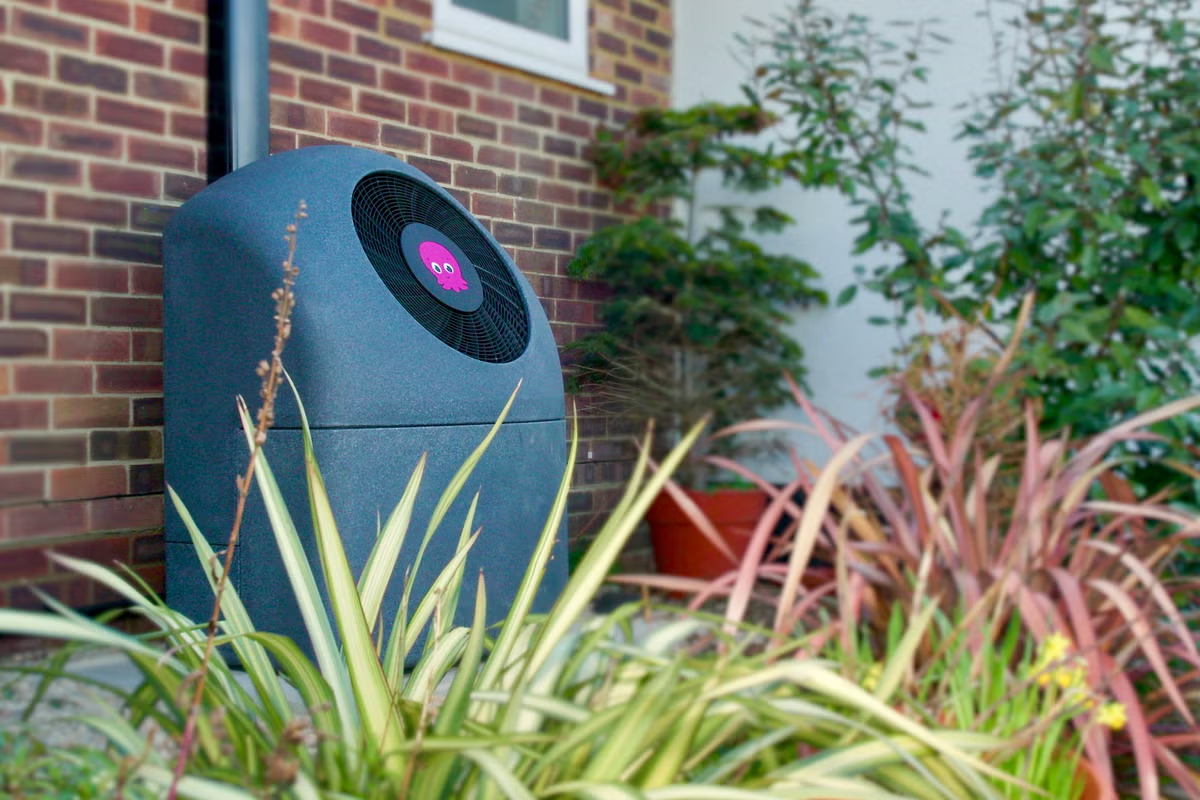
Switching to clean heating technology isn’t just a win for the planet; it completely transforms how your home feels day-to-day. Now that we’ve busted the biggest myths, it’s time to look at what day-to-day life actually looks like once your new system is up and running.Phil Steele, Future Technologies Evangelist at Octopus Energy, is back to share his first-hand experience of living with clean tech, explaining how to master your controls, sync up with smart tariffs, and maximise your savings.Here is Phil’s insider guide to living the heat pump life.How does living with a heat pump feel different compared to a traditional gas boiler?Modern systems completely change the way you experience home heating. With a traditional gas combi boiler, you often hear the system loudly firing up, which can feel noisy and intrusive. Many people find the noise of a gas boiler running just for hot water irritating and wasteful – it is a bit like sitting at traffic lights with your car engine idling. In contrast, we never hear our heat pump running from inside the house. Because a heat pump uses a hot water tank, drawing water just to wash your hands doesn't cause the system to start up at all. The temperature drop in the tank from minor use is simply too small to trigger it. Is it better to use a smart tariff with a heat pump?By pairing a heat pump with a smart tariff like Cosy Octopus, you can automate your heating and hot water to run during ultra-cheap rate windows (Getty Images)The short answer is yes. A smart tariff is nearly always going to be a great decision, always worth doing the maths and checking if the cheaper pricing windows works with your lifestyle. With the Cosy Octopus tariff, you get three cheap periods throughout the day – 4am-7am, 1pm-4pm, and 10pm-midnight – which you can use to top up your hot water or heating. Because you don't always get through a full tank of hot water in a single day, you don't need to top it up the second some water is used. Instead, you can program it to heat up during these lower-rate periods By leveraging a smart tariff rate that is less than half the price of the peak day rate (for instance, 13.93p compared to 32.05p), the cost per kWh produced becomes incredibly favourable. Your heat pump warms your home and your hot water one after the other. If it switches to hot water, the heating pauses briefly, but this happens so quickly you won't even notice. How should I schedule my heat pump to take advantage of the lowest electricity rates?It is incredibly easy to set up a schedule that fits into your day to day life, once you know your tariff's specific windows. Tariffs like Cosy Octopus have clear, set start and end times for cheap rates, standard day rates, and peak periods so it’s easy to make the most out of your heat pump. The Octopus Cosy heat pump has all of this scheduling technology built right into the system to make optimising your rates completely seamless. Instead of a traditional smart thermostat, the system uses the central Cosy Hub paired with wireless Cosy Pods in each room to measure exact temperature and humidity. You manage and automate your entire home's heating and hot water schedules directly through the Octopus Energy app, aligning temperature boosts with cheap tariff windows. Is it cheaper to run a heat pump than a modern gas boiler in 2026?Because heat pumps operate at around 300% efficiency compared to less than 100% for a gas boiler, utilising smart tariff pricing dips makes running an air source heat pump cheaper in the vast majority of cases. (Octopus Energy)If you’re using a smart tariff, it’s likely you’ll see a cost saving while also getting a more consistent and warm home. But of course, there are lots of factors at play. To understand the economics, we look at an industry phrase called the Spark Gap. This is the difference in price between using electricity or gas to provide your heating and hot water. A gas boiler operates at an efficiency anywhere between 80% and 95%, meaning it can never be 100% efficient. Meanwhile, a heat pump typically has an efficiency of 3x (300%). This means if the price of electricity is exactly three times that of gas, the cost of each kWh produced is equal. When you factor in the cheap rates of a smart tariff, running an ASHP is cheaper than a gas boiler in the majority of cases – just ensure you run your figures and take maximum advantage of those pricing dips. Even if we burn gas at a power station to produce electricity to run a heat pump, it uses about a third less gas overall than supplying that same gas directly to your home to burn for heat! To make the Spark Gap increasingly favourable for everyone, we want to see green levies permanently moved off the price of electricity and onto gas. How does adding solar panels or a home battery optimise how a heat pump runs?Combining your heat pump with solar panels or a home battery allows you to store cheap grid electricity or generate your own free power, driving your running costs down to almost nothing (Octopus Energy)With solar panels you can programme your heat pump to create hot water during the daytime using your own free solar generation, instead of exporting that power back to the grid. Because the heat pump isn't running the central heating in the summer, you end up with virtually zero cost to run the system. With a home battery, while your heat pump utilises cheap overnight tariff dips to heat your hot water, you can simultaneously charge your home battery from the grid. You can then use that stored, cheap battery power to run the heat pump's heating cycles during the day outside of the tariff windows. It feels a bit like cheating – you've essentially extended your cheap rate period! With a solar and battery combo you achieve the ultimate setup. Your solar panels power the heat pump and fill your battery for free during the day, and any gaps are topped up using ultra-cheap overnight grid electricity. For the ultimate setup, you can even buy an Octopus Zero Bills home, which combines a heat pump, solar, and battery to guarantee you absolutely no energy bills for at least five years.
What is life with a heat pump actually like? An Octopus expert reveals all
Octopus tech expert Phil Steele shares his first-hand guide to mastering your controls, syncing with smart tariffs, and slashing your running costs
1,080 words~5 min read