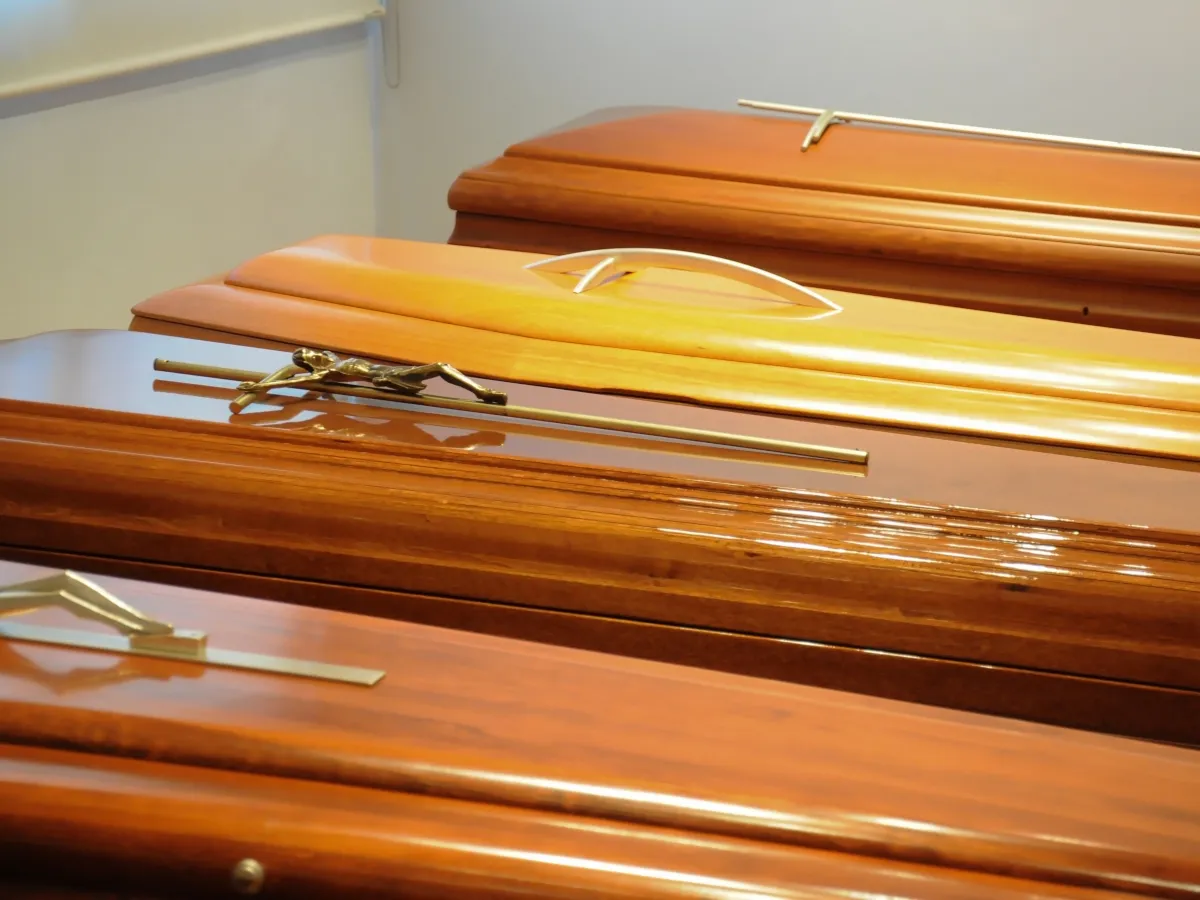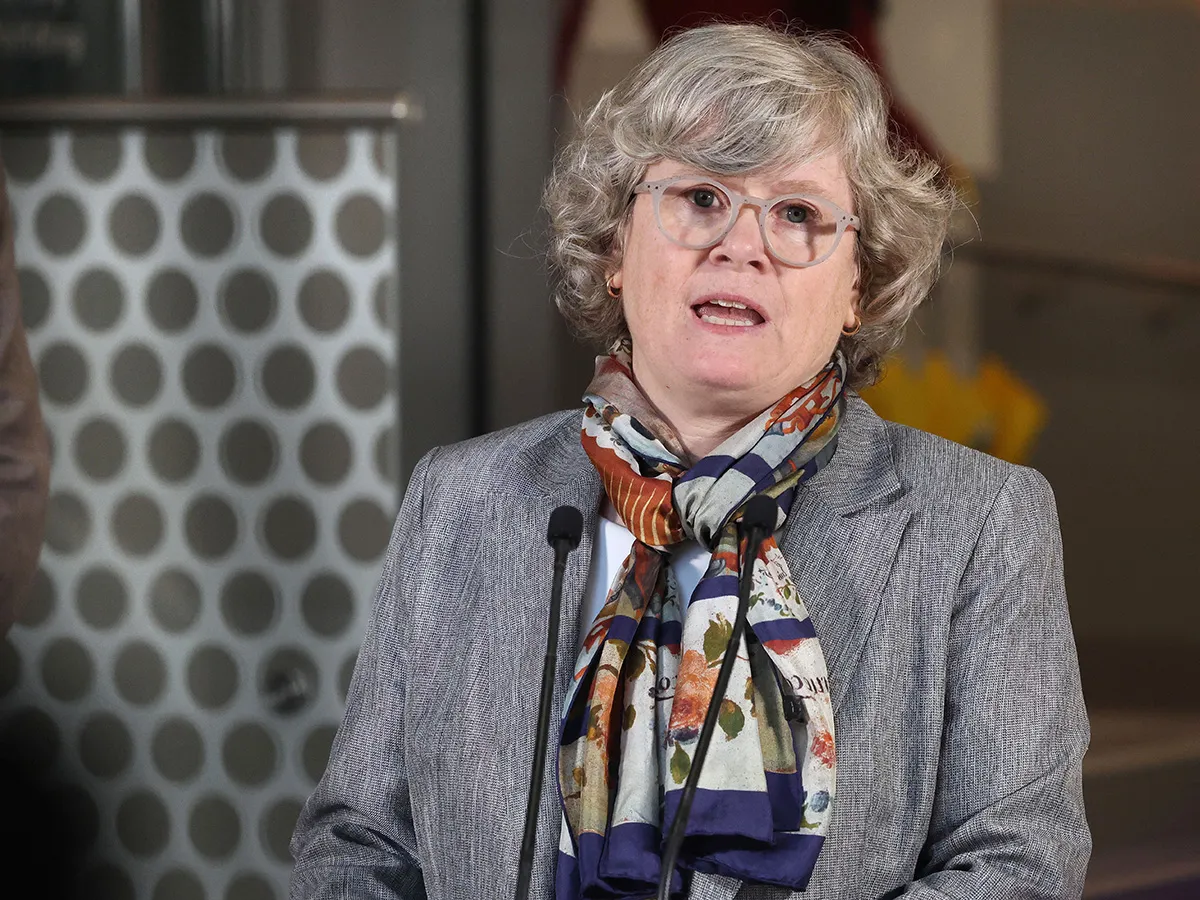
Skip to Content Subscribe Our Offers My Account Manage My Subscriptions FAQ Newsletters Canada Canadian True Crime Canadian Politics Health World Israel & Middle East Financial Post NP Comment Longreads Puzzmo Diversions Comics NP News Quiz New York Times Crossword Horoscopes Life Eating & Drinking Style Sponsored Play for Ontario Travel Travel Canada Travel USA Travel International Cruises Travel Essentials Culture Books Celebrity Movies Music Theatre Television Business Essentials Advice Lives Told Tails Told Shopping Buy Canadian Home Living Outdoor Living Kitchen & Dining Tech Style & Beauty Personal Care Entertainment & Hobbies Gift Guide Travel Guide Amazon Prime Day Deals Savings National Post Store More Sports Hockey Baseball Basketball Football Soccer Golf Tennis Driving Vehicle Research Reviews News Gear Guide Obituaries Place an Obituary Place an In Memoriam Classifieds Place an Ad Celebrations Working Business Ads Archives Healthing Epaper Manage Print Subscription Profile Settings My Subscriptions Saved Articles My Offers Newsletters Customer Service FAQ Newsletters Canada World Financial Post NP Comment Longreads Puzzmo Diversions Life Shopping Epaper Manage Print Subscription HomeNewsCanadaB.C. found hundreds of MAID 'compliance concerns' in 2024. The province won't say what happenedReporting errors were found in half of MAID cases; 353 required ‘education to practitioners’ over legal requirements and practice standardsLast updated 33 minutes ago You can save this article by registering for free here. Or sign-in if you have an account.British Columbia Health Minister Josie Osborne. B.C.'s MAID Oversight Unit, housed within the the ministry of health, reviews every case of MAID in the province. Photo by Nick Procaylo/Postmedia/FileHundreds of MAID cases in British Columbia in 2024 involved reporting errors and “compliance concerns” that resulted in practitioners receiving “education” on the criminal law and professional standards governing MAID, according to an internal B.C. government document.Enjoy the latest local, national and international news.Exclusive articles by Conrad Black, Barbara Kay and others. Plus, special edition NP Platformed and First Reading newsletters and virtual events.Unlimited online access to National Post.National Post ePaper, an electronic replica of the print edition to view on any device, share and comment on.Daily puzzles including the New York Times Crossword.Support local journalism.Enjoy the latest local, national and international news.Exclusive articles by Conrad Black, Barbara Kay and others. Plus, special edition NP Platformed and First Reading newsletters and virtual events.Unlimited online access to National Post.National Post ePaper, an electronic replica of the print edition to view on any device, share and comment on.Daily puzzles including the New York Times Crossword.Support local journalism.Create an account or sign in to continue with your reading experience.Access articles from across Canada with one account.Share your thoughts and join the conversation in the comments.Enjoy additional articles per month.Get email updates from your favourite authors.Create an account or sign in to continue with your reading experience.Access articles from across Canada with one accountShare your thoughts and join the conversation in the commentsEnjoy additional articles per monthGet email updates from your favourite authorsSign In or Create an AccountorThe findings are bolstering calls for stronger, independent oversight of the country’s assisted death regime.The data are contained in a confidential annual report prepared by B.C.’s MAID Oversight Unit obtained by Canadian Catholic News through a freedom of information request.Get a dash of perspective along with the trending news of the day in a very readable format.By signing up you consent to receive the above newsletter from Postmedia Network Inc.A welcome email is on its way. If you don't see it, please check your junk folder.The next issue of NP Posted will soon be in your inbox.We encountered an issue signing you up. Please try againHoused within the province’s ministry of health, the unit reviews every case of MAID in B.C.All required documentation submitted by doctors and nurse practitioners, and pharmacists who dispense drugs used in MAID, is reviewed for compliance with eligibility criteria, federal regulations, safeguards and regulatory college practice standards.Staff follow up if there’s missing or incomplete information, or to clarify what’s provided. Doctors have reporting obligations if they receive a request for MAID and assess the person for eligibility, even if the request doesn’t result in MAID.In an email to the National Post, the health ministry said that if a compliance issue has occurred, the oversight unit determines the appropriate response, from education to referral to police.In 2024, 4,169 people sought MAID in B.C.Half those cases — 51.9 per cent — required follow-up by the oversight unit, “with a total of 2,807 errors across those cases,” according to the report.Most follow-up was due to clerical errors, like missing information, or missing pages from provincial forms, information classified as “non-critical” but reportable.A sizeable proportion of those errors — 12.5 percent, or 353 cases — required “education to practitioners and pharmacists” over concerns about compliance with legal requirements and professional standards.“In these cases, the unit will provide education to a medical practitioner, nurse practitioner or pharmacist in response to a deviation from a mandated MAID process that, on its own, has a limited impact on the integrity of the assessment, provision or reporting process,” the health ministry’s statement said.“Such education is intended to support practice improvement.”The most common examples include forms submitted late, missing forms and “not reviewing the relationship between the patient and witness on the patient’s written request for MAID,” the ministry said.Serious deviations are rare, according to the province. “Only 0.2 per cent of reported MAID cases (since 2018) involve serious compliance concerns which may have a significant impact on the integrity of the MAID process, appropriateness of care, and/or public safety” requiring a formal notice to the practitioner from the health ministry’s director of MAID, referrals to regulatory colleges and/or referrals to law enforcement, the department said.Since 2018, 17,304 people have died of MAID in B.C. The province accounts for the third-highest proportion of MAID deaths in Canada, behind Quebec and Ontario.While the MAID oversight unit reviews the required paperwork, it doesn’t conduct investigations, and serious compliance concerns identified during case reviews “are not allegations of misconduct,” the ministry said.Instead, any investigation would be conducted by the appropriate regulatory college or police.The ministry said it couldn’t disclose how many cases have been referred to police or licensing colleges, citing provincial privacy laws. Any information about the outcomes of any referrals would need to be directed to the colleges and law enforcement, it added.The data come amid calls for greater scrutiny — and more public transparency — over MAID deaths. Recent controversial cases include an Ontario man who was assessed for MAID outside a Tim Hortons coffee shop and, six months later, driven by the same doctor to a storage facility where bodies are prepared for funerals, where the MAID provision took place.In another case, an Ontario man resumed breathing after being declared dead after the doctor failed to use the proper sequence of drugs.Last December 26-year-old Kiano Vafaeian, who struggled with vision loss from diabetes and depression, died by MAID in a Vancouver funeral home after being denied MAID by doctors in his home province. Kiano Vafaeian, seen here in 2024, died by a doctor-assisted death in Vancouver on Dec. 30, 2025. He was 26 years old. Photo by Courtesy of Margaret MarsillaA special joint federal parliamentary committee that last month recommended Prime Minister Mark Carney’s Liberals legislate an indefinite pause on expanding MAID to those with mental illness alone heard conflicting views on MAID oversight. Some expressed concerns assessors are playing loose with eligibility criteria and liberally interpreting the law amid a lack of enforcement.Dr. John Maher, who specializes in treating severe mental illness, told the committee people are getting MAID “for reasons that are frankly illegal.”But Dr. Douglas Grant, registrar and CEO of the College of Physicians and Surgeons of Nova Scotia, testified that allegations of misconduct would be quickly investigated.Since MAID became legal in 2016, the Nova Scotia college has investigated 4,000 complaints, only three of them involving MAID, and all three involved cases where family members were unable to get an assessment for MAID by a conscientiously objecting physician, Grant told the committee.He said he had a “hard time envisaging a situation” where a regulator, a health authority and other professionals involved in a MAID death would be “blinded” to an illegal MAID provision.“I don’t think we can speculate” about the serious compliance concerns flagged by the B.C. oversight unit, Dr. Ramona Coelho, a former member of the Ontario Coroner’s Office MAID death review committee, said in an email.“However, they do raise important questions about safety and transparency in the reporting of a procedure that causes death,” she said.A significant share of the missing or incomplete information is meant to protect patients and includes eligibility criteria, safeguards for patients whose deaths aren’t “reasonable foreseeable” and the right to rescind a request for MAID, Coelho said.“The ministry should disclose how many cases resulted in referrals to regulatory colleges or law enforcement, the nature of those concerns and the outcomes of any investigations.”More broadly, oversight “cannot simply consist of reviewing practitioner-submitted paperwork after a death has occurred,” Coelho said. There should be independent oversight bodies “with the authority and resources to investigate concerns and enforce safeguards.”Of the 4,169 people who sought MAID in B.C. in 2024, 72 per cent — 3,000 people — ultimately died by MAID. Most (98 per cent) were “Track 1” cases whose natural deaths were reasonably foreseeable; two per cent were Track 2 (natural death is not reasonably foreseeable.)In the remaining 28 per cent of MAID requests, the person died of a cause other than MAID, was found ineligible or withdrew the request.National PostOur website is the place for the latest breaking news, exclusive scoops, longreads and provocative commentary. Please bookmark nationalpost.com and sign up for our newsletters here. Join the Conversation This website uses cookies to personalize your content (including ads), and allows us to analyze our traffic. Read more about cookies here. By continuing to use our site, you agree to our Terms of Use and Privacy Policy.
B.C. found hundreds of MAID 'compliance concerns' in 2024. The province won't say what happened
Reporting errors were found in half of MAID cases; 353 required "education to practitioners" over legal requirements and practice standards.
1,647 words~7 min read