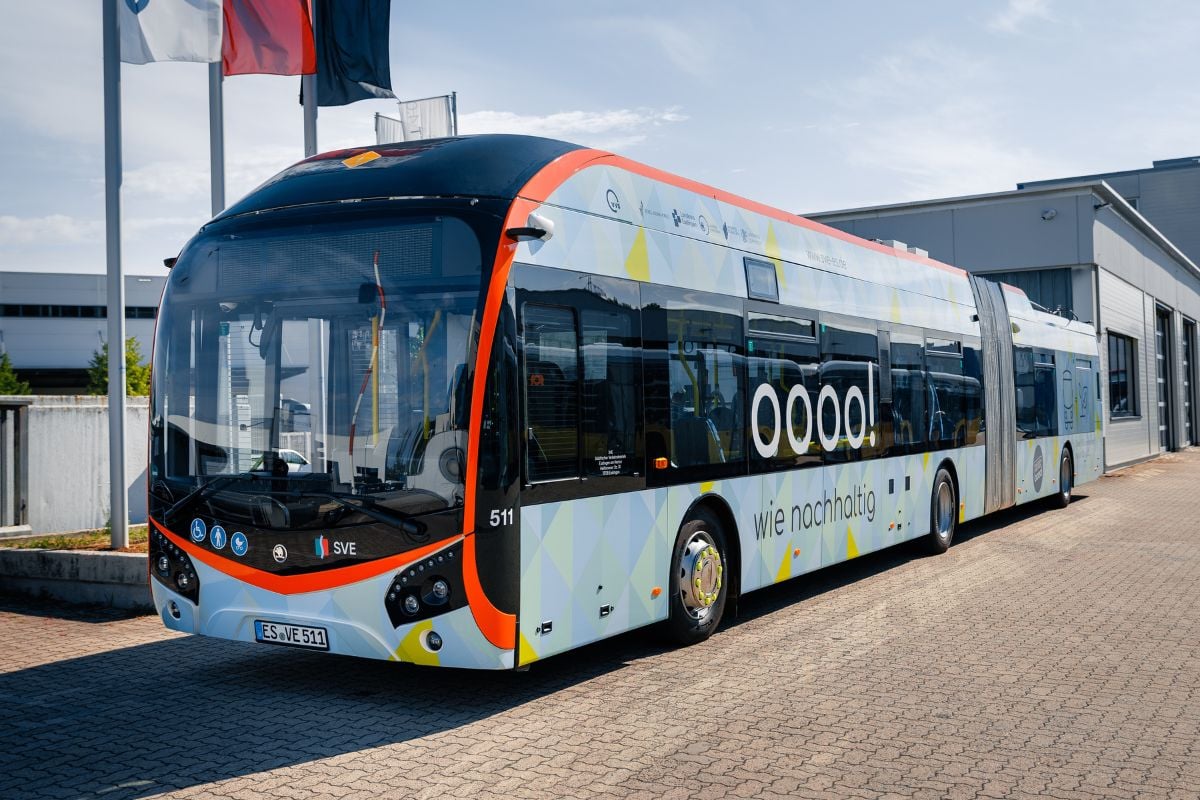
The order comprises ten 12-metre Škoda 32Tr solo trolleybuses and 42 articulated Škoda 33Tr trolleybuses. All vehicles are scheduled for delivery by the end of 2026. The contract also includes an option for nine additional buses.
The vehicles combine overhead line operation with battery-electric driving. While travelling under overhead wires, they draw power directly from the grid and charge their batteries at the same time. Away from the overhead lines, Škoda says they can operate in battery-electric mode for up to 25 kilometres. This enables operators to electrify routes without installing overhead infrastructure along the entire route. The solo buses feature a 135 kWh battery, while the articulated buses are equipped with a 156 kWh battery and two driven axles.
At the same time, Esslingen is expanding its existing overhead line network from around 29 kilometres by a further five kilometres. The city is investing more than €64 million in the transition. Around €27 million in federal funding will support the procurement of 42 of the new buses and the network expansion, while the state of Baden-Württemberg is contributing €1.43 million towards six additional vehicles.
For Esslingen, the concept builds on its existing trolleybus infrastructure. Instead of relying solely on large batteries and stationary charging, the buses recharge while operating under overhead wires and then continue in battery-electric mode on routes without overhead lines. Using green electricity supplied by municipal utility subsidiary grün ES, the entire city bus network is set to operate electrically by the end of 2026.