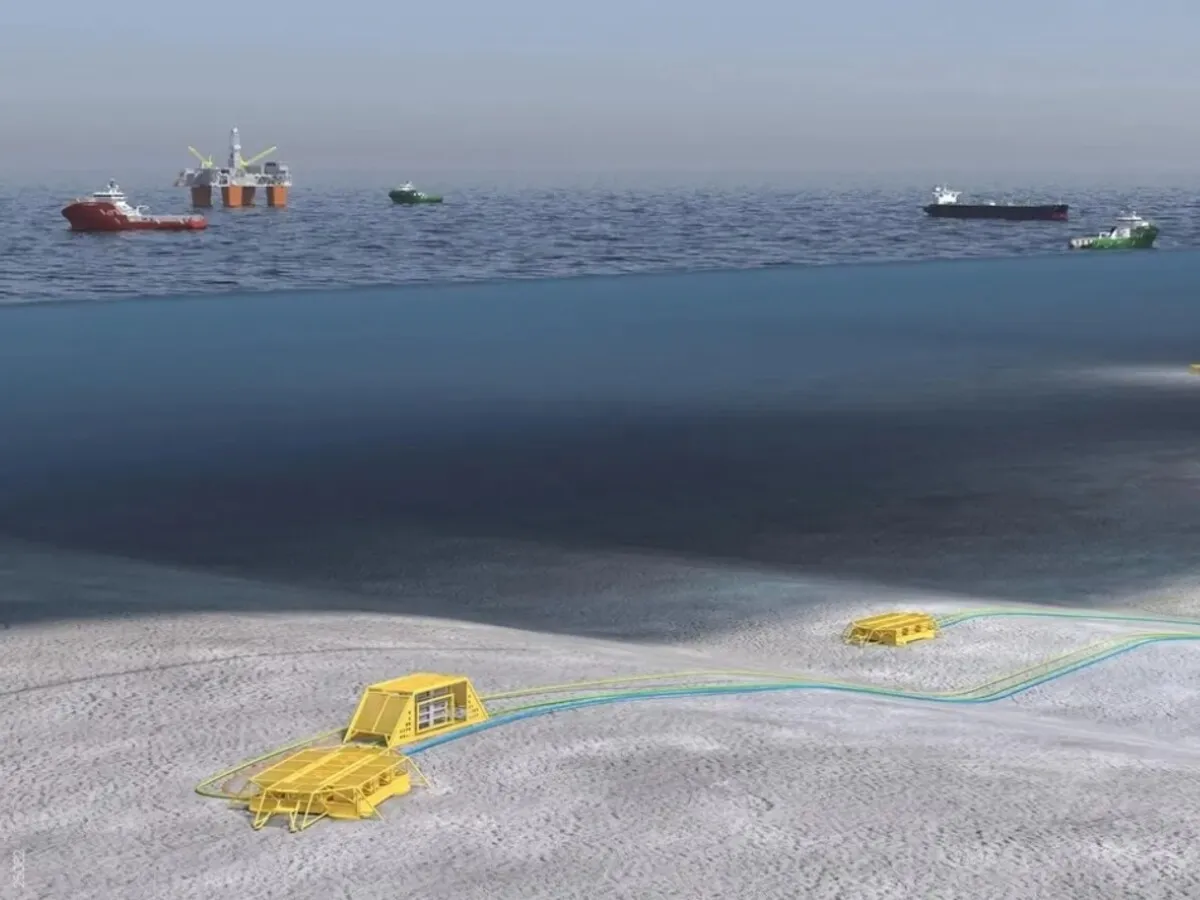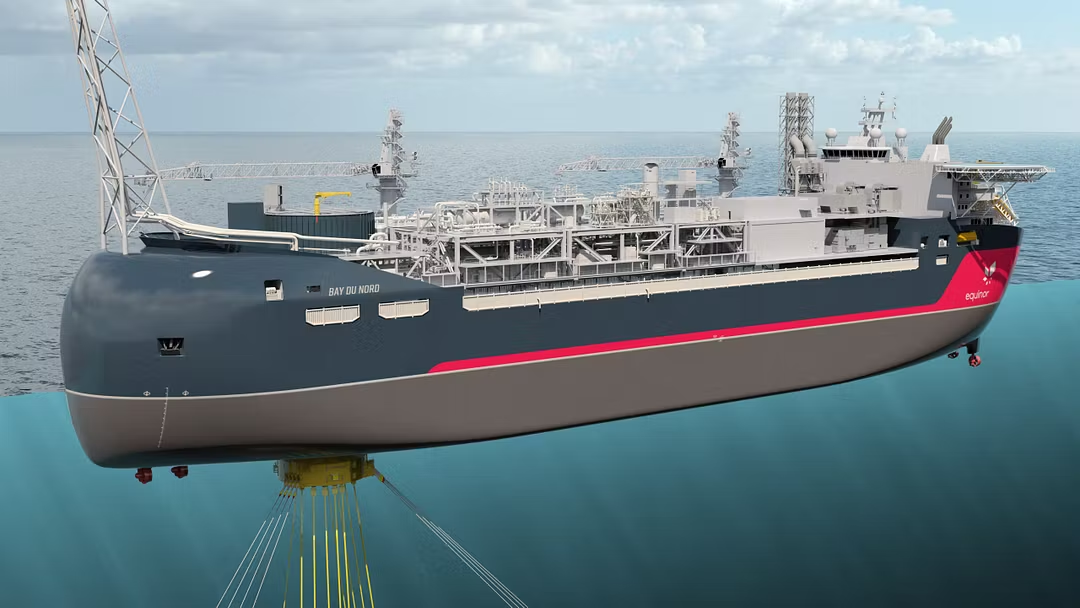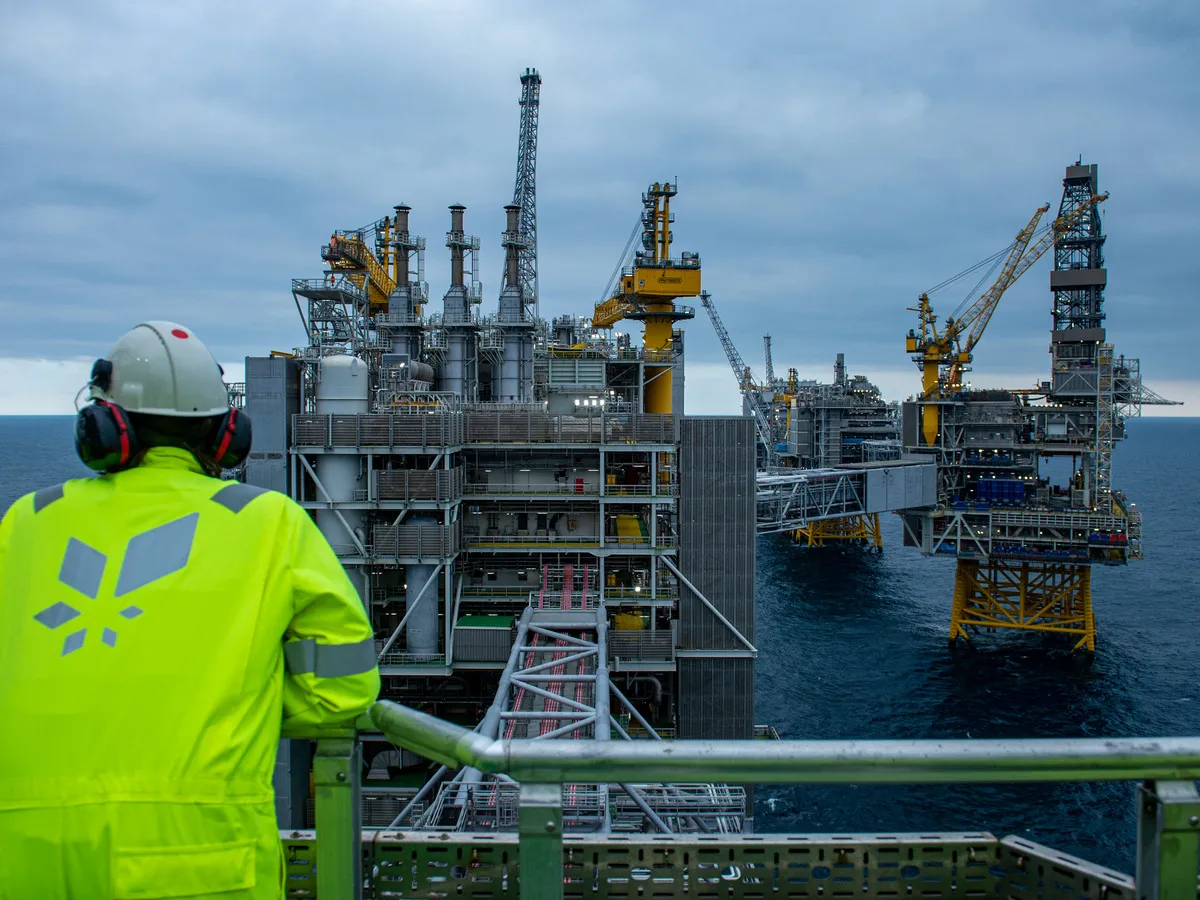
Skip to Content News Archives Economy Energy Oil & Gas Renewables Electric Vehicles Mining Commodities Agriculture Real Estate Mortgages Mortgage Rates Finance Banking Insurance Fintech Cryptocurrency Work Wealth Smart Money Wealth Management Investor Personal Finance Family Finance Retirement Taxes High Net Worth FP Comment Executive Women Puzzmo Newsletters Financial Times Business Essentials More Innovation Information Technology FP500 Podcasts Small Business Lives Told Tails Told Shopping Financial Post Store Obituaries Place a Notice Advertising Advertising With Us Advertising Solutions Postmedia Ad Manager Sponsorship Requests Classifieds Place a Classifieds ad Working Profile Settings My Subscriptions Saved Articles My Offers Newsletters Customer Service FAQ News Economy Energy Mining Real Estate Finance Work Wealth Investor FP Comment Executive Women Puzzmo Newsletters Financial Times Business Essentials HomeOil & GasBay du Nord could be Canada's largest offshore oil project. Now a major partner has pulled outBP's exit is raising questions about plans for the country's first commercial deepwater oil projectLast updated 31 minutes ago You can save this article by registering for free here. Or sign-in if you have an account.Norwegian oil producer Equinor said the Bay du Nord drilling project could become the first development in a new offshore producing region in the Flemish Pass Basin east of Newfoundland. Photo by Carina Johansen/BloombergBP PLC’s recent exit from Bay du Nord is raising fresh questions about Canada’s largest proposed offshore oil project, but analysts say Equinor ASA’s decision to buy out its partner and assume full ownership may be the stronger signal, indicating the Norwegian energy company remains committed to moving the development toward a final investment decision.Subscribe now to read the latest news in your city and across Canada.Exclusive articles from Barbara Shecter, Joe O'Connor, Gabriel Friedman, and others.Daily content from Financial Times, the world's leading global business publication.Unlimited online access to read articles from Financial Post, National Post and 15 news sites across Canada with one account.National Post ePaper, an electronic replica of the print edition to view on any device, share and comment on.Daily puzzles, including the New York Times Crossword.Subscribe now to read the latest news in your city and across Canada.Exclusive articles from Barbara Shecter, Joe O'Connor, Gabriel Friedman and others.Daily content from Financial Times, the world's leading global business publication.Unlimited online access to read articles from Financial Post, National Post and 15 news sites across Canada with one account.National Post ePaper, an electronic replica of the print edition to view on any device, share and comment on.Daily puzzles, including the New York Times Crossword.Create an account or sign in to continue with your reading experience.Access articles from across Canada with one account.Share your thoughts and join the conversation in the comments.Enjoy additional articles per month.Get email updates from your favourite authors.Create an account or sign in to continue with your reading experience.Access articles from across Canada with one accountShare your thoughts and join the conversation in the commentsEnjoy additional articles per monthGet email updates from your favourite authorsSign In or Create an AccountorThe proposed $14-billion offshore oil development, located in the Flemish Pass Basin about 500 kilometres east of St. John’s, NL, is expected to produce more than 400 million barrels of oil and would become Canada’s first commercial deepwater oil project if approved. It is also the only major new offshore oil development currently in Canada’s project pipeline.Get the latest headlines, breaking news and columns.By signing up you consent to receive the above newsletter from Postmedia Network Inc.A welcome email is on its way. If you don't see it, please check your junk folder.The next issue of Top Stories will soon be in your inbox.We encountered an issue signing you up. Please try againOttawa has said the project is strategically important and will help sustain the offshore oil industry while attracting billions of dollars in private investment, supporting jobs, boosting exports and strengthening the country’s role as a reliable energy supplier. But Equinor delayed a final investment decision in 2023 as costs surged and supply chains tightened.The ownership change now leaves Equinor carrying more financial risk, but it also gives it complete control over a decision it was already expected to make on the development. BP sold its 37.2 per cent non-operated stake in Bay du Nord and its interests in 10 offshore licences last week.“BP was not the one that was going to decide to go ahead with the project,” Rory Johnston, founder of Commodity Context Corp., said. “Ultimately, it was still the operator at Equinor that was going to decide whether or not to go ahead with it.”He said BP’s departure is “a mixed bag.”On one hand, Bay du Nord loses the backing of one of the world’s largest energy companies and the potential benefits of having another major producer invested in Atlantic Canada’s offshore industry, but Equinor’s willingness to buy BP’s stake sends its own message.“Equinor still saw value enough to buy back the portion from BP,” he said. “It’s a strong signal of their confidence in the project.”Johnston said he still expects Bay du Nord to move ahead because the project remains strategically important to Equinor and appears economically attractive even if oil markets weaken next year. He said Bay du Nord closely aligns with the company’s long-standing expertise in developing large deepwater offshore projects, particularly off the coasts of Norway and Brazil.“I do think Equinor still seems plenty interested,” he said.Mark Oberstoetter, head of Americas upstream research at Wood Mackenzie Ltd., has a more cautious assessment, though he said BP’s exit has not materially changed his view of the project’s chances, which he continues to put at above 50 per cent.“My gut reaction was finding partners to share the cost risk,” he said.But after reviewing Equinor’s public statements and the project’s continued progress, he said “the project still remains as likely and as viable as prior to this.”Equinor has repeatedly said it remains on track to make a final investment decision early next year and could bring in another partner afterward. Oberstoetter said that approach is common for large offshore developments since companies often bring in or sell stakes to other partners after approving a project rather than before.“If Equinor hadn’t stepped up, that would have been a risk we’d be talking about,” he said.In some ways, Oberstoetter said, sole ownership can simplify the path to a final investment decision since partners in major offshore developments can differ over how a project should be designed and built. But with BP gone, Equinor can pursue its preferred development concept without negotiating those choices with another owner.“It makes it easier for Equinor to go ahead with its development concept,” he said, adding that the company must also shoulder the project’s full financial risk.With ownership largely settled, analysts say the bigger question is whether Bay du Nord’s economics justify a $14-billion commitment from Equinor, but they also say many of the factors that delayed the company’s decision in 2023 have since improved.Oberstoetter said the company has refined its plans, continued engineering work and learned more about nearby discoveries that could improve the project’s economics. He also said Equinor has renewed its focus on growing its international oil and gas business.Johnston said supply chain conditions have significantly improved since the project was paused, although the uncertainty has now shifted from construction costs toward the outlook for global oil markets.His biggest question is not whether Bay du Nord can make money, but whether Equinor will feel comfortable approving such a large investment next year.“I don’t think this changes my view at this stage over the prospects of the project going ahead,” he said. “But I do think that it changes the tone.”Johnston said the prospect of weaker oil markets next year could be a key external risk to be considered when making a final investment decision, but Oberstoetter said the more fundamental question is whether Equinor is satisfied with the project’s economics.“Can they get comfortable with development costs and the expected returns?” he said. “Cost is definitely a big one.”He said additional discoveries that could increase the amount of recoverable oil tied to Bay du Nord would further strengthen the project’s business case.Both analysts also cautioned against reading too much into BP’s decision itself.Johnston said the decision appears to reflect the company’s broader effort to simplify its portfolio rather than a loss of confidence in Bay du Nord and that it has been focusing investment on projects it directly operates instead of holding minority stakes in developments run by other companies.For Newfoundland and Labrador, however, the stakes extend well beyond a single corporate transaction. The offshore oil industry accounts for nearly one-fifth of the province’s economy and more than half of its exports.Bay du Nord is expected to become Newfoundland and Labrador’s next major offshore oil development as production from the province’s existing fields declines over the next two decades. Industry forecasts suggest output could sharply fall by 2040 and potentially wind down almost entirely by about 2050 unless new projects come online.Equinor said Bay du Nord could also become the first development in a new offshore producing region in the Flemish Pass Basin. The project is being designed so that nearby discoveries could eventually share its production infrastructure, subject to commercial agreements. The basin has also attracted exploration by several major international oil companies, including Exxon Mobil Corp. and Chevron Corp.That potential helps explain why analysts see the project as especially important for the province. Oberstoetter said Bay du Nord is far more significant for the province than for Canada as a whole.Nationally, he said, it is one of several major energy projects under consideration. For Newfoundland and Labrador, however, it could determine whether the province maintains an offshore oil industry beyond the next two decades.“It’s extremely material for Newfoundland,” he said. “Newfoundland does face long-term production declines if they don’t find a new project like this one to cement around.” Join the Conversation This website uses cookies to personalize your content (including ads), and allows us to analyze our traffic. Read more about cookies here. By continuing to use our site, you agree to our Terms of Use and Privacy Policy.
Bay du Nord could be Canada's largest offshore oil project. Now a major partner has pulled out
Analysts say Equinor's decision to buy out its partner points to confidence in the proposed $14-billion offshore oil project. Read here now
1,674 words~8 min read