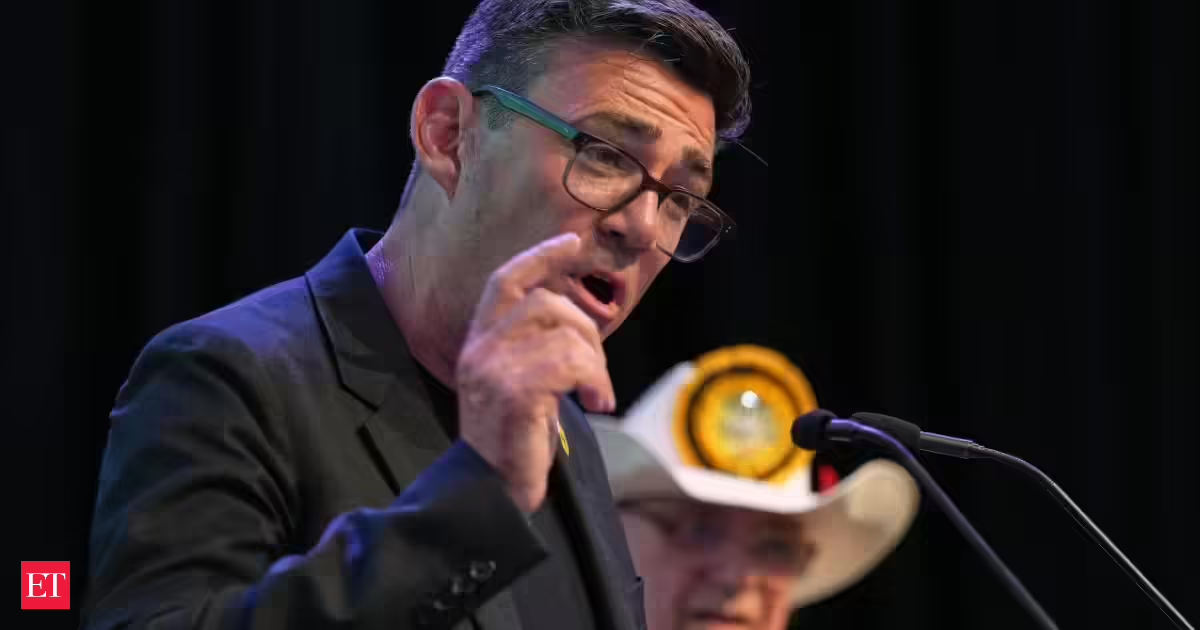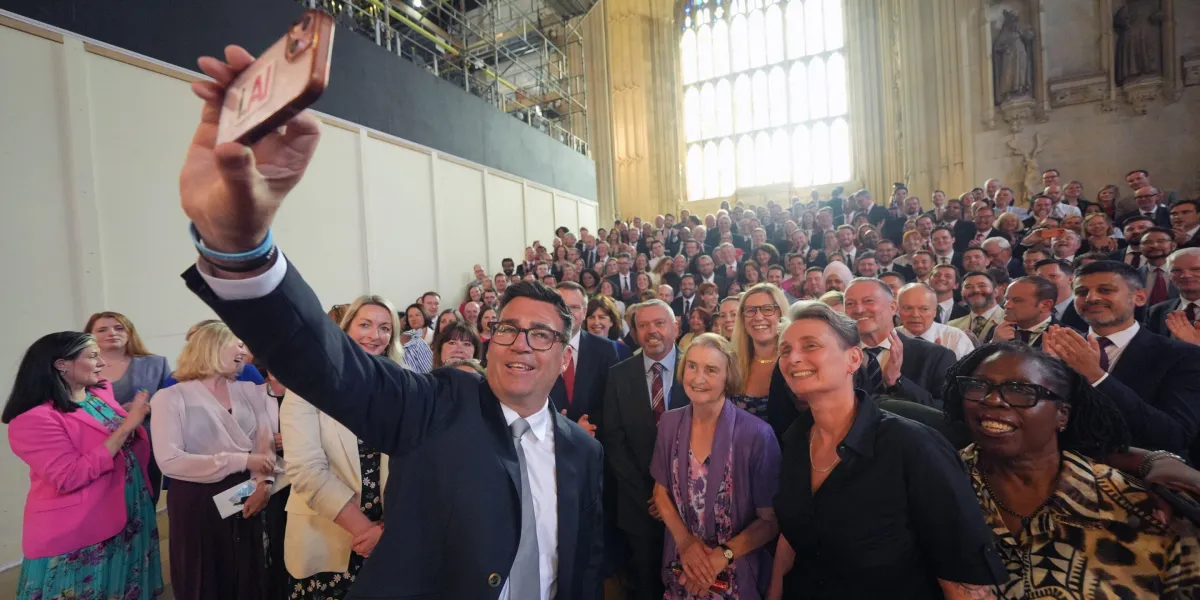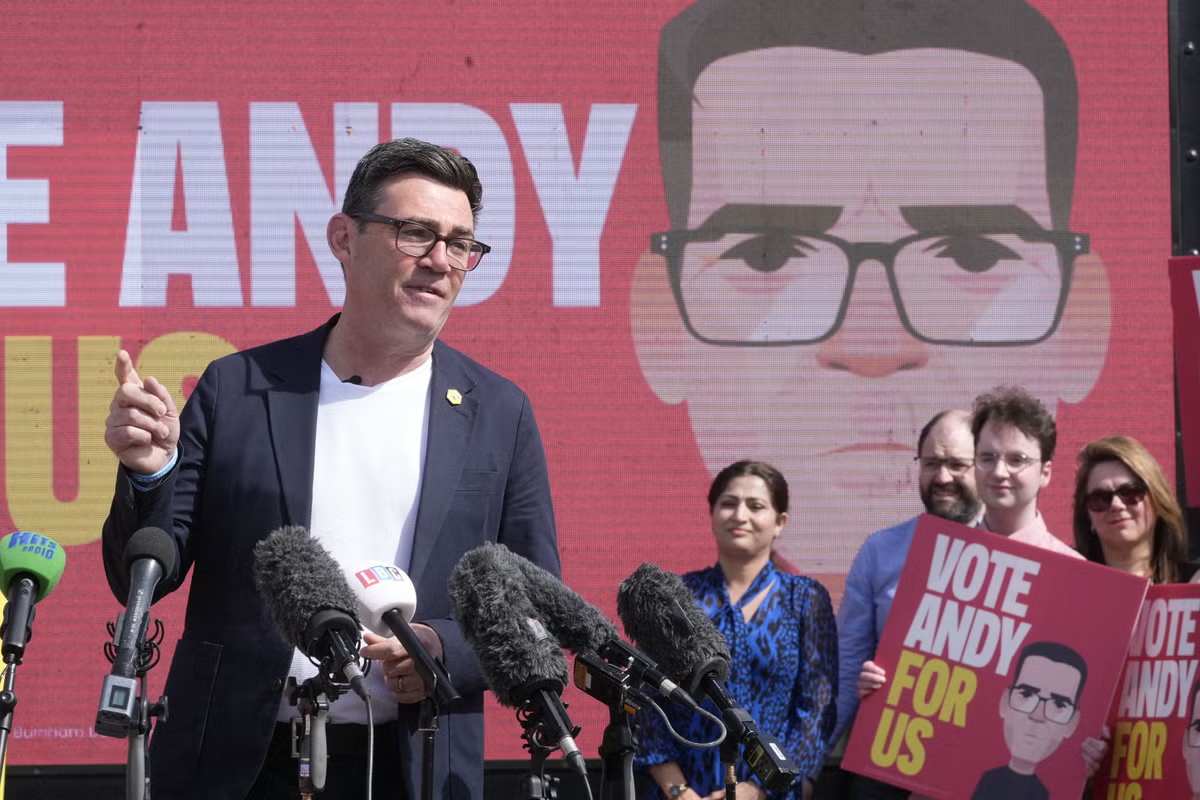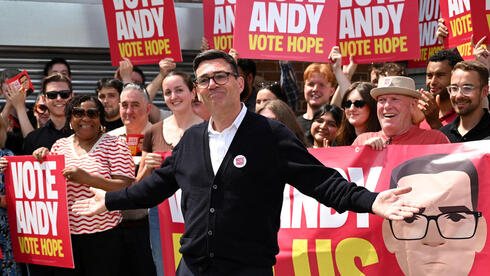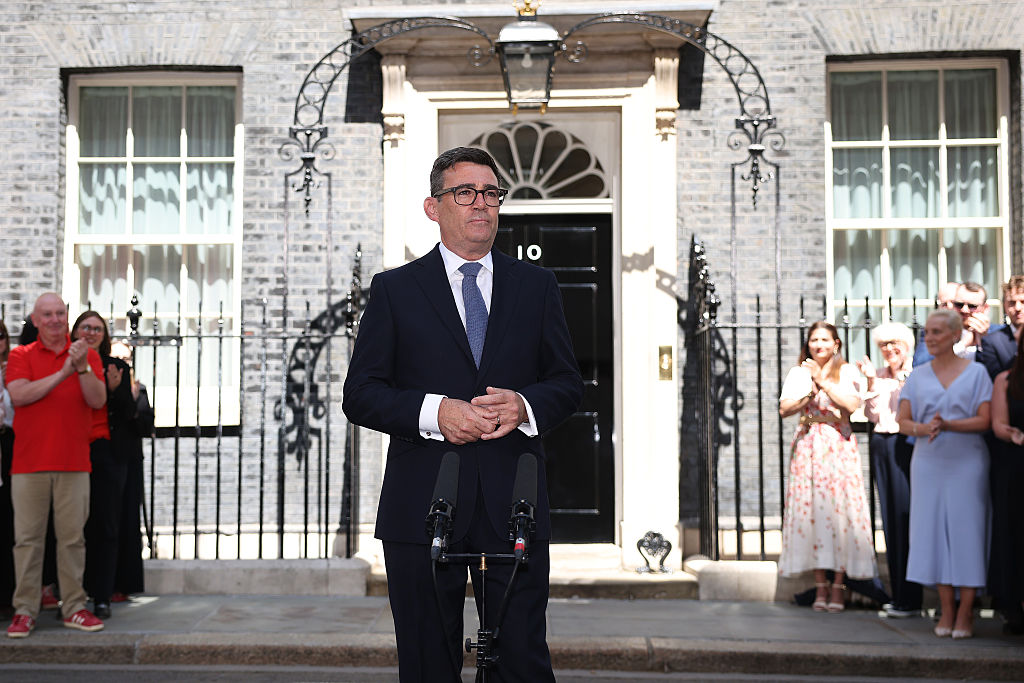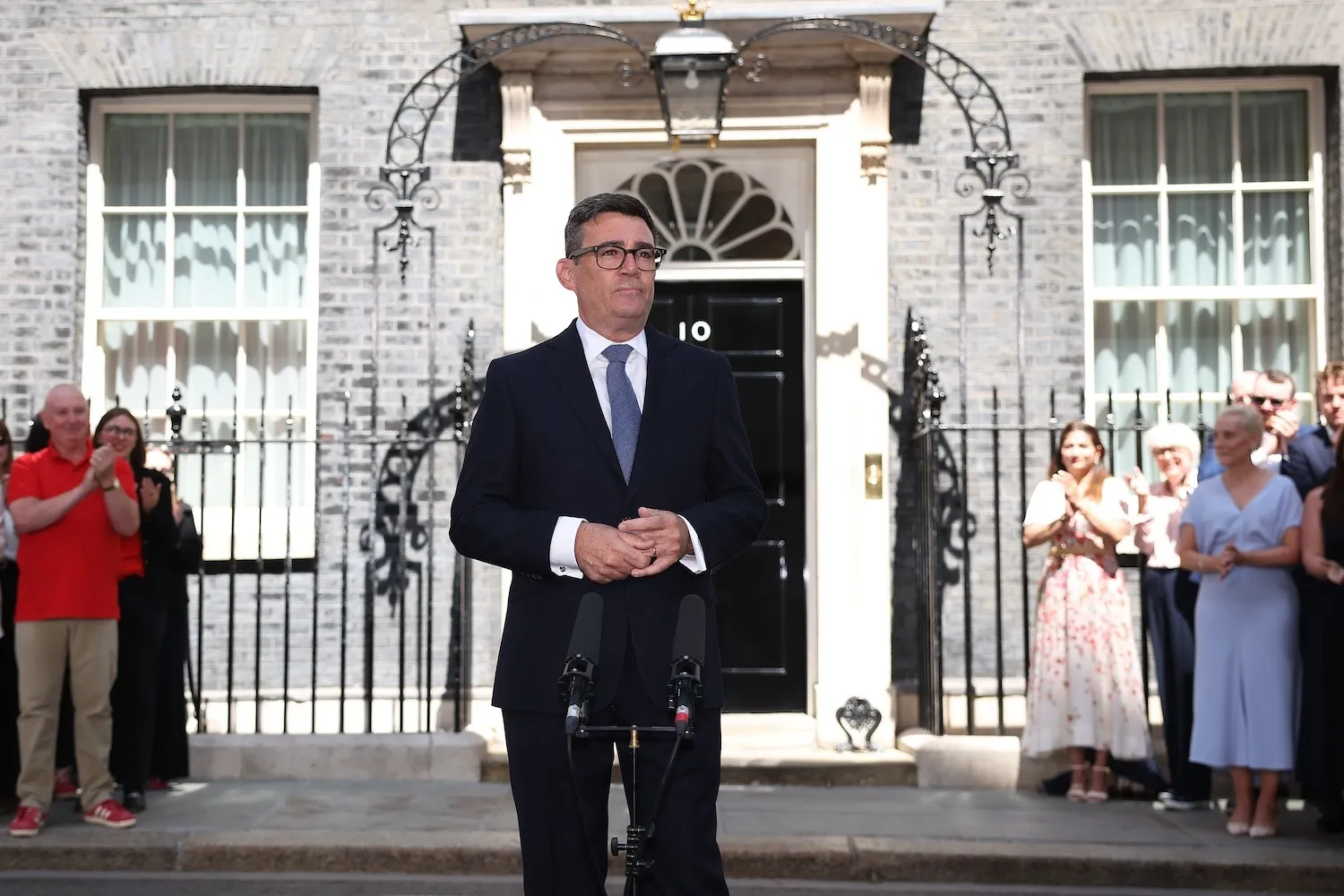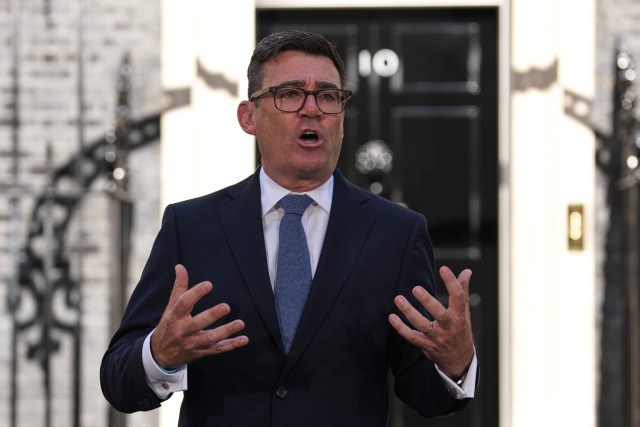
Britain’s new Prime Minister, Andy Burnham, has been a Labour Party politician for twenty-five years, but in taking over from the unpopular Keir Starmer as premier—his country’s seventh in a decade—he is understandably keen to project his accession to power as a big break with the past. From 2017 until last month, Burnham was the mayor of Greater Manchester, the U.K.’s second-largest metropolitan area. In a series of speeches and interviews since he launched a challenge to Starmer a couple of months ago, he has been running under the banner of Manchesterism, which some of its supporters have hailed as a fresh and more inclusive model of economic management.For decades, Burnham argues, British governments of both parties have failed the seventy per cent of the population that lives outside of Southeast England, the most prosperous part of the country. In a May speech that marked his reëmergence on the national stage, he name-checked a series of small towns and suburbs around Manchester that were devastated by deindustrialization during the nineteen-eighties, and then subjected, under Margaret Thatcher and her successors, to the rigors of privatization and deregulation. These places had been “left adrift,” with economic, social, and political power draining from them, Burnham said. “It all adds up to forty years of neoliberalism that have not been kind to the North of England.”For five of those forty years, from 2005 to 2010, Burnham served in the Labour governments of Tony Blair and Gordon Brown, which embraced some parts of the Thatcherite policy agenda, such as low business taxes. Rather than dwelling on his Blairite roots, Burnham calls for the devolution of power away from London and points to his record as the mayor of Greater Manchester County from 2017 until last week. Once the birthplace of the Industrial Revolution, the city of Manchester has, in recent decades, reconstituted itself as a fast-growing services hub also known for its football teams, music, and night life. Burnham, who was born in the nearby city of Liverpool, has proved a popular leader. Manchester’s success “comes from not leaving everything to the market—but public intervention where necessary to set higher ambitions . . . and kick-start the process of change,” he said in another recent speech. “This is Manchesterism.”With Burnham’s emphasis on regenerating left-behind communities and mobilizing the government to tackle affordability, he has drawn comparisons to New York City’s Mayor Zohran Mamdani. Both men have pledged to address rising rent and home prices by building more affordable units. Since Thatcher’s government gave public-housing tenants the right to buy their homes back in the nineteen-eighties, the U.K.’s stock of public housing has been sorely depleted; to replenish and expand it, Burnham has called for the biggest public home-building program since the Second World War. In Greater Manchester, he launched the Good Growth Fund, financed by the city’s pension fund and the central government, to create jobs and affordable housing in parts of the city that have missed out on the recent boom.Like Mamdani, whose campaign called for fast and free buses, Burnham has also championed investments in public transportation. One of his signature initiatives in Greater Manchester was seizing control of the region’s privatized bus services, cutting fares, setting and coördinating routes, and providing free passes to certain groups, including people aged sixteen to eighteen, and discount prices to people aged eighteen to twenty-one. His Bee Network, an integrated transport system of buses, trams, walking routes, and rental bikes, is a big hit with the Mancunian public. “The thing that ties Mamdani and Burnham together is a focus on how you make life more affordable and dignified for households that are relentlessly squeezed,” Mathew Lawrence, the founder and director of Common Wealth, a progressive transatlantic think tank, told me.To be sure, Burnham has his doubters and critics. Some of them point out that the economic rebirth of Manchester began before he became mayor, and that it hasn’t necessarily benefitted the city’s surrounding towns, some of which still have declining populations. Many of the housing units that have been built in Manchester’s city center, sometimes with support from public loans or loan guarantees, are expensive market-rate apartments; more affordable units are still hard to find. “Greater Manchester, far from representing a story of a dynamic break with the neoliberal consensus, instead represents a crystallisation of it,” Isaac Rose, a local tenant organizer, wrote in The New Statesman.That’s a questionable verdict. Like virtually all mayors, Burnham encouraged and welcomed private-sector investments. But he also used the power of his office, which is relatively limited, to move his city in a progressive direction, creating what some of his supporters see as a template for action at the national level. “Andy Burnham’s Greater Manchester programme—the Bee Network, expanded council housing, the Good Growth Fund—has begun to show what the logic of public control produces in practice: lower fares, more routes, restored connectivity to communities the market had written off, and the fastest-growing city economy in Britain,” Lawrence and a co-author, Alex Williams, wrote in a recent report titled “The Productive State: A Framework for Manchesterism.”Over time, Lawrence and Williams argue, the interventionist approach that Burnham has adopted in Manchester could be developed into a new way to manage the entire British economy in the public interest. In the vision that they present, the economy would ultimately be divided into three tiers: a “decommodified foundation,” in which local authorities and publicly run corporations provide essential goods and services; a “stabilized market middle,” incorporating most of manufacturing and retail sectors, which would remain in private hands, with the government playing a stabilizing role; and an “innovation frontier,” also privately run, but with the government actively enforcing competition policies and providing financial support for research and development. Such an economy would not only be more equitable, Lawrence and Williams claim, but also more efficient because it would tackle some chronic market failures, such as corporate rent-seeking, financialization, and growing regional disparities.The extent to which Burnham himself is invested in the ambitious version of Manchesterism laid out in the Common Wealth report isn’t entirely clear: Lawrence said that he has briefed Burnham’s team on the paper, and Burnham has previously cited some earlier work that Common Wealth did on the impact of privatization, but the organization has no formal links to the new Prime Minister or his fledgling government. Moreover, Burnham will now have to deal with many of the same obstacles that handicapped Starmer’s government after it won a big majority, in 2024: stagnant living standards; a largely hostile press; political challenges from the right (Nigel Farage’s Reform Party) and the left (the Green Party); a hefty budget deficit; and wary financial markets, which, in 2022, rapidly put an end to the premiership of the hapless Conservative Prime Minister, Liz Truss. (After Truss’s government introduced a tax-cutting budget that investors consider irresponsible, bond yields surged and the value of the sterling plummeted. She was forced to resign.)Burnham has described his ascension to 10 Downing Street as “the biggest change in forty years of British politics.” He vowed to give local governments “greater public control” over some key sectors of the economy, including water, energy, and housing, and he explicitly called for the nationalization of Thames Water, a public utility that supplies Greater London and the Thames Valley. (In 1989, the Thatcher government corporatized the regional Thames Water Authority and floated it on the stock exchange. Since then, Thames Water has had a number of owners, including an Australian private-equity firm, and it has become notorious for underinvestment, leaks, sewage spills, and the extraction of hefty dividends.) At the same time, though, Burnham has been keen to reassure the markets that he won’t do anything financially irresponsible. Indeed, he has promised to abide by two important fiscal pledges that Starmer’s government adopted: balancing day-to-day spending and revenues within five years and reducing the public debt as a percentage of G.D.P. in the same period. Burnham has also said that he won’t immediately raise taxes on the wealthy, a policy option that, at least in theory, could help pay for a more progressive spending agenda. (He did also say that “at some point” he might have to ask wealthy taxpayers “for a little more.”) “The financial constraints are still in place, and I don’t think the over-all policies will be radically different from Starmer’s,” one veteran Labour policy adviser told me.Still, Burnham does have the ability to differentiate himself from his predecessor in certain ways. The adviser told me that, even without drastically expanding the budget or upending the financial markets, Burnham could borrow a bit more to finance public-infrastructure investments and channel money to depressed regions. As the “Productive State” report points out, England’s fiscal system is highly centralized, and it has severely handicapped local efforts to promote growth and development. Burnham could also give local authorities more power to raise taxes or issue bonds on their own. These moves would be faithful to Manchesterism, and they would represent an important reform. Whether they would be sufficient to sweeten the sour mood of the British public is more questionable.Lawrence told me that, in his view, Burnham faces three tests: devolving power to the regions; providing households with some immediate meaningful relief from the rising cost of living while containing inflation; and reversing privatization to clear the way for longer-term structural reforms in parts of the economy “that aren’t working for ordinary people.” Passing these tests and raising Labour’s poll ratings would represent a formidable challenge to anybody, but Burnham has at least one notable advantage over Starmer: in person and online, he’s an effective communicator.“In an era of populism, center-left parties need leaders with a populist touch, and Andy does have that,” Dan Corry, an economist who headed the 10 Downing Street policy unit during Gordon Brown’s government, told me. “He’s personable, and he has good political instincts.” In an e-mail, another London-based Labour figure offered a more jaundiced take on Burnham: “He seems to have done something smart with the buses but other than that nobody is entirely sure what ‘Manchesterism’ is beyond being a brilliant comms coup i.e. Burnham seems to have convinced a lot of people that Manchesterism exists, made it part of his brand. As a political achievement that is no mean feat and stands in sharp contrast to his predecessor’s, er, inabilities.”Communication skills only go so far, of course, and there are big decisions to be made, the first of which is selecting a new Chancellor of the Exchequer to oversee the economy. The incumbent, Rachel Reeves, is expected to leave office. The favorite to replace her had been Ed Miliband, the left-leaning energy secretary, who has been overseeing a net-zero initiative and would likely be sympathetic to an ambitious Manchesterism agenda. But last week there were reports that Burnham was set to pick the current Home Secretary, Shabana Mahmood, an immigration hawk who hails from the right-leaning end of the Labour Party and could conceivably be more favorably received by the financial markets. “You do need a Chancellor who understands this agenda and is committed to it,” Lawrence said. “If someone is chosen based on fears of short-term fluctuations in the bond market, that, to me, would be a worrying sign.” ♦
Can Andy Burnham’s Manchesterism Save the U.K.’s Center Left?
With a populist touch, and a focus on affordability and raising up left-behind communities, Britain’s new Prime Minister has drawn comparisons to Zohran Mamdani.
1,875 words~9 min read