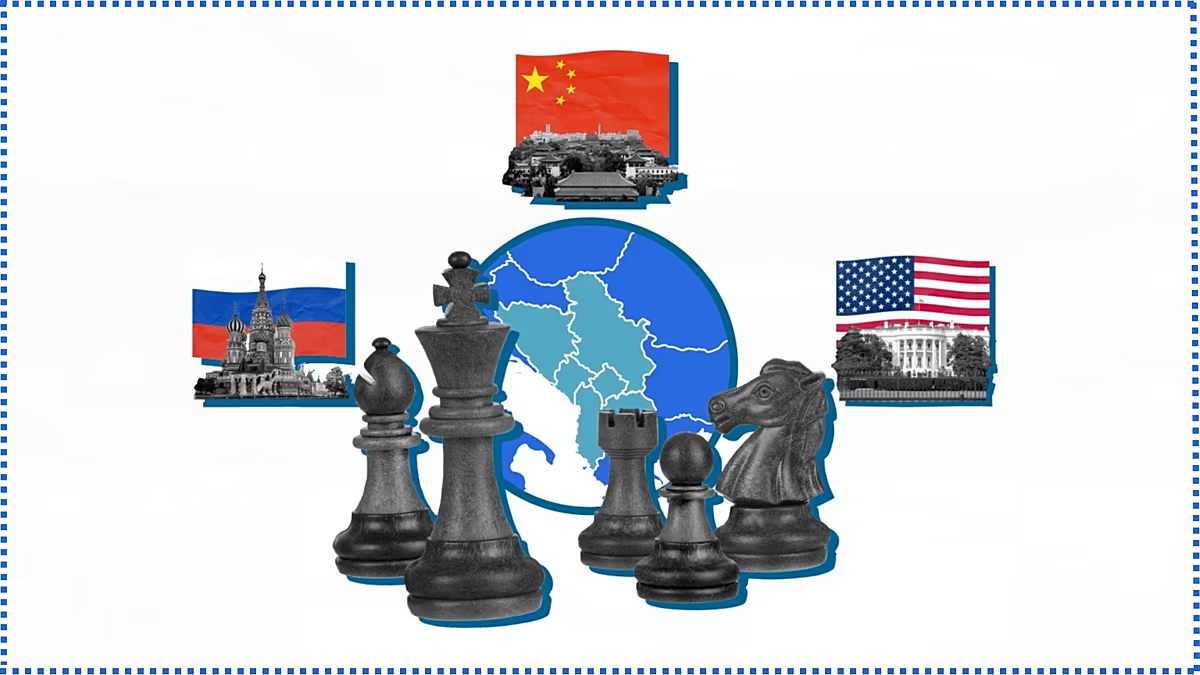
The Western Balkan region, often referred to as southeast Europe, consists of Albania, Bosnia and Herzegovina, Croatia, Slovenia, Kosovo, Macedonia, Montenegro, and Serbia.
These countries share a common perspective on European integration and a rich cultural heritage influenced by the former communist Yugoslavia, the Ottoman Empire, and the Austro-Hungarian Empire.
The European Council declared in unambiguous terms at the Thessaloniki Summit in July 2003 that “the future of the Balkans is in the European Union.”
Apart from Slovenia’s accession in 2004 and Croatia’s accession to the European Union in 2013, little progress has been made since then, and the enlargement prospects of other countries are also unclear.
In addition, these countries demonstrate insufficient regional cooperation and continue to have animosities.