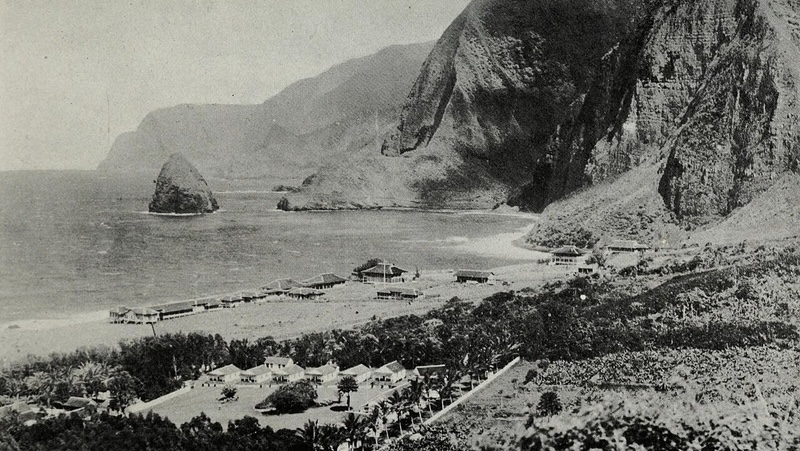
Father Damien was a dirty man. Everyone agreed on that. Dirt would accumulate under his fingernails; he rarely washed his hands. His clothes—his habitual cassock and wide-brimmed hat—were worn for days on end; he saw no reason to clean his hut in Kalawao, the leprosy colony on the Hawaiian island of Molokai. His detractors claimed he lacked elegance too: burly with a “piggish” head, they complained, he squinted from behind a pair of wonky wire-framed circular spectacles. He was eager to learn Hawaiian, it was noted sniffily, but otherwise he had little enthusiasm for languages. His Latin came only by official requirement, his English was sparse; a native Flemish speaker, even his French was stilted. The prose of his letters lacked refinement whatever their language: “coarse…headstrong and bigoted” was one particularly vitriolic posthumous assessment.Article continues after advertisement
None of this worried Damien. Hawaiian did him fine. From that messy home, built in sight of Kalawao’s cemetery, Damien wrote to his brother Auguste, also a priest, to say that Molokai was exactly where he wanted to be.
We eat what Providence sends us. The calabash of poi is always full; there is also meat; water in quantity, coffee and bread sometimes, wine or beer never. As I have had to work all week and cook on Sunday, you will excuse me if my hands are not as clean as yours, which do nothing, I suppose, but turn the pages of books. Sometimes the plates are not well washed either. But what matter. Hunger and habit make us eat just the same. For dessert, we smoke a pipe. That finished, quickly back on the horse.